
Translated material
Battle of Lubyanka
Why is Patriarch Kirill inflicting a mortal blow to the beloved brainchild of Metropolitan Tikhon - the Sretensky Seminary
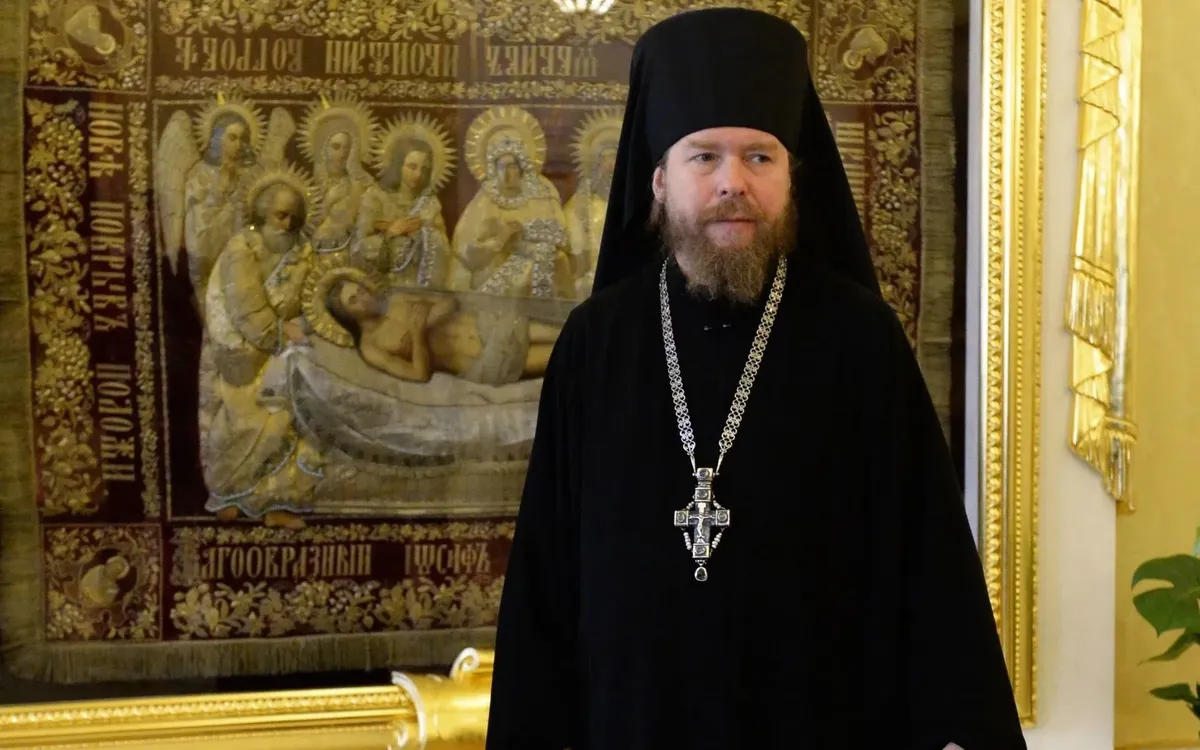
The head of the Russian Orthodox Church dealt a sensitive blow to the hierarch, which is influential among the ordinary clergy and laity who has a reputation as the “confessor of the president”, Metropolitan Tikhon (Shevkunov). After the decision on the actual liquidation of the “main forge of the Shevkunovsky personnel” - the Sretensky seminary in Moscow - the metropolitan looks crushed and crushed. But was the Patriarch started too risky?
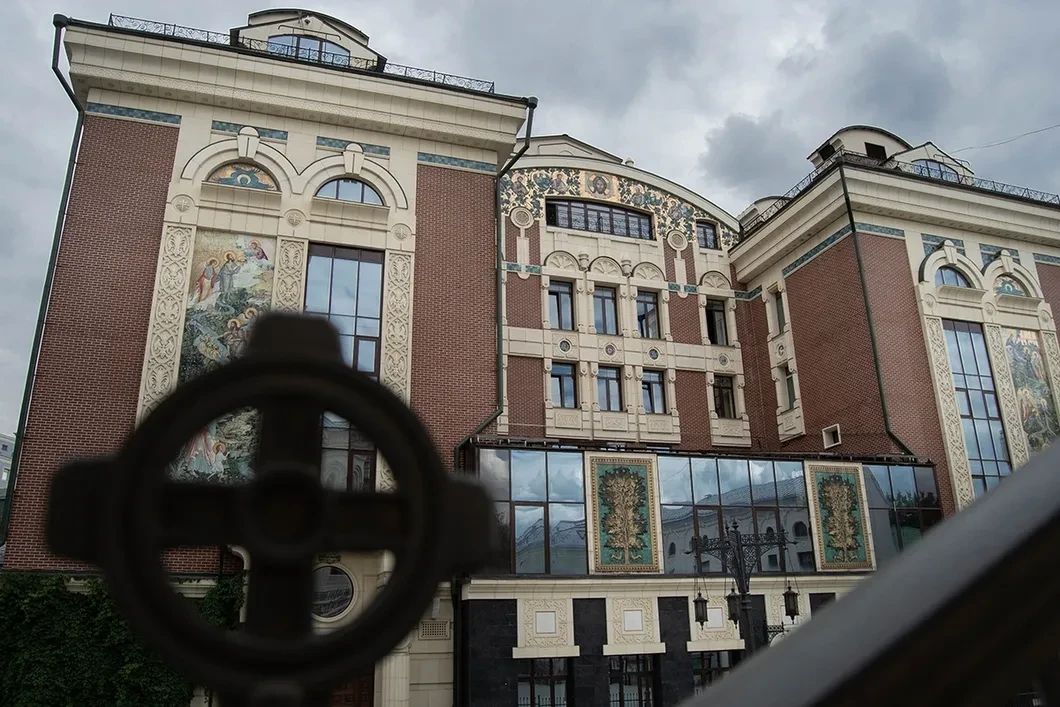
“New” wrote repeatedly ( you can read here, here and here ) that the most likely candidate for the patriarchal throne in the modern Russian Orthodox Church is Metropolitan Pskov Tikhon (Shevkunov). Living in the highest rooms of the Kremlin and Lubyanka, who has a reputation as the “confessor of the president” (which neither Tikhon nor Putin confirms, but also does not refute), who created exemplary Sretensky monastery and seminary (with the same exemplary publishing house and choir), which accumulated billions of sponsor and budget rubles for construction throughout Russia Parks ”who introduce Russians to the“ right ”ideology, this hierarch penetrated the homes and souls of millions of people with their bestseller“ Non -consumed saints ” - the most large Orthodox book in the entire Soviet and post -Soviet history. It seemed that nothing would stop the rise of the “Lubyankovsky archimandrite”, which became the Pskov Metropolitan, to the very peaks of church power.
But Patriarch Kirill decided to turn back the natural course of history too well.
What happened?
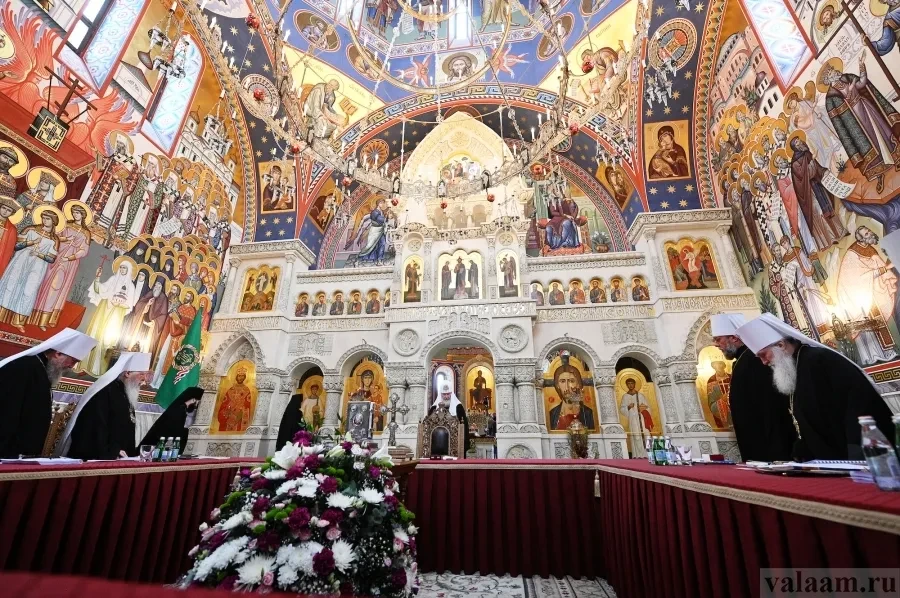
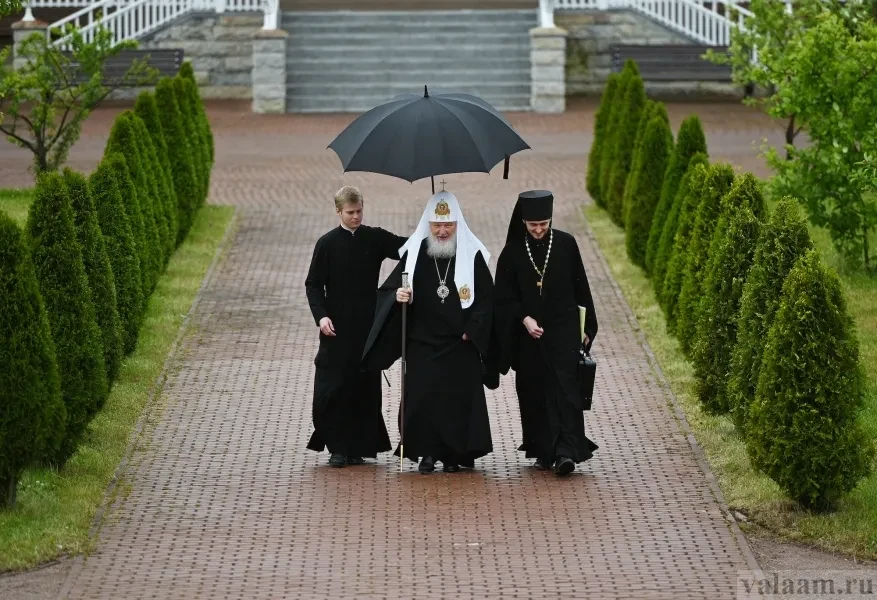
The decision to hold a meeting of the Synod of the Russian Orthodox Church (for the first time in history!) On the remote and isolated island of Valaam did not bode well. The Synod gathered on July 9 in the magnificent temple of the Holy Vladimir monastery, the access to the territory of which is very limited and controlled by the FSO. The fact is that historically there was no such monastery on Valaam. It was built already in the 21st century in honor of the heavenly patron of Vladimir Putin - St. Equal -to -the -Apostles Prince Vladimir - at the relatively distant and well -protected bay of the Valaam archipelago. In addition to the temple, two large cottages in the Scandinavian style are built on the territory of the monastery: one for the president, the other, more modest, for the patriarch. About once a year, the most confidential meetings of the two goals of the Russian eagle are held here.
The monastery serves as a lively embodiment of the idea of the “symphony” of church and state power, which Patriarch Kirill dreams so, but which has recently caused distrust in the Kremlin.
Behind the doors of this monastery tightly closed and protected and protected by the FSO, and the synod led by the Patriarch gathered. They began with a sensational decision on the resignation and sending of the first Vicar of the first Vicar of the first vicar of the Patriarch Metropolitan Arseny (Epifanov) to Lipetsk - the right hand of the deceased Alexy II. But the next decision, aimed at Metropolitan Tikhon, drowned out this sensation. In order to “optimize” the spiritual education system, the Synod transferred to St. Petersburg the rector of the Sretensky Theological Seminary created by Tikhon, located in the monastery of the same name on Lubyanka, and appointed the acting The rector of the Archbishop of Vereisky Ambrose, which is simultaneously the rector of the Moscow Theological Academy in Sergiev Posad. Moreover, a special commission led by AMVrosi was instructed to introduce the “Optimization Project” of the Sretenskaya Seminary and the Moscow Academy by August 1, in other words, the absorption of the Seminary by the Academy, which seeks to move to Moscow and master the rich heritage of Tikhon.
The editor -in -chief of the Echo of Moscow radio station Alexei Venediktov commented on what happened on his Twitter: “Patriarch Kirill felt a threat. Metropolitan Tikhon “optimize” his brainchild - the Sretensky Theological Seminary. The “optimization” of the Sretensky monastery will follow. Roughly, your Holiness, rude ... "
What will happen next?
A mortal blow inflicted by Patriarch Kirill on the main brainchild of Metropolitan Tikhon is, of course, covered by the good motifs of the reform of the spiritual education system of the Russian Orthodox Church. This system is in a deep and possibly hopeless crisis. Long 24 years (1994–2018) The Training Committee of the Patriarchate was headed by a small archbishop Evgeny (Reshetnikov). After several attempts to reform in a subordinate farm, stagnation reigned. Numerous provincial seminaries, opened in the wave of the “religious revival” of the 90s, could not find applicants and funds for feeding students. But even the leading theological schools of the country-the Moscow and St. Petersburg Academy-catastrophically lost graduates who did not want to serve along the church line. I had to introduce something like partial serfdom-when graduates of academies and seminaries sign legally significant obligations at least three years after receiving a diploma to work in the church or cover astronomical amounts for training and maintenance at their own expense. Under Eugene, the spiritual schools of the Russian Orthodox Church switched to the Bologna system, implying a two -level structure of higher education: the seminar course was equated with undergraduate, and academic - with the magistracy.
So the Sretenskaya Seminary began to differ from the Moscow Academy only by name: both of them provided training both according to the undergraduate program and the magistracy program, their diplomas had the same weight. Moreover, in the ranking drawn up by the Patriarchate of the Patriarchate, the Sretenskaya Seminary sometimes even overtook the Moscow Academy in terms of education (the St. Petersburg Academy-Alma-Mater of Patriarch Kirill invariably remains in the first place of the rating).
A year ago, the training committee was headed by the ambitious Moscow Archpriest Maxim Kozlov, a former rector of the church of St. Tatiana at Moscow State University. Over the year, he instructed almost all theological schools of the Russian Orthodox Church and even suspended the work of the most hopeless ones.
However, he had to admit that the Sretenskaya seminary of Metropolitan Tikhon has the best indicators in the system:
Over the 20 years of existence, she released 550 seminarians, of which 70% became clergymen, and the rest work in various synodal structures.
“Optimization”, conceived by Patriarch Kirill, destroys the best spiritual educational institution of the Russian Orthodox Church. The extremely comfortable and at home, the cozy premises of the Sretenskaya seminary are moved by numerous master's students from Sergiev Posad. At the same time, as the new acting promises Rector Archbishop Ambrose, Sretensky seminarians also remain in their places (at first they were supposed to be transported to Sergiev Posad). Thus, incredible tightness arises in Lubyanka - neither monastery dormitories nor seminar audiences are designed to doubling the number of students.
This is all explained by the fact that undergraduates from Sergiev Posad should be closer to Moscow scientific centers, to libraries - to ride an electric train from the laurel to young people “stress”. Even if this is so, then, as the protodiacon Andrei Kuraev rightly notes, in Moscow there are a couple of completely “killed” seminaries, which never grow up to Sretenskaya - Perervinskaya and Ugrash. Both are located on the territory of the monasteries much more significant in area than Sretensky. But for some reason, it was decided not to “optimize” them ...
“The Sretenskaya Seminary is killed, it is no longer saved,” one of her students writes on social networks. - And this is despite the fact that last year, during the audit of our seminary, the Sretenskaya Seminary commission shown the best result of students' knowledge with a large margin among all seminaries: as a result of the audit, our students received 6.51 points, the next seminary has a rating of 5.39, and the next 5.29 ... Sretensky monastery and Sretenskaya seminary were always a single whole, one large large, one large large family. This can be confirmed by all students and graduates of the seminary and the entire brethren of the monastery. And now in the monastery there are 200 strangers who did not want to enter this seminary. What will happen to the monastery? "
“Help the Lord to the dear lord! - exclaims another student, admirer of Metropolitan Tikhon. “It's hard to watch when your brainchild is twitching, as they want!” Lord, have mercy! How all is mediocre and most importantly - viciously! The next step is the genocide of all Sretensky graduates. Do not bring the Lord! "
Such is the ruthless logic of the hardware struggle in the Moscow Patriarchate. For the sake of destroying a personal competitor, the Patriarch is ready to go to the destruction of the exemplary seminary, which, of course, will entail a radical transformation of the monastery.
The Moscow nest of Tikhon (Shevkunov) should be completely ruined.
Is there a way out?
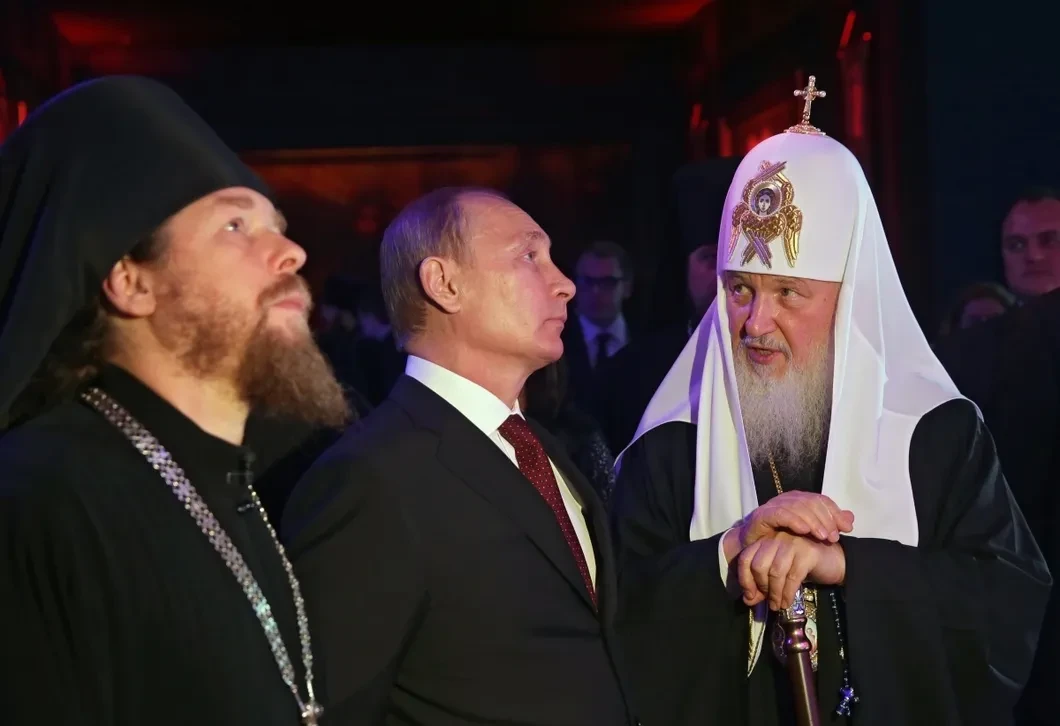
Over the ten years of the Office of the Russian Orthodox Church, Patriarch Kirill managed to almost completely break the foci of the opposition in the church and build a strict vertical of power - perhaps more stringent than in Putin's Russia as a whole. None of his encirclement dares to argue with him. "He destroys all living things in the Russian Church!" - The source in the Moscow Patriarchate exclaims on the terms of anonymity. The former professor of the Moscow Theological Academy of Fr. Andrei Kuraev notes that when deciding on the fate of the Sretenskaya seminary and the Moscow Academy, the Patriarch was not consulted at all: there were no meetings of the academic councils of the Academy and Seminary, the “profile” commission of the Inter -collection presence of the Russian Orthodox Church was not gathering. “How much in the 19th century the Academy fought for their independence! And all sorts of her remains are trampled, ”Kuraev lamented. He also notes that
“Optimization” will cut off from the former Sretensky seminary of many sponsors, “targetedly” helping Metropolitan Tikhon.
And the patriarchy, known for its pressingness and spoiled by budget infusion, will not contain a spiritual school from its own funds.
The Archbishop of Ambrose, appointed by the Patriarch for the performance of black work, is already called the Moscow Theological Academy in the Russian Orthodox Church. Such serious tectonic shifts will result in the destruction of its unique tradition, which was formed within the walls of the Trinity-Sergius Lavra from the 40s of the last century and even a little preserved the pre-revolutionary heritage. Ambrose will prophesy short rectorship in the "united" spiritual school. According to Kuraev, the head of the training committee of Fr. Maxim Kozlov, and according to the historian of the Church, Sergei Bychkov, Metropolitan Hilarion (Alfeev), whose place in the department of external church ties remains very shaky after breaking the ROC’s communication with the Patriarchate of Constantinople and the progressive international isolation of the Moscow Patriarchate.
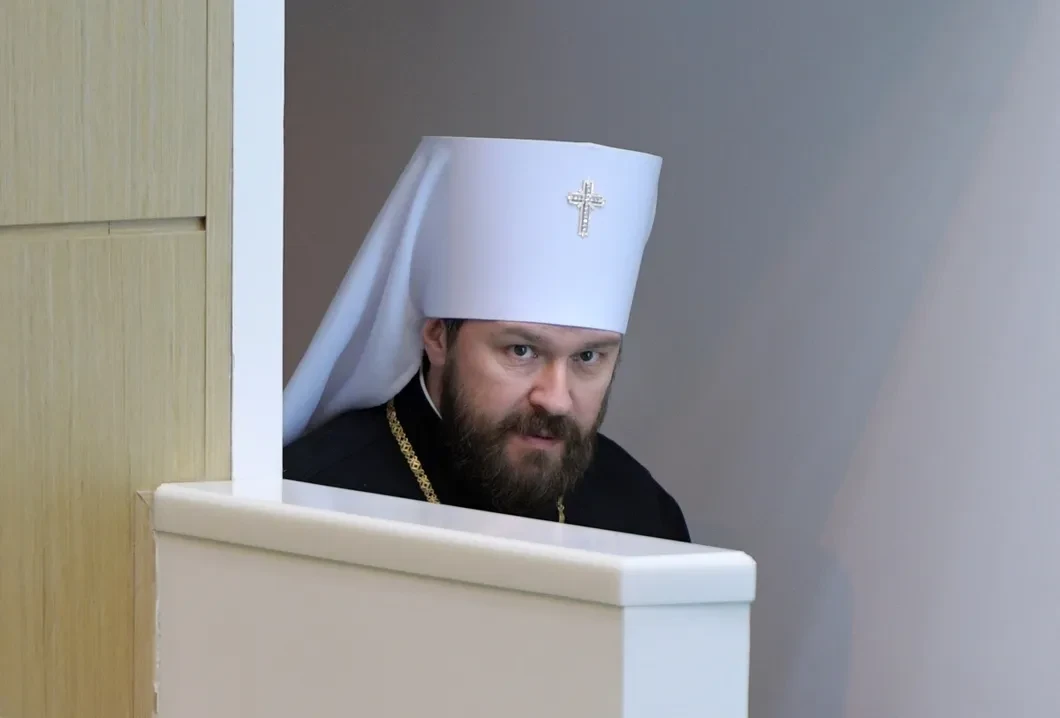
Close in the past to the financial activities of Patriarch Kirill, director of the Foundation of St. Gregory the Theologian Leonid Sevastyanov considers the events around the Sretensky seminary as an indicator of the complete lack of collegiality, or the basics of church democracy, in the Moscow Patriarchate. “Imagine,” he says, “you are launching a project with the blessing of the priesthood, find sponsors and enthusiasts-activists for this project, invest a huge amount of private money into it-and suddenly this project is closed with one signature of the“ chief ”! Question: How can you mobilize active laity and sponsors for some new project, if you knowly know that in a couple of years the project will be buried? ” The ruin of the Sretenskaya seminary, in his opinion, "speaks of the upcoming complete fall of the level of education and the training of clergymen, who, for this reason, become completely non -competitive in public discourse."
Meanwhile, Metropolitan Tikhon is trying to unfold in Pskov, turning him into an alternative center of church life. He is already building the largest of his “historical parks” there, attracted the money of Moscow sponsors to restore key monasteries and the cathedral of the diocese. And in the fall, he is going to open a local seminary in the Pskovo-Pechora monastery, where it is planned to build a sretenka analogue-with ultra-modern audiences, Byzantine mosaics and the best interactive library. Tikhon is a perfectionist, only “human material” in his projects in Pskov is not enough. If almost five thousand people considered him parishioners in Moscow, then all 26 temples of Pskov have only 1,600 permanent parishioners. The youth among them is a very small percentage.
***
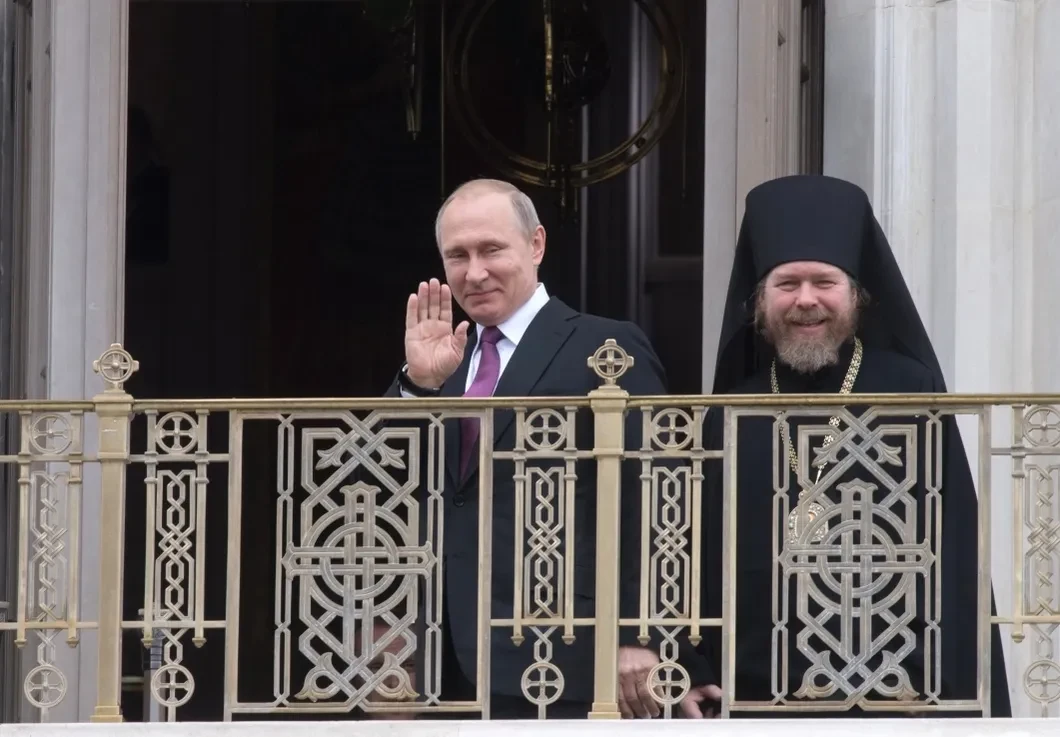
Of course, the views of Tikhon (Shevkunov) on the “Neovizantial Project”, “God -Mopy” by Putin, the spiritual succession of the Soviet and imperial history are very controversial from the point of view of the liberal. But the current one
The reprisal against it is not related to ideology. The Patriarchate in the same way would have crushed any strong creative figure with any views, if its scale and influence could be compared with Tikhonovsky.
Knowing about the vast relations of Metropolitan Tikhon on the very peaks of Russian power structures, it is difficult to get rid of the impression that what is happening with him is a projection on the church life of the Battle of Titans, which unfolds around the advancing “transfer of power” before the completion of the Putin era. And just as it is still impossible to predict the outcome of this battle between the big generals, it is impossible to predict it among the generals in the cassoons. The chances of the parties are still the same.