
Translated material
1969. The conquest of the moon

Conversation about the film "Apollo 11"
Alexander Genis: As expected, the anniversary of the lunar epic is found in America by an explosion of interest in this expedition. As expected, the memory of this achievement was able to, albeit for a short time, unite a sharply divided country in a fit of enthusiasm. As expected, a look from the moon gives a different perspective to our home - earthly - straightening, helping to look down on them.
It seemed that it could not be otherwise, but in fact - it could, and it was. On the anniversary of the book “Apollo's Heritage”, it was written by NASA historian Roger Launius, the mass dissatisfaction of the Americans with a lunar program was clearly described. According to economists, it cost taxpayers about $ 250 billion for our money. At that time it was the largest state spending after the Vietnam war. It is not surprising that in the turbulent 60s, that many in the turbulent 60s are many in the turbulent 60s. Civil rights fighters considered expenses unjustified and would prefer to spend these funds to combat poverty.
However, success overnight and forever changed public opinion. The landing of a spacecraft on the moon, an American flag on our companion, a trace of an astronaut on the surface of an alien world - all this made a joyful shock - and not only in America. Although the entire US space program was conceived as an argument in the Cold War (without it, they said, in the Senate, “We will wait for the Russians to throw bombs from space on us”), the fantastic picture on the screen of each TV spoke about the triumph of the spirit and will of man as such, and this gave the historical lunar epiphysical - measurement.
It is interesting that looking back, the historian Douglas Brinkley came to the conclusion that it would seem that the exorbitant costs of the federal government paid many times due to the research in the field of research in the field of biomedical equipment, light materials, computer developments and all that was required by scientists to deliver people to the moon and return them to Earth. But of course, not the pragmatic, but the symbolic meaning of this mission gave her the status of an epoch -making event that changes our ideas about a person and his capabilities.
Most of all, this sensation conveys a film with a business name and psychedelic content “Apollo 11” immediately recognized as a masterpiece. Having responded to his spring prime minister, we discussed in detail this picture with Andrei Zagdansky. Today - in the days of anniversary celebrations - it makes sense to return to this conversation.
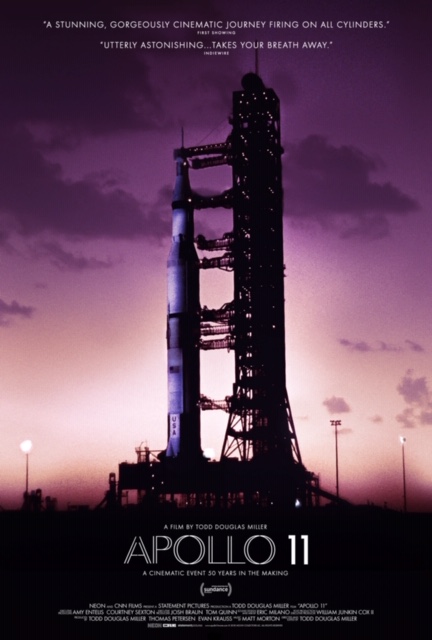
Andrei Zadansky: The new documentary of the director Todd Douglas Miller is called "Apollo 11". The name is very unremarkable: this is what the mission of the Apollo program was called, the one that was crowned with the success and landing of the first astronauts on the moon. It was in 1969, July 20, and the whole world watched fascinated how it happened. And after 50 years, the film about this mission was released. I ran immediately to watch, because I heard from friends working in documentary cinema that this is a wonderful, unique, unique picture.
Alexander Genis: Criticism goes crazy and says that this is an experience that has nothing to do with everything that has been done in the cinema so far.
Andrey Zadansky: That's right. Moreover, there is a certain riddle in this: it seems that I have already seen a lot on the screen, but everything generally develops in an amazing exciting picture close to pagan experience.
Alexander Genis: Not in vain, Apollo is a pagan god.
Andrey Zadansky: Everything converges, right. The film begins with personnel shot in 1969 on a 65 mm film, I emphasize this fact. This is important because the film is twice as wider than the usual 35 mm. They were going to make a documentary about this mission and shot at the largest budget capabilities of that time. A film of 65 millimeters is the limit of quality. This limit of quality is scanned and transferred to the screen today.
Alexander Genis: The most important thing is that so far no one has seen this 1969 film. He first turned out to be accessible to the audience.
Andrey Zadansky: Yes, and the first shots are magic. In my life I never understood what a huge thing it was - a spaceship when it was taken on a special track on a caterpillar.
Alexander Genis: With terrible caterpillars of inhuman size, some pyramids move.
Andrei Zadansky: True, the Egyptian pyramid is the most accurate comparison. The rocket slowly moves to the launch pad. There is no text in the film, there are only music and negotiations of people involved in the operation. Expectation. People spend the night in the parking lot in Florida, on the roofs of cars, play with dogs, with children, women comb their hair, morning, everyone is waiting for launch, waiting for this magical, incredible moment. I tell you and, as it were, I see the screen, it still excites me. In the climax, Matt Morton’s music is turned on, made, by the way, as emphasized in the credits, on the Moog-synthesizers, these synthesizers appeared just in the late 60s.
Alexander Genis: That is, the idea is that the soundtrack is made precisely on the instruments of that time, not modern ones.
Andrey Zadansky: That's right. In general, the Moog-synthesis in those days was something special, it seemed that they would replace all the musical instruments taken together.
Alexander Genis: That is, this is an electronic orchestra.
Andrei Zadansky: And now the music turns on, which fills your blood, your heart with a pagan beating. It looks a little like New Zealand music, the same bit, the same excitement. I swear when I saw how the rocket shot on these 65 millimeters takes off, how the first step rises, my tears flowed. This is incredibly worried, you understand that a person did it, it did the same as me, I am also involved in this as a grain of human race.
Alexander Genis: I read ecstatic critical reviews about this film, where they said that the main merit of the director was that he refused the idea to make a historical film. Really happens now, everything is in the present tense. And we look at the screen in order to plunge into psychedelic cinema, not documentary, not historical, not political, not cosmic - but psychedelic, as, say, in Woodstock, which also took place in 1969.
Andrey Zadansky: Exactly a month after the launch.
Alexander Genis: It is no coincidence: both one and the other, as you emphasize, are associated with the pagan roots of our soul, which is looking for ecstasy.
Andrey Zadansky: This film is documentary and not documentary at once. Because we really plunge into a pagan experience that changes us in a sense. When I left the audience, I experienced excitement from this film all evening, the feeling is very interesting.
Why did it excited me so much? Remember, of course, the film Stanley Kubrick "Odyssey of 2001". The film was released in 1968, a year earlier than the Apollo 11 program was implemented. Kubrick transferred us to an imaginary space flight, on a trip to other times, to other spaces, to other dimensions. This bothered the imagination, filled our consciousness with some new meaning, new content. And here is an amazing castling: what the phenomena with our imagination did is now doing a documentary that is based strictly on documentary material. This is a leap of imagination, the transfer of the viewer to another state, to another world - the world of cosmic flight.
(Music)
Alexander Genis: Moreover, the difference, as it seems to me, is in favor of this movie. The film Kubrick, which personally always seemed extremely boring to me, maybe precisely because I underestimated his psychedelic component, and it is undoubtedly there. Oddly enough, I had a conversation with Alexei German about this film about this film, he said that he looked with interest this picture, but was surprised at the poverty of its content. It is impossible to compare, he said, with our "Solaris" Tarkovsky: there is not a single big thought.
On the one hand, I understand what Herman said, on the other hand, I understand that this is a purely visual experience. Dancing in space is what this film is. It may seem boring to you, but it is choreography, space ballet, and Apollo 11 is a space opera.
Andrey, I want to ask you a purely professional question. The film “Apollon-11” was shot on a special film-two to one, this format was used in the 1960s only for special films-either scientific and fantastic, the same Kubrick, or for the biblical epic. What does this mean for the viewer?
Andrei Zadansky: What I told you is a 65 mm film. The usual film, on which the vast majority of the films were shot at that time, was 35 millimeters, and this one is twice as wider.
Alexander Genis: That is, widescreen cinema.
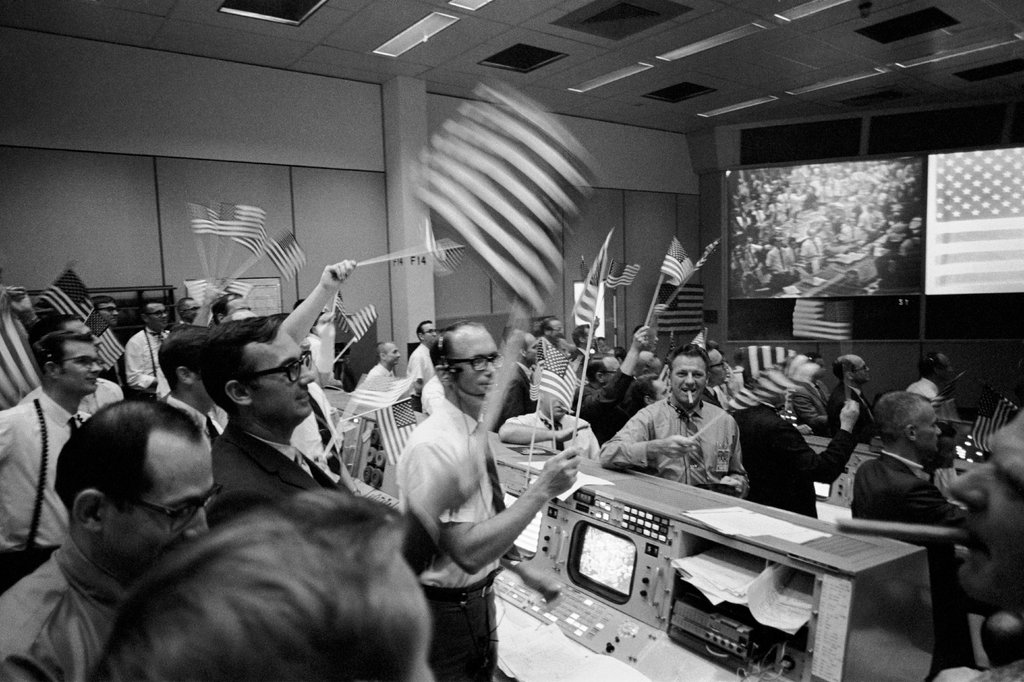
Andrey Zagdansky: Yes, widespread. In a professional language, we precisely determine the format - 65 millimeters. This is what made it possible to preserve the incredible quality of the image, not everywhere, because, of course, in the space where the astronauts are located, they did not shoot 65 millimeters, there was simply no place for these cameras. But the frames on the ground were shot just like that. In addition, they used a polyater. On the screen, you simultaneously see several events: astronauts, a flight control center, an incredible number of people who are sitting in front of the screens, probably computers, I don’t know what was then, everyone is responsible for some kind of sensor. And this whole machine only works for these three people to rise up.
What is still very interesting: the authors made an elementary, literally children's animation in the film. This is the earth, this is the moon, this is how they fly, here they turn on the engine and come off from the attraction of the earth. Here they fly in free space. Here they enter the area of attraction of the moon, again include the engine and turn into a satellite of the moon. For us, the mission that the astronauts perform is completely clear and understandable, we are included in the process, like the people who watch football: we always know what is happening.
(Music)
Alexander Genis: I was shocked by the reaction of the audience who gathered to follow the take -off, you described them well. Persons are perfectly visible there - these are faces filled with pride in humanity. Do you remember this day?
Andrey Zadansky: I remember amazingly. Many question whether there was a broadcast of landing in the Soviet Union. But I saw it myself. Moreover, I clearly remember the childish feeling of the delight of my mother. Stuck to the TV, she watched how all this happened. This, too, probably made an impression on me, but I remember my mother’s delight and adult conversations more about this. It seemed that it was something supernatural. And the cold of the Soviet press-it began to come to me a little later-about the Apollo-13 mission, which ended with the failure and happy salvation of the astronauts, the return of them to Earth. We know this game and documentary well. This Soviet cold was already then. Have you looked at the landing at the moon?
Alexander Genis: No, I did not watch the landing and I do not remember that it was shown on TV. The fact is that that night my parents and I lived in a tent on the banks of the Gaui River near the Gulf of Riga, there were wonderful mushrooms and fishing, by the way. But we listened to a report on the radio. My father never parted with a “speedle”, always listened to the BBC. I still remember the voice of Anatoly Maksimovich Goldberg, the famous BBC observer, he said almost with a tear: “You can even imagine that people from the moon look at the ground? Is it much more interesting than looking at the moon. And we see how small the earth. How can we fight when we live on such a small planet?” This phrase remained with me forever. I still think that maybe this is the most important meaning of this whole epic in seeing the earth from our satellite, from the moon.
Andrey Zadansky: You are absolutely right. There is a special moment in the film when they first saw the earth from the moon. And this completely changes the prospect. Yes, only three people, but they represented all of humanity, and they were able to see the earth differently-this is a change of angle, as in art, everything becomes completely different. But we, unfortunately, remained the same as we were.
In addition to the purely emotional experience of the film, delight and excitement, you begin to involuntarily think about the completely changed perspective, both the cosmic perspective and political. Why did the idea of the mission arise? Because there was a cold war, as we remember perfectly; There was a need to prove to the whole world, the Americans primarily, that America surpasses the Soviet Union in weapons.
Alexander Genis: Moreover, it was an answer to the Soviet satellite, who made a grand impression on America. What America certainly did not expect is a satellite. Russia, a backward country that was able to launch a satellite, - he bibs and flies. In response to this, America arranged a reform of education, special programs for schoolchildren in the exact sciences arose. The result of these reforms was landing on the moon.
Andrei Zadansky: A satellite in space is a demonstration of fundamental military dominance. If you launched a satellite, you can start a rocket with nuclear weapons.
Alexander Genis: Hence the landing on the moon. There would be no atomic bomb - there would be no moon.
Andrei Zadansky: Complex things are happening, because sometimes the implementation of the task exceeds its goal. After some time, people will probably not remember that this was the result of the Cold War, people will remember and remember the launch of Apollo-11 as an outstanding achievement of all mankind. They will remember that it was another America, that America, where there was a high dream, where there was a rational and idealistic president, who formulated this incredible task in 1961, saying that until the end of the decade we must drop a person on the moon and return it to Earth. This is the same America that the whole world looked at, America was an example of freedom, technological achievements, science. America was somewhat different, not the one now. Do you agree?
Alexander Genis: I don’t know, it’s a difficult question. There was a war in Vietnam, the most difficult political problems stood in front of America. But all this was in comparison with American culture. America was not so much political power as cultural. The country of jazz, the country of the cinema, the country of Hemingway and the country of astronauts who landed on the moon. It was a cultural achievement, that is, symbolic.
In fact, no one needed a moon, if not for the arms race, then there would have been nothing. You just said rightly. But the problem is that symbols for humans are extremely important. We remembered the pyramids here, after all, no one needs them either, but they are still standing. And landing on the moon is a sort of pyramid of mankind, it is for all of mankind that this is also true. Because America, of course, does not forget that it was the Americans who landed, and not the Soviet lunar carrier. It really was a huge step for all of humanity. And this step was nowhere, because he did not lead to anything. I really like one simple and offensive thought: the landing of the Americans on the moon is most reminiscent of the feat of the Vikings, which discovered America too early. They opened America 500 years before Columbus - that's for sure, it is now completely indisputable. Columbus Day in Minnesota is already celebrated with Leaf Ericksson's Day, because they have a lot of people of northern origin there. But none of this happened, because the Vikings discovered America too early, they could not use this discovery. So the moon is also 50 years old. It is like the conquest of the South and North Pole. Events that are unusually important for a person’s heroic representation of themselves, but they have no practical significance. When Hillary was asked: why you climbed on Everest, he said: "Because he is."
Andrei Zagdansky: Perhaps the vast majority of the most significant events in the history of mankind are just a symbolic character and have no pragmatic application. I’ll tell you as a Kievite: after the Maidan, the events of 2014, when I went to the city center and once in my life went along the Institutskaya Street, where these terrible events took place, I thought about why it was necessary to hold this small venue from the Kyiv land from the Berrokut? Why was it necessary to defend this piece of Kievskaya street and not allow the Kyiv demonstrators to drive away? Nobody will ever find a rational explanation, no one will convince me that it was strategically necessary. This was only psychologically necessary for those people who held it. And this psychological symbolic victory changed the history of the country.
Alexander Genis: Like Napoleon on the Arkol bridge or Yeltsin on a tank.
Andrei Zagdansky: These minutes stay with us forever, as the scene remains with me forever after the film, as they enter the zone of attracting the Earth and into dense layers of the atmosphere. This is the most exciting moment of the film, although I knew what would happen now. The capsule begins to burn, covers with fire, we see the fire out the window of their porthole, and Blackout, silence, this is just the time when there is no radio signal from the capsule and we must wait. I do not know how much you need to wait until visual contact with the capsule happens when the parachute reveals. This is a crazy moment of the film.
Alexander Genis: Critics write that this film makes a very strange impression: it penetrates the brain of bones. This is an experience that becomes bodily, like on an American hill, you ride and cannot forget it, something happens not with your head, but with the whole body. So they usually don’t write about cinema, especially about documentary cinema. But here we are talking about bodily memory, about bodily experience. When this film was released, he made a huge impression, I think that it appeared today. After all, the space race begins again, only this time competitors are no longer Russians, but the Chinese, who promised to plant a person on the moon in 2020. And this is a new challenge for America. This film opens a new race.
Andrei Zadansky: I do not know to what extent the director and author of the film associated their actions with state programs, with the new financing that NASA receives.
Alexander Genis: But it is in the air.
Andrei Zagdansky: But not only this is in the air, the former symbolism is in the air. You said that in 1969 there were many problems in America, but there are many problems now. There was a Vietnamese war, now other wars, always something terrible is happening. But it seems to me that today in America and in the world there is not enough that idealistic vector, the desire to rise up, I have in this case, of course, a symbolic path upward.
Alexander Genis: The space myth died. It turned out that automatic devices can be launched into space - it is cheaper, safer, more sense. Telescopes that fly in space give a million times more information than what a person can bring. In order to fly into space, you need to look for something specific there. It is clear that people were looking for in 1969 - they were looking for opportunities to prove that this can be done, and it is worth it to invest crazy money there. Now there is another task: the moon can become a transit stop on the way to Mars. But this already sounds different. NASA is going to build a small orbital station around the moon, from where the astronauts will fly to the moon and return, experiencing everything that is necessary for a space operation of a different scale - flight to Mars. And Mars is able to revive a cosmic myth.
Andrey Zadansky: This is a new dream. But the dream that we are talking about today began in 1961 in the famous speech of John Kennedy. The author of the film made a wonderful very simple trick: he put Kennedy's performance at the very end of the film. In his speech, Kennedy lists the stages of space travel - you need to raise a rocket, bring it to orbit, go to another orbit from orbit, plant astronauts to the moon, then people will return, and so on. Step by step, he lists all this. That is, he firmly knew what he was talking about. And at the end of Kennedy laughs, it seems that he himself is amazed, how he spoke, how he strata says that no one can really imagine, except for a narrow group of scientists. He stands on the street, the wind blows, his hair moves, he is young, he is very beautiful, he is full of energy, and this energy charges the nation, it changes them. We are talking to you about the idealistic vector, as this high idea of a person’s landing on the moon appears, how a new symbol is born. When you look at Kennedy, you think: the spite, there was another country, there would be a different president, everything looked completely different. Maybe these are nostalgic memories of a world that I did not know, but nevertheless, these moments are beautiful on the screen. This, if you like, was a real American dream.