
Translated material
Ukraine before the elections
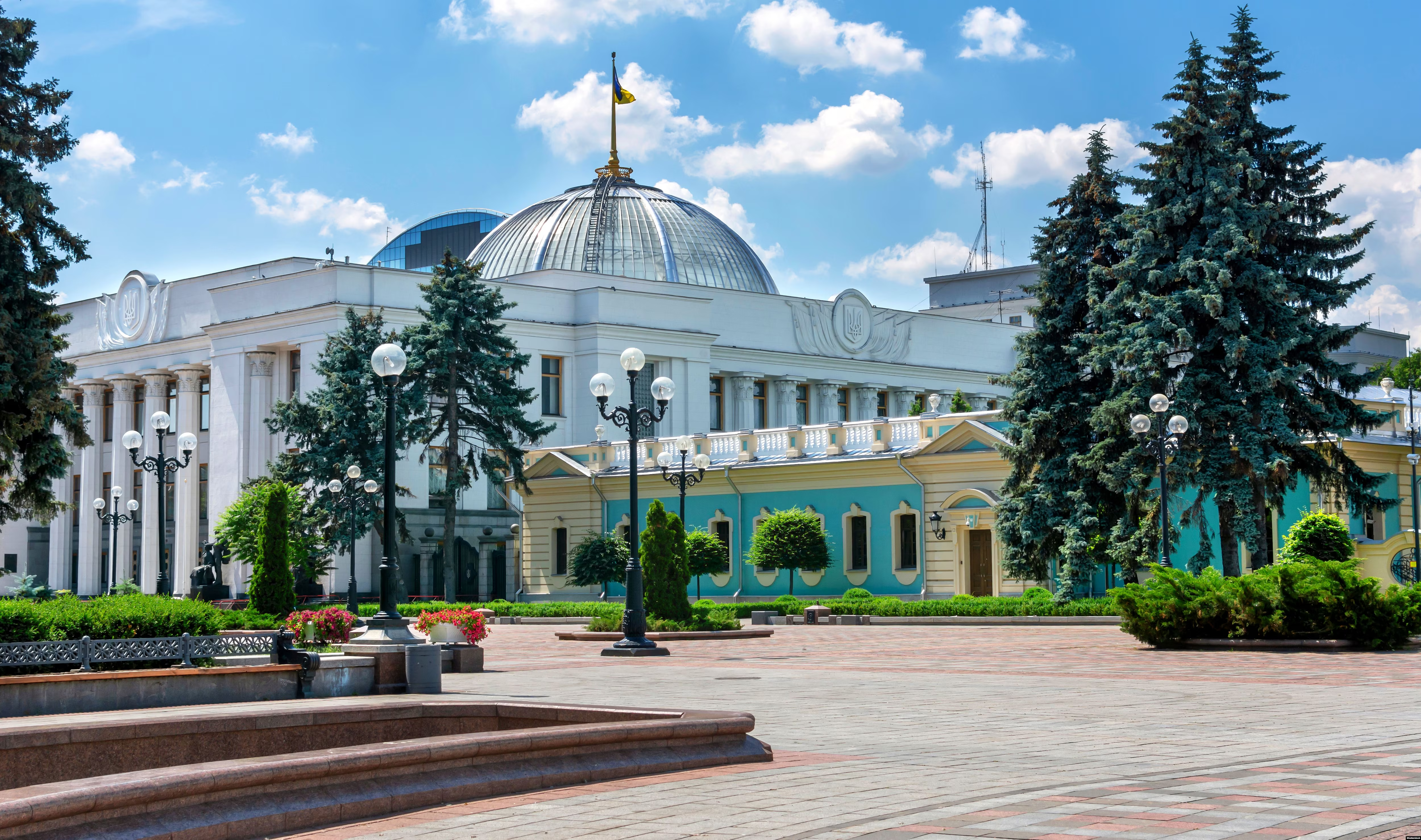
Early elections to the Verkhovna Rada: Who will win?
Vitaliy Portnikov: There are literally a few days to extraordinary parliamentary elections in Ukraine. Sociologists talk about which parties will form factions in the new Verkhovna Rada, experts about how the configuration of the Ukrainian authorities will look like after the next presidential and extraordinary parliamentary elections. And we will talk about the prospects of the new Ukrainian parliament and Ukrainian society after the electoral cycles finally end.
The guests of our program today are the People’s Deputy of Ukraine Leonid Emets , a candidate for deputies of the New Verkhovna Rada from the Voice party , and political analyst Oleg Sahakyan . Before moving on to a conversation with the guests, the plot of the essence of events.
Correspondent: Extraordinary elections to the Supreme Rada of the ninth convocation will be held on July 21. The elections were initiated by the new President of Ukraine Volodymyr Zelensky - due to the low trust of Ukrainians to the current parliament and the actual absence of the ruling coalition in it. However, experts call another reason: Zelensky hopes that at least half of the deputy mandates will receive at the wake of its high personal popularity the “servant of the people” . This will make it possible to form a parliamentary majority controlled by the President and the government, led by the loyal head of state, Prime Minister. The new Verkhovna Rada will be elected according to the old system: half of the deputies - on party lists, the second - in the majority districts. The leader of the election campaign is the party "Servant of the people" created by Zelensky. Its rating, according to various polls of public opinion - from more than 30 to almost 50%. The second position with a result of 10-15% of the vote is occupied by the "opposition platform - for life" led by Yuri Boyko, Viktor Medvedchuk and Vadim Rabinovich. Three more parties apply for overcoming a five percent barrier - this is claiming:the “European solidarity” of former President Petro Poroshenko, “Fatherland”, led by former Prime Minister Yulia Tymoshenko and the Voice of the frontman of the Ocean Elsa group Svyatoslav Vakarchuk. The chances of other political forces to get into the Verkhovna Rada are regarded as minimal. However, given that approximately 30% of Ukrainian citizens have not yet decided on their choice, as well as the fact that the voting date falls on the period of summer holidays, surprises are possible.
"Opposition platform - for life", one of the leaders of which is the politician Medvedchuk close to Vladimir Putin, advocates restoring relations with the Russian Federation. Among the activists of this party are associates of the former president of Ukraine Viktor Yanukovych, who fled during the events of 2014. "European solidarity" and "Fatherland" support the course to develop cooperation between Ukraine with NATO and the European Union. The current speaker of the parliament Andrei Parubiy, running on the lists of the European Solidarity party, states that together with his associates will fight not only in the Rada, but also on squares and streets to prevent the revenge of pro -Russian forces. Among the priorities of the Voice and Servant of the People are also the Euro -Atlantic vector of the development of Ukraine, and they call their main competitor in the elections the "old system."
The leaders of the Party "Servant of the People" say that they expect to form a single -party majority in the Verkhovna Rada
The rock musician Svyatoslav Vakarchuk last winter refused to run for the presidency of Ukraine, but he created his own party for elections to Rada, which, despite the high expectations, as most analysts believe, will not be able to repeat the success of the “servant of the people”. In expert circles, forecasts are made on the prospects for the formation of a parliamentary coalition, the government and the probable candidate of the Prime Minister. The leaders of the “Servant of the people” say that they expect to form a single -party majority in the Verkhovna Rada, but if these hopes are not justified, are ready for negotiations with those who share their views and principles.
Vitaly Portnikov: Leonid, you are a candidate for deputies from the Voice party is a party of new persons, and you are still not a new face, because you are a deputy of the outgoing parliament, but more recently you were also a new person. I have the feeling that the Ukrainian voter is always engaged in the search for new faces, but even in new faces you can find old ones, and in old persons - new ones. And all this sometimes replaces the content of the electoral process itself.
Leonid Emets: This is not from love for the process, but from the fact that the result does not satisfy the Ukrainians. The idea of finding new faces is that the old faces demonstrated the reluctance to change the rules in which they were brought up and by which they used to work. We are talking about corruption, about the excessive bureaucracy, about the desire to obey those in power in these people. This applies not only to politicians, but also of judges and government officials. They grew up under certain conditions, they do not want to be free people, they want to have their own slaves. Therefore, we have a lot of ideas over 20 years old, but few results. And people require real results, and the idea of new persons is imposed on this. By new persons, they mean not literally new or young faces, but those who want and can change the country for the better.
The story with the electoral code, which is literally a miracle since the 18th attempt after two hours of continuous voting stations was still voted, this is the first step towards finding new faces. It is clear that the parliament that is today is formed from people, most of whom simply buy mandates - through buckwheat, through a banal bribe of voices, and these people are unnecessary well -fed, satisfied citizens, they need poor, unhappy, uncertain in tomorrow, ready for five hundred and thousand hryvnias to sell their voice and not think about high matters. And then this deputy is definitely not interested in making a legislation that will make well -fed, satisfied, not ready to sell their votes from Ukrainian citizens. He is interested in keeping them on the verge of poverty, maintaining this condition from the elections to the elections. So this deputy corps has existed for decades, and we are not talking about one or two deputies, but about entire factions, about the oligarchs who are behind them, about businesses, and they keep the Ukrainian people on the verge of poverty, because it is beneficial for them.
The only way to break this vicious circle is open electoral lists, because this system, in principle, removes the opportunity to form parliament through corruption, and a majority with buckwheat, with bribery is simply liquidated as a class. The ability to buy a place in the list disappears, because not a party leader determines the place in the list of candidates. The voter during the vote with his voice moves the candidate up the party ladder, determining which of the candidates will become a deputy. It is impossible to sell the place, because the voter himself determines it on the election day. This changes the quality of the parliament, the legislative power, and the future of our country. Therefore, the law on open lists is not a law for candidates or deputies, it is a law for Ukrainian people and their future, it changes the very essence of the system.
If you dig even deeper, then in this case the Ukrainian voter will feel responsible for his choice, because he made him, this is his personal choice, he was not imposed on him with closed lists, and was not imposed on a bribery.
Vitaly Portnikov: What Leonid is talking about is the future, but not the current elections. And the current one will lead to systemic changes?
Oleg Sahakyan: The current elections are the launch of the transition regime. In fact, the old system is being degenerated now, and the political process that we see is qualitatively not new, it is rather a product of the degeneration of the old. If we talk about new faces, then this is also not a request, but the answer to the request. And people have a request not on others, but on other, that is, qualitatively others.
Vitaly Portnikov: Interestingly, others exist in Ukraine?
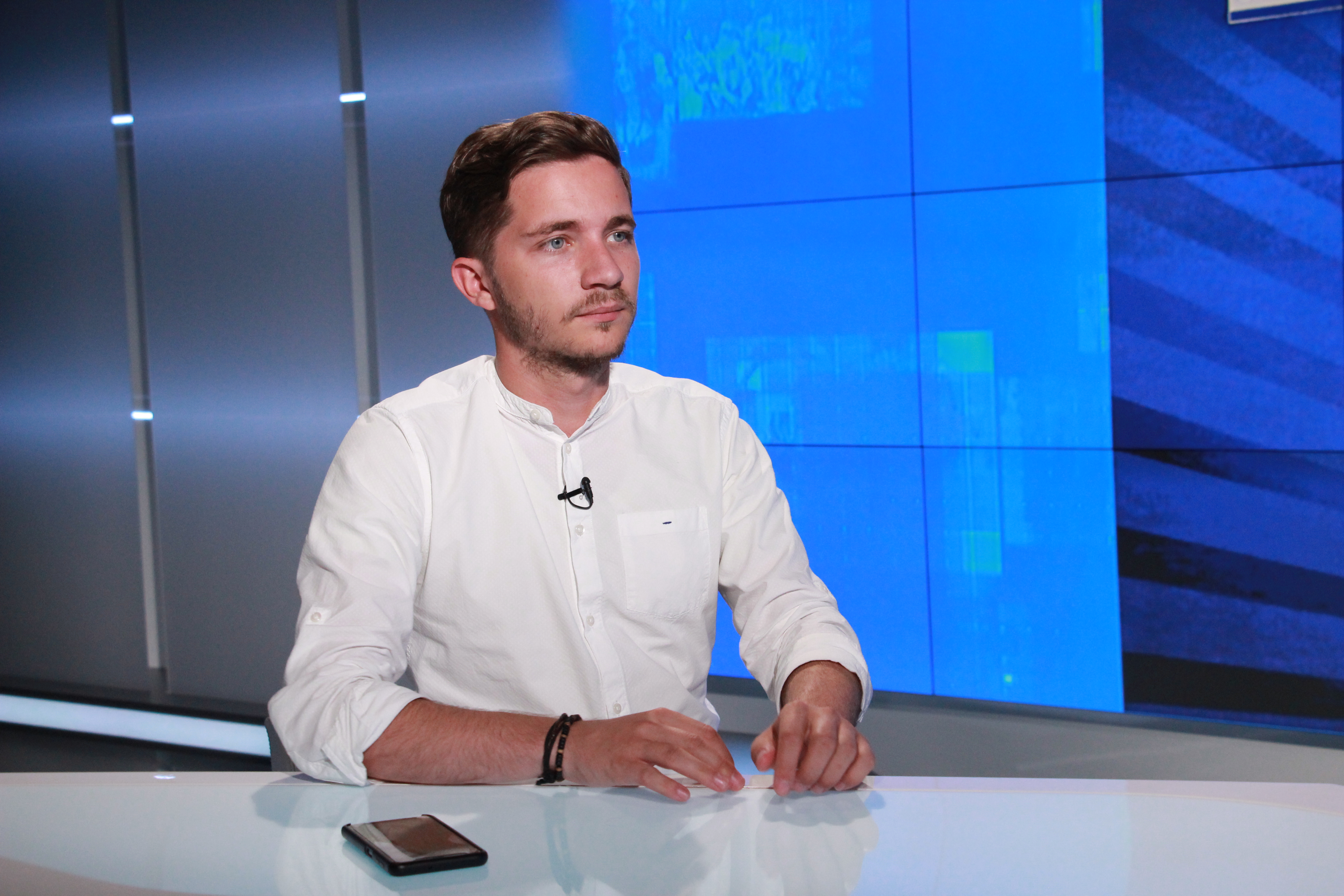
Oleg Sahakyan: I already see several people among the candidates now, and even teams that are really high -quality. They profess other principles and live on them. I think in general in this parliament the percentage of high -quality parliamentarians will be greater than in the former. But there will be no critical mass in terms of irreversibility of processes - this is a transitional parliament. In many ways, this parliament should dismantle the Ukrainian SSR, remaining institutionally, in practitioners and so on, and God forbid, give birth to modern Ukraine.
Vitaly Portnikov: This was talked about back in 2014 - to dismantle the Ukrainian SSR.
Oleg Sahakyan: In 2014, this request received a completely different answer. From the Maidan they said that the Maidan should form his party, come to politics and change all this through politics. But in fact, the Maidan was not a purely political, but a sociocultural phenomenon that had its own political incision, therefore, about the products of the Maidans, about changes, we can talk more in a sociocultural than in a political sense. Although, if you take a policy, then the population is self -organization, a bunch of various initiatives, starting from businesses and ending with the sphere of self -government, and it is clear that the last revolution had its fruits.
Now, already in these elections, we will partially see how these people, carriers of this changed quality, begin to go to parliament. Moreover, here we largely see the formation of the institution of political reputation. If the primaries in Ukraine as a tool failed with a bang, various political forces are manipulatively, then we have already seen post -violations both in the Voice party and the “servant of the people”, which declared themselves quite well. This is an instrument of post -violation, when the parties actually began to clean up people who were very toxic in their lists. Moreover, even the old political forces already in the formation of lists watched how society reacts to those surnames that fall into the list. In these elections, we still see some evolutionary elements.
Vitaly Portnikov: Why did the dismantling of the Ukrainian SSR not occur after 2014? Or did it take part in part?
Leonid Emets: Partly, of course, occurred, but not to the end, too long and too systematically it was introduced, it was almost the bone marrow of many generations, and in order to get rid of it, you need to go through a lot of stages. We often discuss the same Ukrainization among ourselves, which is of different types, and the most correct of them is when everything happens naturally. At some point, we see that society has chosen its path, and this is Ukrainian, civilized, European path, and it enjoys it, moreover, he does not even notice how this happens. This is exactly the path that needs to go. All that is done forced is exclusively for those times when such solutions are needed. Now we have the times of war: it is possible that such methods would be correct, you just need to have wisdom in order to clearly define this moment.
Vitaly Portnikov: Oleg, do you think the last situation with the election campaign was under the sign of a real polarization of forces? All the last days and even weeks, polarization of forces has been observed. We see that those political parties that are quite strictly articulated by their positions (first of all, the “opposition platform-for life” and “European solidarity”) somehow rise, and those who do not very articulate their position, trying to cover a larger amount of the electorate, as a result, reduce their ratings.
Oleg Sahakyan: It seems to me that just in the last days the opposite situation has developed. At the start of the election campaign, we saw how this black and white picture was installed: in fact, two extreme poles with their positions rigidly expressed were indeed beneficial recuctor from this polarization. But recent events with protests, with attempts to conduct a television station between Russia and Ukraine, actually created a certain vaccination from this radicalization in society. A number of political forces that had not performed with hard positions before, stated themselves, the same “voice” came out and first protested under the Newsone TV channel. Accordingly, this black and white discourse broke up into various gray shades. However, there are several days before the end of the election campaign, and Ukrainian politics is always very unexpected in the sense of such charms: in recent days, certain events are also possible that can again return us to a black and white picture.
Vitaliy Portnikov: Do not you think that the voter of Voting wanted a more intelligible position from this party on many strategic issues related to Russia, the war, with the protection of some cultural priorities?
The Ukrainian state should work as a whole in order to stop Russian aggression together with international partners
Leonid Emets: The position of the Voice about the war with Russia is absolutely clear: Russia, the aggressor, attacked Ukraine, annexed Crimea, seized our territories, and violated international law. I am a party representative, a representative of Ukraine in the Parliamentary Assembly of the Council of Europe, and now we are talking about sanctions that are imposed on Russia by the world community. It is very important that the Ukrainian state works as a whole in the reporting of this information, in the use of it in order to stop Russian aggression with international partners through sanctions.
There are two ways to stop the Russian aggressor, the first is the military path: tanks, soldiers, aviation. But here, unfortunately, international partners directly stated: they will not give us tanks or soldiers - now, at least. They offered another way - the path of sanctions. Under this path, legal justifications must be placed. The first step was the resolution of the Parliamentary Assembly of the Council of Europe in 2014, all world sanctions began with it. Now we have a number of provisions that relate to economic, political, diplomatic sanctions.
It is very important that Ukraine does not give slack. The only opportunity for Russia to be sure that Crimea will remain in its composition is if Ukraine itself refuses. So far, Ukraine has not done this. We should not and will not do this. Crowning was and will remain Ukrainian legally, according to international law. And there will always be a question about when Crimea returns to Ukraine.
Vitaly Portnikov: How do you imagine a new coalition in the Ukrainian Rada, whose will it be? Will she be more inclined to pro -Russian or to pro -Ukrainian forces?
Oleg Sahakyan: I think that each president of Ukraine, in addition to the Gospel and the Constitution, has an unspoken, invisible, but, nevertheless, a ticket for Rostov with an open date. Any of those who will now try to change the geopolitical course of Ukraine, to expand the ship, firstly, stumble upon a misunderstanding in society and the tremendous protest, since most of the society clearly determined its priorities, and secondly, this will create a rather conflict situation. Therefore, behind any such scenario can immediately be the desire for the breakdown of the political process and the creation of conflict points.
Nevertheless, I think that the coalition in Ukraine will be pro -European and pro -Western, and this is, first of all, the pro -Ukrainian coalition. Most likely, the architecture of the new coalition will be determined in the triangle “Servant of the People” - “Fatherland” - “Voice”. It is likely that some kind of political force can get into the parliament: while the elections have not ended, we cannot say exactly who will be in parliament. It is obvious that the OPZH will remain in the political Margina and will act as a political destructor, in the position of Baba Yaga against, telling the Russian narrative in the Ukrainian political process.
Vitaly Portnikov: Leonid, do you agree that there will be a pro -European coalition?
Leonid Emets: We must wait for the result of the election, first of all, the result of the Zelensky party. If they gain from 150 to 170 mandates (meaning the listers and majoritors), then a very difficult question arises due to the fact that the “voice”, for example, will gain 30 mandates, and “Fatherland” with something with something, and this is not enough for the coalition. In order for the coalition to be confident, it should have at least 240-250 mandates. There is no difference, 150 mandates or 120: if you are in the coalition or not, its existence depends, then you are absolutely equal, regardless of the number of mandates, you have a unique opportunity to create a coalition or lead to its decay. Therefore, in order for the Zelensky party to be sure that it was the leader in this process, she needs a reserve so that none of the participants could impose her will on him. And since the same “Voice” will have 30 plus mandates, he needs a supply higher than 30 plus, above the coalition. We are talking about 270 members of the coalition, and where to recruit 270 members of the coalition, if the majority workers are hypothetically independent figures? Some of them go as representatives of groups of certain influences, representatives of the oligarchs. The oligarchs, unfortunately, will retain their influence on parliament. Поэтому вряд ли так получится, что у нас будет коалиция демократических сил, независимая от каких-либо внешних влияний - к сожалению, потому что выборы пройдут по старому избирательному закону.
Надо менять избирательное законодательство, в том числе потому, что на этих выборах огромнейший массив денег вложен в то, чтобы получить своих мажоритарщиков. В Киеве работает целая группа, которая ведет своих мажоритарщиков по каждому из округов для того, чтобы получить здесь количество депутатов просто путем покупки голосов. Они делают это по всей Украине. Они хотят потом играть какую-то важную роль в будущем парламенте, быть частью коалиции, навязывать свое мнение. К сожалению, может быть, без их участия и не обойдется. Поэтому перспектива достаточно непростая, даже пессимистическая.
Как гражданин, а не как кандидат в депутаты, я бы хотел понимать, что этот парламент придет как переходной на ближайший год, а после этого на открытых избирательных списках будет сформирован новый парламент, и это будет уже другое качество: не новые лица, а новый парламент.
Виталий Портников: В той ситуации, которая складывается в стране, мажоритарщики при первом же кризисе разбегаются из любой власти, из любой коалиции, и оказывается, что у них совершенно другие интересы и другие представления о самой конструкции власти, чем у депутатов, которые избраны по партийным спискам, потому что каждый должен помочь своему округу, и каждый раз бюджетирование Украины упирается в эти интересы.
Партия «Слуга народа» - классический Голем, она лепилась за очень короткое время из очень разных людей
Олег Саакян: Более того, за каждым из них в большинстве своем стоят те или иные финансово-промышленные группы, которые находятся на этих территориях. Поэтому в условиях порочной мажоритарки, когда у нас фактически политическая система остается на феодальных колесах, конечно, мажоритарщики являются очень нестабильными людьми в политике. Они руководствуются не идеологическими принципами и даже не какими-то идеями. Они очень сильно зависимы от интересов их патронов с территорий или даже от общественных настроений на их территориях. Поэтому площадки, поэтому деньги на округ, а не интересы государства.
Виталий Портников: Леонид, как вы считаете, президент Владимир Зеленский разделяется вашу идею о том, что это переходной парламент, или это только ваше представление о будущем?
Леонид Емец: Пока это только мое представление. Какими будут идеи Зеленского, мы узнаем исключительно от него или из его действий, прямо или косвенно. В любом случае, если у нас стоит задача руководствоваться не чьими-то интересами, а интересами государства и его будущим, перспективой того, как сделать нашу страну более сильной, мощной и эффективной, то я считаю, что это правильный путь - переходный период сейчас, формирование парламента на основе новых правил, которые мы сегодня, слава богу, с огромнейшим трудом, но все-таки утвердили. Это открывает нам достаточно ясный путь к новым стандартам, где парламент будет иметь собственное мнение, представлять реальные интересы народы и работать на эти интересы. Казалось бы, что может быть проще для действующих депутатов - принимать законы, которые нужны и нравятся людям, а потом выходить на площадь, где их будут поднимать на руки, бросать цветы и говорить: какие вы молодцы!.. Но они же этого принципиально не делают, потому что не хотят иметь довольных, счастливых людей, они им не нужны. Это болезнь нынешнего парламента и всех парламентов до него, и у того, который придет сейчас, эта болезнь тоже останется, потому что они приходят туда через коррупцию, и коррупция будет там жить. Единственный способ от этого избавиться — это открытые избирательные списки. Закон мы приняли, теперь надо запустить его в работу и провести на нем выборы. Здесь, прежде всего, будет политическая воля именно президента Зеленского - по крайней мере, сейчас, на том этапе, когда у него есть такая колоссальная поддержка.
Виталий Портников: Не станет ли новый парламент придатком нового президентского офиса?
Олег Саакян: Мне кажется, нет. Формирование правительства во многом станет испытанием на прочность, прежде всего, для самой партии «Слуга народа». Эта партия - классический Голем, она лепилась за очень короткое время из очень разных людей, представителей различных групп. Соответственно, любая кризисная ситуация может очень серьезно проявить эти расколы внутри. Голем выглядит очень сильно, но, едва двинувшись, он сразу же начинает сыпаться. Исходя из этого, уже не говоря об украинской политической культуре, которая даже не демократическая, а ближе к охлократической, я думаю, у президента просто не будет возможности выстраивать какие-то диктатуры перед парламентом, да и перед обществом.
При этом будет очень интересный микс. Мне кажется, сейчас мы войдем в фазу, когда у нас одновременно будут постоянные поползновения в сторону охлократии, выродившейся демократии, гротескной уличной демократии, а параллельно с этим поползновения в сторону диктатуры, когда президент, по крайней мере, будет играть в диктатуру с жесткой рукой, заигрывая при этом с частью электората, которая хочет быстрых изменений: такое возвращение в СССР. Это будет очень интересная картинка, но жаль, что нам придется в этом жить. Мне, конечно, было бы куда приятнее наблюдать за этим со стороны. Но это те реалии, к которым нам стоит готовиться.
Виталий Портников: По сути, это имитационная, а не настоящая политика. Одни изображают из себя диктатуру, другие изображают из себя народных заступников, и они пытаются как-то договориться между собой.
Леонид Емец: Такое происходит постоянно. Я часто вижу, как, казалось бы, непримиримые враги в студиях и в парламенте потом вместе уезжают куда-то пить кофе. Я считаю, что это категорически нечестно по отношению к людям, живущим в этой стране. Действенный способ — это изменение избирательного законодательства. Парламент у нас один, законодательный орган один, и не получится излечить эти болезни без формирования его через честные инструменты.
Конечно, нужна открытость. Любой политик, любой чиновник должен быть максимально открыт. Речь идет и о декларациях, и о его жизненном пути, и о том, где он кушает. Если ему повесить на голову камеру, которая будет сопровождать его круглый день, наверное, очень многие откажутся. Я утрирую, но сегодня медиа и технологии, в принципе, привели к этому.
Виталий Портников: Посмотрим, как завершатся украинские парламентские выборы. Уже в следующих наших выпусках мы будем подводить их итоги и говорить о последствиях.
-