
Translated material
How is the deforestation of the forest with a flood in Siberia
At the end of June, a flood occurred in the Irkutsk region, which led to the victims and caused significant damage to the region. Among the reasons for the incident, many call forest cutting down. Scientists of the Institute of Forest. V.N. Sukacheva Fitz “Krasnoyarsk Scientific Center of the SB RAS” explains why such judgments are premature.
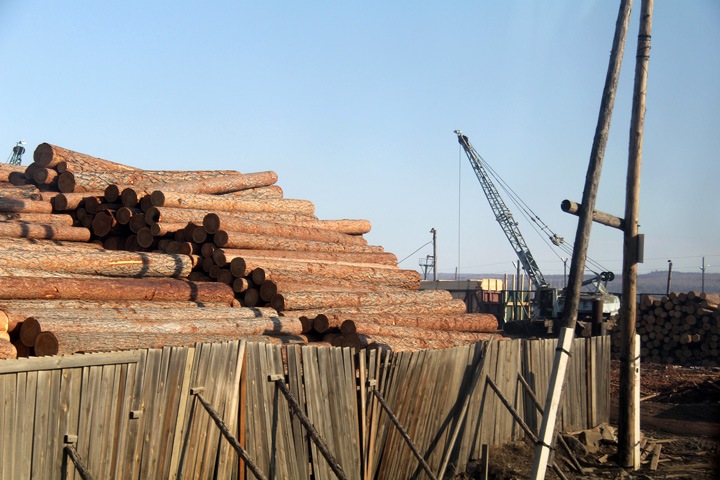
The publication "Science in Siberia" has published an article "Is the forests in the June flood in the Irkutsk region to blame?" signed by candidate of agricultural sciences, scientist secretary of the Institute of Forest named after V.N. Sukacheva Fitz KNC SB RAS Natalia Kuzmik. We give the text almost completely.
According to experts, the cause of floods in the Irkutsk region was a rare combination of natural factors: a clash of air masses, a strong influx of heat and moisture, which reached the Eastern Sayan and provoked the strongest rains, the rapid melting of glaciers. So, according to the Irkutsk State University, in the Tulun area, a record amount of precipitation fell from June 25 to 27 - more than four times more.
Nevertheless, the media expresses categorical judgments that the situation was affected by the number and condition of forests in the water collection pools of the UDI and AI rivers, below which, in particular, the city of Tulun is located. This version is in doubt, since the main cuts are concentrated north of the settlements that have fallen into the flooding zone, that is, downstream. The upper reaches of the AI River, like many other rivers - the tributaries of Uda and Kan, are located in the highlands of East Sayan. These areas are almost inaccessible to the development of forests. For a substantial analysis of the causes of the flooding, reliable information about forests, atmospheric sediments, about the melting of snowfields and channel processes: the destruction of natural or artificial dams above, the formation of congestion downstream is needed.
147357 Is it possible to blame the flood of hydroelectric power station?
Forests in a water bribe, of course, perform important water-regulating and water protection and protective functions. Forest vegetation softens the peaks of floods by intercepting atmospheric precipitation and transferring surface waters into the soil. Thanks to this, the peaks of the floods and their waves are stretched in time. However, such a water -regulating effect is most pronounced on small water collections with an area of up to several square kilometers. In large water collections, the water -regulating role of forests is reduced. Here, a much larger number of factors affect the behavior of a water flow.
“It is important to consider how the river pool is open to moisture -growing masses, what landscape zones crosses the river, how the tributaries are located, and how regulated their drain. It is highly likely that the smoothed peaks of the floods formed on small forest water collections located above from a large village can get there at the same time, and then the flood does not depend on woodedness, ”says a senior researcher at the laboratory of technogenic forest ecosystems of the Forest Institute named after V.N. Sukacheva candidate of agricultural sciences Tamara Anisimovna Burenina.
Hydrologists recognize the water protection and water-regulating role of the forest, but the question of whether its cutting affects the floods. Catastrophic floods in Thailand and Bangladesh in 1988 were explained by a deforestation on the slopes of the Himalayan mountains. On the other hand, there are a sufficient number of scientific works, where there is no connection between forest cutting on water collection and floods. A number of scientific research shows that the transition of forest lands as a result of felling or fires into herbal communities leads to the emergence of flood peaks at a local level, but is not the main cause of high flood. From the conclusions made by the Center for International Forest Studies based on a generalization of data of perennial observations, it follows that forests cannot prevent catastrophic floods caused by meteorological phenomena.
In order to evaluate the role of the forest in the control of floods on the river, it is necessary to use forestry models adapted to local and regional conditions. Unfortunately, in Russia, studies, on the basis of which you can create models of this kind, are reduced to indecent minimum. The luggage that was accumulated by forest hydropolists in the USSR is already not enough to understand the hydrological role of forests in the conditions of occurring climatic changes and the increasing influence of man.
There is a shortage by various scientific funds, which in recent years, if not decades, have not been supported by a single project on this topic. This state of affairs allows non -professionals to draw far -reaching conclusions that the main cause of floods is deforestation. For the sake of objectivity, it must be said that in the forest industry there are many negative phenomena, but “hanging all the dogs” on the forestry, which is in a deep crisis, including thanks to the current Forest Code, is incorrect.
Of course, deforestation does not help reduce floods, but it is impossible to objectively evaluate the negative contribution of this factor in this case. The mitigation of problems associated with emergency situations can be ensured by studying the nature of such phenomena, the verification of mathematical models and their adaptation to regional and local conditions.
“It is necessary on a permanent basis without an unnecessary pump and in a close bunch of science, power and all subjects interested in solving emergency problems, carry out systemic work. The mountainous regions of Southern Siberia, where the stock of almost all large rivers is formed, need atmospheric precipitation monitoring. In the last two to three decades, a fairly large number of weather stations and hydrological posts have been closed in the mountains, ”comments on the director of the Forest Institute named after V.N. Sukacheva Fitz KNC SB RAS, Doctor of Biological Sciences Alexander Alexandrovich Onuchin.
It is obvious that the works that carry out the forestry services of Russia, including in the territories of water -breeding basins, are not enough to preserve the water protection functions of forests. At one time, studies were conducted aimed at determining the optimal forestry of water brothers in various timber conditions, to identify the optimal width of water protection and protective forest strips. Unfortunately, their results are not properly reflected in regulatory legal acts regulating forest use. The development and compliance of this kind of requirements will contribute to the preservation of water resources and the formation of a favorable environment in taiga regions.