
Translated material
Detectives and plastic horn: how the eco -center of the "collector" works
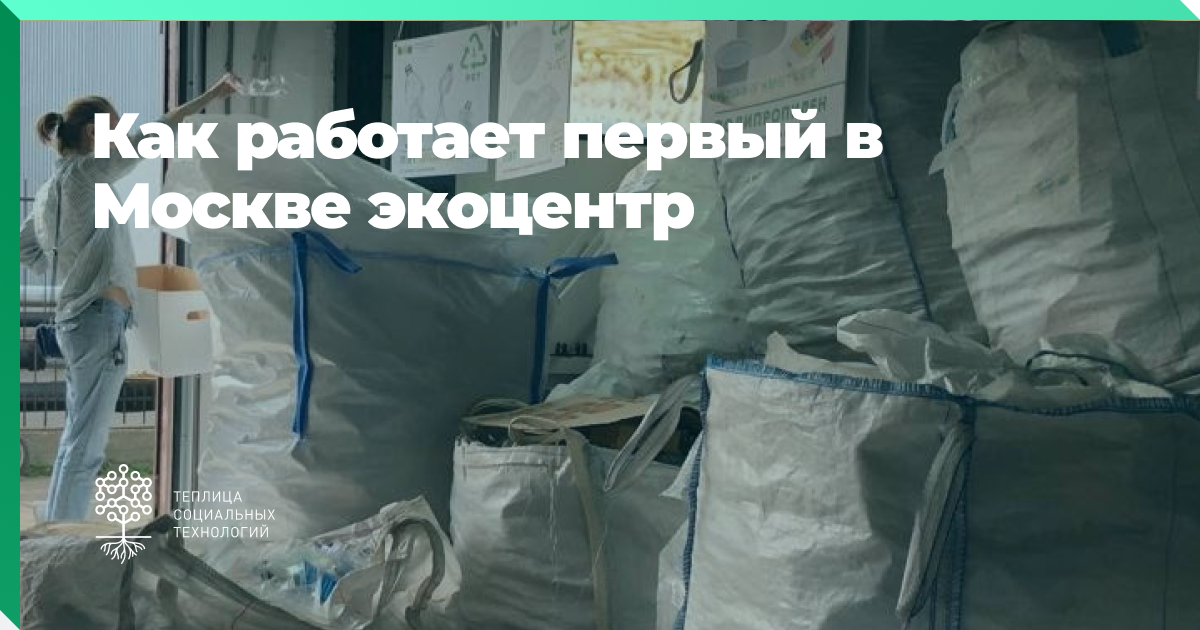
I have been preparing for a trip to the " Gentor " for a long time. Plastic bottles, glass and batteries I hand over to verified reception points near the house. But they do not accept another recyclable in them. You can bring 40 different fractions to the eco -center. Therefore, in the "collector" I take with me packages with foamed polystyrene, plastic and metal lids.
The eco -center is an angar in the industrial zone. Here are large containers and bags - each for a certain type of recyclable. Above everyone hangs with signatures so that it is easy for visitors to navigate. At the entrance I am met by volunteers and Valery Korostelev, the founder of the “collector”. They help me to decompose recyclables and talk about how the eco -center works.
Click on plastic
The project to collect secondary raw materials "Gentor" launched in September 2018. First, plastic, glass, metal and waste paper were collected during shares. And they brought to the warehouse next to the Kantemirovskaya metro station. Here, the project team pressed and sent for processing recyclables. Gradually, the warehouse became not only the sorting site, but also the collection point. People from all over the city came here every day. It turned out that this is the only place in Moscow, where at a time you can pass so many types of recyclables.
But in the warehouse the press constantly worked, the staffing staff drove and the trucks arrived. Therefore, it was uncomfortable and unsafe for people to hand over. Then the team of "collector" decided to rent another room next to the warehouse. So the first eco -center appeared in the city. Now volunteers and project employees are accepting secondary raw materials daily at the address: Caucasian Boulevard, 54, p. 5.
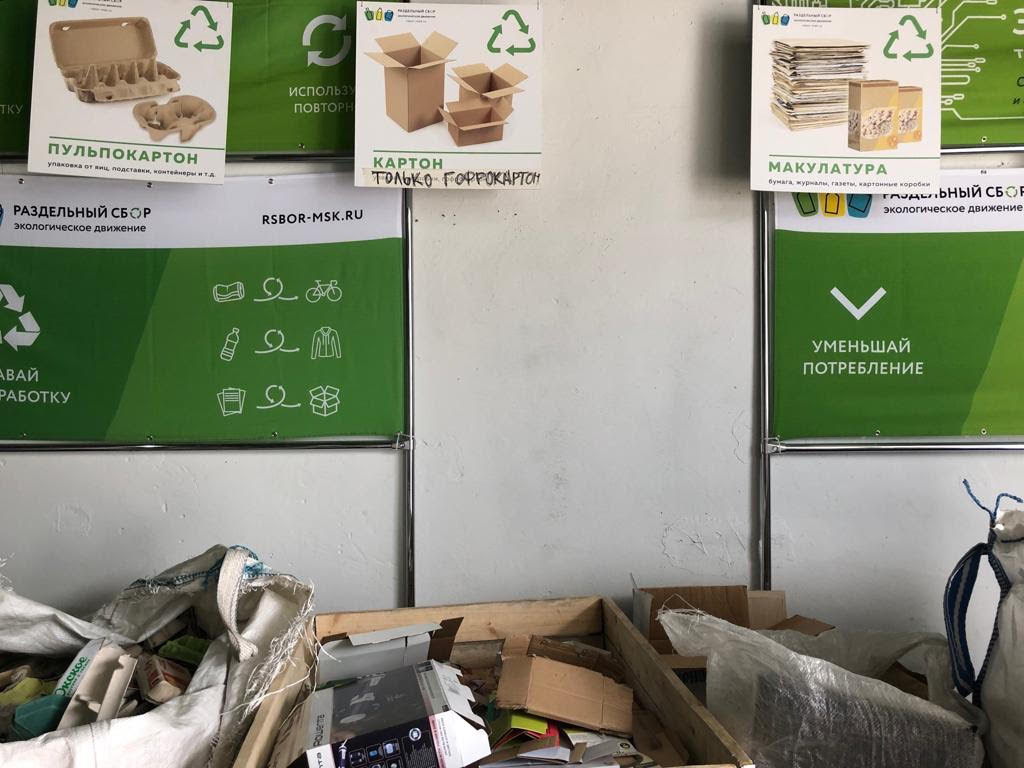
In the environment center, self -service, you yourself must sort out and decompose the brought backlight. But if there are some difficulties, you can always ask a question and ask for help. For example, it is sometimes difficult for a beginner in the sort of recyclables to understand what type of plastic a thing is made from it if there is no marking on it.
With me, the girl brings a plastic toy horn and doubts which bag it needs to be put in. She turns for help to Valeria Korosteleva, the founder of the “collector”, who on this day helps visitors to the eco -center along with volunteers. Valeria has been engaged in recyclable for nine years for nine years. Therefore, it can determine the types of plastic by eye. Valeria knocks on his horns with a finger and says that this is a “kopeck piece”, that is, plastic with a marking 02. The toy goes into a bag to high -density polyethylene products.
“Volunteers also help visitors to determine the types of recyclables. But on weekdays, sometimes we have no assistants - everything is at work. Therefore, we ask people to stay for fifteen minutes. Even if you still do not understand the topic of sorting, then just working hands are always needed. Sometimes you just need to sprinkle recyclables into bags. Or even just accommodate the floor, because there was a shipment and something woke up-small pieces of cardboard. Or you can sort disks, pull them out of the boxes. Help in the eco -center is always needed. ” Valeria Korosteleva
Recyclable instead of the gym
People of different ages and professions become volunteers of the eco -center. For example, businessmen and office employees come on weekends. They drag bags and perform another physically hard work. Valeria says that the “collector” replaces young people with a trip to the gym. They like that they spend time with benefit, and not just monotonously raise the bar.
And one girl walked along the street during a downpour, and a strong wind broke her umbrella. She did not want to throw away the spoiled thing and began to find out what can be done with an umbrella. So she found out about the "collector." And the fact that the eco -center accepts secondary raw materials for processing, including complex and multicomponent, such as broken umbrellas. Now she not only sorts and brings recyclables to the warehouse, but also helps other visitors to the eco -center as a volunteer.
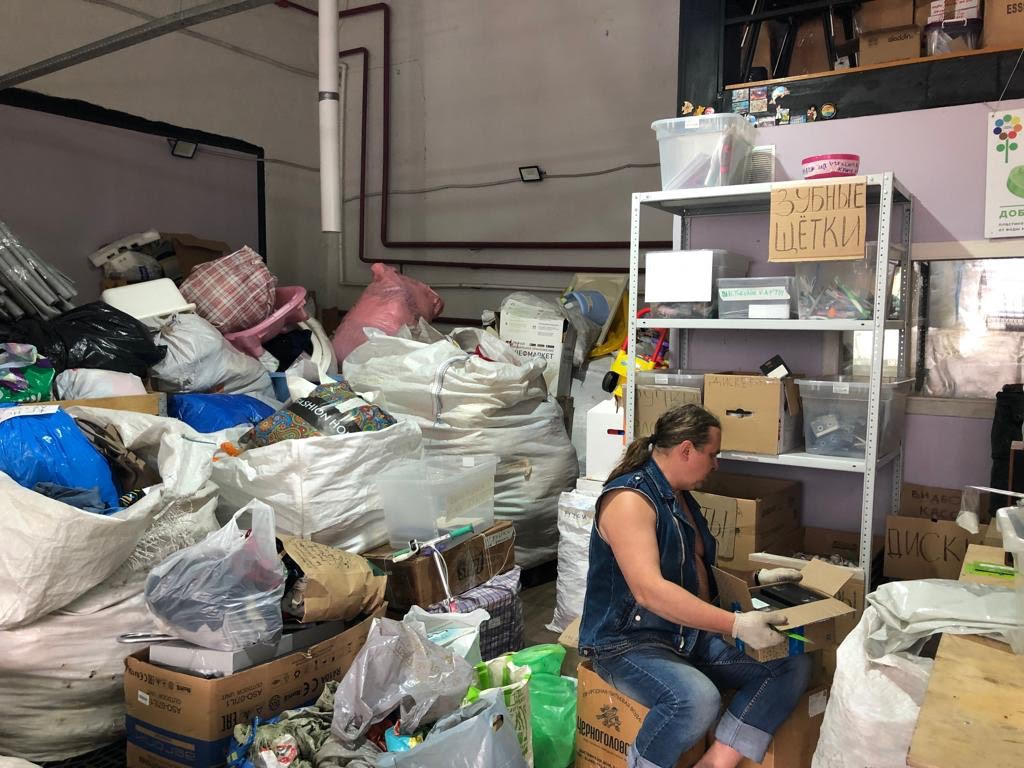
Someone specifically fills the questionnaire on the “collector” website, because he wants to help the project. The coordinator of volunteers is associated with such people and determines how they can be involved in work. Volunteers are offered to help with unloading machines in the eco -center. Or they ask to take part in the collection shares of recyclables, which are held in different areas of the city. They always need additional hands - everything happens very quickly and chaotic. There is a large stream of people, everything forms in general bags. And without the help of volunteers, it is very difficult to cope.
“Those with the“ collector ”for a long time begin to hold their own shares. But these are advanced volunteers who understand all responsibility. Promotions take place once a month, you need to get up on Saturday in any weather. You also have to look for assistants all the time. But promotions are an important part of the project. The eco -center is too far for many residents of Moscow and the Moscow Region. And it’s much easier for them to come to the event in their area. ” Valeria Korosteleva
Visualizing the garbage trucks
Muscovites can not only take recyclables in the eco -center. The collector team and volunteers also check the containers installed in the city. The rating is published on the site of the Separate Collection movement, part of which is the project. And at any moment you can choose a reliable gathering point near the house. Help with public control is always needed. You can, for example, see if the recyclable is taken out of the tanks in your yard, or the car simply dumps plastic, glass and waste paper in one container. Take a picture or record violations on the video and trace whether they are systemic.
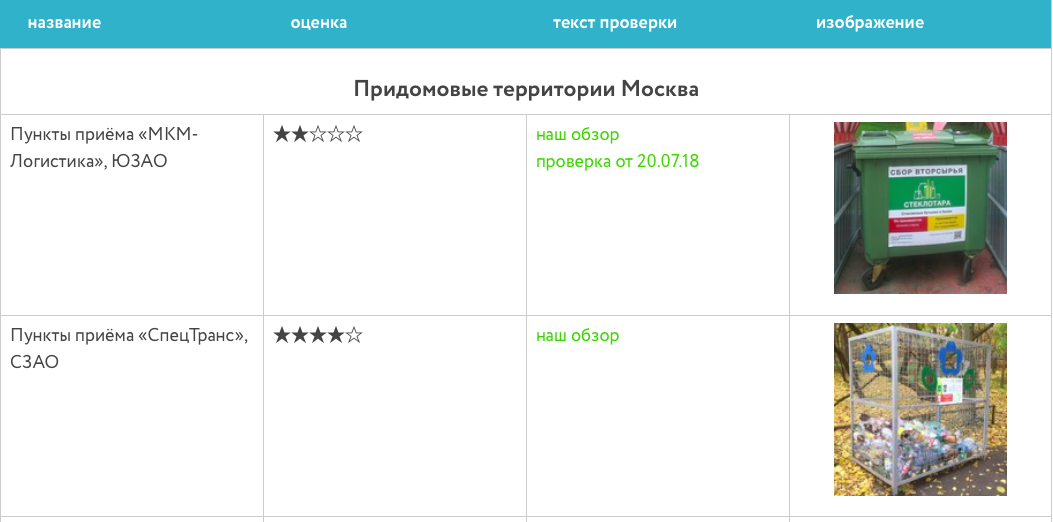
Valeria says that sometimes volunteers become detectives. The team of "collector" is associated with management companies and asks where to take recyclables from containers in the yards. It happens that it is not possible to achieve an answer. Then the volunteers get into the car and go for garbage trucks. They look where they take recyclables. And you can also go on an excursion to the processors with whom the “collector” cooperates. And remove the report from there. This will help to convince people that their secondary raw materials are not sent to training grounds.
More on the topic: how to create an ecological campaign website in three hours
Support the project and “sofa volunteers”. These are people who write requests to various instances. Such assistance does not take much time - you can fill out the form on the municipality website in the metro or lying in a hammock in the country. At the same time, a person participates in public control and makes a great contribution to the common cause. All answers flow to the headquarters of the "collector". And the employees check whether the truth answered the volunteer or not.
“I can immediately assess how the answer corresponds to Russian realities. We have a lot of experience in such matters. For example, one chain of stores now began to take shoes for processing. And sends it to the Dmitrovsky plant of the RTI. Representatives of the enterprise answer us that they sort each pair of shoes for 40 components: leather, laces, rubber and so on. That's just the only plant in the world that works like this is in Germany. I am ready to give the Nobel Prize to the Dmitrovsky factory, if they really were able to organize all this in Russia. We propose to make a report about them, tell everyone how cool they are. But they do not agree. " Valeria Korosteleva
Communication with visitors
You can become a volunteer and follow the work of the “collector” at any stage of the project. The maximum transparency is one of the principles of the Ecocenter team. People who bring recyclables know exactly what kind of processor he is sent and what they do from it in the future. Therefore, new visitors come here every day - they trust the "collector". Many of them surrender the recyclable for the first time, and they have difficulties and questions.
While we communicate, people are constantly approaching Valeria. One girl shows the founder of the “collector” a packaging of coffee, on which there are several different markings, and it is not clear which bag should be put in. Valeria explains that this is foil packaging, you can’t send it for processing, you just have to throw it away. The project staff constantly record training clips and tells in detail what is possible and what cannot be brought to the warehouse. But not all visitors have the time and the opportunity to study instructions. Therefore, the team of the "collector" patiently after time explains to people how to properly hand over.
Anastasia helps to lay out packages and lids on bags and containers. She became a volunteer not so long ago, but already managed to learn a lot from more experienced employees. Anastasia also helps animal shelters. She found out about the “collector” when she was looking for cat houses. It turned out that not only recyclables are handed over to the eco -center. People also bring things to the warehouse, which are then handed over to charitable organizations, including different products for animals.
Anastasia answers my questions and simultaneously analyzes the container with waste paper. The girl says that with most eco -center visitors it is very easy to find a common language. They calmly listen to the advice of volunteers in sorting and are ready to help. Recently, for example, a group of schoolchildren came to Angar. They quickly figured out how to lay out recyclables on bags, got involved in the process. And in the end, one child approached Anastasia and asked if he could transfer money to the help of Shesu (a place in the Arkhangelsk region, where the construction of the garbage training ground is planned, the project caused active protests of eco -activists and local residents. - approx. Ed.).
But not everyone is so easy to make contact. Anastasia had already encountered conflict visitors - one woman did not want to tear herself away from the conversation on the phone and properly decompose the brought recycling. The fact that some people have to look for a special approach, says Valeria.
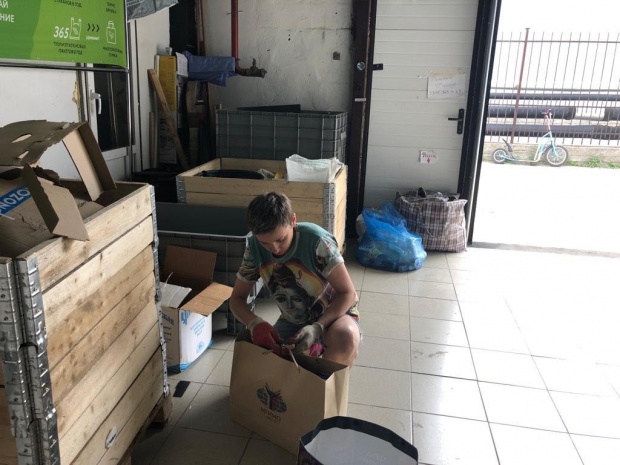
“We live in an aggressive environment, many have become introverts. Volunteers, too, do not always feel comfortable. It is necessary to communicate with skeptics and with complex people. Someone, for example, does us a favor. Like, I already gathered recyclables and arrived, and you, volunteers, save the world, now wash and sort yourself. And someone enters the hangar, sees that it is necessary to understand, and the people are a lot, vanity, uncomfortable. Quickly dumps everything into the nearest bag and runs away. We try to catch up and amiably explain why this cannot be done. You need to be loyal to all visitors, so that they feel calm here, they are not afraid to come. ” Valeria Korosteleva
Taxi for recyclables
I ask Valeria if she thinks that so many people come to the eco-center, because the city finally appeared in the city for the surrender of recyclables. But she shakes her head negatively. “Kantemirovskaya is inconvenient. Only residents of neighboring areas are comfortable here. And everyone else to get to the eco -center is far and difficult. It's just that this is at least some opportunity to take secondary raw materials for processing. Here people go to us. But they are waiting for everything to become more accessible, ”says the founder of the“ collector ”.
Valeria opened the eco -center with her husband Leonid Sinitsyn. Initially, he wanted to organize the free export of recyclables so that people could call and order a car to his house. But the costs of logistics were too large. And per month, only 600 applications could be processed, which is too few for Moscow. But there was a demand for such a service, and then Valeria and Leonid decided to launch Ecotax .
Now the driver-courier can be called to the house and office any day without weekends. At the same time, ecotax can take any volume of recyclables - the project has cars and trucks. And the cost of the trip will only depend on the distance. The only thing that recyclables will have to be washed, lay out on packages and sign it so that in the eco -center it is immediately poured into the necessary bags. Valeria says that ecotax is in great demand and pays for the expenses of the “collector” for logistics.
He also earns a project to surrender recycoses in the processing and environmentalization of offices. The collector team holds a lecture, games, master classes and training for business. And on weekends in the eco -center there is a “useful store”. Here you can buy eco -bags, reusable shoe covers or thermal circles. And the team of "collector" develops and produces containers for separate collection. They can be ordered on the store’s website and installed at home or in the office.
“Sometimes we see that a person comes to the eco -center every week and brings a bunch of bags. Then we try to explain that recycle (processing) is the last stage of reasonable consumption. It is necessary to start with rease (re -use) and reduce (contractions of consumption). And we offer to buy reusable bags in our “useful store”. The funds that we receive from the sale of eco -goods go to the development of the project. ” Valeria Korosteleva
Garbage from bloggers
The founder of the “collector” wanted to open a warehouse for collecting recyclables in Moscow when she saw similar projects abroad. Valeria says that in Europe, a large territory is usually allocated for eco -center. And for each type of recyclable there is its own separate hangar. So far, for the team of the "collector" this is only a dream. But Valeria already knows exactly what the project wants to see in the near future.
An exhibition with processing samples will be opened in the eco -center. So that people can clearly see what is made from the recyclable, which they bring to the eco -center. The team of "collector" also collected a large collection of Greenwitching things for the exhibition. These are goods that manufacturers position as environmentally friendly, but in fact they are not such. Visitors always bring “biodegradable” packages or cutlery for processing. Employees explain that such things can actually cause even greater harm to the ecology, decomposing into microplastics, and do not need to use them.
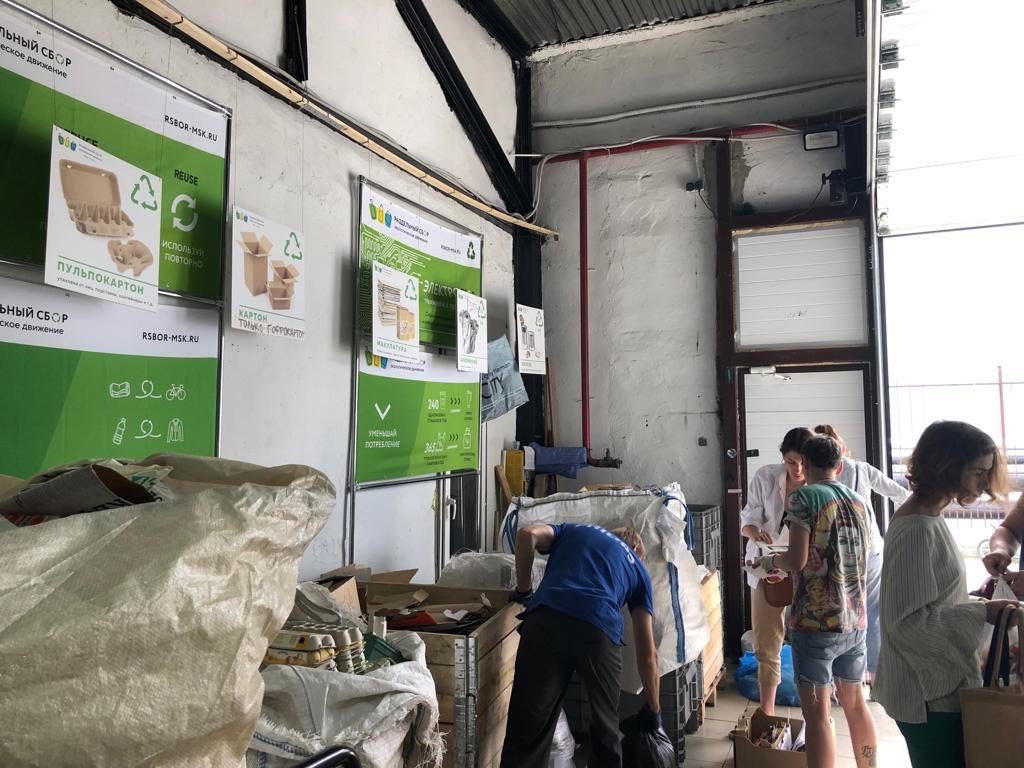
Breakfast for bloggers will take place in the eco -center. Such meetings are needed so that the topic of processing is properly presented with a wide audience. “A popular blogger arrives and says that he collected garbage for the“ collector ”for a month. And calls for subscribers to make the world cleaner. Not everyone begins to immediately understand the topic and really just do not throw garbage for a week. And then they bring it to us in a large poorly smelling bag. Of course, we explain that we collect not garbage, but secondary raw materials. We offer to sort and wash everything, even the sink is now specially installed. But it is better to avoid such situations from the very beginning, ”says Valeria Korostelev.
Black box factory
The team of “collector” is faced with other situations when people have to talk more about processing. Someone does not understand why it is necessary to share plastic by type. Then employees and volunteers explain that each type of product has its own melting and combustion temperature. Valeria says that many people, surrendering to recyclables, imagine some kind of garbage processing plant. Everything stops into it, like in a black box, and leaves many different products. People are explained that all recyclables are taken to processing enterprises that take different fractions.
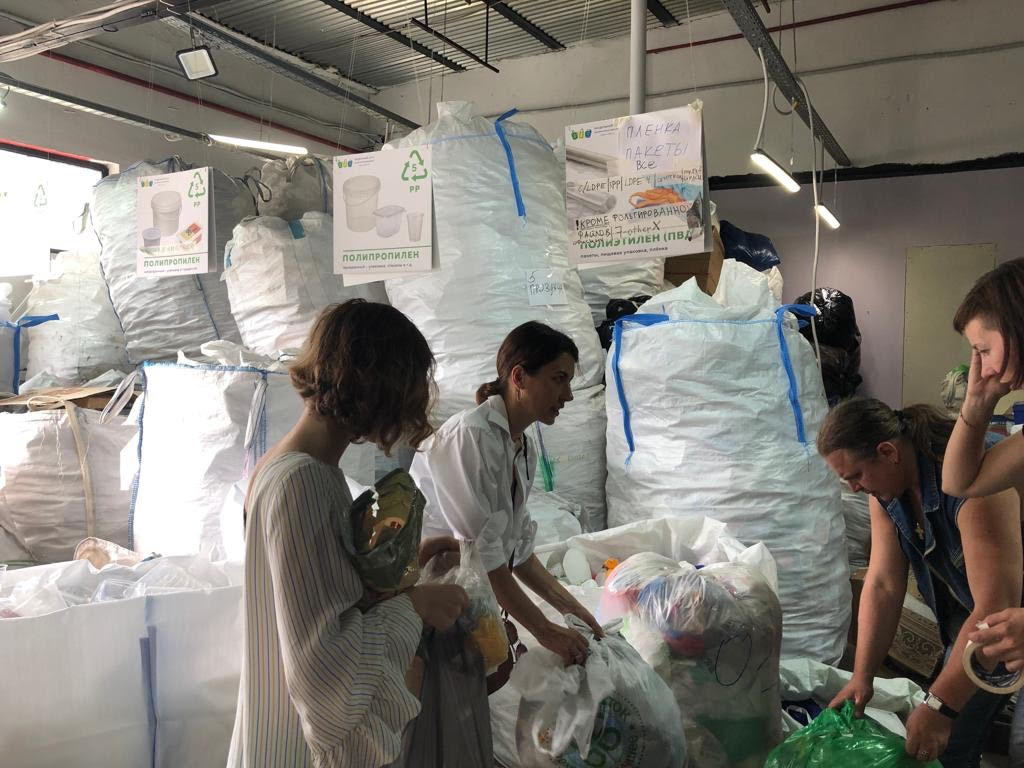
There are visitors who do not want to wash bottles or banks, believing that you can’t spend water on it. They are told that much more resources will be spent on the manufacture of a new product from primary raw materials. And household waste is only a small part of what pollutes nature. Large enterprises cause much more harm to ecology. And a separate fee, first of all, is designed to reduce the amount of industrial pollution, not garbage training grounds.
“It may seem that we do too little. And our project is a drop in the sea. We tell skeptics that the “Separate Collection” movement, part of which is the “collector”, already more than 100 thousand supporters throughout the country. And that many people will sorry recesses as soon as an affordable infrastructure appears. Our people really need hope and trust. It is important for them to see that separate collection works. We are used to impotence that they decide everything for us, and good projects are closed. Therefore, we say that they are not alone and the situation can really be changed. ” Valeria Korosteleva