
Translated material
Conversation with Dmitry Zimin about enlightenment

A month ago, on the pages of the TRV-hobby, I wondered “ what is an enlightenment? " 1 , having promised later a conversation on this topic with the founder of the Enlightener Prize Dmitry Zimin.
We can say that Andrei Dmitrievich Sakharov introduced me to Dmitry Borisovich, more precisely, a book about him, which was published at the end of 2000 in Izhevsk at the Publishing House of Regular and Chaotic Dynamics. A couple of months later, I received an e-mail with warm words and a sentence to meet, signed as follows: “Dmitry Borisovich Zimin, General Director of Vimpelcom JSC.” I decided that this was just some kind of ephemeral office generated by a chaotic dynamics of post-Soviet life. It is unlikely that the real general director, I thought, would have become a similar book. But, having rummaged on the Internet, I found that the leading company Beeline’s mobile communications company lies behind Vimpelkom. And its general director turned out to be very unusual: a 67-year-old doctor of sciences, who had worked at the Radio Engineering Institute for more than 35 years over the missile defense systems of the Central Industrial District. But it was precisely because of the pro, as I already said on the pages of the TRV-hunger 2 , Andrei Sakharov made his coolest turn in life-he left the closed military scientific world to an open public arena. This was discovered only in the mid-1990s, when several documents of Sakharov were declassified in the presidential archive, including his 1967 letter to the Central Committee. I wrote about this story in the book, but I relied only on the letter itself, and it seemed to me strange that the nuclear physicist was so thoroughly immersed in missile affairs.
It was very seductive to look at this mysterious story from the “anti -missile” side, and in May 2001 I first ended up in the office of the Russian Federation’s veteran and the pioneer of the Russian cellular communications. Our acquaintance took place on a steep turn in his life. Just then, Zimin finished his second career - he left the business forever - and thoroughly prepared for the third - not to earn money, but to spend money. Spend to support fundamental science.
Over the next years, conversations with him not only opened up new dimensions of the history of advanced Soviet equipment and a kind of economy, but also gave communication with a wonderful interesting person. The result of conversations with Zimin and his colleagues was the book “The Science and Life of Dmitry Zimin”, which I almost prepared for the publication.
Among other things, during the conversation, I tried to find out what kind of education this is, to which Dmitry Borisovich devoted more than one decade of his life. And our “found out” conversation captured more and more extensive topics, and the oral dialogue wandered into correspondence, where discussion of the threat of humanity, the mysteries of the birth of European science in the 17th century, the problems of the relationship of scientific knowledge and moral principles were intertwined with the topic of enlightenment ...
About the deep crisis in which humanity was
- Dmitry Borisovich, in connection with the decade of the Enlightener premium, I thought about how to determine the exact meaning of this word? He climbed into the dictionaries and made a discovery: it turns out that the concepts of “enlightenment” and “propaganda” are essentially the same thing: the spread of some ideas or knowledge . And which ones - true or false, healthy or harmful, depends on the "evaluative judgment" of the one who considers himself an expert. Enlightened Russian writers - Pushkin, Dal and Leskov - gave several intriguing tips, but I did not find a clear answer.
How do you yourself understand the word "enlightenment"? What ideas and knowledge do you want to contribute to the spread of?
In a recent interview, you said that enlightenment is one of the most important tasks facing the intelligentsia ... 3
- Now I would remove “ one of ”, but would simply say “ the most important task ”. And this is due to the idea of the deep crisis in which humanity has now turned out to be. Thanks to science and technology, instruments of incredible power - tools of creation and destruction fell into the hands of people. With increasing speed, in terms of exponent. New knowledge, new forces, new military forces.
Since time immemorial, however, the herd instincts of people have remained. The condition for the survival of an individual is fidelity to its herd, embodied in fear of the leader of the herd and/or in humble love for it. Primitive patriotism is “my herd”, “my family”, “my tribe”. Hence one step to hatred of neighbors who can eat the mammoth you have obtained, or even yourself.
Now on Earth about two hundred states. If in each there are patriots who love their cave homeland and the leader of their tribe, who hate neighbors and possessing nuclear weapons, such a world is doomed to each. Doomed! If you do not recover from this primitive patriotism, the earthly civilization will disappear.
- Recently, the President of Russia denounced "cave nationalism, stupid and moron, which leads to the collapse of our state." It looks like "primitive patriotism." Primitive people have stolen caves. The epithet "cave" is more clearly: "Everyone who is not from our cave is nonhumans!" But your conclusion goes beyond the limits of any cave: not just the collapse of one “individual” state, but the death of all earthly civilization.
- The limb of the life of civilization seems quite natural. Morning sun never lasts a day. And, apparently, only a very rare combination of circumstances will allow earthly civilization to exist vozingly for a long time. This is very desirable, but it seems unlikely. This is indirectly evidenced by the “Silence of Cosmos”, about which Astrophysicist Joseph Shklovsky wrote - the lack of radio signals of extraterrestrial civilizations.
A scream considered the emergence of life on Earth for 4 billion years so incredible that he put forward the idea of a “directed panspermia” - the arrival of the embryo of life from space. Ginzburg and Feynberg, who knew Shklovsky, looked at the “incredity of life” more soberly and carefully monitored the theme of “universe, life, mind”. This was the name of Shklovsky’s book, in the posthumous publication of which it was concluded that civilizations, having achieved the opportunity to send radio signals, destroy themselves during the time, very small in cosmic scale.
Ginzburg simply admitted that science does not know how life arose. And Feynberg considered the emergence of life an event so unlikely that it deserves the name of the “miracle”: “ We - humanity - turn out to be a unique phenomenon of nature, a consequence of a unique combination of circumstances, perhaps, unique in the literal sense of the word - the only one. And we must proceed from the fact that we are alone, the only exception, in a sense, is really a miracle. The preservation, savings of this phenomenon, this “miracle” - on the responsibility of mankind, and this imposes obligations on us. Perhaps the disappearance of mankind and life will not change anything in the enormous infinity of the world in itself, but if such an amazing phenomenon has come true, it changed the face of the world, and the return to the dead indifferent matter would be a sad fact . ”
The opinion of physicists about the origin of life is especially curious, since the biophysicist D. S. Chernavsky worked next to them in Fiana, who, in a large article “The problem of the origin of life and thinking from the point of view of modern physics” in the journal “Success of the Physical Sciences” of 2000, argued that the emergence of life is much more likely than it is accepted. Judging by the recent discussion in the Trinity version, the optimism of biophysics was really not justified
( TRV-SCIENCE.ru/2019/03/26/veroyATNOST-ZAROZHDENIIA-HIZNI/ ).
- The gloomy conclusion of Shklovsky is based on the assumption that extraterrestrial civilizations arise "all the time." But until an extraterrestrial life has been found, it is only the subject of faith. Such a faith is usually combined with an atheistic view of the world: if life arose in a certain natural way from inanimate substance (abiogenesis) on Earth, then it should also arise on any planet similar to the ground, and there are a great many of them. However, the three unconditional atheists thought differently: the molecular biologist Francis Scream and Theoretic physics Vitaly Ginzburg and Evgeny Faynberg.
"Only humane humanity can count on a long existence"
- Excuse me, I will finish my thought. Rational consciousness, it seems to me, should come to the understanding that civilization, which has reached the incredible heights of the development of science with unprecedented pace in history, is now facing mortal danger. Therefore, the task of education is humanization. Only humane humanity can count on a long existence.
- Please decipher what you call humanization.
- When a person in his thoughts and feelings completely sincerely replaces the “fatherland” with “humanity”.
- Because it is the person - the "crown of creation"? And not the state ...
- That's right. Such a replacement seems to me the only condition for a long existence of civilization. Just out of a sense of self -preservation. The intelligentsia, which understands this, must engage in enlightenment, bringing to the consciousness of people at least these thoughts about mortal danger. To explain that skills, knowledge, habits that served in the Stone Age to preserve the herd surrounded by other herds are deadly “for all herds” at once. That patriotism as a love for the state, for the leader of the state is a deadly thing. Loving the country, you can have different opinions and argue about how life is better to do in it. But the country will not survive if humanity perishes.
How to explain this, I do not know.
- It depends on who to explain. A person with a scientific horizons and developed critical thinking or a “man from the street”? And from which street - urban or rural, Russian, German or Yemenskaya ...?
There is a visual argument: in countries where many people know that a person is a “crown of creation”, and respect the right of a person to freedom, science develops much more successfully, and its fruits increase life expectancy and the welfare of the average person. This, however, in completely different countries may object that living for a long time and safely is not the most important thing. The main thing is to live “righteous”, conquering or destroying the unrighteous, even if you die, but instantly guaranteedly getting into paradise and getting eternal bliss in the most appetizing forms.
Such “righteous” cannot be objected to such a science. As you know, no morality follows from science, although it is necessary for the development of science itself.
-If for self-preservation of mankind in our scientific and technical era, universal ethics, humanism, sympathy are necessary in order to overcome the deadly dangers of primitive-stem patriotism, then this contradicts your words.
Where does morality come from? Perhaps some moral truths arise because they are self-evident for some people almost from birth, in coincidence of some random life circumstances? And such a truth could gain a foothold, contributing to the survival of still prehistoric tribes in which such natural moralists were born.
-You are talking about moral inventions and their historical and synceptive selection. The invention of any fundamentally new idea - scientific, artistic, moral - makes a separate person, relying on everything that knows, on imagination and logic and on the mysterious "intuition". For others - with other intuitions - the new idea first looks “artificial” and not convincing. Even in physics, where logic and experience reigns. For example, none of the physicists accepted the inventive idea of Einstein’s “already great” on the geometrization of gravity until he embodied it into a whole theory. Moreover, if we talk about the fundamentally new moral idea, which contradicts the usual - “natural” - the way of life. It is worth emphasizing that they are natural, i.e. Natural, only animal instincts of man, and all culture is artificial, since it is invented by people. Inventing a successful idea is much more difficult than a new material tool for life. A new tool can be evaluated immediately as soon as you see its action in ordinary material life. And the path from the idea to its implementation-materialization is very thorny and winding.
- The main thing is that the new public way has sharply increased the possibilities of innovators in all areas of life, the possibility of an active person to find application to their abilities, to realize. As history shows, it is this creative human resource, and not minerals - the main source of the well -being of the country.
The crisis problems in the current state of mankind require new inventive approaches to their solution. The salvation of mankind, drowning in problems, is the work of hands (more precisely - heads) freely and boldly thinking inventors. And enlighteners explaining to society the essence of problems and the proposed solutions. At the same time, the experience of the history of science with its socio-cultural geography and personal psychology is a convincing instrument of education.
It is impossible to enlighten, however, all of humanity at once, it is too cultural and historically diverse. The Enlightener prize operates only in the Russian -speaking part of mankind. And in this part, now one of the most alarming phenomena is the growing rating of the “great helmsman of the country of socialism”, “fighter, thinker, scientist, wise teacher and leader of the heroic party of the Bolsheviks, the Soviet people and all progressive humanity”, “an inexhaustible source of creative inspiration” . These titles taken from the greeting of the Academy of Sciences Stalin in 1949, now, however, not in use. The modest pair of the generalsimus boots. And the mortal fear of academicians and people more simply transformed into a 70 percent folk approval, or even delighted respect. To understand the current delighted, it is useful to read books on ethologies, included in the lists of the "Enlightener": "Naughty child of the biosphere" Viktor Dolnik, "Wait, who is leading? Biology of human behavior and other animals ”Dmitry Zhukov,“ The Evolution of Man ”by Alexander Markov.
I will retell some thoughts from these books, clarifying the phenomenon of love for the leading leaders. With a minimum gag.
Two factors determine human behavior: congenital instincts and culture. Culture is all that is laid down in a person not a father with a mother at the time of conception, but by education. The study of the behavior of a person and the species closest to him shows that it is common for them to form male (female) hierarchies. They are formed spontaneously, based on congenital instincts. Teenage hierarchies, hierarchy in prisons, and a hierarchy of authoritarian regimes are also formed.
Recognizing the naturalness of hierarchies does not mean justifying any form of their forms. After all, this biological program arose in the wild herd of primates, and already at that stage the transformation of the fear of an individual before the leader in love began. To obey the leader is loving, easier and more pleasant than fearing. Loving individuals received everyday advantages over the afraid. Nowadays, the hostage syndrome for the Bandits who captured them was called “Stockholm” after a specific case of the capture of hostages in Stockholm in 1973, but the psychological mechanism was described back in the 1930s, just at a time when the syndrome began to operate massively in the two countries. Probably, it could be called the syndrome of slavery.
Scientifically and economically developed states by themselves, on the basis of instincts, do not arise. The separation of powers, enshrined in political, economic, judicial, scientific and educational structures, is a product of reason, culture, creativity. These structures of society must always be maintained by the political activity of citizens who do not allow potential usurpators to seize power.
- A significant biological difference between a person is a long childhood, when a child is not capable of an independent life without the guardianship of adults. Like everything in the world, this has pros and cons. A long experience of dependence on guardianship can be gained in infantile paternalism. And a long experience in culture can give a person a powerful initial cultural resource - skills, knowledge, images, ideas. The question is what this culture teaches - family and public. The fact that a person is a trembling creature, or that a person has an integral right to freedom.
The development of this culture can be likened to the development of technology - a number of inventions adopted (or rejected) by society in specific unique circumstances of history and geography. In ancient times, the most important cultural inventions had a figurative religious form and, in the form of grandmother's fairy tales and grandfather's myths - acted emotionally for imagination, embodied in social establishments and a system of values. In modern times, new forms of cultural inventions appeared, coming back to printing.
For the birth of new inventions and their implementation, a significant share of active people who have realized and accepted new cultural values should be accumulated. The main new value is an inalienable person’s right to freedom, the right to strive to happiness. The accumulation of enlightened people is due to cultural diffusion from the outside and enlightenment from the inside, which is and is engaged in the competition of the Enlightener Award.
- Amen!
Как просвещать «умы и сердца»?
— Осталось только прояснить, как именно, по-вашему, следует просвещать. Не могли бы вы восстановить ход своих мыслей при создании фонда «Династия»?
— Никаких особо просветительских мыслей у меня тогда не было. Не считал я себя человеком, который знает, что именно нужно народу и как его вразумить… Позже мысли такого рода начали появляться, но основное чувство было очень простым. Когда видишь что-то такое, что тебе очень нравится, вызывает восторг, хочется воскликнуть: «Смотрите, что я увидел! Бегите сюда!» Хочется поделиться. Делиться надо!
— Но есть много разного замечательного в мире: художественная литература, живопись… Вы же с самого начала сосредоточились на замечательной науке.
— Эгоизм. Со школьных лет меня завораживали физические открытия и основанные на них изобретения. И люди, которым удалось их сделать. Кстати, самым великим из них ничто гуманитарное было не чуждо. Играли на скрипке, читали Достоевского, знали древние языки и историю философии…
Выбирая, на что тратить свои силы и средства, и думая о конкретных формах, естественно искать нечто интересное и понятное тебе лично. Побывав в западных музеях науки, я позавидовал тем, кто может всё это увидеть и «пощупать». Политехнический музей в Москве отставал на столетие. Так возникла идея создать по-настоящему современный музей науки в Москве.
После года изучения зарубежного опыта, оценок возможностей и затрат пришлось признать проект Большого музея неисполнимым. Слишком много денег требовалось, а главное, не обойтись было без участия государства. Пару лет спустя мы «разменяли» этот столичный проект на поддержку музейных экспозиций, посвященных науке. А первой рабочей программой фонда стала поддержка теоретической физики: стипендии способным студентам и аспирантам, гранты молодым исследователям. Чтобы они могли сосредоточиться на науке, не думая о дополнительных заработках.
— А почему именно теоретическая физика?
— В некотором смысле опять эгоизм. То, что мне особенно интересно. Александр Львович Минц завел у нас в РТИ сильный теоретический отдел. Возглавлял его членкор С. М. Рытов, работал там Михаил Левин, друг Сахарова… Участие теоретиков в научно-технических обсуждениях и в разговорах на любые темы поднимало уровень обсуждения, создавая особую атмосферу. Занятия теоретической физикой способствуют широкому и свободному взгляду на реальность, уважению к фактам и к логике. И мне хотелось, чтобы умных и свободных людей в России было больше. Конечно, умные люди занимаются не только физикой. И в последующие годы мы добавили математику и биологию.
— В первых годовых отчетах «Династии» активно участвует «популяризация науки», а «просвещение» присутствует лишь слегка и в английской версии отчета переводится как education. В отчете за 2006 год «просветительство» названо третьим главным направлением деятельности (после «поддержки науки и образования» и «популяризации науки»), но по-прежнему переведено как education. Наконец, в 2008 году появилась премия «Просветитель» за лучшую научно-популярную книгу года.
Популяризация науки, образование и просвещение имеют, конечно, нечто общее, но всё же не синонимы. Научно-популярный рассказ об атоме урана, о строении Земли, о жизнедеятельности муравейника вряд ли можно назвать просветительством, если он всего лишь излагает сегодняшние научные знания (даже талантливо), то, что называют «сухим остатком». А каким, по-вашему, должен быть научно-популярный текст, чтобы претендовать на премию «Просветитель»?
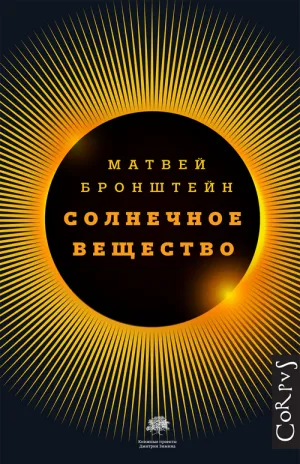 — Такой текст рассказывает не только о науке, но и о людях, которые делают ее. Рассказывает, как они делают науку, что движет этими людьми, показывает драму идей и людей на путях поиска истины. Это есть в книге «Солнечное вещество» 4 . Как старались понять, что остается, если из воздуха удалить кислород и азот. Крошечный остаток — вес блохи. Как ломали голову и ставили опыты, чтобы эту «блоху» поймать. И, наконец, короткая телеграмма: «Криптон — это гелий. Приезжайте — увидите»…
Таким рассказам не место в учебниках. And that's right. Там сухой остаток. Плоды науки. Можно сказать, сухофрукты — питательные, аккуратно упакованные и… не похожие на фрукты-оригиналы, выращенные стараниями людей науки на древе познания, высокопарно выражаясь. В законах науки не видны люди, их открывшие, даже если закон назван именем открывателя.
А люди эти заслуживают внимания. Умные, изобретательные, честные, увлеченные, способные к сотрудничеству, готовые к критике и к признанию своих заблуждений. Само присутствие таких людей в обществе благотворно для его здоровья. Их опыт поиска истины и ее надежного обоснования необходим обществу в целом. И это было главным основанием, чтобы поддерживать молодых исследователей. Чтобы «не утекали» из России вместе со своими мозгами…
Конечно, я был в высшей степени оскорблен ярлыком «иностранного агента», которым меня наградили в 2015 году, и тогда пришла мысль, что главная обязанность человека — это состояться. А если для того, чтобы состояться, надо уехать куда-то, он обязан это сделать.
— Об этом писал академик В. И. Вернадский еще в 1928 году: « Ученый по существу интернационален — для него на первом месте, раньше всего, стоит его научное творчество, и оно лишь частично зависит от места, где оно происходит. Если родная страна не даст ему возможности его проявить, он морально обязан искать этой возможности в другом месте ».
— Не знал, что повторяю мысль Вернадского. Горжусь.
— Вы не повторяете, а просто знаете, как и он, об ответственности перед человечеством, перед мировой наукой. Известен афоризм «Талант — это поручение», и поручение не правительства, а какой-то более высокой инстанции…
— Но чтобы талант состоялся, правительство по меньшей мере должно этому не мешать, а хорошо бы — помогать. Особенно когда речь идет о научных талантах. Опыт честного поиска научной истины, где нет политических партий, демагогии и всего такого, нужен обществу, чтобы выявлять проблемы, неизбежные в живом развитии, искать и изобретать их решения. Просветительская литература только и может сделать этот опыт достоянием общества.
— Метафору сухофруктов для «сухих остатков» науки можно развить. Прежде чем аппетитный плод созреет на древе познания, он был цветком, а еще раньше семечком, из которого выросло фруктовое дерево в саду познания. Все эти этапы требуют заботливых стараний садовников и уважения общества к их труду. Так что просветительская литература должна рассказывать о работниках науки, об их мыслях и чувствах, об их научных приключениях в драме познания. Такого рода сюжеты требуют не только научного понимания, но и художественных средств. Научно-художественный жанр литературы в нашей стране изобрел и с энтузиазмом продвигал Самуил Маршак в 1930-е годы в ленинградском Детиздате, где появилась и книга «Солнечное вещество», которую не только Маршак считал эталонным образцом этого жанра. Маршак искал авторов среди специалистов-профессионалов, наделенных еще и даром слова.
— Редкая комбинация, и тем более драгоценная.
— Правильно ли я понимаю, что, учреждая премию «Просветитель», вы не пытались определить четкие критерии отбора победителя, а доверились мнению жюри?
— В общем, правильно. Не хотелось избыточной формализации, да и определение не вырисовывалось. В первый состав жюри пригласили людей, здравый смысл и научно-художественный вкус которых я ценил, а преемственность обеспечивали обновления жюри победителями прошлого года.
— Рискну предложить неформальное определение, основываясь на нашем неформальном уже почти 20-летнем общении. Подсказку я нашел в отчете «Династии» за 2009 год, где «Просвещение в области общественных наук» связывается с распространением « идей свободы, прав человека, гражданского общества ».
Эти три ценности сводятся по сути к одной — к неотъемлемому праву человека на свободу. Только люди с таким самосознанием способны образовать гражданское общество, основанное на самоорганизации и самоуправлении. И то же самое право необходимо для современной науки. При этом в естествознании, попросту в физике, связь свободы мысли исследователя и результатов его работы наиболее убедительна, поскольку дает в руки массу вещественных доказательств, самое наглядное из которых — смартфон. Достаточно взглянуть на родословную смартфона, чтобы убедиться в указанной связи. В области обществознания сделать такой вывод труднее из-за культурного и социального многообразия, которое не так легко воспринять извне и осмыслить.
Таким образом, опираясь на знаменитый отечественный бренд ФМД, я бы так раскрыл ваше (и мое) интуитивное понимание просветительства: распространение веры в то, что человек — не тварь дрожащая, а имеет неотъемлемое право на свободу познания. Когда-то эта вера была пред-рассудком, предшествуя рассудку. К нашему времени история науки, техники и экономики дала рассудку веские доводы в пользу поразительной плодотворности этой веры. Страны тем более развиты научно-технически и социально-экономически, чем более в них укоренена эта вера.
Как вам такое раскрытие понятия просвещения? Соответствует ли оно вашим представлениям и воплощает ли взгляды Даля, говорившего о просвещении ума и сердца, а также Пушкина и Лескова, которыми я озадачился перед нашей беседой?
— Что-то в этом есть. Но я бы предпочел менее художественную форму. И как-то уж слишком просто…
— Слишком просто для того, кому самоочевидно право человека на свободу, начиная со свободы мысли и познания. Но это было не очевидно Раскольникову, который пришел к своему роковому вопросу почему-то под впечатлением от неродной религии: « О, как я понимаю “пророка”, с саблей, на коне. Велит Аллах, и повинуйся, “дрожащая” тварь!.. Повинуйся, дрожащая тварь, и — не желай, потому — не твое это дело! » Отечественное крепостное рабство давало не меньше оснований сомневаться в праве человека на свободу. Путь к пониманию этого права Достоевский открыл своему герою лишь после его преступления.
— Ну что ж, если «Библейский гуманизм» сводится к постулату «Человек имеет неотъемлемое право на свободу», то против этого вряд ли кто станет возражать.
— Еще как возразят: «Какой человек?? Вот этот?! Да ему-этому дай свободу, он такое натворит!» И действительно может натворить, если «он-этот» не принимает библейский антропостулат и не знает, что постулат этот в равной степени относится ко всем «ближним своим», к каждому члену сообщества. И, значит, личная свобода личности ограничена свободой других личностей, а границу определяет и охраняет система власти, опираясь на общественное доверие и соучастие. Всё это возможно лишь в сообществе, значительная часть которого считает исходный постулат самоочевидной истиной.
Прекрасный пример такого сообщества — мировое сообщество физиков, которые, обходясь без писанных законов своей общественной жизни, делали общее дело — познавая мир и решая возникающие при этом трудные проблемы.
Потому-то рассказы о жизни науки — самый убедительный и увлекательный инструмент просвещения в наше время, когда почти у каждого человека в руках смартфон, плод свободной мысли исследователей, изобретателей и предпринимателей.
Так сошлись две ваши карьеры — в создании первой российской компании, признанной в мире, и в возрождении научно-популярной литературы в России. И эти карьеры вряд ли могли состояться без предшествующей карьеры, соединившей научно-техническую и, скажем так, военно-патриотическую ипостаси. Родина высоко оценила ваши заслуги: академической премией им. А. С. Попова (1965), Государственной премией РФ (1993), премией «Бизнес-Олимп-2001: Репутация», а в 2015-м даже дважды — премией «За верность науке» и почетным званием иноагента. Но, похоже, главной наградой для вас было то, что вот уже три десятилетия делаете свое дело в полном согласии ума и сердца. И, как вы признались в недавнем интервью 5 , получали удовольствие и зарабатывая деньги в последнее десятилетие прошлого века, и тратя их в первые десятилетия века нашего.
С чем вас и поздравляю!
- Thank you. Рад стараться.
Dmitry Zimin
Беседовал Геннадий Горелик
1 trv-science.ru/2019/06/04/chto-takoe-prosveschenie/
2 trv-science.ru/2018/07/17/50-let-razmyshleniyam-saxarova/
trv-science.ru/2018/05/22/protivoraketnaya-oborona-i-prava-cheloveka/
3 Дмитрий Зимин, интервью телеканалу RTVi , 4 июня 2018 года.
4 corpus.ru/products/matvej-bronshtejn-solnechnoe-veshhestvo.htm
5 Дмитрий Зимин: «Есть что-то общее в удовольствии от зарабатывания и от траты денег» // Harvard Business Review Россия, 12 февраля 2019 года.