
Translated material
Why do teachers MIITA protest?
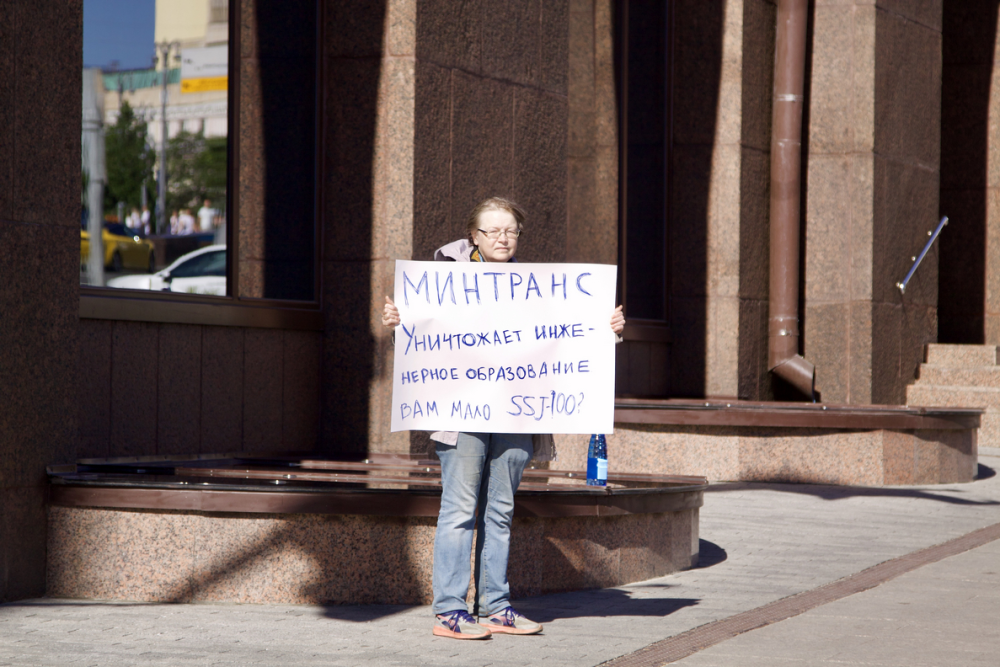
Perhaps many remember the wonderful story of Nikolai Garin-Mikhailovsky “Tyoma and Bug”, where the boy Tyoma saves the dog that has fallen into the well. In fact, this is an excerpt from the story “Childhood of Tyoma”, followed by the novels “Gymnasiumists”, “Students” and “Engineers”. These books tell how Tyoma grew up and studied and how he became an engineer of the Certain. Moreover, the author himself was an engineer-a-party.
In the story “Engineers” you will read about how the matured Tyoma uses a rather complex mathematical apparatus for the design of railway tracks. All Putidian engineers possessed deep knowledge of the physical and mathematical disciplines necessary for engineering calculations. Without knowledge of mathematics, knowledge and application of geodetic calculations is impossible. Without knowledge of mathematics, physics and mechanics, it is impossible to design and build bridges, tunnels, railway stations, etc.
Therefore, the teaching of the physical and mathematical sciences both in tsarist times and in the USSR at transport universities was at the highest level.
At the same time, in tsarist Russia, and then in the USSR, the Putidian engineers were the highest category of engineers-up to the beginning of the development of mass aircraft and then cosmonautics.
Work in the structures of the department of the roads of tsarist Russia was very prestigious. When in 1896 it was announced the creation of the Imperial Moscow Engineering School of the Department of Railways in Moscow, the competition exceeded 50 people to one place of the professor. Outstanding scientists, such as Mathematician Mlodzeevsky, physicist Lebedev, mechanic Chaplygin, geodesist Solovyov and others, came to teach at the school. Later, the famous mechanics of Bolotin and Aleksandrov, mathematicians Aramanovich, Berman, Sadovsky, Karpelievich, Myshkis and Ventzel (I. Grekova) and others worked here.
Later, the school became the institute (MIIT), and in post -perestroika time - the university. During his work, many outstanding specialists, physicists, mathematicians, and engineers worked in it; You can list them for a long time. Teaching of physical and mathematical disciplines, as well as theoretical mechanics, sum, etc. remained at a high level.
In post -perestroika time, students of different directions studied the theory of functions of a complex alternating and operational calculus, important for solving differential equations of the dynamics of machines, electronics and automation.
Mathematics VS Creative
However, after the introduction of the so -called Bologna system of training program in MIIT and other railway universities began to change significantly. First of all, this affected a significant reduction in teaching programs for physical and mathematical disciplines. According to our estimates, the course of higher mathematics for engineers decreased by about three times. A reduction in the number of auditorrs (lectures, practical classes and laboratory work) began. By the 2018/2019 academic year, under the 18-week semester, the audit training of students was 27 hours a week. At a five -day school week, students had at least one free day. And at the same time, the “independent work of the student” (SRS) increased proportionally.
The requests of specialists of various manufacturing departments are constantly sounding: students need to know this or that section of higher mathematics or physics. But how to do this with a catastrophic lack of training hours?
In addition, in order for the graduates to be “creative” and “communicative”, mandatory study of future engineers of many humanitarian disciplines, such as history (“history of Russia”, “universal history”), “philosophy”, “safety of life”, mandatory essential abstracts in the discipline “Physical Culture and Sports” (to addition to the actual physical education), “Russian language),“ Russian language). and business communications ”,“ History of religions of the peoples of Russia ”,“ Environmental security ”,“ Jurisprudence ”,“ Legal support for professional activity ”,“ Management of human resources ”, etc. From this year, the course“ History of Transport of Russia ”(in addition to the history of specialty) is also introduced from this year.
At the same time, the introduction of the course of the Russian language, for example, is motivated by the fact that schools do not know the Russian language well. But they also do not know mathematics and physics - so why not introduce a course of school mathematics and physics into the university program?
The load of teachers in the 2018/2019 academic year is 780 academic hours a year. As you know, the training hours are divided into the so -called throat (lectures, practical classes, laboratory work) and an extraordinary load, which often actually takes place in the audiences, these are tests and exams, control of the student’s independent work (KSR, that is, the verification, often repeatedly, individual homework and intermediate control (PC). Directly the “throat” load was approximately 1/3 of the entire training load of the teacher.
In autonomous swimming
In 2018, the founder of MIT was replaced by the new founder, the Ministry of Transport of the Russian Federation became. MIIT began to be called the Russian University of Transport (Ruth), and with a great creak the name (brand!) MIIT was preserved with rut in brackets. Without coordination with the MIIT team, the charter of Ruth (MIT) was changed in such a way that now the rector Rut (MIIT) is appointed to the same time as the Minister of Transport - in contrast to the previous charter requiring the obligatory election of the rector at the proposal of the founder.
Soon, Ruth (MIIT) was transferred to the status of an autonomous budget institution, that is, now the Ministry of Transport of the Russian Federation is not actually responsible for the current activity and future of MITA.
The new rector became Klimov Alexander Alekseevich, known for the publications of Dissernet 1 . This official managed to work hard as Dean and the head of the department in the NOU "Togliatti Academy of Management", not having a scientific title of assistant professor or professor. There is no information about whether A. A. Klimov has the experience of teaching at a university, in the official biography of A. A. Klimov.
Together with Klimov, Vice -Rector Klenov Mikhail Vladimirovich, Cand, came to Mit. honey. sciences, also without teaching experience; Vice -Rector Timonin Vladimir Sergeevich, cand. Philos. Sciences, by education, a historian, also without teaching experience. MIITA finances are controlled by Vice -Rector Tugaev Mikhail Yuryevich , Cand. tech. Sciences, by education of a mechanical engineer, without teaching experience and at the same time a businessman (Labius LLC and ANO “Ioir”) 2 .
This situation is quite typical for modern Russia, when the manager is not a specialist who knows the problems and features of the functioning of the enterprise (institution), but the “manager”, ready to manage anything. The control style of the new rector - purely bureaucratic - through numerous orders and orders. There is only one day a month to receive employees by the rector, the duration of the reception is two hours; It was almost impossible to make an appointment with the rector until recently. After the propagation among employees and students , the performance of Professor V. B. Zylev 3 was a reception for the rector was simplified.
By the spring of 2019, employees of the issuing departments made training plans - taking into account the constantly changing numerous requirements and instructions, this is not easy and exhausting work. New curricula were adopted by the educational and methodological department (mind) Ruth (MIIT) and approved. But after the May holidays of 2019, the mind reported that from the 2019/2020 of the academic year the school week is reduced to 22 hours, and the number of study weeks is up to 14. As a result, students will have 60% less educational audit classes. Also, the volume of extracurricular work with students (consultations, KSR, PC) was approximately halved.
As a result, a significant part of the material being studied was sent to the section “Student's independent work” (SRS) without any control. Curriculums were changed by officials to the mind without taking into account the specifics of various disciplines - a simple cutting of auditorial hours.
Famous mathematicians and outstanding teachers E. S. Ventzel and A. D. Myshkis in the article "Who will teach a professor who should teach the student?" (Komsomolskaya Pravda dated February 27, 1988, p. 2) wrote: “In every possible way to stimulate not massive, depersonalized, but individual forms of work of the teacher with a student. For this , both must have time. Nothing contributes to the growth of a future specialist as free, unstressed conversations with a mentor. ”
Now the possibility of personal communication during consultations and the KSR is practically reduced to zero.
Further, the auditor's load of teachers was increased to 850 hours a year, and now the lion's share of this load (approximately 2/3) is a “throat”, the most laborious work.
"May decrees"
Finally, the rector demanded to transfer 15% of the load to the hourly fund. As a result, part of the academic work will have to be carried out almost free: the rates of hourly wages of teachers have not changed for many years. Few people want to work on these conditions! This attitude towards teachers does not allow how to educate new young teachers; Most of the faculty (PPS) have been forced to transfer to an incomplete bet, many teachers are fired, and the average age of the PPS will soon surpass the retirement age.
All these transformations occur under the slogan of the execution of the “May decrees”, about which at the recent PMEF-2019 in St. Petersburg even the highest officials of the Russian Federation spoke as impossible.
The leadership of MITA claims that the university is in the debt pit, and the proposed innovations can improve the financial situation of the university. It is not clear how in one year the university fell into this hole. At the same time, the administrative control apparatus is exorbitant. More than 20 people “work” in the rector alone, including 5 assistants of the rector, one adviser to the rector, President Ruth (MIIT), the scientific director of Ruth (MIIT), 5 vice -rectors and their secretaries. According to indirect estimates, now the number of administrative-control personnel exceeds the number of PPS by about doubled.
As a result of increasing the load to one rate and transferring a significant part of the load to the hourly fund, the number of PPS rates decreases by more than 1/3.
At the same time, the heads of the units require not only the transfer of existing teachers to smaller stakes, but also the dismissal of employees. It was required that the ratio of the number of students to the number of PPS rates was more than 12 to 1. However, by the beginning of 2019, for example, at the Institute of Management and Information Technologies of MITS before the start of these transformations, there were more than 12 students per permutation of the PPS. The innovation introduced by the Receiptee concludes the ratio of the number of students to the state of teachers more than 20: 1 or even 30: 1. Naturally, this cannot but lead to a deterioration in the quality of students' formation.
Nevertheless, the planned values of the numerical amount of the PPS are declared, while it states that the average salary of the PPS should be calculated based on the number of PPS, and not from among the rates.
A abbreviated educational load will lead to a radical deterioration in the quality of graduates. Not knowing the sopromat, engineering graphics, geodesy and bases for studying these items - physics and mathematics - graduates of MIIT will not be able to design and create new transport systems, manage them and develop a digital economy. In addition, castrated curriculums will not be able to attract foreign students to MIIT, and this will lower the already not very high rating of MIIT.
The training load of senior courses (2nd and above) changes from the 27 × 18 to 22 × 17 scheme, a decrease in the training load by more than 20%. Students planned to get an education according to those curriculums that were adopted at the time of their receipt, but now they will receive a completely different education.
It seems that the goal of some managers of the Ministry of Transport is to capture the territory of MIIT and the destruction of one of the oldest technical universities in Moscow, which is the scientific and cultural property of Russia.
In our opinion, all of the listed “innovations” threaten the irreparable destruction of engineering education in the field of railway transport and require at least a serious discussion of the engineering and academic public.
On July 4, the authors visited the rector and expressed concern about the current situation, especially in connection with a decrease in the training load. At that time, new curricula of 2–5 courses were not approved, and there are doubts about the legality of their adjustments. Now they already exist, but almost all the teachers and educational staff are on vacation, there is no one to fill out the work programs (RP) of the courses and the FOS (fund of assessment funds). The next semester is included in the approved RP and FOS.
Alexander Bratus,
doct. physical. sciences, professor, head. Department "Applied Mathematics - 1" from 1999 to 2018;
Galina Zverekina,
Associate Professor, Cand. physical. sciences, and. O. Head. Department "Applied Mathematics - 1"