
Translated material
The success of young generals
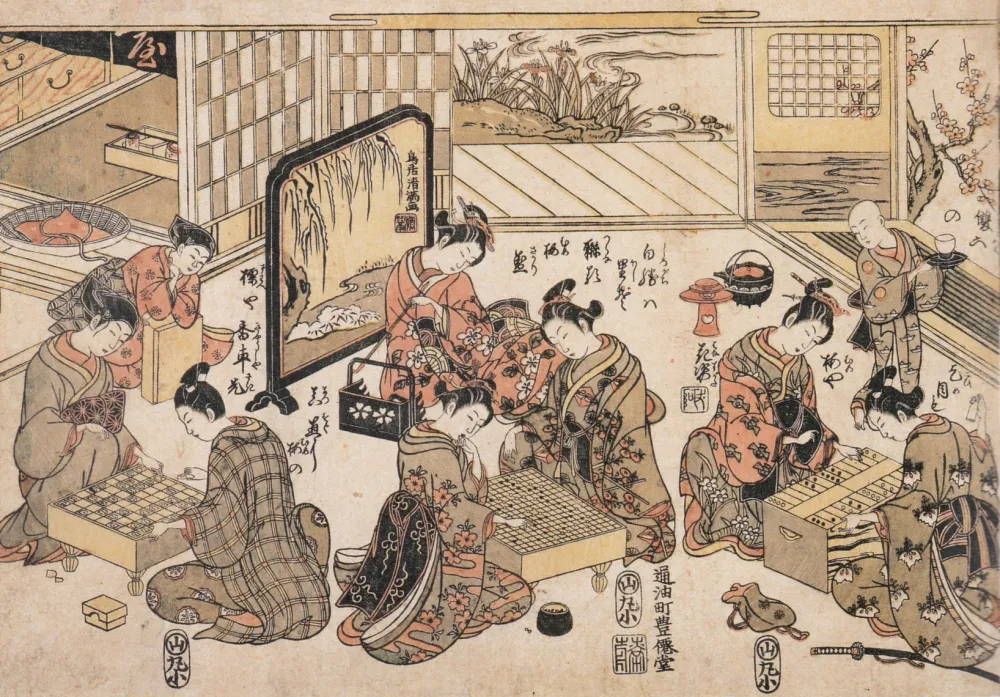
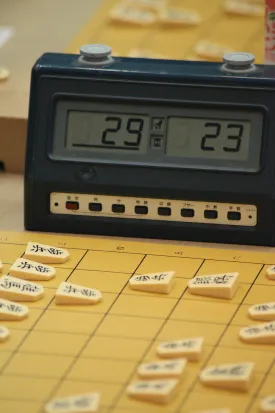 Sogi is one of the oldest board intellectual games. It comes from the ancient game of chatural, the birthplace of which can be considered the Iranian Abadan, who was part of India in ancient times. From there, amateurs brought her through Persia to Europe, where she evolved in what is now known as “Chess”. But the movement of the game took place to the east, to China, where it was transformed into the "Seians". In the era of Nara (710–794), the Japanese missions sent to the court of the Tang Empire brought them to their homeland and the exciting game, slightly changing its name in their own way. The purpose of the game is to take the enemy king. The Modern type of shoe was acquired in the 16th century, its final reform was made by Emperor Go-Nara. In the shogs, each player has 20 figures of 8 items that differ from each other by force and movements of moves. The main feature of the game is that the enemy’s taken figures can be returned to the board at any time as its own, which significantly expands the tactics and strategy of the game.
On June 29-30, 2019 , the third Youth Championship of Europe for Japanese chess of the shogi (Japan. This logical game of the chess type until the mid-1980s was almost unknown outside the Japanese islands, but little by little the shogi began to be popular in Europe and other continents. Closed from external influences, Japan is slowly starting to share its treasures, and for sushi-rolls, amazing Matty's tea, manga and anime, the turn came to finally show the rest of the world of Japanese chess. This novelty also got to Russia, where championships have been regularly held since 2003. Interestingly, initially in our country, not professional chess players showed interest in the game, but students interested in the culture of Japan, lovers of logical games. And only after it became known that the current chess king Magnus Karlsen is not averse to fighting the Japanese variety of this game, other chess players also began to play it slowly.
The main difficulty at the initial stage of the development of the game is the figures themselves-pentagons with hieroglyphs-calls applied to them, moreover, they are all the same color, that is, at first glance it is not entirely clear where their own are, and where strangers are. It is also obvious that the game is more complicated than ordinary European chess due to a larger number of options, and, accordingly, it is more interesting and dynamic, there are almost no draws in it. The psychological barrier is easier and faster before incomprehensible hieroglyphs are overcome by children, pretty soon they begin to show a strong game, forcing more inert adult players.
We talked with the President of the Japanese chess of the Russian Sogi ( vk.com/shogifdr ), a chess teacher Alexander Kalenov .
- Alexander, please tell us about the youth championship of Europe on the shogi, which recently took place in Wroclaw. How did your students come?
- This championship was held in Wroclaw for the third time (the competition began back in 2017). Denis Titov from Moscow became the European champion under 15. Denis also participated in the very first tournament, he was the European champion among boys under 12 years old. This year he played already in the age group under 15 years old and again, having won all parties, won first place. Ivan Mishin played in this tournament for the first time, scored 6 points out of 8 and won bronze among boys under 12 years old.
- What are our federation prospects with full -fledged membership in Fes (the Federation of European Associations of the Sogi)?

- I had a long correspondence with Fes's President Frank Roovet , only a formal part remained during the World and European Championship, which will be held in August this year in Bratislava, and Russia will become a full member of this international organization. In addition, we still discussed with him the question of the fact that Moscow would apply for the fourth youthful European Sogi Championship in 2020.
- Will meetings in the format of a chess biathlon (shogi + chess) will continue with the participation of Russian and Japanese students?
- This year the competition was accepted by the city of Vladivostok, and now everything will depend on the Japanese side, since the format of this event implies the alternation of countries (Russia - Japan) that accept this tournament. Since 2014, a chess biathlon has been held on a regular basis due to the joint efforts of our Federation and the Society for the International Washing of the Sogi (ISPS, Japan).
- In your opinion, is it possible that in Russia there will soon be state support of the shogue, or this sport will remain the lot of the few “chosen”?

- Russian legislation requires, for the recognition of the game, the country's scale of organized communities of players at least half of the subjects of the Federation, so I believe that we are still very far away. Other Japanese games (Go and Renju) began to develop in our country significantly earlier than Japanese chess (back in the USSR). Then there was a completely different legal framework in this matter. Therefore, for example, Go has its own separate sports federation, registered by the Ministry of Justice, the less common Renju is included as a separate sports view of the Cheski Federation.
- How do class classes affect the success of guys at school? Does this give them some advantage in mastering the exact sciences?
- I personally think that in relation to all such games (chess, shogs, etc.) there is no such dependence. Children who are naturally developed by combinatorial thinking are interested in such games, they begin to win; Accordingly, this stimulates them more and, as a result, play better than most of their peers. Accordingly, such children and study at school is much easier, and they have time better. Studies were conducted in the world (in particular, more recently in the UK there was such a study, and very large -scale), and no correlation between teaching children chess and academic performance was revealed in school subjects. In our country, chess is now introducing to the school as an obligatory subject, but this is due to the simple interest of the chess federation (which has long been lobbying) to conduct a successful business: the publication of educational aids, the sale of inventory in schools, teachers for which, of course, budget funds are allocated.
- Tell us about your plans for organizing international competitions in our country.
- As already mentioned, in August we will apply for the Youth Continent Championship of 2020 if it turns out, then I plan to submit an application for the same competition among adult players.
Alexander Kalenov
Cyril Sokolov talked