
Translated material
We got out
Who will manage the European Union in the near future
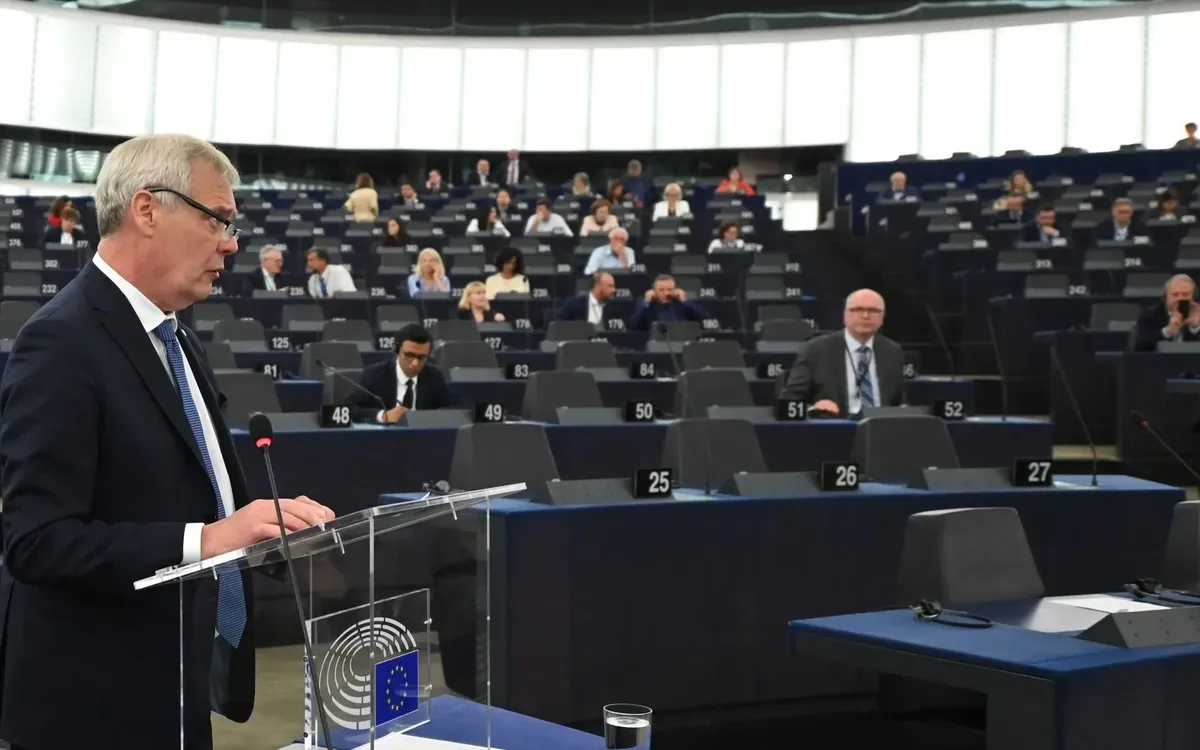
The leaders of the 28 EU countries at the Summit in Brussels on July 2 elected the chairman of the European Council, the head of the diplomatic department of the EU and the President of the European Central Bank, which was supposed to approve (or not approve) the European Parliament. The next day in Strasbourg, the European Parliament of a new convocation elected its chairman. These five people who will represent the European Union and largely determine its policy make up a single personnel package, balanced by political, geographical and even gender principles. Therefore, the selection process resulted in a 48-hour marathon of a special EU summit in Brussels.
Ursula von der Layen
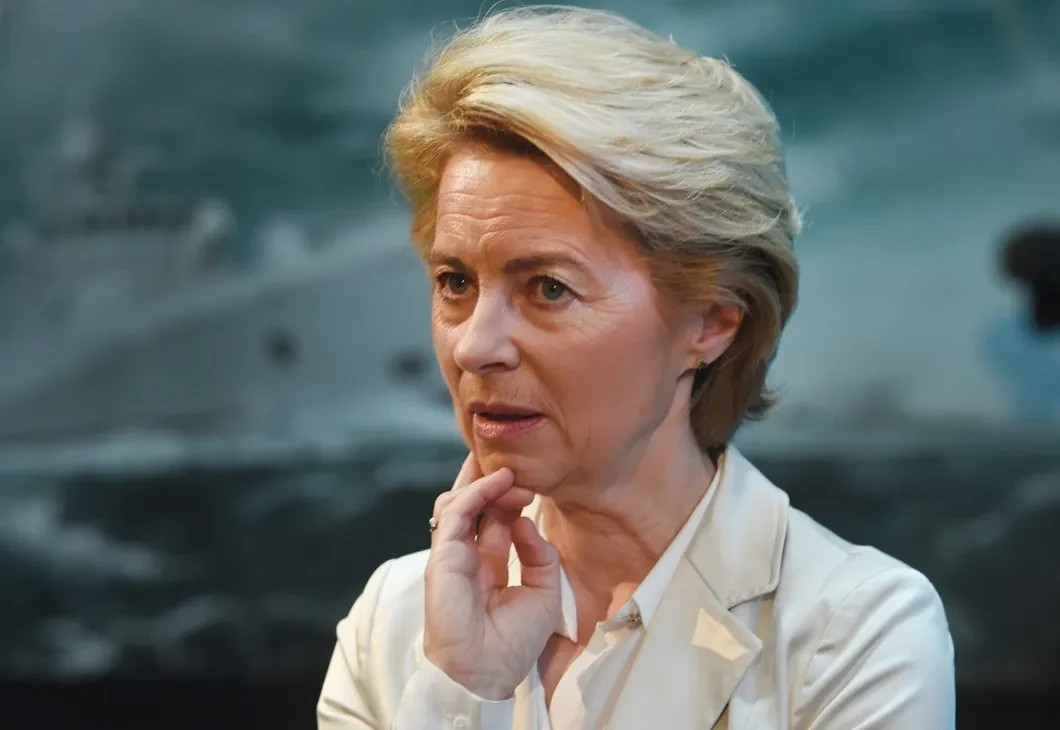
The hereditary aristocrat, a doctor of medicine, who received a second education at the London School of Economics, now the Minister of Defense of Germany, 60-year-old Ursula von der Layen, will replace Jean-Claude Junker as chairman of the European Commission. She will lead the EU executive collegium from commissars who oversee certain directions of politics, and a huge bureaucratic apparatus that monitors compliance with the EU agreements, prepares bills, and after their adoption by the leaders (or ministers) of the Union and the European Parliament, it ensures the implementation.
Von der Layen is a relative newcomer in politics. She joined the Christian Democratic Party of Germany (HDS) only in 1990, and before that she worked as a gynecologist or was a housewife. However, getting into politics, immediately began to move rapidly along the career ladder. In addition to the angel Merkel herself, she is the only member of the government that has been working in him all the time since 2005. Von der Lyain, the deputy leader of the ruling CDS, and she was considered a natural successor to Merkel at the office of the chancellor or - a favorite in the race for the post of Secretary General of NATO.
In recent years, however, her star has somewhat faded against the backdrop of Germany’s readiness for military operations, the accident of the Bundesweh “Euro -fi -files” with the death of the pilot, the disputed distribution of defense contracts and the hiring of numerous external consultants.
Von der Lyain was not among the candidates for the EU key post, when the leaders of the Union countries gathered on Sunday, June 30, for a special summit. But by the morning of July 2, it became obvious that due to insurmountable disagreements, the prepared candidates did not pass, the European Union threatens the management crisis, and the leaders of its countries are a crisis of confidence. And then from the mouth of Emmanuel Macron sounded the name von der Layen.
She arranged everyone - the heads of 27 countries voted for her with one abstained. Paradoxically it was Merkel.
She did not have the right to support her closest ally without the consent of the Federal Government of Germany, and her younger coalition partners-Social Democrats-knowingly against von der Lyayen, constantly recalling her flaws as Minister of Defense, right-wing political orientation and, in general, suspecting her of incompetence.
But the European Council decided that von der Lyaine would cope, especially with the first two deputy: a socialist from the Netherlands Frances Timmermans and a representative of the Danish liberals Margret Westager. Both of them were candidates for this place.
Von der Layen was born and until 13 years old was brought up in Brussels, where her father worked in the European Commission, studied at the Brussels European school, so he speaks French freely. Then she studied in England and California for five years and fluid English.
“I am deeply saturated with the spirit of Europe,” she told European parliamentarians. In her first - after the nomination - public statements, she said that the EU should be strong and united, since he fights on the world arena "with growing China, unpredictable administration of the United States and assertive Russia." The EU is based on principles and values, she believes, its foundation is the rule of law. It is important to increase the competitiveness of the EU economy, and for this it is necessary to promote the reform of a single market, to invest in defense capabilities that will supplement NATO potential and allow Europeans to “be more persistent” in relation to the United States.
Many in the EU regard the position of von der Lyain in relation to Russia as tough, but there are nuances.
In 2015, she opposed the supply of weapons to Ukraine, believing that this would only warm up a military conflict and give an occasion for the Kremlin open intervention;
She said that Europe should be united in the support of Ukraine, but negotiations with Russia are possible;
She defended the North Stream-2 project from American pressure.
Von der Lyaine promised to be tougher in protecting the supremacy of law than a junker, and reforming the failed system for providing asylum in the EU.
She has personal hostility towards the Communists and everything that is associated with them. At the end of the 70s, when West Germany lived in fear of communist terror (Rote Armee Fration) and her father, at that time a prominent German policy, threatened her daughter’s kidnapping, Ursula went to study at the London School of Economics under the pseudonym Roses Ladson (as her American great-grandmother was called).
Von der Lyain would like to see the EU "united by the state of Europe - in the likeness of federal Switzerland, Germany or the USA." “Only in this way, the EU countries will benefit from the size of the continent, having agreed on key issues of finance, taxes and economic policy ... Maybe not my children, but my grandchildren will live in such Europe.”
Ursula von der Leyen is married to Haiko von der Lyyen, professor of medicine, director of the company for sales of medical equipment, which comes from an old count of family. Spouses raised seven children - they are now from 20 to 32 years old.
Charles Michelle
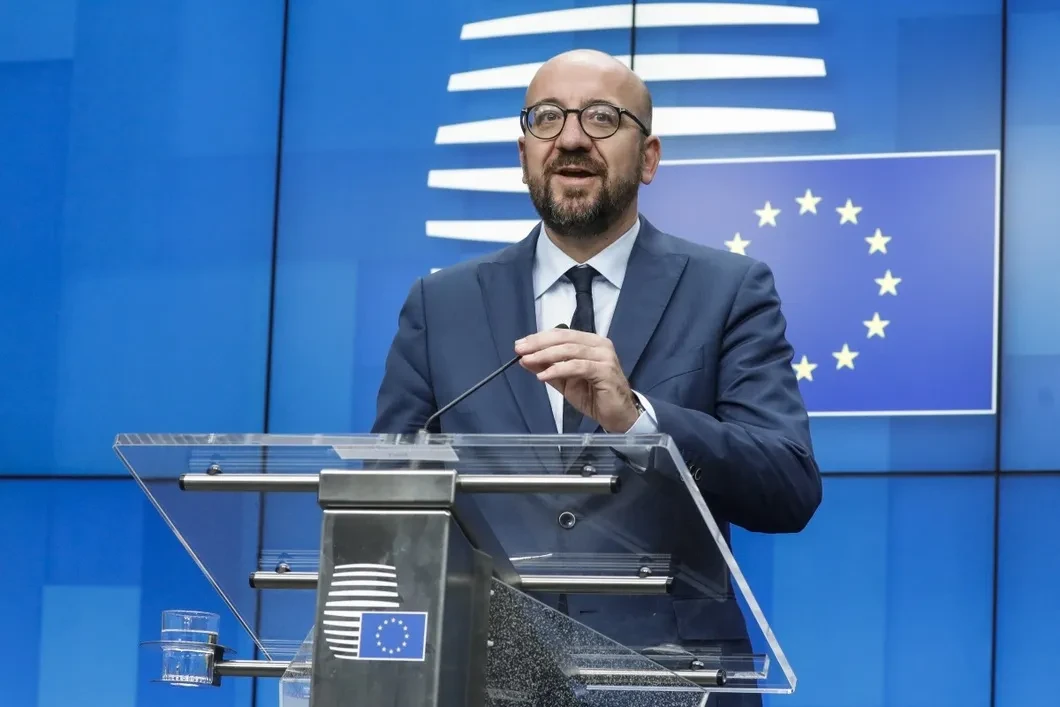
... The deputy, minister, mayor, leader of the party, Prime Minister of Belgium, and now here is the chairman of the European Council-all this in 43 years.
Charles Michelle, the departing head of the Belgian government, was elected chairman of the European Council.
His new work is to offer a political agenda of the discussions of the leaders of the states, to keep meetings and try to find a compromise on the most important issues of the EU policy. He will replace Donald Tusk in this position.
“, Charles Michelle, thanks to his experience, Prime Minister of Belgium is ideal for achieving consensus and forming unity between Member States,” said the former “head of Europe” of Tusk after the EU leaders have reached an agreement on new appointments.
I often met with his father, Louis Michel, when he was the Minister of Foreign Affairs of Belgium in the late 90s, and then a member of the European Commission. So Charles Michelle is a hereditary politician. At 16, he joined the Federation of Young Liberal Reformers. At 18, in the provincial elections, he went to the Council of the Vallonian Brabant. He studied at the law faculties of universities in Brussels and Amsterdam, and then registered in the college of Brussels' lawyers. He became one of the leading figures of franco-speaking liberals, at the age of 25-the minister, and in 2014, at 38-the youngest Prime Minister of Belgium.
In the political tradition of Belgium - a complex country, divided by language, wealth and politics - not the imposition of the will of the majority, but the search for a compromise. Michelle, mastered the art of unifying sides into a fragile coalition. Although he is from the Franco -speaking half of Belgium, he agreed to lead the government, which the Flemish nationalists were first included.
“This is a leader who can accept new formats,” said France President Macron, who insists on “Europe of different speeds” about Michelle. “The unification of the EU with respect for national diversity,” Michelle wrote on Twitter, formulating his goal as chairman of the European Council.
One of the first outside the EU was congratulated by Michel on the election, the chairman of the PRC Xi Jinping. He wrote about the brilliant prospects of the Chinese-European cooperation.
And the Belgians, meanwhile, focused on prose: the first place in the search engines took users' request for the salary of the head of the European Council. 32,700 euros per month-just something. Not much more than the current 24,250 euros of the Prime Minister of Little Belgium.
Josep Borrel
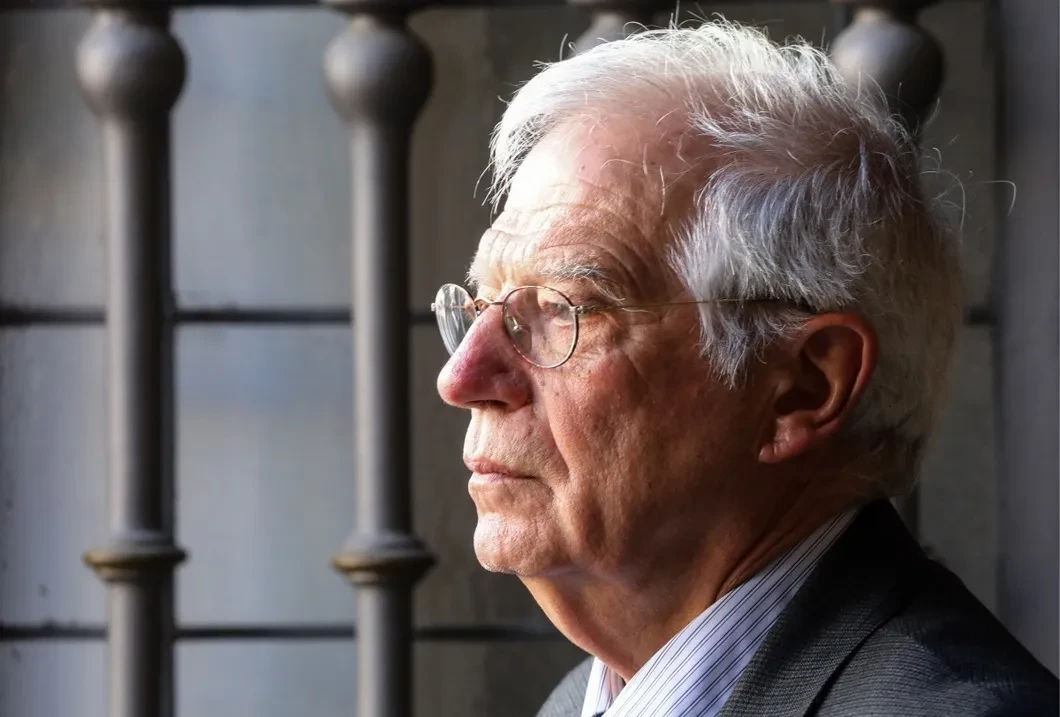
From the new head of the foreign policy department of the European Union, Josep Boar does not expect the mobility that was inherent in his predecessor Federica Mogherini - she almost does not get out of the plane for five years: official visits, international forums, hot spots ...
They expect another from the fighter - that he will devote more time to the coordination of the positions of the EU countries on international problems.
Boarse is 72 years old. The position that he will take in November officially sounds like this - a high representative of the EU for foreign affairs and security policy plus deputy chairman of the European Commission. A kind of foreign Minister of Foreign Affairs, but only in the part in which the member country shared with him their sovereignty.
Borrel is a mastodont of the political arena, the last surviving politician of the Golden Age of Spanish socialists. In the government of Felip Gonzalez in 1982-1996, he was the Minister of Public Work and oversaw a large -scale infrastructure program. Born in a small village in Catalonia in the baker’s family, graduated from high school with honors and then studied aviation equipment in Madrid; In Stanford (USA) received a master's degree, and then moved to Paris, where he received another degree.
Policy was still engaged in Caudillo Franco. He worked since 1972 as an engineer in the National Oil Company of Spain and was elected one of the leaders of trade unions. He joined the Socialist Party in 1974 - even under the French regime. In 1979, he became the head of the financial department of the regional government of Madrid, and in 1982 the leader of the Spanish socialists Gonzalez invited him to the government. Then he was elected as a deputy of the European Parliament, and from 2004 to 2007 he was his chairman. After he actually left politics, but the events in his native Catalonia in 2017 returned him to active activity - he spoke in defense of the Spanish constitution, actively fought with separatism.
Last year, when the legalist government of Spain fell, the leader of the socialists Pedro Sanchez invited the representative of the old guard guard to his Cabinet of Foreign Affairs. And now the name of the Boral is part of the compromise package of EU top managers. The leaders of the EU countries did not bother his age. They probably judged him.
He has now shown a slight anti -Americanism in Europe, which does not affect the foundations of Western values, but emphasizing the independence of Europeans.
For example, he rejected the US demand to Europe to send troops to the Middle East, read the moral of Trump administration regarding the crisis management in Venezuela, defended Cuba in a property dispute with America, made several caustic anti-American replicas, praised Iran for socio-economic achievements.
But the main thing that European leaders expect from him is the solution to the problem of Western Balkans. The EU promised these countries the "European perspective." But besides Slovenia and Croatia, already adopted in the EU, and Montenegro, the rest - Albania, Northern Macedonia and Bosnia and Getsegovin - frankly do not meet the necessary criteria, and in the present - not its best condition - the European Union is not able to “digest” them. The same Kosovo problem prevents the acceleration process in the EU of Serbia, and negotiations have come to a dead end.
Borrel is a furious opponent of separatist movements, perhaps this will help him win more sympathy from Belgrade.
The attitude of the bean towards Russia is not to say very pleasant: “Before us is a new world that we could not imagine five years ago. Trump was not the president then, there was no Brexit. Since then, a lot has changed.
Our old enemy, Russia, again says "here I am," and this is again a threat, and China also manifests itself as an enemy. "
Borrel will now become the face of the EU - and this mission is unlikely to consider a lover of life for a burden, directed to the future who, in July last year, married his longtime friend - the chairman of the Spanish Socialist Party, Christine Narbon.
David Maria Sassoli
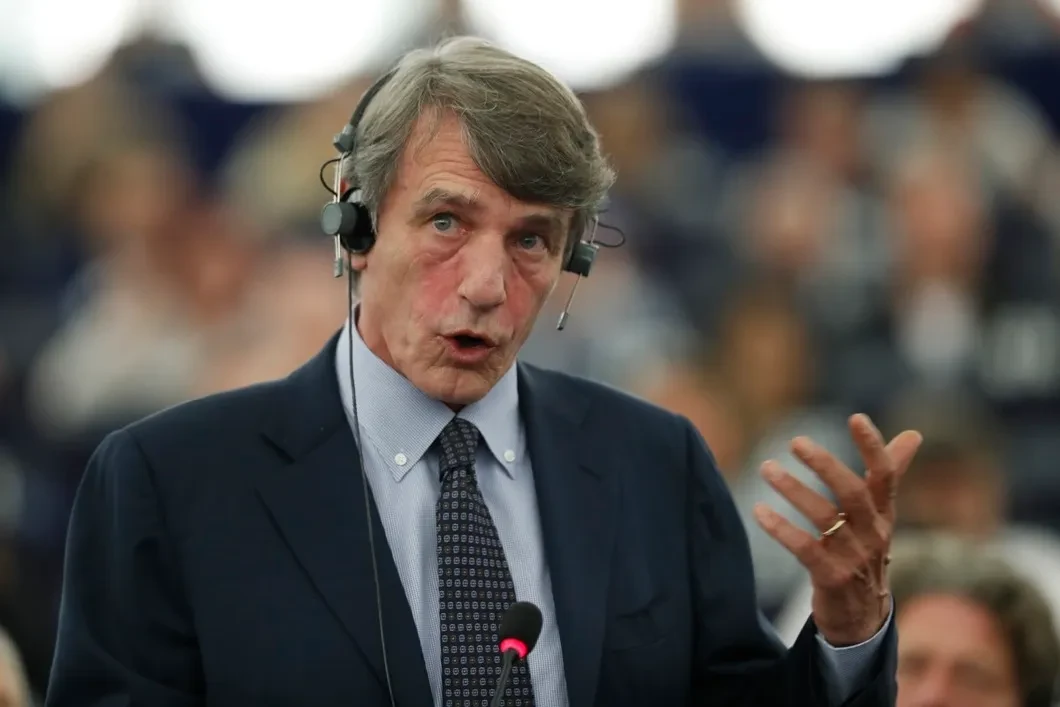
The member of the European Parliament since 2009, and since 2014-its deputy chairman, 63-year-old David Maria Sassoli was known only to the deputies, since he chaired the plenary meetings. A journalist, a political scientist by education, he first worked in Roman newspapers, since 1992 - a TG3 channel reporter, and then leading news on TG1.
On July 3, he was elected chairman of the European Parliament.
The take -off of Sassoli was unexpected. The heads of state and governments at the EU summit on July 2 fell on their opinion - the European Parliament should be headed by Sergey Stanishev, Bulgarian, chairman of the European Socialist Party. A native of Kherson, a graduate of Moscow State University, a former Prime Minister of Bulgaria, would provide an Eastern European balance in the Package of the EU Higher Positions. But contrary to the recommendations of the leaders of 28 countries, Stanishev did not put up his candidacy, deciding to devote himself to the strengthening of the Party of European Socialists. And his one -party members nominated Sassoli.
Thus, the European Parliament respected the opinion of the leaders of the countries, but only in terms of political balance, without providing geographical. The socialist was elected, but not from the Eastern European country, but the Italian.
Sasssoli, who has still been interested in the political position of Sassoli, says his active membership in the interfacing group of the European Parliament for eradicating poverty and protecting human rights.
Sassoli is married, he has two children. As a true Florence, he is rooting for the Fiorentina football club.