
Translated material
A couple of Germany was fined 950 euros for making coffee on a bridge in Venice. What else can not be done by tourists in Italy?
In 2018, 713 million tourists visited Europe-more than in any other part of the world. Italy was one ofthe most popular areas, as in past years. 94 million tourists arrived in the country, spending more than 40 billion euros there. Tourism accounts for 13% of the Italian GDP, but cities and resorts are faced with pollution and overpopulation due to tourists-and introduce restrictions and fines for them. "Medusa" has collected examples of how in Italy they tighten order for guests.
Venice. You can not cook coffee on the street, walk in a swimsuit and dive into the channels
On July 19, the Venetian authorities fined 950 euros a couple of tourists from Germany, who, with the help of a hiking plate, prepared morning coffee near the Rialto bridge . The Germans were accused of violating the rules of conduct in Venice (in particular, they prohibit the use of igniting substances in public places) and after paying the fine asked to leave the city. “It is necessary to respect Venice. Those bad people who come here and do what they want should understand that the police will catch them, punish and expel them, ” said the mayor of Venice Luigi Brunyaro.
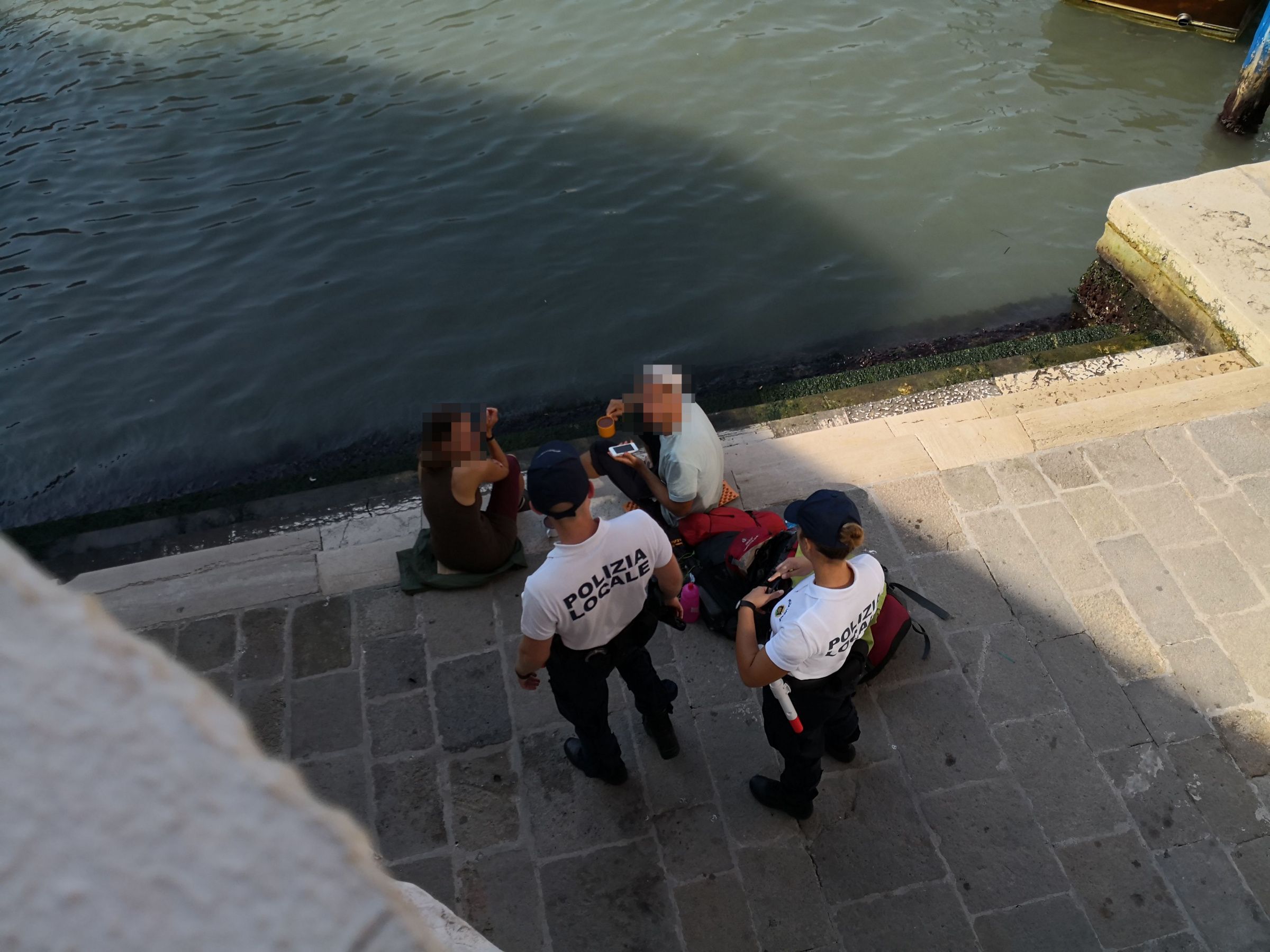
In the 270,000th Venice, where from 25 to 30 million tourists come annually, there are more restrictions for visitors than in any other Italian city. It is forbidden to feed pigeons (a fine of 50 euros ) there, lie on shops ( 100 euros ), walk in a swimsuit or without a T -shirt (200 euros), dive into channels (450 euros). In addition, in May 2019, the Venice authorities introduced payment for the entrance to the city for tourists who come for only one day. “Entrance ticket” to Venice for them costs three euros.
Rome. You can’t swim in fountains and hang "castles of love" near them
In Rome there are a number of restrictions that relate to ancient fountains in the city center. It is forbidden to eat near them, throw some things into them (exceptions-coins; however, they can be fined for their gathering ), climb on the sculptural compositions of the fountains, hang on the fences near them “castles of love”, wash their clothes and drink animals from them. Fines for violations start from 160 euros.
In addition, the city authorities have been fighting for many years with tourists who bathe in fountains in the summer (for example, from April to June 2017, at least nine people were fined for this, each paid from 450 to 500 euros). On July 17, 2019, the mayor of Rome Virginia Raji posted a video of a video of a man in Facebook in a costume of the ancient Roman senator, whom a policeman removes from the fountain. “Our monuments must be respected, historical Roman fountains are not pools,” Raja wrote, adding that a fine of 550 euros is provided for such a violation.
In addition, the Roman authorities forbid to carry strollers and suitcases on wheels on the stairs, which are historical monuments (for example, along the Spanish staircase ), as well as drink from street fountains, touching them with their lips - instead should be praised in the palm or bottle. True, the journalists have already doubted that the authorities would really be able to follow the observance of this rule.
Trieste. Hammock cannot be tied to trees
Last week, the city of Trieste in the northeast Italy was fined for 300 euros of the 52-year-old Austrian tourist, who was resting in a hammock on the embankment. The police said that the Austrian tied a hammock between two trees and thereby violated the city rules for using green zones. In addition, the trees were located on a pedestrian path, so other people were forced to bypass a sleeping tourist.
Some considered the fine unfair and decided to arrange a flash mob in support of the Austrian. A group called “Free Gamaki team” arose on Facebook, whose participants called on in the evening of July 20 to hang hammocks on the embankment, where a fined tourist was sleeping and take a nap. The initiative attracted the attention of the European media, in particular, The Guardian. However, the flash mob did not work: at the appointed time no one appeared on the embankment, the local newspaper Trieste Prima wrote .
Sardinia. You can not take shells and sand from the beach
On the Italian island of Sardinia, there are fines for tourists who, on vacation, are trying to take sand, shells or pebbles with local beaches. This rule drew attention to this in August 2018, when a resident of Great Britain, who violated him, received a fine of a thousand euros (they could be fined three thousand as much as possible).
The removal of sand from the beaches of Sardinia seriously threatens the island ecosystem because of its scale: only last year, employees of the Callararia located on the island of the airport found more than a ton of sand in the luggage of tourists. The airport employees even created a group on Facebook in which they publish photos of sand containers and stones taken from tourists. “Over the past 20 years, we have seized dozens of tons of natural material. Every year at the end of summer, we try to return it to where others got it, ”CNN complained to one of the group administrators.
SKYA and Lipari. You can’t walk in a swimsuit
In June 2018, the authorities of the small island of Lipari, located near Sicily, under the threat of a fine of 500 euros introduced a ban on wearing swimming trunks and swimsuits in the city center. Two months later, a similar rule appeared on the island of Kysya near Naples - they were forbidden to walk without shoes, in a swimsuit or without a T -shirt. The mayor of Slar Enzo Fernandino found that such actions defend the resort’s reputation and introduced a fine of 25 to 500 euros for them. Shortly before that, Fernandino also forbade drying towels and other things on balconies that go to the central streets of the city. True, these restrictions on Klar are applied to both tourists and residents of the island.
Olga Korelina