
Translated material
In the Russian edition of the book of the historian Juval Harari, the head of Putin and Crimea was replaced by the head of Trump. The author himself agreed to such edits
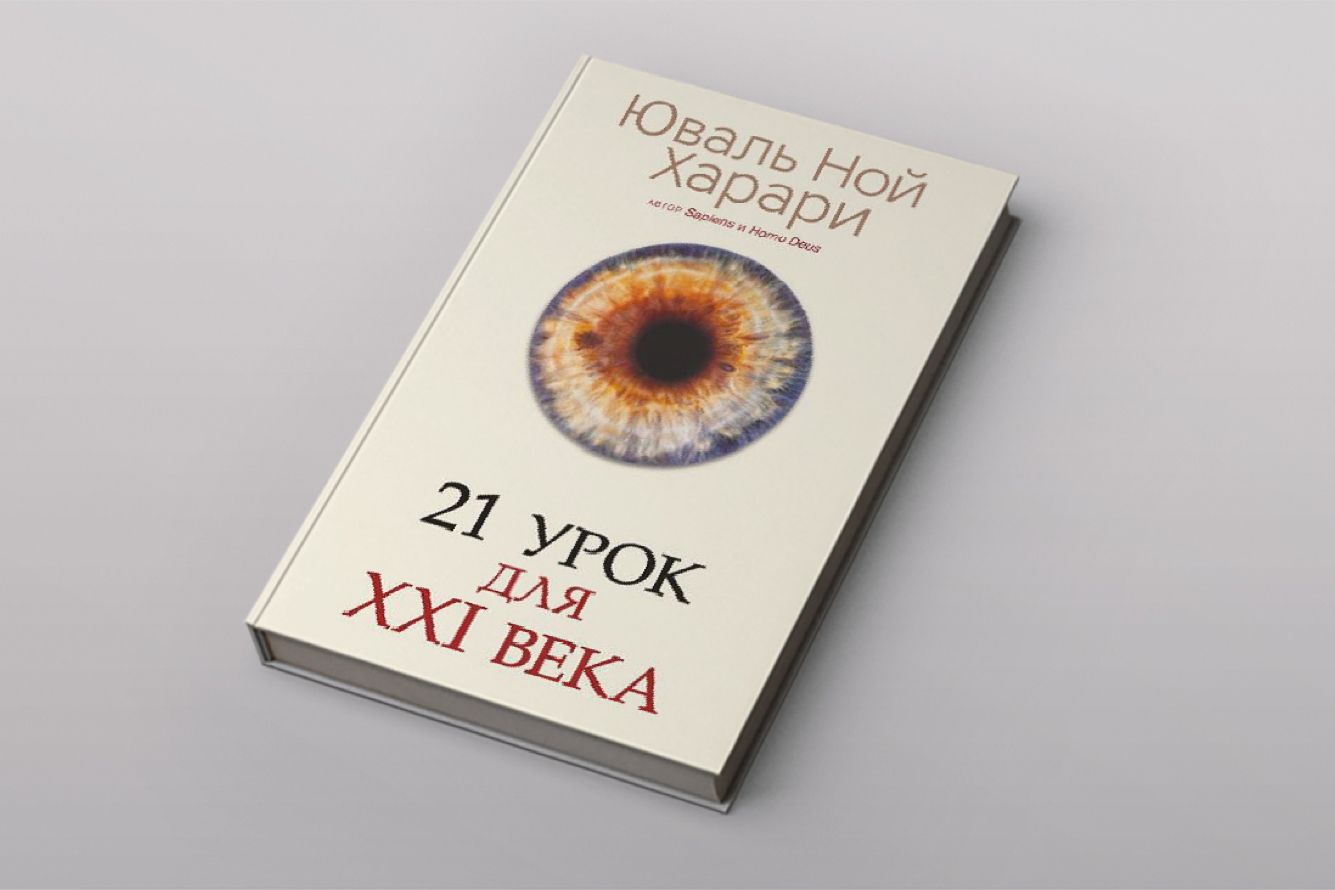
On June 21, the Book of the popular Israeli writer and historian Juval Harary “21 lesson for the XXI century” was published in the Russian Publishing House of Sinbad. It is devoted to the problems that modern society faces. This is the third book of Harari in the series. The first, which became the bestseller “Sapiens: a brief history of mankind”, was published in 2011. It is dedicated to the past. The second, published in 2015, “Homo Deus: A Brief History of Tomorrow,” was an attempt to look into the future. In his new book, Harari, as he himself writes in the preface, decided to focus on what is happening here and now.
The book was published in the USA, Canada and a number of European countries in September-October 2018 and became a noticeable event; The review of her in The New York Times was written by Bill Gates.
Shortly before the publication of the Russian translation, Sinbad shared fragments of a book with several publications. Among them was Medusa, who retold the chapter to raise children in the modern world (it was partnerships). The publication "Poster" published a fragment of the 17th chapter of the book, which is called "postravda."
A few weeks after the release in Russia “21 lessons for the XXI century”, readers drew attention to the discrepancies between the English and Russian versions of the book - primarily in the chapter of “postravda”. So, on July 16, the user of the Living Journal under the nickname De_leser noticed that in the English version, as an example of fake news, the author gives Vladimir Putin's statements about the situation in Crimea in 2014. From the Russian version, the name of Putin and the mention of Crimea disappeared, and Donald Trump's performances were an example of fake news. On July 20, Ukrainian user Andrei Chernikov wrote about this on Facebook , and on July 21 - Russian publisher, critic and translator Dmitry Kuzmin. They published screenshots of the Russian and English versions of the book of Harari.
What is written in the Russian version "21 lessons for the XXI century"
In the version issued by the Sinbad, the head of the “postraud” begins with reasoning about how people convince: modern life is full of lies and fiction. “So, according to the calculations of The Washington Post, during the time that passed after the inauguration, President Trump made more than 6,000 false public statements,” the text says. - In the speech, uttered in May 2018, out of 98 factual statements Trump 76% were erroneous, misleading or not based on anything. In response, Trump and his supporters invariably call the journalists The Washington Post, The New York Times, CNN and other media “liars” and accuse them of spreading “fake news” in order to discredit Trump's presidency. ”
But, it is noted in the Russian text of Harari, the tantrum around fake news is inflated: “In reality, she plays on the hands of tyrants and dictators. If people do not want to believe anything, because “all the news is fake”, a free and open public discussion becomes impossible. Therefore, we must remind ourselves that today our situation is no worse than it was before. ”
What is written in versions of the book in other languages
The English version of the head of the “postraud” coincides with the Russian -speaking only the first proposal: “Today we are constantly repeated that we live in a new frightening era of“ post -truths ”, surrounded by lies and fiction.” Further, as an example of fake news, Harari cites a completely different story - about how Vladimir Putin publicly denied the presence of the Russian military in the Crimea in February 2014.
“The Russian government and President Putin personally have repeatedly denied that these were Russian troops, and described them as spontaneously created“ self -defense groups ”, which could buy uniforms in local stores. When they made this rather ridiculous statement, Putin and his assistants knew that they were lying, ”wrote Harari. Fragments of this chapter were given by Open Magazine and The Guardian .
Here, the author argues that "many Russian nationalists" consider the idea that "Ukrainians are a separate nation from Russia." And Ukrainian nationalists, in turn, consider the self -proclaimed DPR and LPR to “false countries”.
The Medusa compared the English -language version of the head of the “postravda” with the publications “21 lessons for the 21st century” in German and French, as well as in Hebrew. All of them almost verbatim coincide with each other.
In the Russian publication, not only the chapter about the "posture" was subjected to edits
Ukrainian blogger Andrei Chernikov found another fragment of the book “21 Lesson for the XXI century”. In Chapter 11, entitled “War” in the submarine “Gazy from the Kremlin”, the accession of Crimea to Russia is called “the only successful invasion of the 21st century, undertaken by the Great Power”. The author writes that Russia itself “does not consider the annexation of Crimea an invasion of a foreign country,” and notes that the Russian troops “practically did not meet resistance from either the local population or from the Ukrainian army”.
In the Ukrainian, English, German and French versions there is no remark that Russia does not consider the annexation of Crimea an invasion of a foreign country. But it says that Russia "settled fear in the souls of neighbors." And the success of the “conquest” is explained by a combination of circumstances - neither the local population nor the Ukrainian army showed resistance, and other countries of the world did not interfere with what was happening.
Juval Harari said that he agreed to edit in the Russian edition
“Medusa” sent questions to Sinbad about why the Russian version of “21 Lesson for the XXI century” differs from publications in other languages and whether these changes were agreed with the writer. The representative of the publishing house Anastasia Khanin promised to answer them after the Sinbad spoke to the Harari office.
On the same day, the writer’s statement about edits in the Russian version of the book published the website Newsru.co.il. “My goal is to ensure that the main ideas of the book about the dangers of dictatorship, extremism and intolerance achieve the widest audience as possible,” Harary said in a statement. - Including an audience living in countries with a undemocratic regime. Some examples in this book can push this audience or lead to censorship from a certain regime. For this reason, I occasionally admit the adaptation of books and affirm changes in certain examples - but never the main thoughts of the work. ”
As Newsru.co.il emphasizes, Harari representatives did not answer the question of who is the author of fragments of the Russian version of the text that do not coincide with the original. However, the Russian -speaking fragment of “post -truths” is almost identical to the beginning of the Harari column, which he published in December 2018 in the “Opinions” section on the popular Israeli website Ynet (this is the site of the Akhronot newspaper, one of the largest and most influential in the country). However, in this column, Harari also mentions Russia, calling the power in it “tyrannical” and recalling the accusations of the spread of “false news around the world” that sounded to it. These fragments did not get into the book.
Anna Zhilova