
Translated material
Plan or failure
Tehran’s power maneuvers lead to a weakening of the desire of Europeans to save a “nuclear deal” with Iran
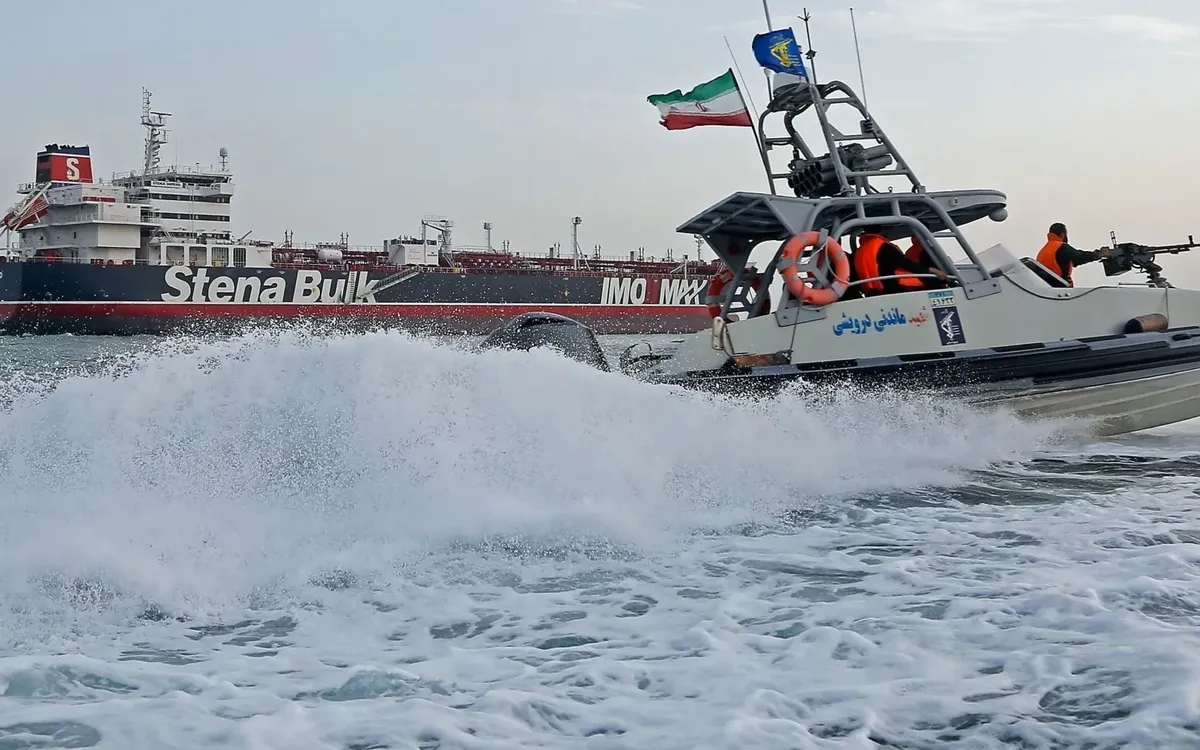
On July 19, it may well become a reference point of not only a new round of escalation of military tension in the Persian Gulf, but also changes in the approach of the European Union to the Iranian problem, or rather, to the situation around the “nuclear deal with Iran”.
We are talking about an attempt by Europeans to preserve in some-albeit a cut-a joint comprehensive plan of action (SVPD) after the exit of the United States from it in May 2018 or its actual (without official statements by the European Union) liquidation. The plan, recall, was agreed in July 2015 between Tehran, on the one hand and five permanent members of the UN Security Council and Germany, on the other. Until now, Europeans have tried to adhere to the scenario of salvation of the SVPD, noticeably distant from the position of Washington, which in this matter pursues a policy, called the “maximum pressure” approach to Iran. But the actions and line of the behavior of Tehran inspire them less and less.
Gulf oil and strait
On July 19, the naval units of the Almost omnipotent in Iran of the Islamic Revolution Corps (KSIR) crossed the Red Line in relations between the Islamic Republic and the countries of the West: the “guards” were seized and redirected to the Iranian port of Bender-Abbas, the tanker Steha Impero from 23 with the British flag with the Saudi Arabia with Arabia. crew members. The ship belongs to the Swedish transport company Stena Bulk.
Actually, there are no British among the crew, but there are three Russians on the lists there, we note.
On July 22, the incident became the subject of discussion of the Cobra Government Committee specially convened in London. Judging by the leaks in the press, the “Extraordinants” intend to limit themselves to economic sanctions against Iran, while not resorting to military force. However, according to The Sun, the UK is ready to send an atomic submarine like Astute to the Persian Gulf (armed with torpedoes and cruise missiles) and marine infantrymen who will be given the opportunity to use large -caliber machine guns and other weapons.
Why does the tension in the Persian Gulf escalate so rapidly over the past two months? The fact is that in May, the first year summarized the sanctions against the Islamic Republic restored by Donald Trump, as a result of which the latter lost, according to the US special representative for Iran Brian Hook, 50 billion dollars. The tip of the renewed sanctions was aimed, first of all, to Iranian oil, the reduction or even the termination of sales of which should cause irreparable damage to the economy of this country (according to the American CongResional Research Service, there are 20% of the Iranian economy and from a third to half of the income of the treasury).
Since May of this year, the oil boot for Tehran began to contract at a double speed, since two six -month periods provided by the Trump team to several countries - Iranian oil importers to search for alternative sources. We add to this that in May-June it became clear that the mechanism of “non-long-haired” calculations in trade with Iran (INSTEX), launched by Europeans (with a fair amount of time), does not justify the hopes of Ayatall, because it does not imply the purchase of Iranian oil by European companies due to the risk of falling under American sanctions. And trading through Instex “permitted” Americans and the UN goods (mainly drugs and food) is not particularly interested in Ayatall.
They themselves and their high -ranking officials began to vyoply declared publicly, not disdaining threats to "block the Ormuzian Strait"
- According to the principle of "if Iranian oil does not come true in world markets, then Arabic oil should not be sold." In response, Trump put forward a striking group led by the Avraam Lincoln aircraft carrier - formally to ensure the safety of shipping in the Strait of Ormuzian.
Following this, warning “mysterious” subversions of oil tankers in the Emirates ports began - so that the words of Ayatall did not disperse with affairs. Then, on July 4, the British interception in the Gibraltar area of the Iranian super-tank Grace-1 with two million barrels of raw oil, which was supposedly intended for the processing plant in Banim in Syria, in respect of which an international sanctions regime, was applied. The British, for their part, announced their readiness to release the tanker, provided that the Iranians would confirm that their oil would not go to Syria. However, it is not easy to prove this to Tehran, since there are no other consumers of their black gold in the Mediterranean today. “You [Britain] are the initiator of destabilization, and you will soon see the negative consequences of your actions,” President Hassan Rouhani said in this regard, urging the European Union to ensure the “full safety” of international marine shipping.
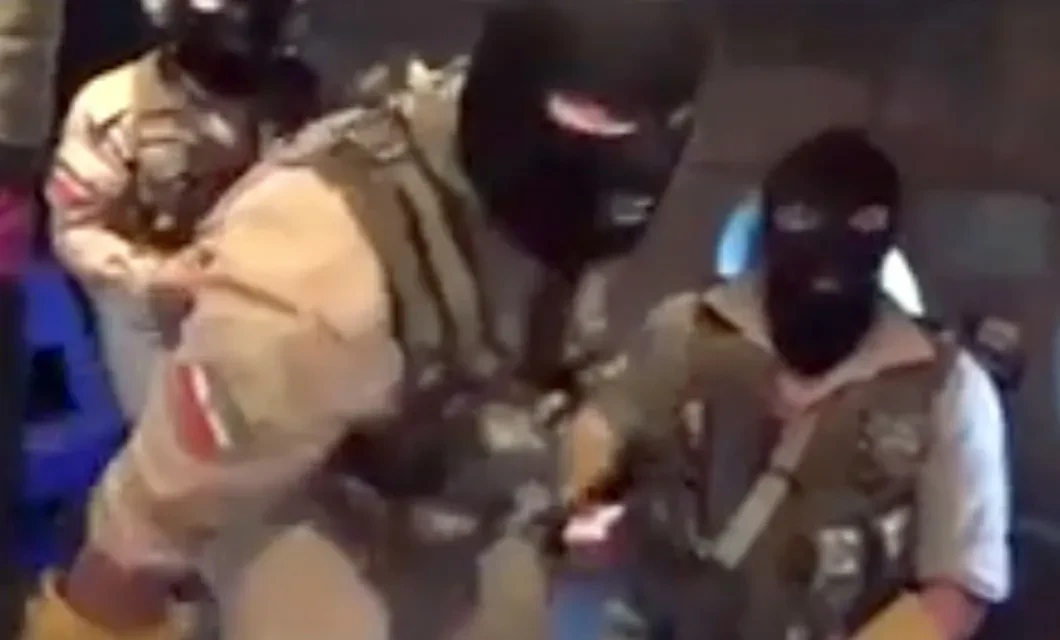
It is not difficult to guess that the capture of the Ksirovites of a particular British vessel, who allegedly “violated the rules of shipping” in the Ormuzian Strait just at the time of the growing Iran-British confrontation, is the implementation of threats from the Ayatalls. The Xirovites themselves no longer hide this: their official representative Abbas Ali Kaddiya wrote on his twitter as follows: “The rule of adoption of mutually symmetrical measures is well known in international law. It is often used against the dirty actions of governments. ” However, the very fact of power seizure involving the landing is recorded by technical means.
It is not surprising that after the Cobra meeting, the head of the British Foreign Ministry Jeremy Hunt called Iran "a state practicing piracy."
You can’t be silent to shoot
About at least three capitals - Washington, London and Tehran are reflected on where in this puzzle to put a comma in this puzzle today. So far, Trump’s calculation was not justified that as a result of the seizure by the Iranians, the Stena Impero will finally “see” the British, and other European politicians follow them to abandon the attempts to save the SVPD and solidify with the American approach to this problem. Trump himself and his advisers, we note, hastened to express solidarity and support for his British counterpart. Those, however, after a two -day pause seemed to be determined. Reuters quotes the following words of the head of the British Foreign Ministry: “We want to form a naval international shipping mission led by European states in order to support the safe passage of crews and cargoes in this important region.” At the same time, Hunt emphasized that the planned mission will in no case become "part of the American pressure policy on Iran." “We are not looking for confrontation with Iran,” he said.
Unlike the oscillating London in Tehran, it seems that the Xirov residents are kept under the support of Rachbar - Ayatollah Khamenei under control. Moreover, with the aim of providing pressure on the European Union, a year ago, he took to save a nuclear deal with Iran.
Now is the time of the Iranian “security forces” who believe that they showed patience for too long - while President Rowhani (political “pigeon”) “experimented” with the agreements on the nuclear program.
In recent months, the scales in Tehran were clearly inclined in favor of the “security forces”. Recall that in February of this year, the head of the Ministry of Foreign Affairs Mohammad Javad Zarif even tried to resign (according to available information, to stop the growing influence of the Xirovites on the country's foreign policy). Then he was persuaded to stay. And on July 16, he made another attempt to find interchange in the confrontation with the United States and Great Britain, publicly stating that the program for creating ballistic missiles in Iran may, as they want in Washington and Brussels, become the subject of negotiations. A day later, his statement was disavowed by the Xirovites: they say, no compromises on missiles.
As a result of the position of the main states involved in conflict situations in the bay, they are such.
The United States demonstrates force in the absence of diplomacy (Iran does not make contacts and negotiations).
Great Britain is trying to show flexibility: by applying force when the super -tanker is captured, he offers him to let him go, but not to Syria, and London appears to the courts on this issue.
Iran relies on power levers, demonstrating its unbending (there are no signs of a compromise on any issue) and trying to put pressure on the EU so that it decisively distance from the United States, providing opportunities for the export of Iranian oil.
Thus, it is Iran who increases confrontation dynamics in the bay, which is unlikely to promote the preservation of the strategies of a mild approach to Tehran along the SVPD.