
Translated material
The owner of the Chechens
As the head of the republic established power over foreign diasporas
From the editorial office
In early July, a large -scale study of Chechens in Europe was published on the Novaya Gazeta website. In this study, factors of negative changes in the European migration policy against Chechen refugees were analyzed by a consequence of a violation of human rights in Chechnya.Readers rightly drew attention to the fact that the deterioration of the image of the Chechen European diaspora contributed to a large degree of action outside Russia of the Chechen authorities, as well as their supporters. Indeed, literally from the moment Ramzan Kadyrov was appointed the head of the Chechen Republic, Chechen diasporas, both historically formed in the Middle East and recently formed in European countries, have become a close object of his attention. About what methods of the Chechen authorities established control over Chechen diasporas around the world and why it turned out to be vital for Ramzan Kadyrov and his environment - read in the material of Elena Milashina.
Ramzan Kadyrov’s strengthening of the Chechens was actively spoke in 2016-2017, but the Chechen diasporas have become a priority sphere of his interests from the moment the head of the republic in 2007 was appointed to the head of the republic.
Firstly, Kadyrov had to resolve the urgent issue of returning people to a postponed Chechnya. This process began back in 2002 and was very often accompanied by coercion. For example, people were squeezed out in different ways from the camps of refugees (primarily from Ingushetia) and it was then that the Chechens began to go massively to Europe.
Having come to power, Ramzan Kadyrov made the main bet on the intensive restoration of the destroyed republic and used his successes, including as an argument for the return of Chechens, scattered by the war in the regions of Russia and various (mainly European) countries.
Secondly, the young (at that time is the youngest governor of Russia) Kadyrov solved the problem of his legitimacy through the diaports and laid down the problem of the problem of his and his close environment of security for the future.
Kadyrov demonstrated an integrated approach to solving these problems and was addressed not only to those Chechens who became refugees as a result of recent Chechen warriors, but also to the already historically established diasporas in Central Asia and the Middle East.
That is, from the very beginning he made it clear that he considers all Chechens abroad to his influence and control.
A few months after his appointment, in December 2007, the head of Chechnya first addressed all his compatriots with an appeal: “The leadership of the Russian Federation and the Chechen Republic does everything to create conditions for your return to your homeland ... Wherever you are, we have a common goal - to attach the unity of the Chechen people and maintain our roots: faith, traditions, language ...” information materials about success in the restoration of Chechnya along with this An appeal was sent to Turkey, Belarus, Kazakhstan, Azerbaijan, Kyrgyzstan, Ukraine, Abkhazia, as well as to European countries (France, Poland and others). The Department of Foreign Relations of the President and the Government of the Chechen Republic was engaged in this.
The head of Chechnya made his first foreign visit in the same 2007 to Kazakhstan, where, as a result of the Stalinist deportation of 1944, the Big Vainakh diaspora arose. Then, trips to the countries of the Middle East, North Africa - Saudi Arabia, the UAE, the Libya and, of course, to Jordan, on the territory of which the Bolshaya Chechen diaspora began to form in the days of the royal Caucasian warriors.
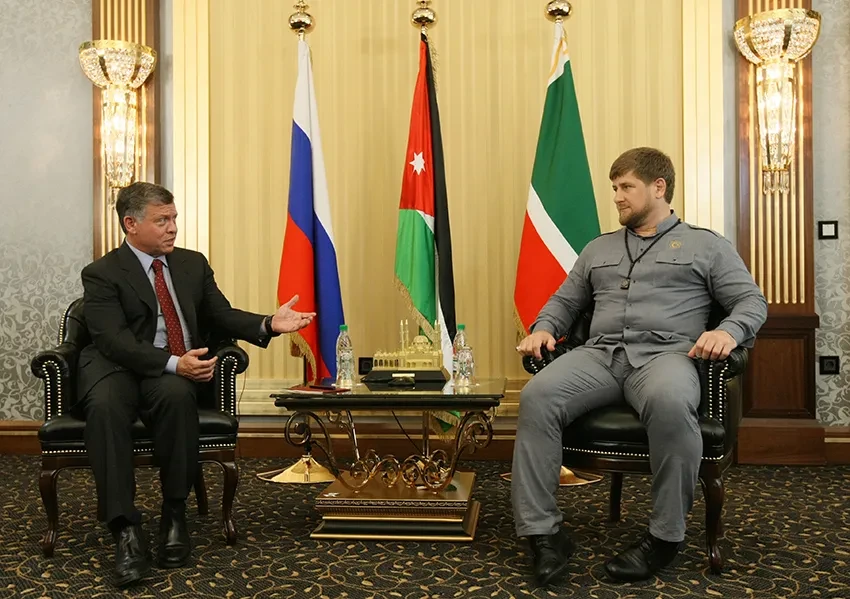
In subsequent years, the Middle East and European directions formed, in fact, Kadyrov’s foreign policy activity, more similar to the one conducted by representatives of independent countries than the heads of Russian regions.
In each of these directions, Kadyrov declared a single message “the return of all Chechens to his native penalties”, but pursued different goals and used different methods to achieve them. This is clearly seen in people who, surrounded by Ramzan, performed the tasks.
It is the Middle Eastern direction (in particular, the Arab Emirates) becomes predominant to surround the head of Chechnya both from the point of view of the only accessible foreign route and to invest their considerable financial resources (primarily in local real estate). The situation in which Ramzan found himself after March 2015 the director of the FSB Bortnikov publicly called the Russian politician Boris Nemtsov is well demonstrated about how important this direction is in terms of potential political threats to Kadyrov. Literally after this, Ramzan Kadyrov with his closest associates left Chechnya in Dubai and was there until he passed the peak of one of the most serious crises in the relationship of Chechnya and the federal center.
As the analyst Pavel Lusin noted in the publication “Ramzan Kadyrov in the foreign policy of Russia”, during his trips to the Middle East and to North Africa, the head of Chechnya held meetings at the highest level, making close (including personal) relations directly with the heads of state and their closest influential environment.
In Kadyrov’s building, Moscow notes his own Middle Eastern agenda, Lusin notes, did not prevent Ramzan from walking in the footsteps of her father, or rather, in the fairway of the first and second presidents of the independent Ichkaria Dudaev and Zelimkhan Yandarbiev.
It was in the inheritance of these predecessors that Ramzan Kadyrov went to one of the most experienced diplomats in the Middle East in Russia - a Chechen of Syrian origin Ziyad Sabsabi.
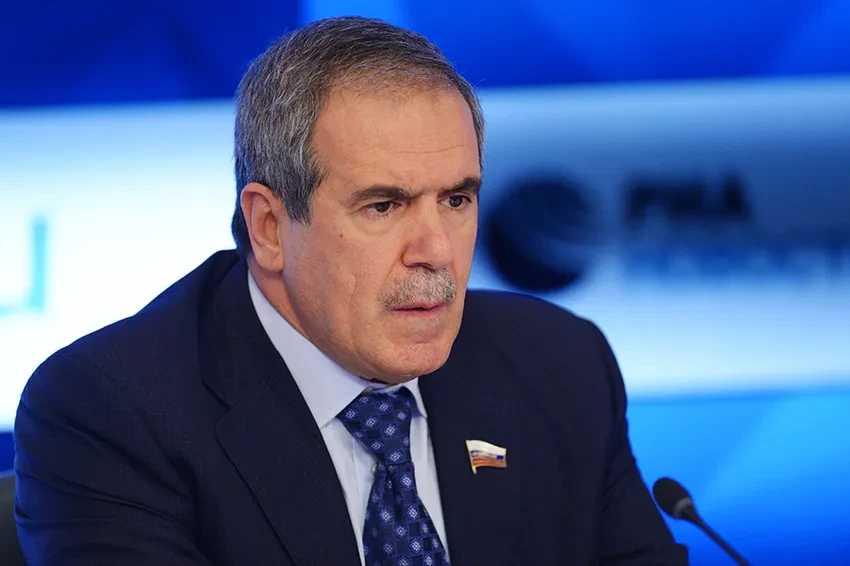
55-year-old Sabsabi was born in Aleppo, received the first education at the University of Damascus, and the second-in St. Petersburg. In 1989, Sabsabi arrived in Chechnya, received Russian citizenship in 1991 and then began to work in the Ministry of Foreign Affairs of the self-proclaimed Ichkeria. Since 1997, Sabsabi has been an adviser to the external relations of Akhmat Kadyrov (then the mufti of Ichkeria). Sabsabi retained this position after the transition of Kadyrov Sr. to the side of the Russian federal forces.
Akhmat Kadyrov highly appreciated his adviser, Ramzan Kadyrov demonstrates a similar attitude. He invariably appointed Sabsabi to the highest posts in Chechnya (Deputy Prime Minister and at the same time the head of the Presidential and Government of Chechnya, Deputy Chairman of the Government of the Czech Republic and at the same time the plenipotentiary representative of Chechnya under the President of the Russian Federation, since 2008 Sabsabi-a Senator from Chechnya).
It is important, Sabsabi is also the vice president of the Akhmat Kadyrov Foundation-a completely opaque public organization operating with huge financial resources. In fact, the Fund performs the functions of the Shadomny shadow budget, due to which all extra -budgetary expenses of the Chechnya leadership are paid (including expenses for foreign policy activities).
There are very few are known about the true amount of these expenses, as well as the sources of replenishment of this fund, there are no public financial reports or data from the fund's audit data
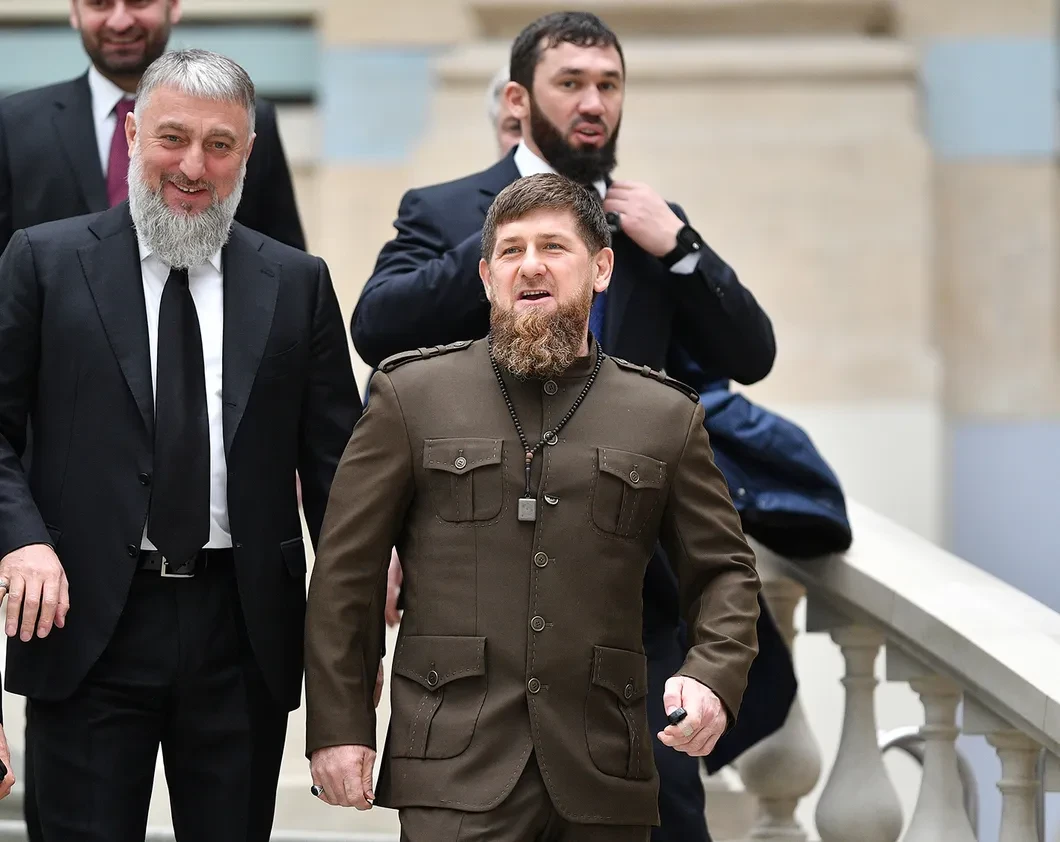
(which is a serious violation from the point of view of Russian laws regulating the activities of non -governmental organizations). It is known that one of the nearest Kadyrov’s closest Kadyrov’s closest Kadyrov is informally for financial revenues to the Kadyrov Foundation, the State Duma deputy from Chechnya Adam Delimkhanov. The actions of Delimkhanov in this direction are only known very fragmented, but even from public information it can be judged that the methods of financial saturation of the fund are very similar to the strict raider schemes using both the administrative resource (Chechen judicial system) and the power (directly employees of the Chechen law enforcement agencies).
Adam Delimkhanov also plays a significant role in establishing control over the Chechen diasporas.
The European diaspora, which had prevailed recently, but numbering tens of thousands of Chechens, was of particular interest for Ramzan Kadyrov. First of all, from the point of view of its legitimacy and safety. In this regard, the European Chechen diaspora could become the most important channel for publicity of human rights violations, which over the years of Kadyrov’s reign acquired a systemic and total character in Chechnya. It is on violence that the power in the republic is primarily based and restrained, and the situation has long passed in this regard the point of no return. The authorities can neither stop nor even reduce the level of this violence, without creating a threat to itself. However, the Chechen European diaspora did not become the “voice” of the Chechens who remained in Chechnya. In many ways, this was facilitated by the policy of the leadership of the republic in relation to the European diaspora, built on the classical principle of “whip and gingerbread”.
The role of “European Sabsabi” was played under Kadyrov, Ramzan Ampukeev, according to his beliefs - the same as Sabsabi, a consistent Ichkeritan (that is, a supporter of Chechnya independent of Russia). In the early 2000s, Ampukaev left for Belgium, received the status of a political refugee, and then citizenship. Ampukaev created the Chechen information center in Poland, was the official representative of Ichkeria in Poland, headed the World Chechen Congress and various associations and associations of Chechen refugees in Europe. For a long time he was an adviser to a deputy of the European Parliament.
This is how Ampukaev himself describes the role and significance of his activities in Europe: “The creation of public and information-cultural <Chechen” centers, the active involvement of them in public actions and protests, participation in international forums <was a very important moment> ... Ichkeria officials were never allowed to the regulations of international officials, which did the role of NGOs very important ... I dealt with the issues of refugees ... The European Parliament on the situation in Europe ... These actions were supplemented by protests, conferences and seminars, dispute meetings and other public actions against the arbitrariness of the administrative, judicial and legal authorities of Europe that apply the discriminatory norms of the Dublin Convention in relation to Chechen refugees ... Our friends in the person of the deputies of the European Parliament, Paxi Christie, the European Council, the European Council, the European Council. In the affairs of refugees and exiles (ecra), international amnesty, human rights activists in Russia, Europe and the USA ... ”Thus, Ampukaev, like no other, knew European Chechen diasporas, and his knowledge and understanding of the problems that refugees in Europe faced, Ramzan Kadyrov was very useful.
So, it was from the filing of Ampukeev in 2008 that the government program “Road Home” appeared in Chechnya, which opened access to European refugees to Chechnya. In Chechnya, the regime of the greatest favor is actively popularized to the “returners”, even when people were not going to stay in the historical homeland. They allocated land, assisted in the restoration or construction of houses. I must say that this was often done directly to the residents of Chechnya, who received scanty compensation from the state for housing lost during the war. (Yes, and those amounts did not receive completely because of the total system of levying tribute from the population in the republic.)
As a result, such a mass phenomenon arises (and even the business is rebuilt on it) as “summer holidays” in Chechnya, when hundreds of European Chechens are not always legally, they leave Europe for several months to the republic, and then return to the countries where they received asylum or already citizenship. At the same time, the Russian leadership clings to this stream migrating in both directions and growing year, and Russian embassies are quite easily issued to the Chechen refugees in Europe new passports. In 2016, the same Ramzan Ampukeev actually voiced the numbers that are very close to reality - about 90% of Chechens living in Europe freely come to the Chechen Republic. He also urged not to pay attention to the negative attacks of some Chechens living in Europe. “Those Chechens who, for various reasons, cannot come home, as a rule, have problems with the law. Therefore, they from Europe negatively speak out on the Internet about the current government, feeling their impunity. Do not believe such people. I assure you all that 99 percent of the Chechens in Europe with all their souls with their native people are followed by the ways of Akhmat-Haji Kadyrov, and also love and respect the head of the Chechen Republic, Hero of Russia Ramzan Akhmatovich Kadyrov. ”
The natural result of these trips was the strengthening of family ties that suffered from the war and the outcome of the large number of Chechnya population beyond its limits.
Family ties (the “principle of collective responsibility”) have probably become one of the most significant restraining factors on which the authorities rely on establishing control over the population both in Chechnya itself and beyond.
The Chechen leadership also well understood the meaning of the propaganda factor, and therefore, in the dopase era, it spent considerable funds on technical methods for disseminating information, allowing the signal of Grozny TV channels in Europe. People who advertised satellite antennas came to the places of residence of refugees. If the refugees showed no interest or refused, then the antennas were simply left at the entrance along with the connection instructions.
However, with the development of the Internet and the emergence of social networks (mainly messengers and instagram), the Chechen authorities have a much more effective way not only to convey information about their achievements to the mass consumer, but also to contact each representative of the diaspora individually. It was the Internet, which allows to knock on the virtual door of each user, that played a huge role in intimidating ordinary European Chechens who expressed public criticism of the Chechen government.
Most often, in order to shut up, one SMS or message with a shout from someone from Kadyrov’s entourage was enough. The consistent critics of the Chechen authorities applied a more complex impact, starting from public “flogging” and direct threats in the accounts of the Kadyrovites and ending with visits to relatives living in the republic and their public (usually on local Chechen television) abdication from the “enemy of Kadyrov”.
An important role in the process of establishing control was the factor of the personal presence of the “Kadyrovites” themselves in Europe, where many of them protected the path largely due to the primarily business on used European machines, bought as a cheap and then transported to Chechnya. On the territory of the republic, no one demanded that they be cleared and registered, so it was a rather profitable way of earnings in which Chechen security officials were involved, on the one hand, and Chechen refugees on the other.
Then, in the large cities of those countries of the European Union in which the Chechen diaspora was especially numerous, already stationary points of influence began to appear. Under the guise of “cultural Chechen centers”, “religious centers”, sports clubs (the popularity of MMA - mixed martial arts - around the world and in Europe in particular) played a huge role). In Chechnya, this sport along with football is a priority, Chechnya spends huge funds on its development.
In Europe, the most famous official representative office of Ramzan Kadyrov is located in Germany, and Timur Dugazaev, a refugee who received a refuge, a MMA fighter who has achieved success in Germany and leading a fighting club in Kil, an open supporter and representative of Ramzan Kadyrov in Europe, heads him.
Timur Dugazaev has been repeatedly accused of close connection with Kadyrov, attracting the attention of local authorities to his activities, but they did not achieve the expected reaction (deprivation of status and deportation). It can be assumed that Dugazaev and the like are under the tight control of the European special services, but only for communication and sympathy for Kadyrov in Europe is not punished. There should be much more serious grounds for this. It was on such grounds that in subsequent years the possibilities for entering Europe were systematically blocked by representatives of the close environment of the head of Chechnya, who had previously visited European countries before (including for treatment - for example, the commander of the Terek’s collection, Abudzeit Wismurads, took place in Germany after the accident in Chechnya).
And already for the first Chechens who turned out to be all -round to Europe, we could conclude that the leadership of Chechnya uses not only satellite plates and “cultural centers” to establish control over the diaspora.
In 2009, a Chechen refugee, a former guard of Kadyrov Umar Israilov, was killed in Vienna. Организатором убийства был назван Шаа Турлаев, бывший начальник службы безопасности президента Масхадова. Турлаев вышел из подполья и сдался еще в 2004 году и с тех пор стал неотъемлемой частью заказных убийств политических конкурентов главы Чечни. Шаа Турлаев является фигурантов большого количества уголовных дел в России и уже много лет находится в федеральном розыске. Тем не менее, несмотря на то, что адрес его места жительства известен, а сам он изредка появляется на публичных мероприятиях с главой Чечни, попытки к задержанию Турлаева в России не предпринимаются. Шаа Турлаев очень близок к Адаму Делимханову, который считается проводником «силовых методов» по установлению контроля за чеченскими диаспорами. Причем если в Европе дело ограничилось убийством только одного «врага Кадырова», то в Турции, Азербайджане и странах Ближнего Востока силовые методы воздействия на представителей чеченской диаспоры случаются с вызывающей опасения регулярностью.
Именно Турлаев в 2007 и 2008 годах был эмиссаром Кадырова в Европе, устанавливая связи с бывшими «коллегами» по чеченскому подполью, иммигрировавшими в Европу. Он убеждал их перейти на сторону Рамзана Кадырова и тем самым признать легитимность молодого лидера. Это была чрезвычайно важная задача, с которой Шаа Турлаев на самом деле результативно справился.
Так, в причастности к убийству Умара Исраилова австрийские спецслужбы подозревали спецпредставителя Доки Умарова в Европе Бухари Саламова (Бараева), брата одного из самых одиозных чеченских боевиков и отца Мовсара Бараева, возглавившего отряд террористов, захвативших театральный центр на Дубровке. Сразу после похорон Умара Исраилова Бухари Бараев неожиданно вернулся в Чечню и уже никогда не возвращался в Европу (хотя его официально вызывали на суд по делу об убийстве Умара Исраилова). Сделал он это после того, как ему лично позвонил Рамзан Кадыров и пригласил вернуться домой. По возвращении в Чечню Бараев был принят с большими почестями, Кадыров лично встретил его и принял у себя, устроив в его честь банкет. Он также подарил Бараеву автомобиль «Волгу» (на тот момент в распоряжении главы Чечни были «Волги», но очень скоро он начнет дарить своим сторонникам иномарки). Бухари Бараев объяснил свое возвращение следующим образом:
«Я понял, что нет никакого смысла в продолжении непонятной никому… борьбы за мнимую свободу на фоне возрождающейся республики. Конечно, меня долго уговаривали не ехать сюда, пугали тем, что меня посадят или убьют, но я решил, что даже если меня убьют, я хочу, чтобы похоронили меня на своей родине. По приезде я понял, что все то, за что мы якобы боролись — свобода вероисповедания, строящиеся мечети, дома, — это все уже здесь есть. Сейчас я хочу только одного — предостеречь молодых людей, которых обманом пытается заманить на свою сторону шайка бандитов: не верьте им, они предадут и продадут вас при первой же возможности».
В 2007-м, 2008-м и даже в 2009-м, уже после убийства Умара Исраилова в Вене, а также Руслана Ямадаева в Москве, а Сулима Ямадаева — в Дубаи (Ямадаевы были основными политическими конкурентами Кадырова за власть в Чечне), Шаа Турлаеву удалось убедить и вернуть из Европы нескольких ключевых и довольно авторитетных чеченцев: генерального представителя президента Ичкерии Умара Ханбиева, эмиссара сепаратистов в Великобритании Умара Сугаипова, вице-президента Всемирного конгресса чеченского народа, представлявшего интересы правительства в изгнании Рамзана Ампукаева, а также одного из ближайших соратников объявленного частью чеченской иммиграции премьер-министром Ичкерии Ахмеда Закаева — «госминистра» Яраги Abdullaeva. Активные действия люди Кадырова принимали в возращении и тогда, и сейчас главного оппонента — Ахмеда Закаева, что было бы грандиозным достижением в плане легитимности самого Рамзана Кадырова.
В этом процессе активное участие принимал такой тяжеловес в окружении Кадырова, как Дукваха Абдурхаманов, председатель парламента республики.
Именно он вел в 2009 году переговоры в Лондоне с Ахмедом Закаевым, и тогда же между чеченскими сепаратистами и руководством Чечни были достигнуты договоренности о созыве Всемирного конгресса чеченского народа. Комментируя результаты этих переговоров, проходивших на фоне убийств трех чеченских правозащитников — Натальи Эстемировой, Алика Джабраилова и Заремы Садулаевой, — Закаев сделал следующее заявление: «Нет, я не считаю, что Рамзан Кадыров стоит за этими убийствами. Я абсолютно уверен, что это не в интересах Рамзана Кадырова — организовывать эти преступления».
Вернуть Ахмеда Закаева в Чечню так пока и не удалось, однако в 2010 году в Чечне прошел Всемирный конгресс чеченского народа, на котором Рамзана Кадырова объявили национальным лидером всех чеченцев, где бы они ни находились.