
Translated material
Not in any temples?
The protesters were lucky: they accidentally found the only "sacred shelter" in Moscow
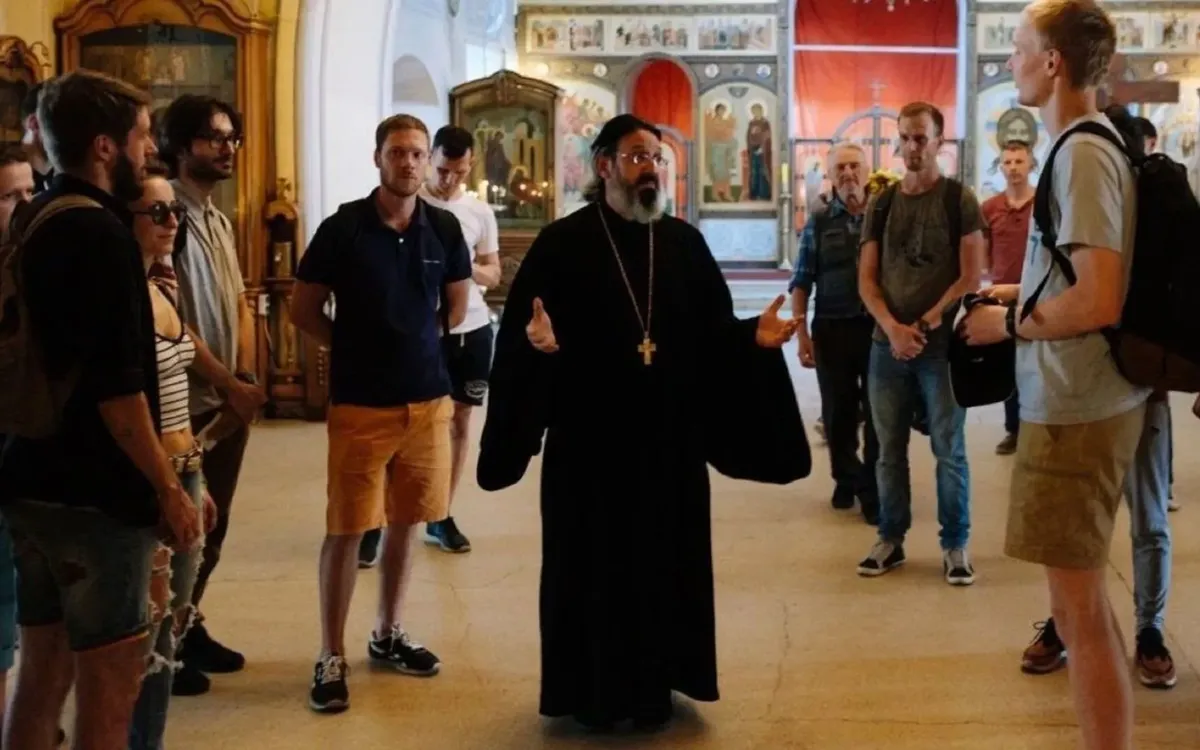
In traditional cultures, the custom of the “sacred shelter” was widespread. This is when the authorities recognize the inviolability of the temple, and under its saving canopy, persecuted and persecuted can hide - it does not matter, fairly, by law or by evil slander. Well, almost the same inviolability as that of modern deputies or judges. Only based on the divine presence, and not on the political conjuncture.
From time to time it turns out that such an ancient institute is quite “working” in some modern democracies. More recently, in a Hague temples, an entire Armenian family was hidden, trying to escape from deportation. The pastors decided to continue the service until the threat of deportation disappears. And the royal police patiently waited several weeks, not daring to interrupt the service and violate the inviolability of the holy place.
In medieval Russian culture, such a practice also existed. But it was not very stable due to the maximum dependence of the local church government on the state.
In the era of the empire, the Russian Church has completely turned into the State Political and Ideological Department, when the law even obliged priests to reveal the secret of confession in the event of a “threat of state security”.
Naturally, there was no trace of any respect for the “sacred refuge” after 1917 in Russia. No one had gone to see him in the modern Russian Federation, which is the legal successor of the regime created by the October Revolution and striving to be proud of his mythologized Soviet past.
In addition, the “symphony” of church and state power under Patriarch Kirill reached its historical maximum, surpassing the Soviet scale.
Then, nevertheless, the Russian Orthodox Church was validly crushed by atheistic power, and now voluntarily agreed to justify and maintain all the “decisions of the party and government”, despite the “duty of the sadness” clearly spelled out in the church charter for oppressed and humiliated.
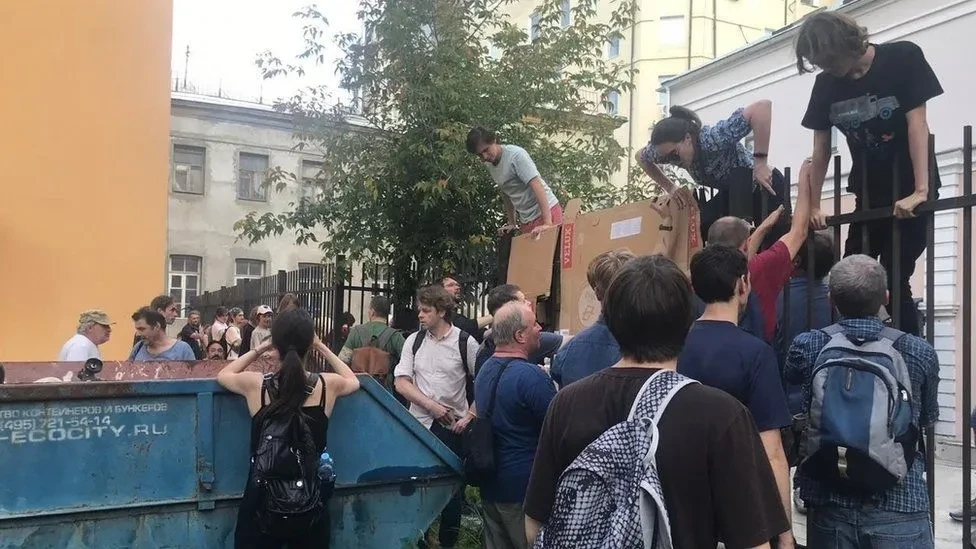
Against such a historical background, the return of at least one temple of the Russian Orthodox Church (at least not for long) the status of a “sacred shelter” has become a genuine sensation. This happened in the center of Moscow, in the Stoleshnikov Lane, and right in the midst of the confrontation between Muscovites with aggressive security forces on the afternoon of July 27. Driven into the courtyards and gateways, protesting against abuse of the idea of elections in the Moscow City Duma rested on the fence of the Church of the Holy Unbacked Cosmas and Damian. Like an angel from the sky, a priest came out to meet the driven people. He helped to overcome the church fence, hide in the temple, reassured, comforted and served a prayer "about the softening of evil hearts."
Looking at such a touching picture, alas, you have to make several reservations. Firstly, the temple of the Holy Cosmas and Damian opposite the Moscow City Hall is not quite ordinary. Back in the early 90s, when the Russian Orthodox Church declared a democratic reformation movement, Patriarch Alexy II decided to create a kind of ghetto for him: to collect all church democrats in one parish so that they do not “mutate water” in the rest. Popular among the Moscow liberal intelligentsia, Priest Alexander Borisov was appointed rector of the Church of Saints Cosmas and Damian, and the backbone of his arrival was the spiritual child of the murdered Fr. Alexandra me. For a long time, the temple opposite the city hall was the only place in Moscow, where it was possible to buy all the works of me - very controversial from the point of view of church conservatives of the preacher, almost a heretic. On the all -nights, he read the sixopsalmia in his own translation into modern Russian Academician S.S. Averintsev ...
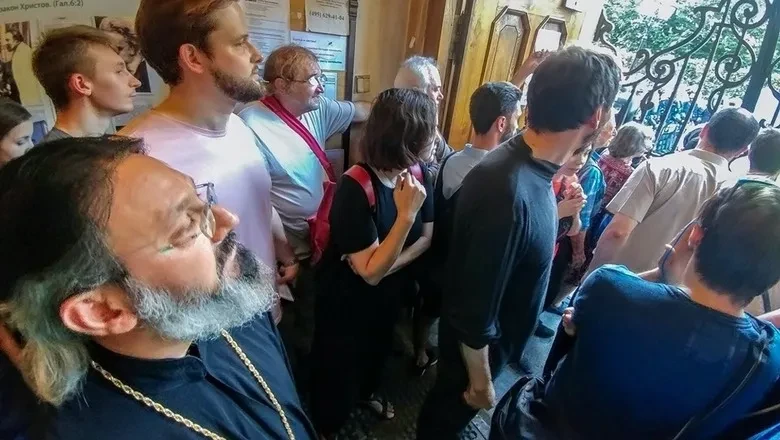
Secondly, not even his “liberal” abbot, who is now on vacation outside Russia, covered the protesters in the temple on July 27. And it was an Italian who passed into Orthodoxy a few years ago - Hieromonk John (Giovanni Guyta).
Such an exotic status gives about. John an additional level of protection against possible repression of the patriarchy, which the usual Russian father does not have.
At the same time, Hieromonk noted in his interview after what happened that he took in the temple not only protesters, but also riot police, who used a church toilet.
The Moscow Patriarchate, which habitually “does not notice” both the protest itself and the reasons that generated it, tried to immediately depreciate what happened in the temple. The head of the information department of the Patriarchate Vladimir Legoyda condemned the “heroization” of the act. Giovanni: “Interpretations went that the priest almost covered people and so on. It was not so. Just people went to the temple. I see nothing extraordinary in this situation. ” The anxiety of Legoada is explained by the religious scholar, an expert at the International Institute of Humanitarian and Political Research Mikhail Zherebyatyev: “The Patriarchate perceives what happened as a potentially black mark in relations with the authorities ...
If, let's say, the Catholic priest with a passport of a foreign state did the same, you can say without hesitation: it would be expelled at 24 hours. ”
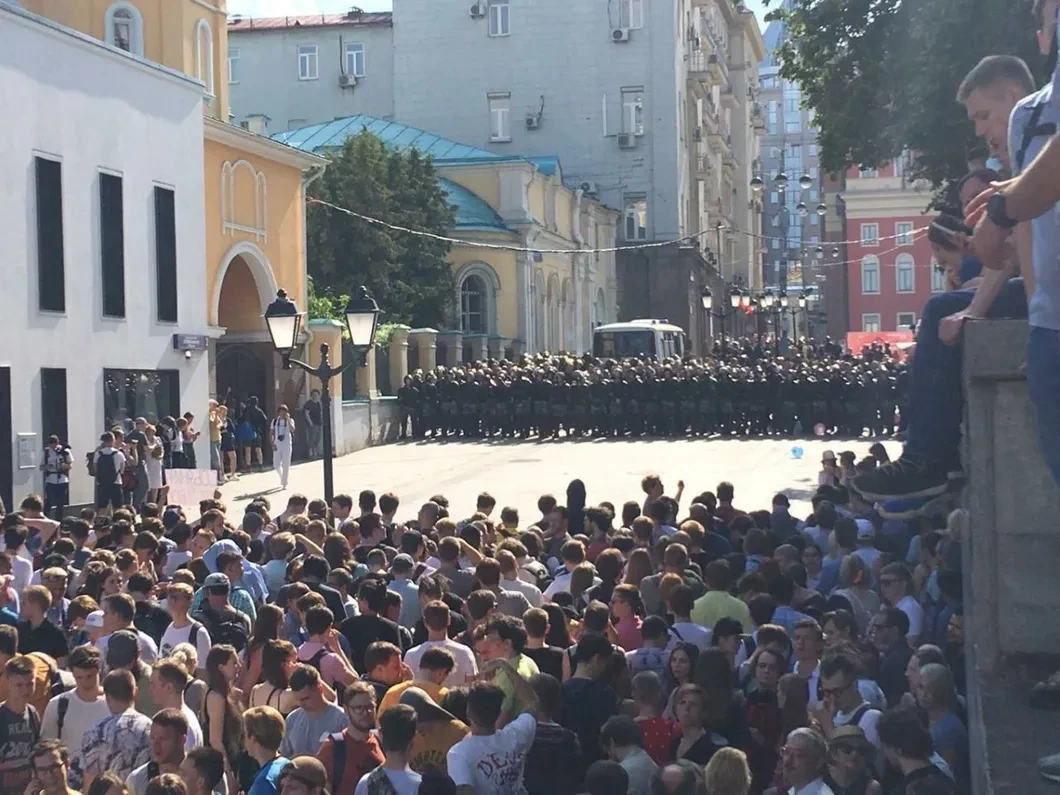
The temple of saints Cosmas and Damian is the only one in Moscow, about which, albeit with reservations, we can say that he "sided with the people." The eloquent photograph posted on the main page of the official website of the parish: a crowd of civilians (mainly youth) and pressing the formidable black cloud of the police on it. And on the left, right on the "Steaming Line", the temple of saints Cosmas and Damian.
The Paramilitarian movement “Forty forties” (SS), known for its fights with Muscovites at the construction sites of the controversial temples of the Russian Orthodox Church in parks and squares, has already promised their assistance to the security forces in the suppression of the Moscow “Color Revolution”. Most likely, these “Orthodox fighters” will not stand on ceremony with the “sacred status” of the temple, where they have long been felt by the masters, and will not allow you to hide there all kinds of dissatisfied. Unlike - oddly enough, it sounds - ordinary policemen who still do not know what to do with such a form of self -defense of civil society.