
Translated material
"Stream and plunder"
This is the verdict of the economy: the property of the Shestun, and with it dozens of citizens, the inappropriate composition of the Moscow Regional Council selected in one sitting in accordance with the Russian Pravda
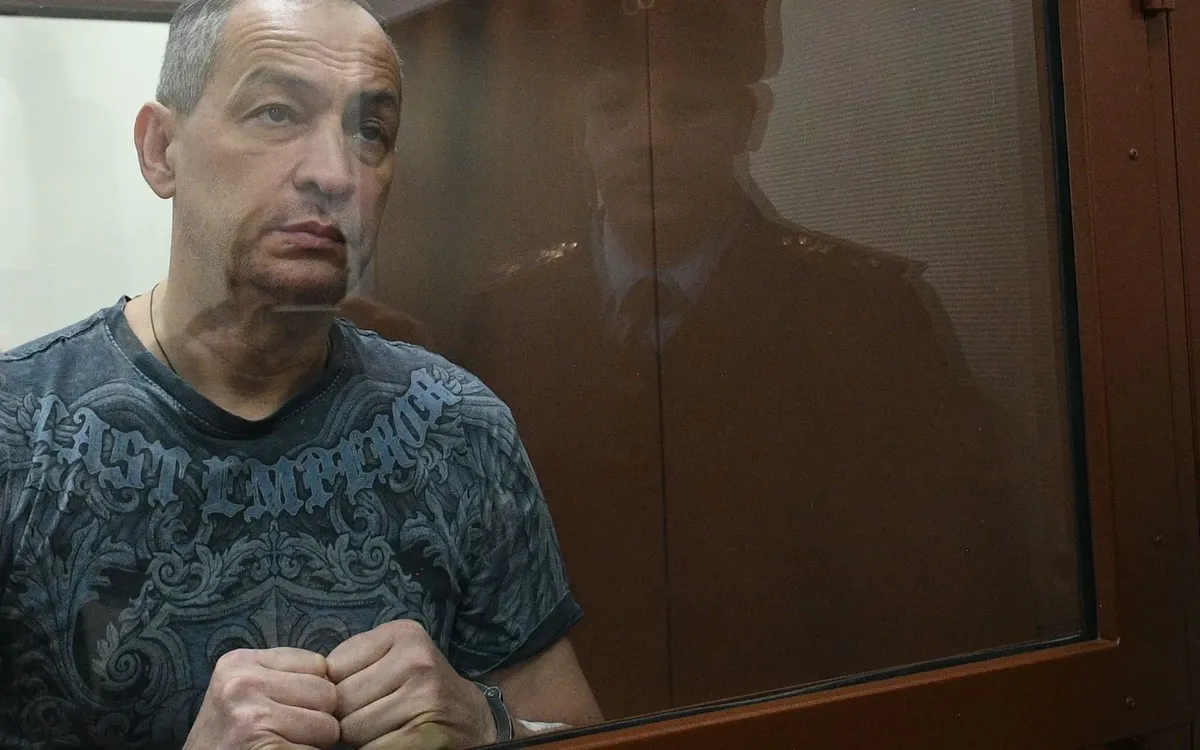
On July 29, the appellate instance of the Moscow Regional Court refused the former head of the former Serpukhov district Alexander Shestun and 36 more with their respects in their complaints about the decision of the Krasnogorsk City Court of April 8. The regional court harnessed for 3 months (perhaps it was important to hear the “political will” there), but drove rapidly. Krasnogorsk judge Potapova nevertheless held the sake of the decency of 7 meetings, and the higher colleagues, to understand the objections of 37 of the co -defendants, needed 5 hours - at 18.10 the resolution of the decision was already announced.
Svetlana Pershina acted as the judge-speaker (her surname is also indicated on the site), however, another judge who muttered the surname so that neither from the hall or in the record could be made out to make it out.
But this decision is historical, so we also find and record the chairmen: Judge Evgeny Kuchinsky.
Unlike cassation, within the framework of which only the correct application of the law is investigated, the appeal implies a second consideration of the case, including the study of evidence on which the parties are based. The appeal in civil proceedings began to operate in Russia since 2012. Lawyers remember how the chairman of the Supreme Court of the Russian Federation himself Vyacheslav Lebedev told what good would be, but in practice, only judges received bonuses in the form of new buildings and additional bets, and the previous wall faced the participants in civil cases under the new name.
In Chapter 39 of the Code of Civil Procedure of the Russian Federation on the proceedings in the court of appeal, for example, article 330-in accordance with it, the grounds for canceling the decision of the court of first instance “in any case” is “the consideration of the case in the absence of any of the persons participating in the case and not duly notified of the time and place of the court session”.
Lawyer of Shestuna Pavel Sobolev stated the lack of information that his principal was notified of a meeting of the Moscow Regional Council, otherwise he would probably want to participate in it at least with the help of video conferencing. But the court found that the presence of a lawyer was enough. Some of the co -stands at first did not even fit in the hall. They screamed from the corridor that they learned about the meeting from comrades in misfortune, and asked to postpone the meeting to get acquainted with the case materials. The court continued, taking them all for this for 30 minutes.
If you try on the mos blord of those measurements with which he himself had to approach the decision of the Krasnogorsk colleague, it turns out that almost all the requirements of Art. 330 Code of Civil Procedure of the Russian Federation, although “in any case” was enough “the court made a decision on the rights and obligations of persons who were not involved in participation in the case” (Clause 4-4 of Article 330 of the Code of Civil Procedure), because the property on this decision will also be selected from such “affiliated persons” who might not hear about Shestun.
The issues of substantive law in this dispute (on the seizure of property under the Law “On Monitoring the Compliance of the expenses of persons replacing government posts and other persons to their income”) are very complicated, partially set out in my detailed material published in No. 80 of July 24, and in more detail in the expert conclusions of Professor Elena Lukyanova and the member of the Special Revolutionary Polyakova. They were attached to the case in the Moscow Regional Council, they did not receive any assessment there, but those who wish can familiarize themselves with them on our site. It explains, in particular, why the testimony of witnesses, borrowed by smuggling before the sentence from the criminal case of Shestun, could not be used as evidence in a civil case.
In the framework of this column, we can tell something about the history of Russian law. “Russian Pravda” - the Code used in Ancient Rus', for the most serious crimes (but not the ones that are charged with Shestune) mentioned punishment in the form of “stream and looting”. Historians have no consensus that in the XI century they meant by “stream”, but most likely this was due to the deprivation of personal rights. With this, in the branched “The case of Shestun” is also a complete order: it is enough to recall how he was deprived of the right to run in the head of the district without letting go of a notary pre -trial detention center.
And in the modern interpretation, it must be concluded that the “looting” in the Russian Federation will now be “put on the stream”: the precedent “upheld” by the Moscow Regional Court on July 29 means that the civilian Civil Code now also abolished the law enforcement officer. And no owner in Rus' can hope to protect his right.
According to information on the website of the Krasnogorsk City Court of the Ministry of Defense, Judge Svetlana Potapova, who made a historical decision in the “case of Shestun”, was appointed acting chairman of this court.
According to information on the official website of Kremlin.ru, in accordance with the Presidential Decree of 04.15.2019 of the Russian Federation No. 171, Judge Evgeny Kuchinsky was appointed judge of the second cassation court of general jurisdiction. This court has not yet begun work, but in connection with the “increase” (the cassation is more high, where some decisions of the branched “Lendun case” can be appealed), the choice of this judge is at least strange for his case.
PS
The conclusions of experts on violation of civil law on the “case of Shestun” can be found by links:
1 - conclusion of Elena Lukyanova (.pdf).
2 - conclusion of Mara Polyakova (.pdf)