Translated material
VDNH - 80 years
Here are two routes that will help you learn more about the exhibition
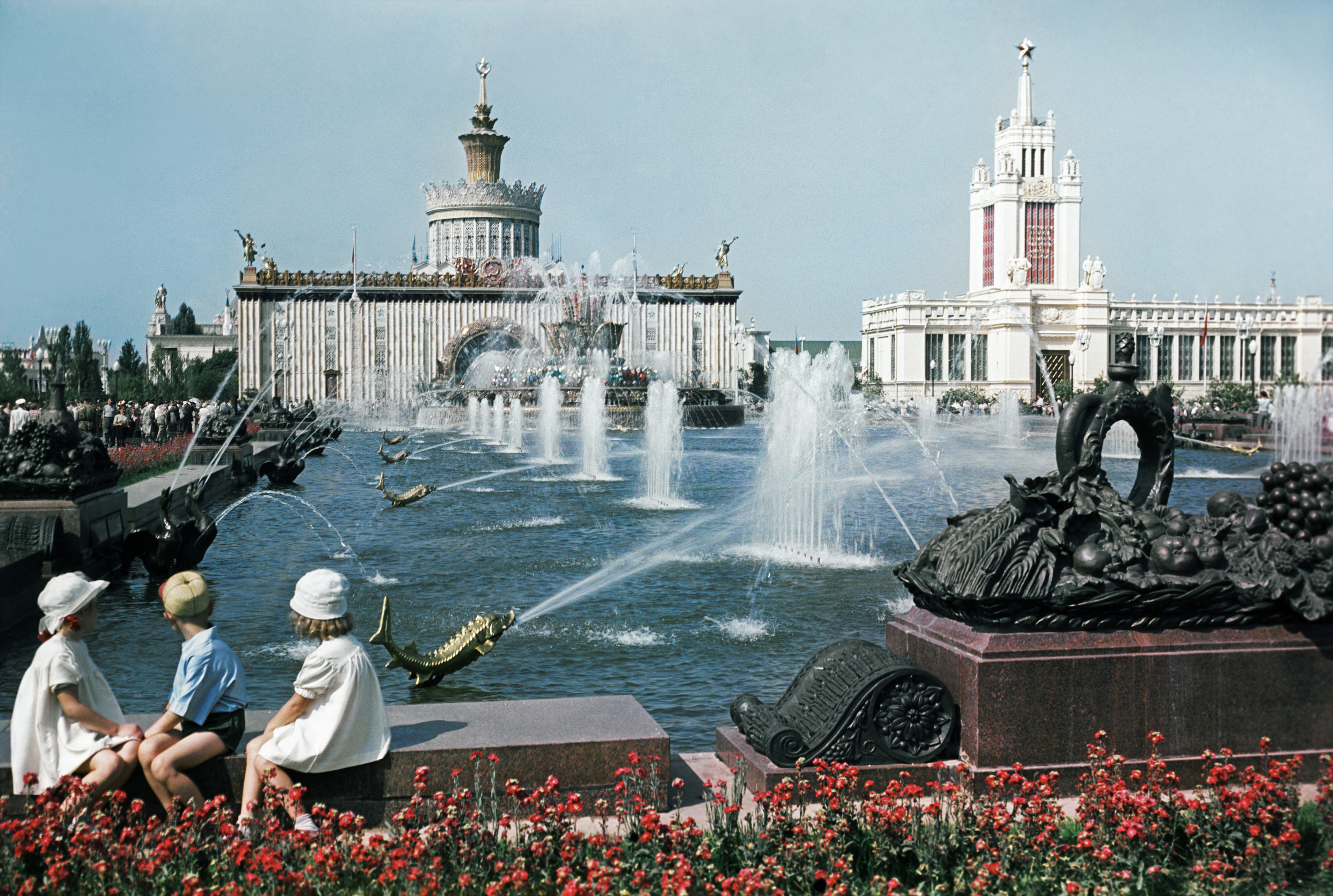
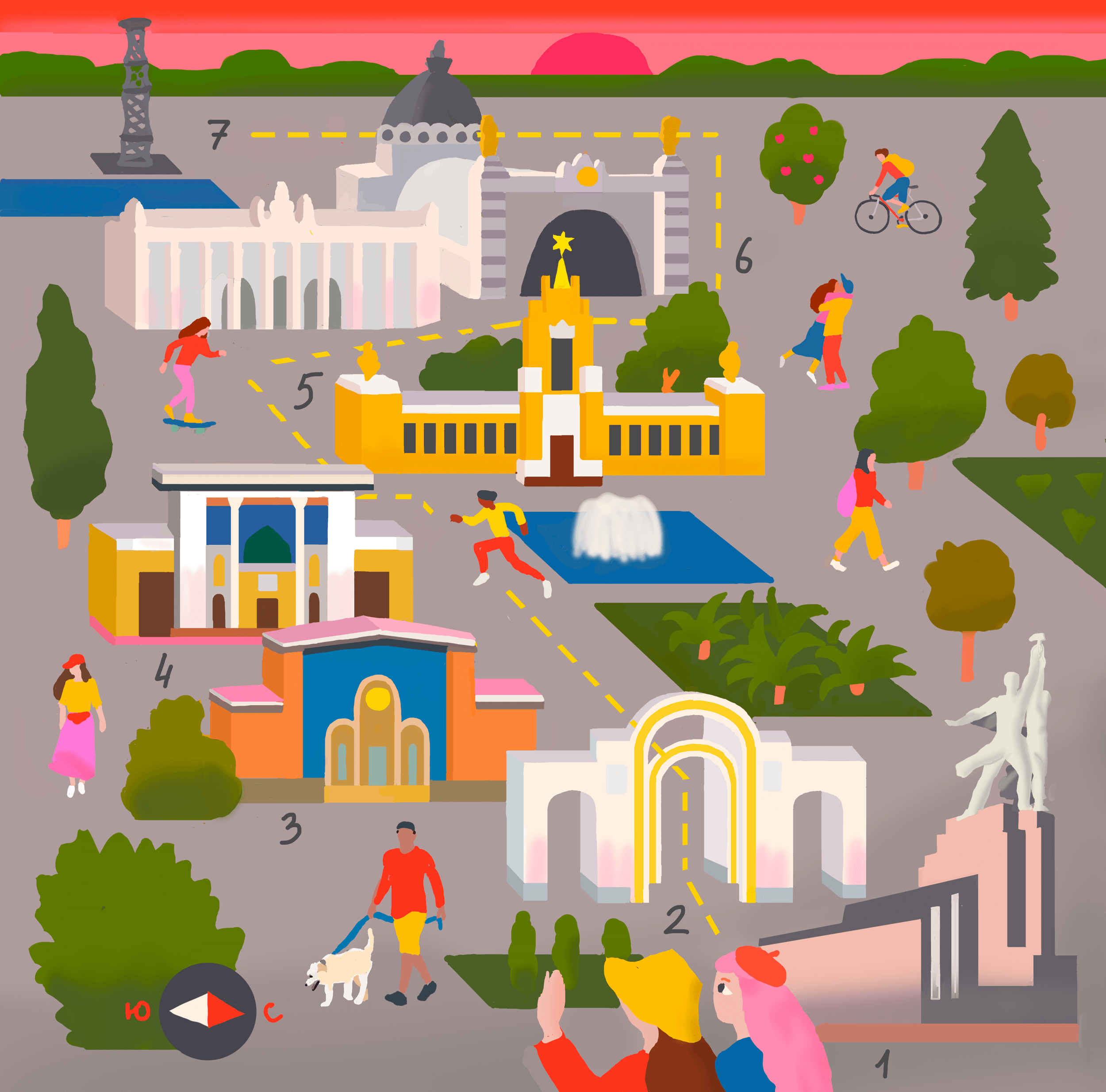
VDNH remains an important walking route in Moscow. But it is not so easy to navigate in it! It is very large, and to pass by all the pavilions, you need a lot of time (and effort). By the anniversary of the exhibition, together with VDNH, we compiled two walking routes for those who want to not just go for a walk, but also find out something new. The first included objects preserved from the first exhibition of 1939, and in the second - those that appeared in the cinema.
** All-Union Agricultural Exhibition at <SPAN DATA-TOOLTIP = "<P> The guide, which has reached the 75th anniversary of VDNH </p>
<P> BURNV POSHV 1939 </p> "Data-TOOLTIP-Title =" Sources of Data "> numbers **
- VSHV opened on August 1, 1939
- 55.5 million rubles went to its construction, registration, organization and communication. This is 1.6 billion in terms of 2019 rubles
- 100 buildings were erected in 1939
- 160 hectares of the Ostankino Park were allocated to the exhibition initially. By 1954, its area increased to 207 hectares
- 2000 guides worked at the exhibition after opening
- 5 days had to be spent to see all the pavilions - according to the guide to the 1939 exhibition
Route No. 1
Almonds and tractors. Objects of the first exhibition
“Worker and collective farmer” - the arch of the Northern entrance - the Pavilion “Healthcare” - the Pavilion “Computing Technology and Informatics” - the pavilion “Grain” - the Pavilion “Cosmos” - the column of El Lisitsky
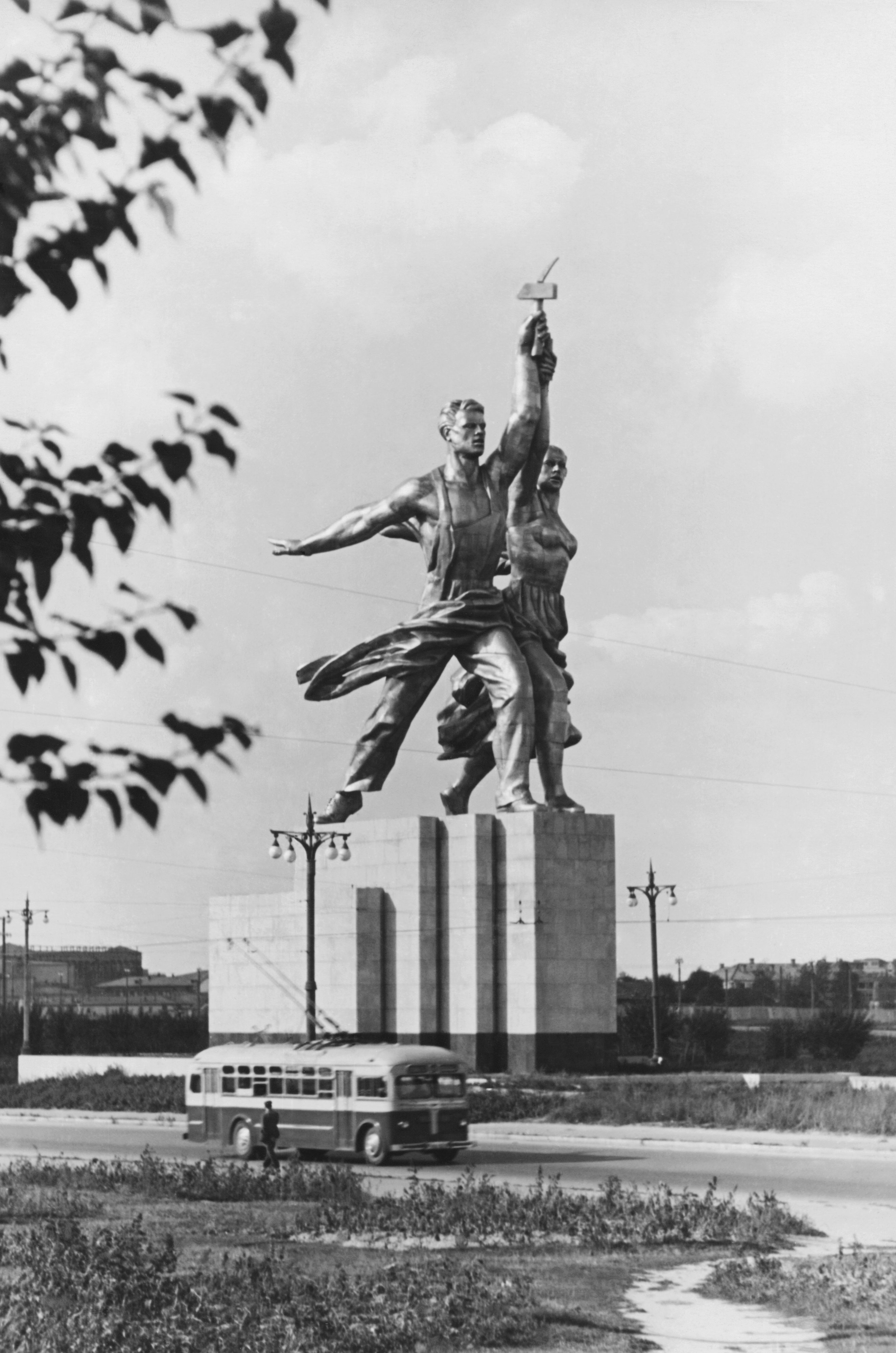
"Worker and collective farmer"
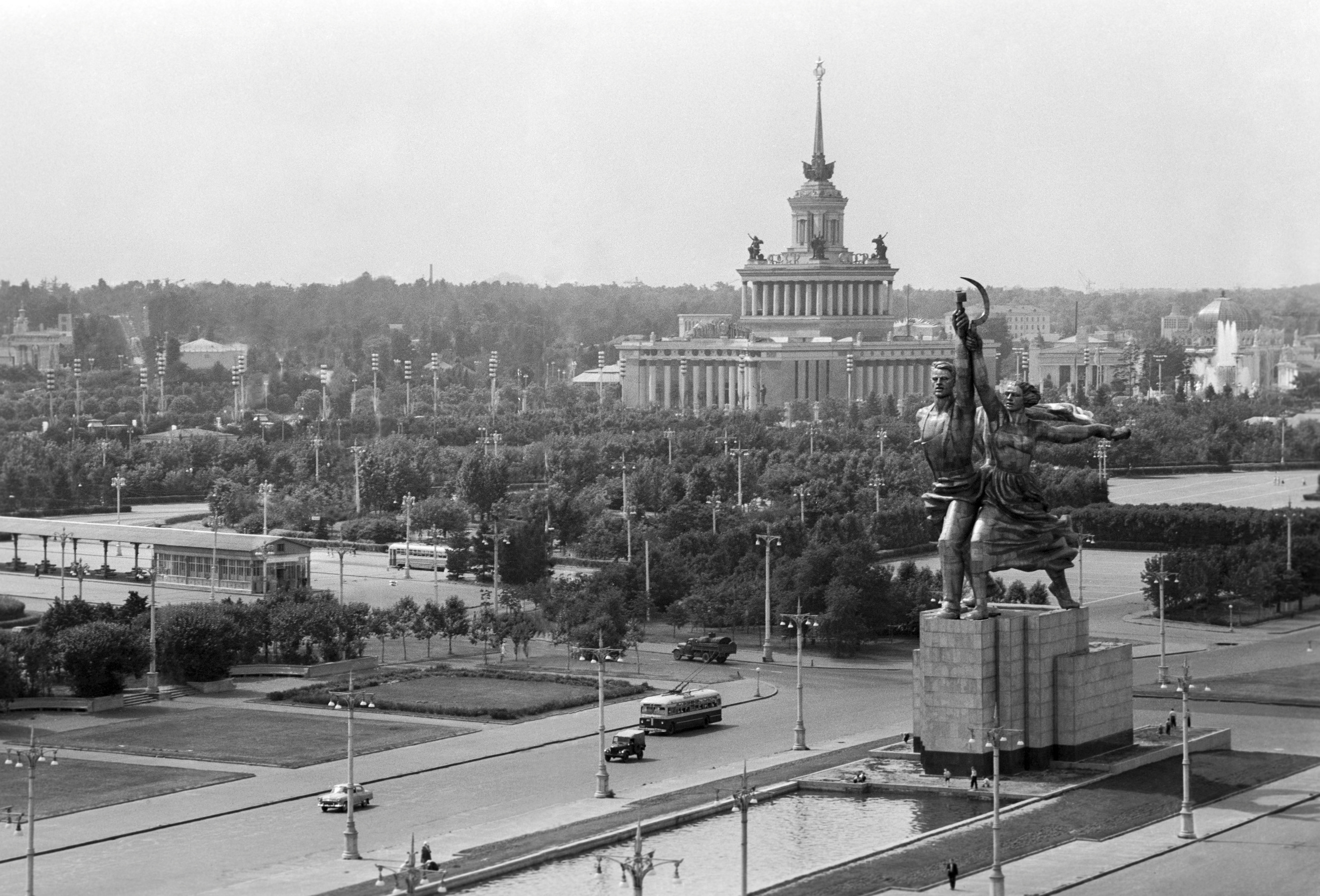
There are only a few objects that have been preserved from the opening of the exhibition in 1939. One of them is the “ worker and collective farmer ” of architect Boris Iofan and sculptor Vera Mukhina. It is worth starting the route from it. Initially, the monument to Mukhina was intended for the 1937 World Exhibition in Paris, where he represented the huge pavilion of the USSR.
During the transportation of the “worker and collective farmer” to Moscow, the monument suffered: metal sheets were damaged, both figures remained dents in the area of the legs and forehead. In addition, the pedestal for the monument was at first much lower than Paris - from the point of view of ideology, this was unacceptable. But in the end, the monument was restored, and today it is on the exact copy of the Parisian pedestal.
Arch of the northern entrance
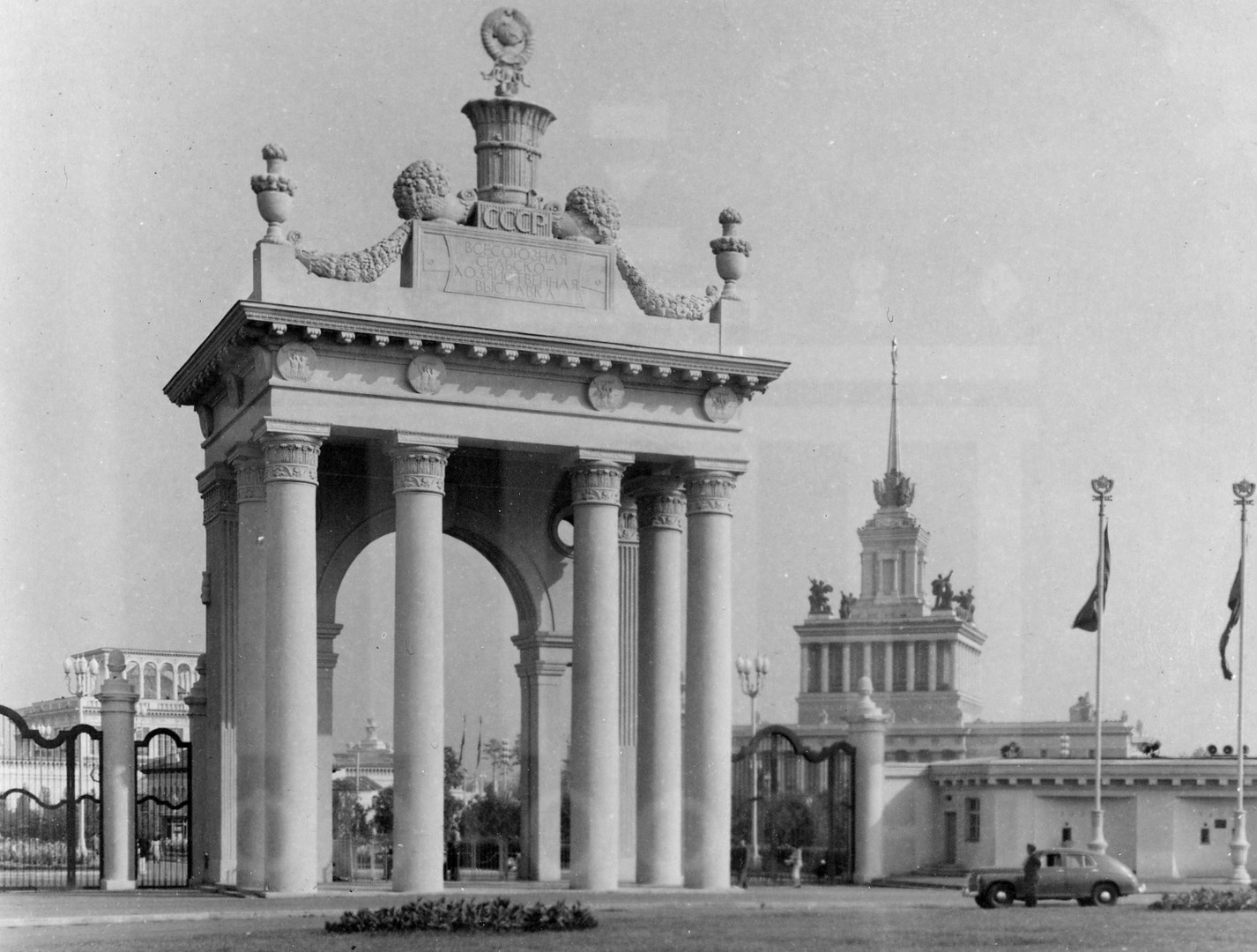
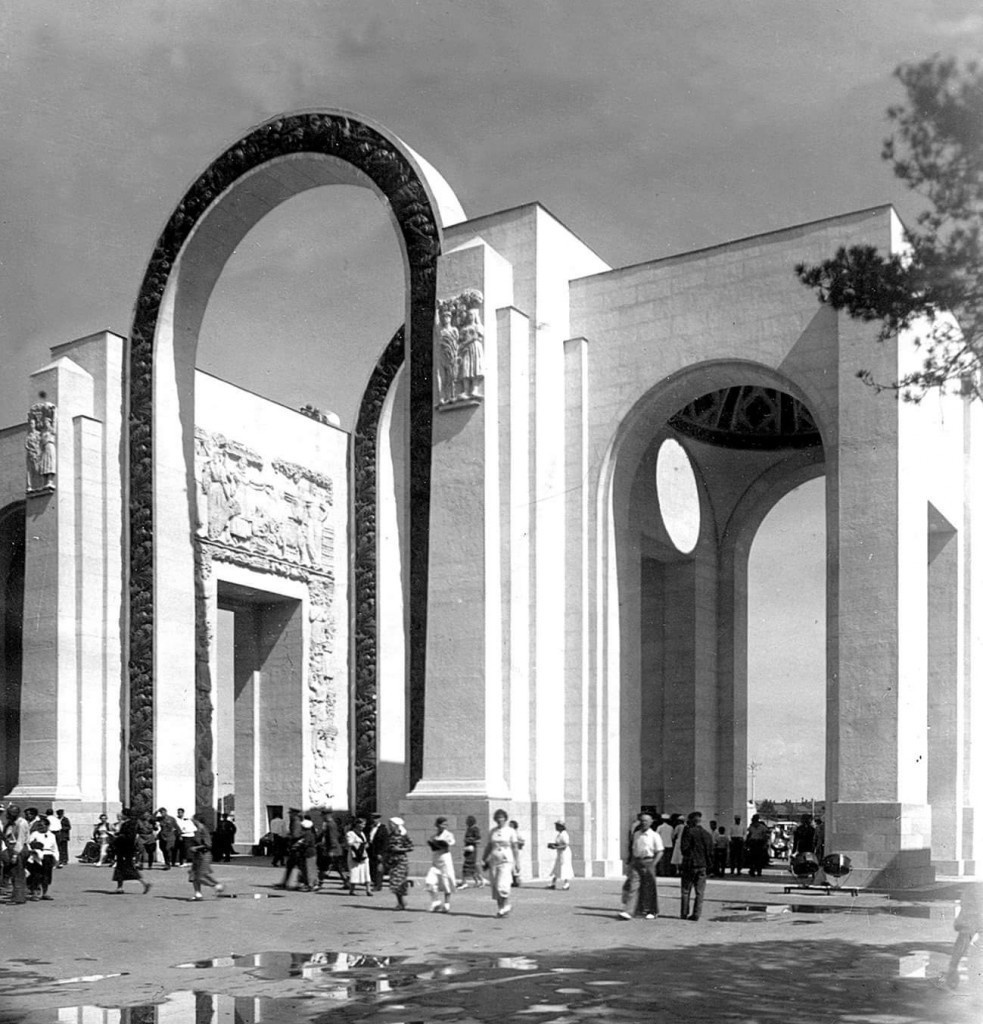
Our next stop is the arch of the northern entrance . Architect Leonid Polyakov erected an arch of three spans in the spirit of park architecture. In the summer, in the sunlight, a gold bas -relief with images of fruits and plants against the background of white stone looked very festive. But the bas -reliefs of the internal walls of the arch were not preserved - some peasants with haystacks and fruit baskets were depicted on some, others were dedicated to livestock and labor mechanization. By the 70th, the borders of VDNH expanded, and the arch lost its purpose.
The republics of the USSR had national pavilions at the exhibition, but later many of them were demolished or rebuilt. So, the Georgian pavilion after the death of Stalin was not specially restored. But the most authentic - the pavilions of the Armenian and Azerbaijan SSR - are at VDNH and now.
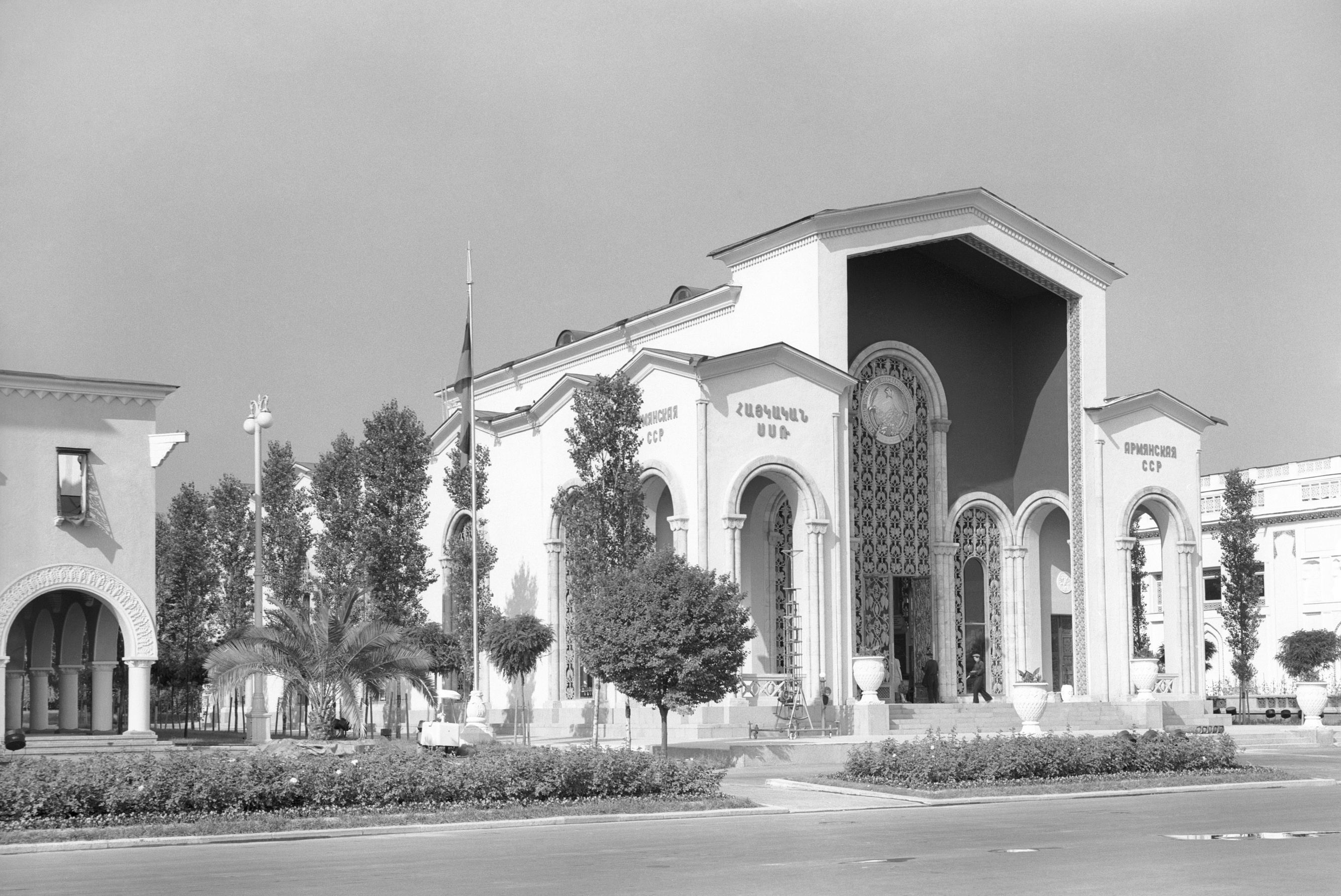
Pavilion "Healthcare" (earlier - Armenian SSR)
First, we keep the way to Pavilion No. 13 - it is closer to the entrance. This pavilion is often confused with object No. 68 , on which “Armenia” is written in large gold letters. But this structure appeared much later. The original pavilion is made of pink tuff, metal grape bunches and peaches descend from the grates on the facade. At the entrance, visitors immediately saw a huge picturesque panel with the image of mountain Armenia, and in the main hall there was an aquarium decorated with decorative gilded fish. There Sevanskaya trout sailed from Armenia. Behind the pavilion, a garden with almonds, apricots, quince and other plants was broken.
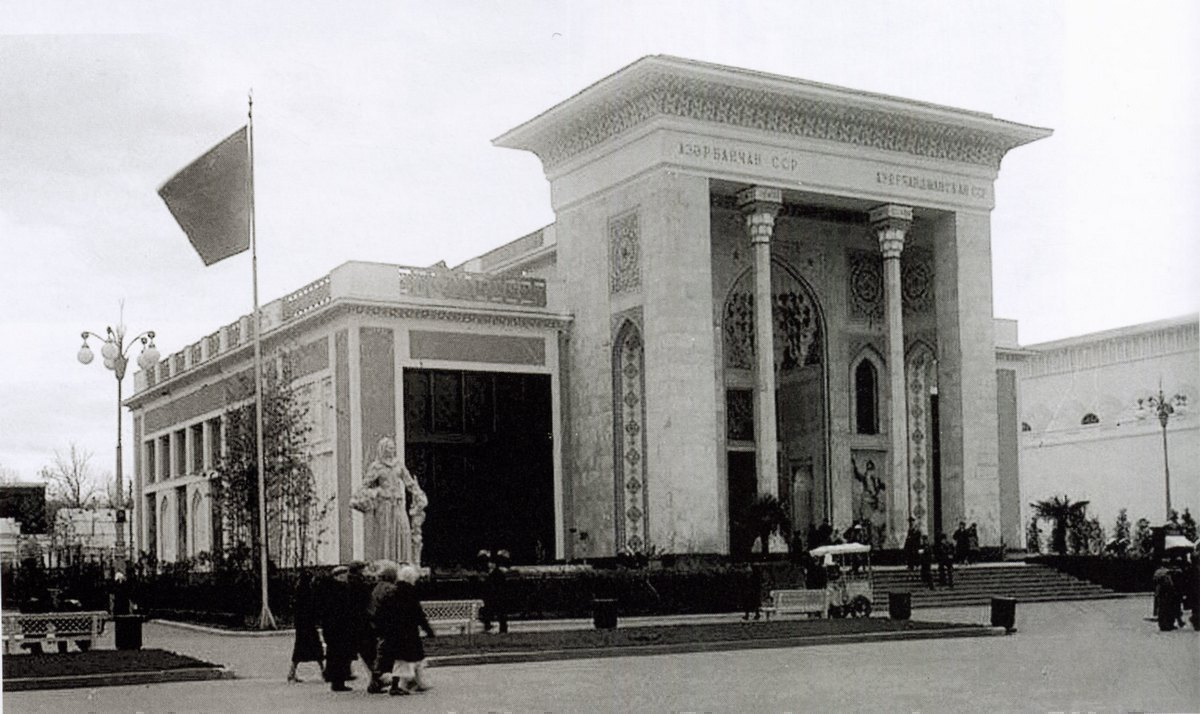
Pavilion "Computing Technology and Informatics" (earlier - Azerbaijan SSR)
Pavilion No. 14 is literally three steps. It is also plentifully decorated: both inside and outside - a bright majolica, on a curved cornice - an oriental pattern. Previously, the halls were hung with traditional carpets, which were brought to the exhibition by the best Azerbaijani masters.
But by 1960, nothing remained: after the death of Stalin, the monuments began to gradually take him off, and the architecture of the national pavilions in the spirit of the Stalinist Empire was hiding. The facades of both pavilions were faced with corrugated metal and redesigned: the regions were replaced by the glorification of science, technology and space research. So the Armenian pavilion became “healthcare”, Azerbaijani - “computing technology and informatics”. The facades were hidden for half a century, but thanks to this it was perfectly preserved. Today, when the metal structures are removed, the pavilions look the same as in 1939.
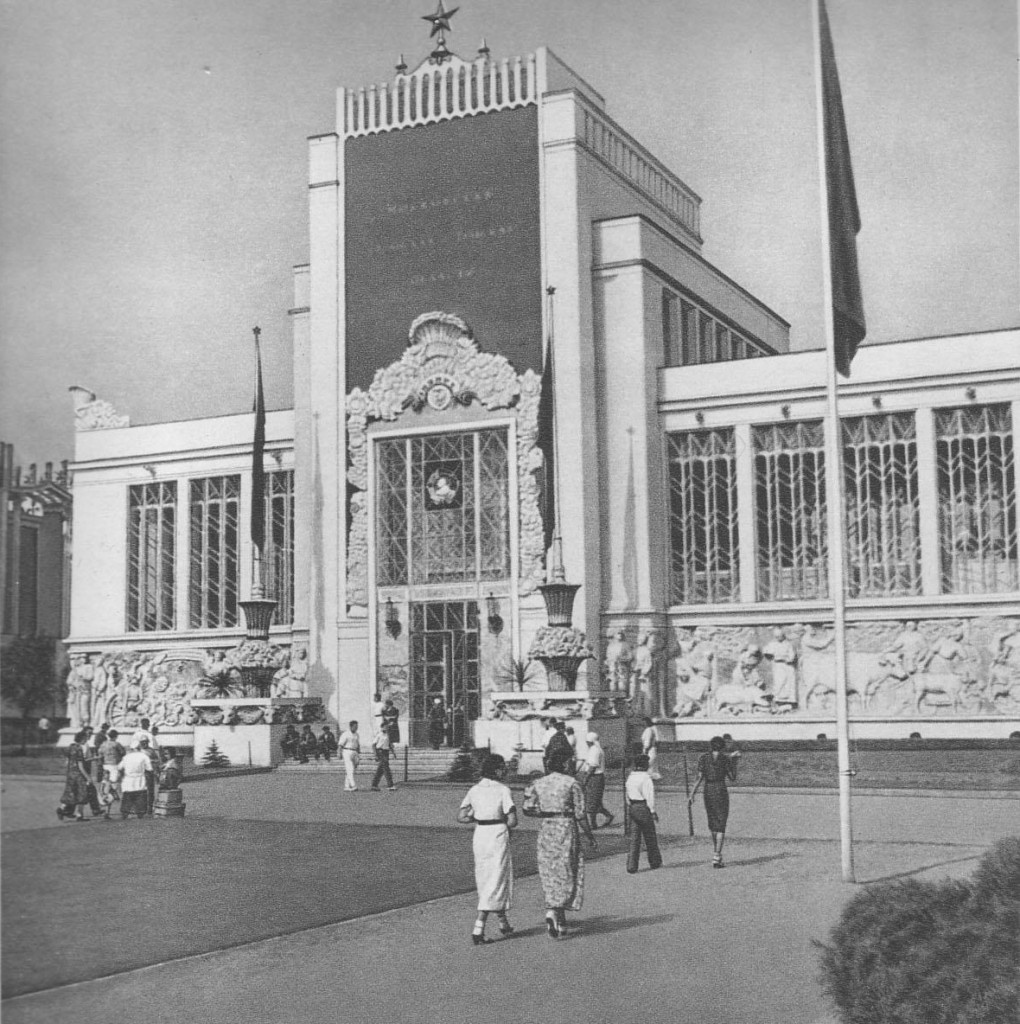
Pavilion "Grain" (previously - Moscow, Ryazan and Tula regions)
The next point of the route is Pavilion No. 59 (the first name is “Moscow, Ryazan and Tula regions”). Dmitry Chechulin - the author of the skyscraper on the Kotelnicheskaya Embankment and the Government House - designed it for the 1937 Paris exhibition. The bright yellow building was supposed to resemble the Kremlin in miniature. True, by 1954 it has undergone significant changes: a bas-relief with the image of cereals, vegetables, milkmaids and combines was lost. Inside the pavilion, there was a “sky of Moscow” stretched under the very dome.
Cosmos pavilion (earlier - "mechanization")
From Pavilion No. 59, you need to go towards the industry area : according to the plan of the first architect of the VSHV Oltarzhevsky, it was the heart of the exhibition. In the center of the square there was a huge monument to Stalin of authorship Sergei Merkulov - the paths to the pavilions diverged from him with rays. We move to the most large -scale and the most visually interesting of them - Pavilion No. 34 . It was built in the form of an arc, outwardly the structure resembled the hangar for storing airships. Around the latest Salinet-65 tractors, the most advanced combines, trucks-all that Soviet designers and engineers were proud of.
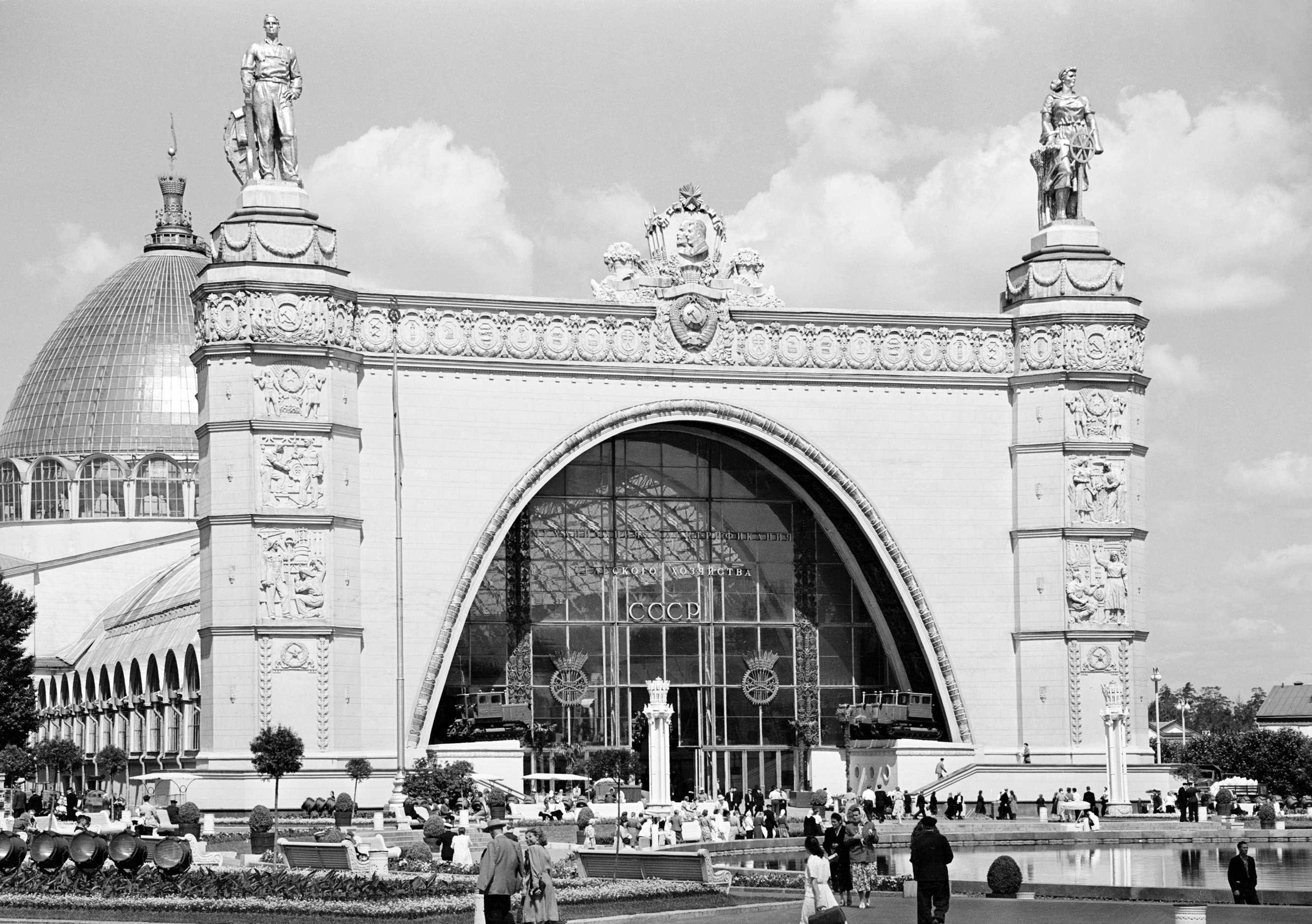
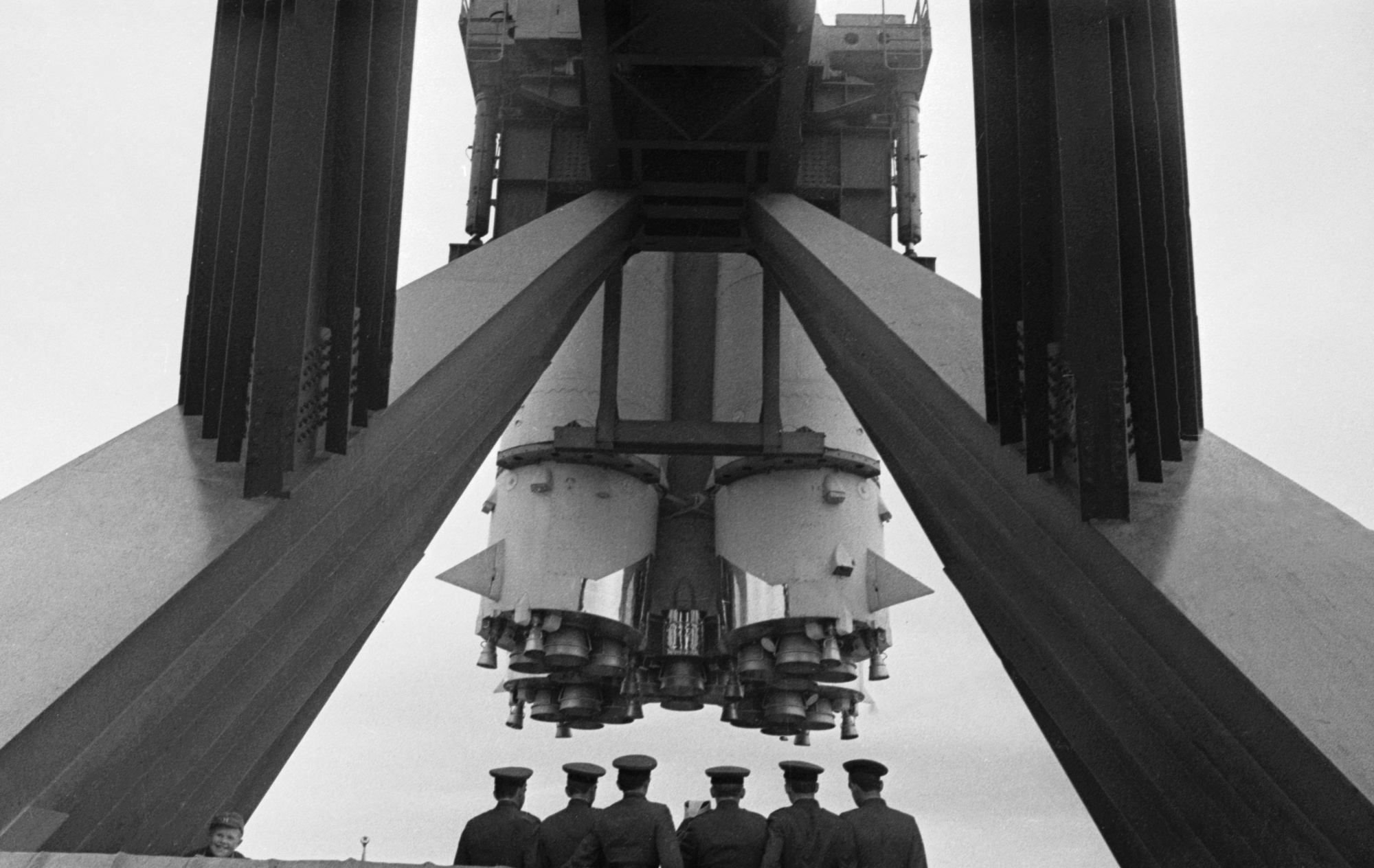
To the 1954 exhibition, the structure was updated by embeding a solemn facade with two golden figures on the sides in the arc. In 1961, the “mechanization” was renamed the “Cosmos”, the first satellite layout was installed in the pavilion, the interior was decorated with portraits of Gagarin. And instead of the monument to Stalin, who had already been removed by that time, the Vostok missile was installed.
El Lisitsky tower
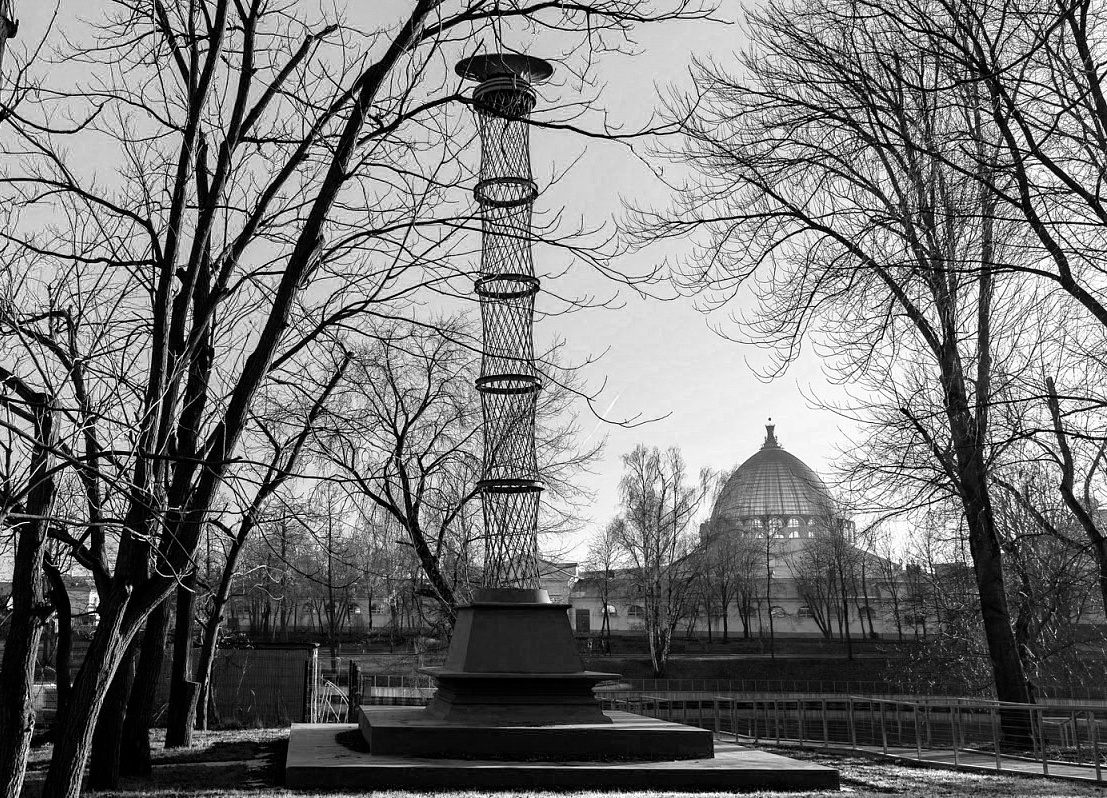
The last point of our route along the facilities of 1939 is the El Lisitsky tower . At first glance, this object in the form of a mesh for fishing for fish can not compare with giant pavilions. You can find it by rounding the industry area and passing the “stone flower” . The column tower was built as a shield for the advertisement of Soyuz Konservs and was not of historical significance. But more recently, the arts of vanguard art proved that the tower is the work of the consumer artist El Lisitsky. The avant-garde was gone back in the 40s, while it was believed that in addition to the dilapidated building of the former printing house, the “light” from his architectural projects was not preserved. No one knew that one of his works has been standing on the territory of VDNH for 80 years.
Route No. 2
From the "bright path" to the "spy". VSHV in the cinema
“Worker and collective farmer” - the Arch of the Northern entrance - the Pavilion “Chemical Industry” - the “Soviet Print” pavilion - the Pavilion “Central Black Earth Regions” - the arch of the southern entrance
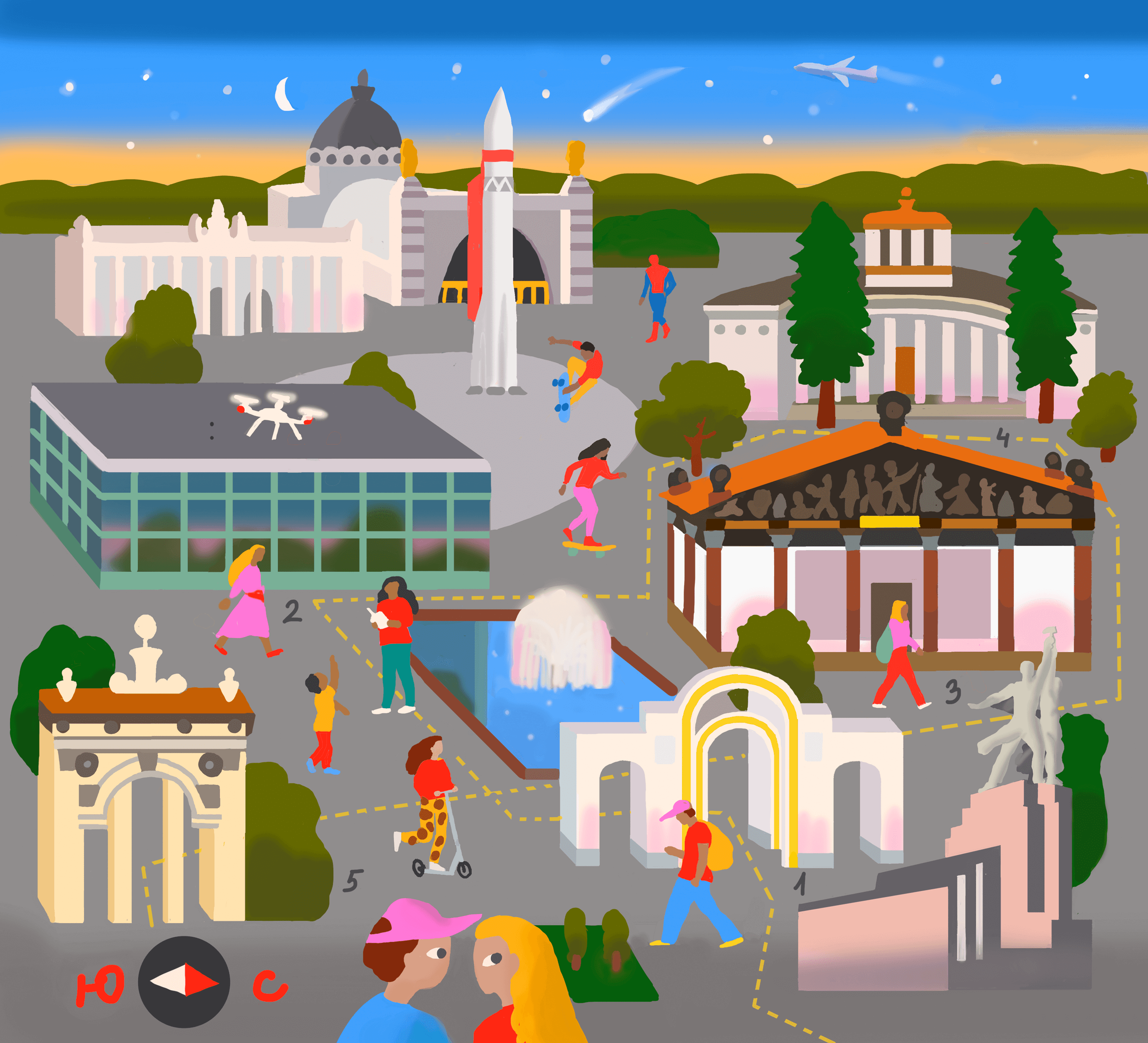
"Worker and collective farmer" and the arch of the northern entrance
The film machine is also worth starting with the " worker and the collective farm ". The monument appeared in Tatyana Lukashevich Tatyana Lukashevich. Filming of the film about the little girl Natasha, who left the house and was lost, was conducted in the midst of the summer of 1939. In search of the girl, the heroes had to go around the whole city, including the VSHV. The heroes drive there right by car, bypassing the monument to Mukhina and the arch of the northern entrance.
The arch flashes in the final scene of the film "The Bright Way" (1940). In it, a village girl Tanya moves to Moscow, settles in a weaving factory and becomes Stakhanovka. In one of the scenes, she flies through the ZIS-101 convertible through the arch of the northern entrance and drives past the industry and a group of fountains.
Pavilion "Chemical Industry"
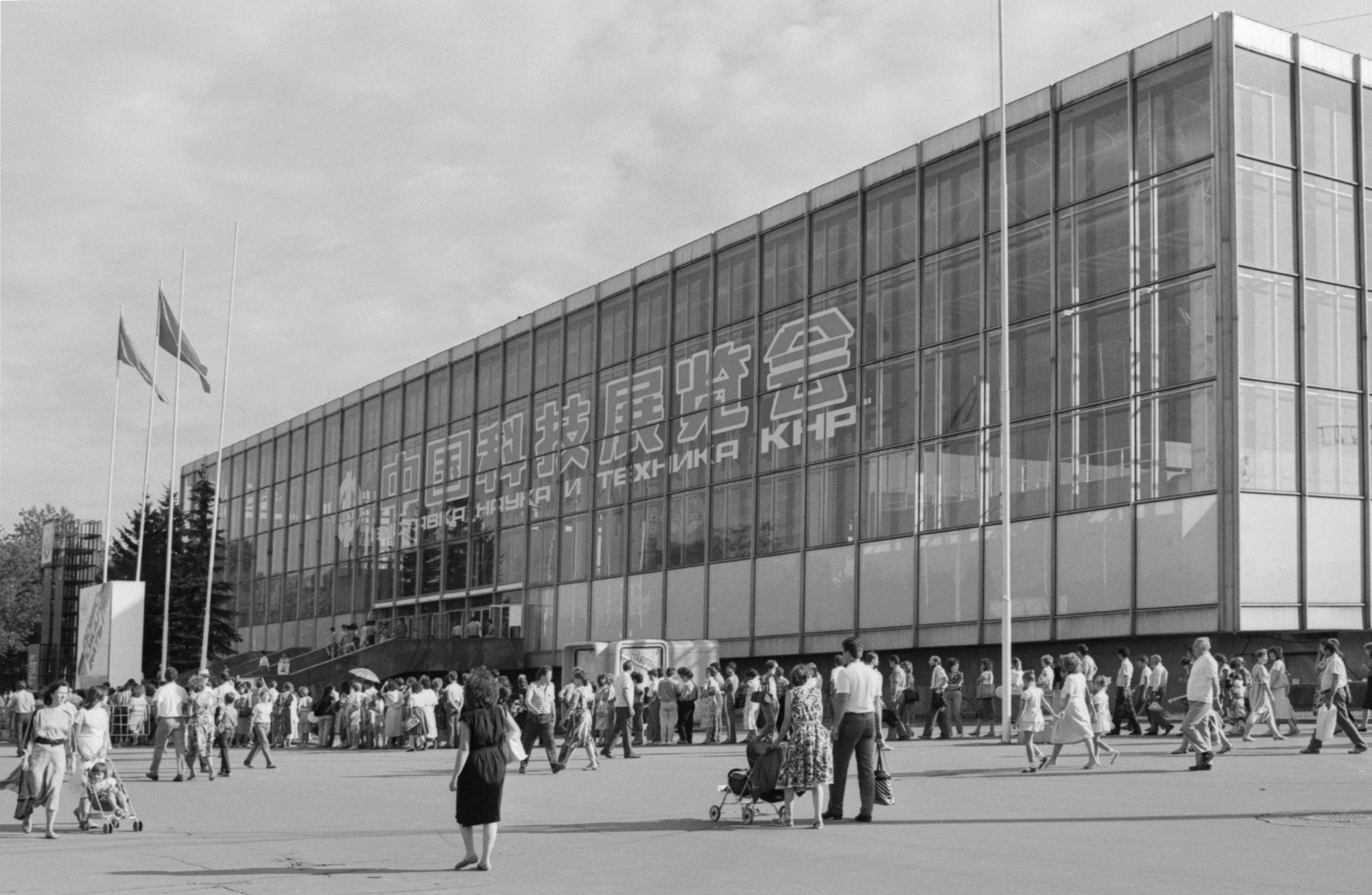
From the northern entrance it is worth moving towards Pavilion No. 20 , which already appeared in the American film “Russian House” (1990). The film adaptation of the spy novel by John Le Carre starred in Moscow during perestroika. The main character, the literary editor (Sean Connery), comes to the book fair at VDNH and falls in love with the Russian girl Katya (Michelle Pfeiffer). Their meeting occurs precisely at Pavilion No. 20.
Pavilion "Soviet Print" (earlier-Karelo-Finnish SSR)
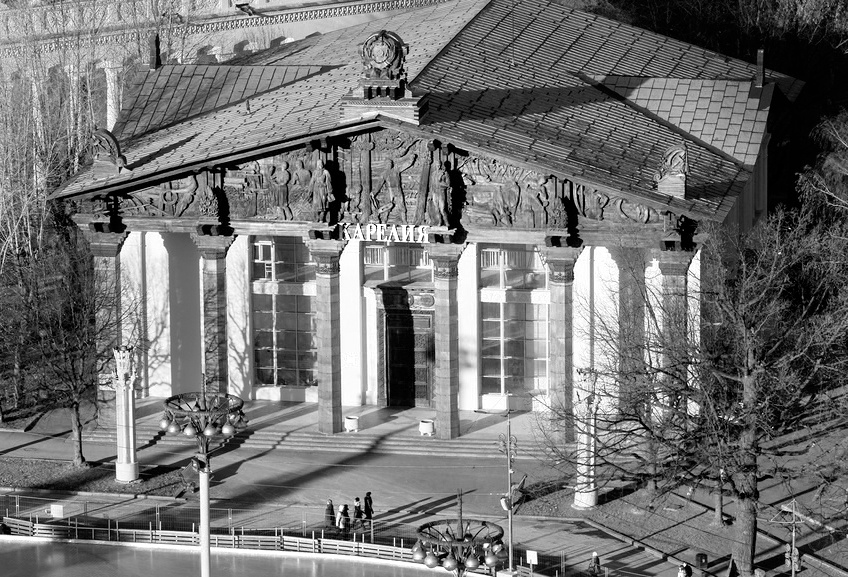
From the "chemical industry" you need to go to Pavilion No. 67 , reminiscent of the house in the spirit of the peasant north. The giant pediment is made of wood, and instead of bas -reliefs with milkmaids or workers there are images of guslars, protein, spruce branches and cones. But already in 1958, the pavilion was renamed the “science”, and the first artificial satellite of the Earth was established inside. Personnel with him appear in the prologue of the film "Five Evenings" (1979) by Nikita Mikhalkov. By the way, in the room of the heroine Lyudmila Gurchenko, the viewer can see the “Certificate of the Participant of the VSHV”: according to the plot, she works as a master at the factory.
Pavilion "Central Black Earth Regions"
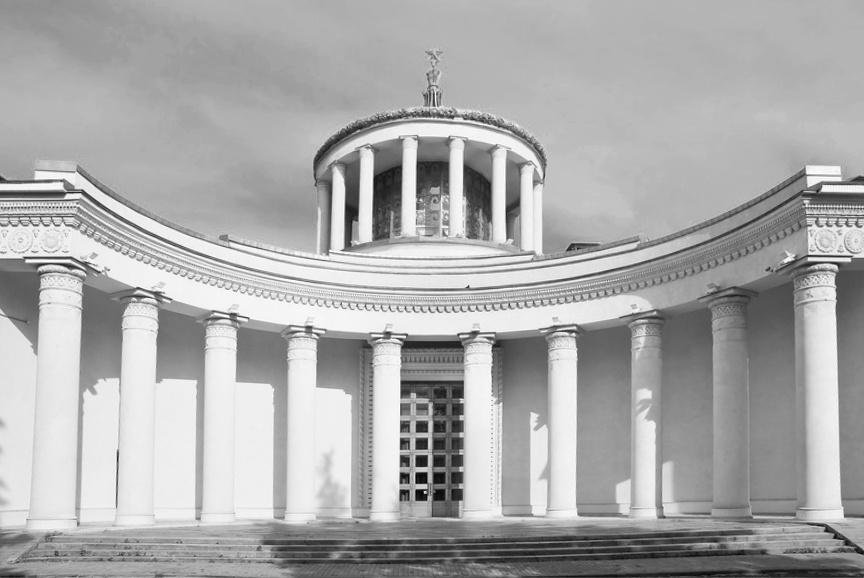
Five minutes from him, surrounded by fir trees, there is a small neoclassical building with a colonnade and a golden wreath - this is Pavilion No. 60 . In his central hall it is worth stopping and looking up at the light dome - it is decorated with images of sheaves, sickles, five -pointed stars, wreaths and other details of the Stalinist Empire. The building was built in 1954, but in the cinema it appeared only in 2012, in the film "Spy" based on the novel by Boris Akunin. There, the pavilion plays the role of the Vyborg station.
Arcade of the southern entrance
From there, a “friendship of peoples” fountain can be passed to the final point of the route - the arch of the southern entrance , which also appears in the “spy”. True, confusion arose with her: the triumphal arch in the spirit of the Renaissance in 1941, when the film takes place, could not be. It was built only by 1953.