Date
Author
Вячеслав Половинко, Александра Джорджевич, Юлия Минеева
Source

Preserved copy
Translated material
Beat and hide
The security forces are trying to conceal the individuals of those who beat on rallies on July 27. But deanonymization can no longer be stopped
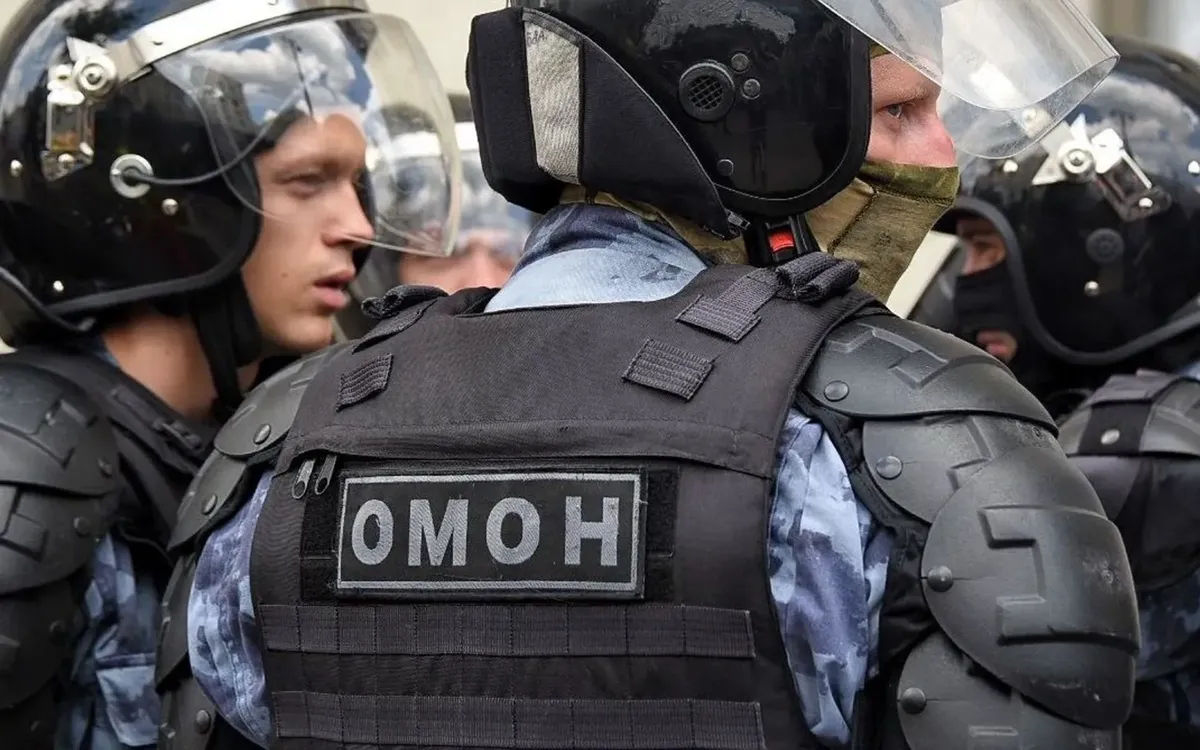
Who has something on the face
After the dispersal of an inconsistent action in Moscow last Saturday, representatives of power structures (Ministry of Internal Affairs and the Russian Guard) try to go into the shadow as much as possible. The Moscow mayor praised them, but ordinary people synchronously launched several processes to disclose the individuals of those who applied violence to activists, random people and journalists. The information is widespread that the Moscow police issued an internal order for its employees to remove all photos from social networks in which their faces can be recognized. This is done so that no one (in the representation of the security forces) can accommodate the photo with those who were made by journalists at rallies.
Even if such an order exists, it is absolutely useless: everything that was downloaded on the Internet is almost impossible to delete.
“It is too late to take some actions to anonymize their employees,” IT specialist Alexander Litrev is ironic. - All user pages on social networks were scanned by different services at least a hundred times - both foreign and representatives of opposition movements created here. You can, of course, hide photos from ordinary people, but it is impossible to conceal them from specialists. ”
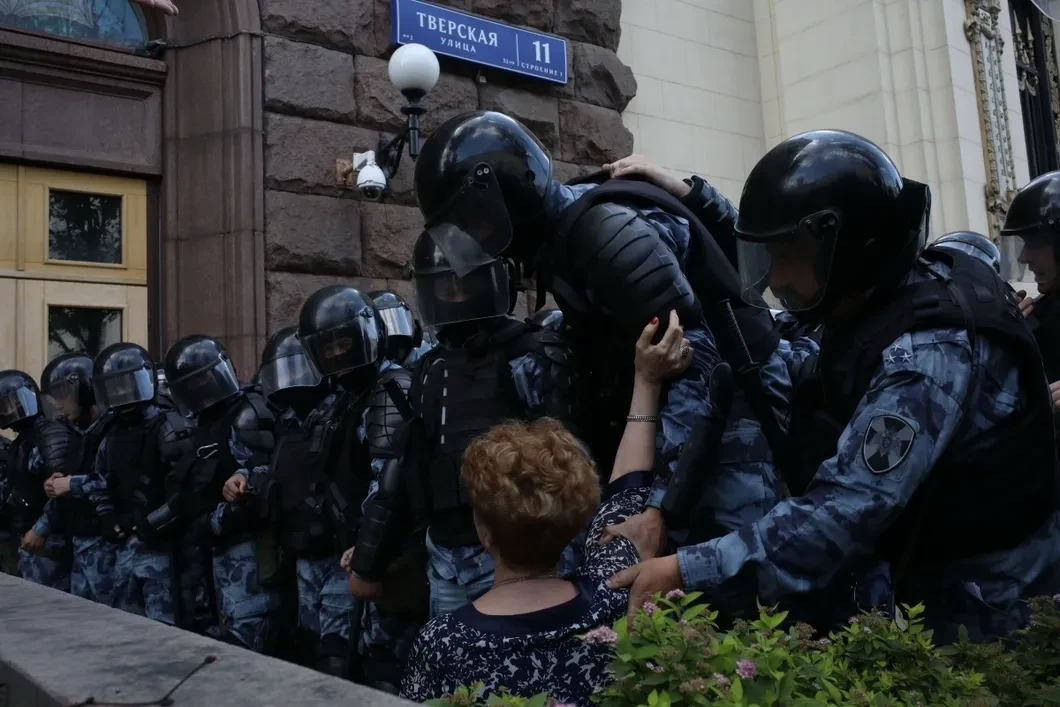
The panic of the security forces is understandable: the Russian Guard, for example, does not obey the law “On the Police”, so that its fighters have the right not to introduce themselves to those whom they intend to beat with batons, and the only identification sign is the person of the security forces who fell into the frame. The police should introduce themselves, and ideally, they should have a plaque with a personal number on their chests, but, in fact, the number is very difficult to discern (even then on the frames removed), and none of the law enforcement officials are in a hurry to call their name during the detention.
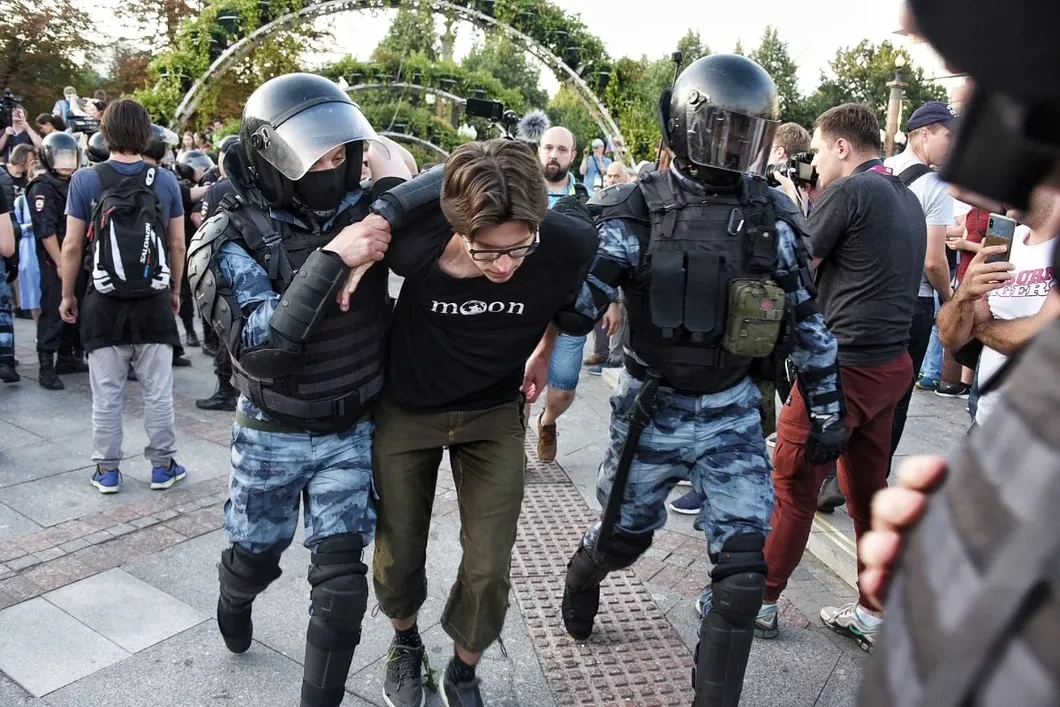
Designer Konstantin Konovalov (he was detained the very first on July 27 during the usual run and broke his leg) recalls that the police who captured him did almost without conversation. “Of course, no one introduced himself,” says “New” Konovalov. -I quickly ran towards the security forces, and maybe if they gave me some sign in advance, I would stop, looked at them carefully and then remembered. But the employees did not do this, but just ten meters ten before the intersection with me began to bounce to me. I slipped out, and then they still filled me up. I shouted that I would not resist and go with them, so that they stop breaking my legs and hands, and in response to ask why I ran and didn’t say anything else, they swore a little, but I don’t remember exactly how. ”
The identification and public disclosure of the personality of the security forces not only allows him to apply to him with a complaint or sue, but also significantly spoils the reputation to this person, says Alexander Litreev. The Baza Telegram channel said that the famous captain Syakin, who also dispersed the rallies on Bolotnaya, is already in threats. There is a response: a telegram channel with the speaking name “security forces” and a number of other channels laid out the data on the network, as it seemed to them, the author of the scanner project, which used to be engaged in anti-corruption affairs, and now began to disclose the personalities of security forces on protest promotions.
The name, surname, photo, phone, home address, car number, as well as calls “Decorate his car” and the promise “next time to introduce his parents and other relatives” of the author were posted.
It is noteworthy, however, that the embittered channels are considered to be the “scanner” of the “scanner” Ruslan Levieva (Karpuka) - the head of the organization Conflict Intelligence Team, which was investigating the activities of the Russian military in Syria.
Leviev himself denies participation in the project (they say, the “scanner” simply posted at home) and explains what programs you can deanonymous for law enforcement officers. At the same time, his personal data are posted on the network for a long time, so that the new “security forces” and other telegram channels were laid out. “I thought that they were somehow connected with law enforcement agencies, but, apparently, this is not so. Firstly, the number of my car was written with a mistake, and secondly, there is generally no information about my motorcycle, and everyone who is at least signed on me knows that I move mostly on it and recently, for example, got into an accident, says Leviev. “The reaction to deanonymization suggests that we fell into the most sore spot: people engaged in violence do not like publicity most of all.”
Get out of the gloom
The attempt of the security forces to conceal their data on the Internet shows that both law enforcement agencies and the authorities generally do not fully realize how modern technologies are arranged, Alexander Litreev says, which is already clear from legislative activity on the Internet. Meanwhile, deanonymization as a process acquires a catastrophic scale for security forces. Applications and services for identifying personality via the Internet a huge number: a significant part of them is free, and the principle of work is available to anyone.
“We use various services - such as FindClone or the search for Yandex according to the pictures,” explains Ruslan Leviev, who began to popularize the deanonymization campaign one of the first on the Internet. - I take photographs and videos that I find on the Internet, I highlight those police officers who showed special cruelty and unreasonably delayed people. That is, those who, in my opinion, directly violated the law. I highlight their faces, “put” in these services and see their profiles in social networks. It happens that I find very similar people, but neither in the service nor in the profile there were no traces of the possible involvement of these people in the Russian Guard or the police. In such cases, I do not publish the names and photos of people, since there is no one hundred percent confidence. ”
Leviev was doing this before, but now a request has appeared - and more importantly, it is massive and not centralized, but based on the "enthusiasm of users of social networks."
There is still a well -known FindFace service, which has acquired for its purposes the Ministry of Internal Affairs: the service is used to recognize persons in video from street cameras. “But you need to understand that it works in both directions: in the same way through this service you can find the faces of the security forces,” says Alexander Litreev. FindFace is now working in a half-closed mode, you need to pay for some functions, but this is not a problem in itself, but inconvenience, and besides, the service already has free analogues with similar functionality, adds IT experts.
... A large initiative entitled "Law and Order Number" has been launched in the country. Its authors created a petition, in which they offer to oblige police officers to apply a personal number in a large font. “This does not violate the rights of the police and allows you to observe the law: to quickly find out which of the police exceeds their powers,” the authors of the initiative write. They refer to the fact that such a practice exists in other countries. As of 14.00 Thursday, August 1, more than 30 thousand people signed the petition.
The security forces are unlikely to do something with such an onslaught on the part of the company as part of the law: all data is taken from open sources. Alexander Zheleznikov, managing partner of the Bar of Lawyers “Zheleznikov and Partners”, clarifies that problems can only be in case of attempt to disclose the personalities of the FSB, but the Chekists do not disperse the rallies - at least for now. He is sure that the public disclosure of the individuals of those who exceeded the authority is good, but it is necessary to translate this from private initiatives into a legal and legislative field.
“The fact that the employees of the Russian Guard are not presented or hide their data, I consider it unconstitutional,” says Zheleznikov. - Many in recent days give an example to Europe or the USA, where sometimes there are much more rigid acceleration of demonstrations, but I want to emphasize that with these rigid accelerations, each employee is responsible for his actions, his data is available, ordinal numbers, badges and other identification notes are visible. And if you know that you will not be punished, because they will not find you, then you can somehow not restrain yourself. By the way, this case should provoke other structures to ask the question of why the position of the Russian Guard privileged in relation to others?
Maybe this will feature the deputies to think about the legislatively oblige the Rosguard employees to wear noticeable identification marks? ”
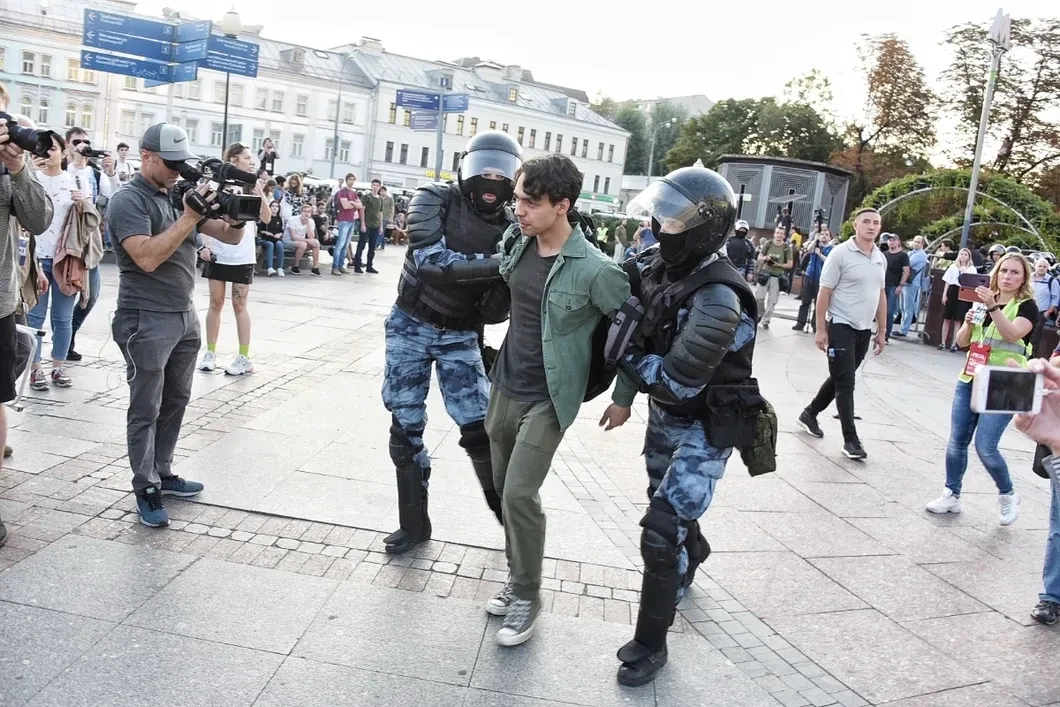
The only “but” in the process of revealing the personalities of the security forces lies in the ethical plane. “Already found a man who did not miss an ambulance with me, and people began to write all sorts of nasty things on social networks. I can’t say that I think this is very correct, ”says the detained designer Konovalov. - Yes, he is wrong, but those people who gave him the order not to let me out are even more wrong. You can wonder why he works there at all, but this is another topic. And the answer to the question is whether it is worth writing threats for him is ambiguous for me. It seems to me that it is not worth it. It is probably right that people begin to look for the faces of the employees of the Russian Guard and the police, but so far I am not sure that those who have already been found are “mine”.
True, the issue of ethics is also controversial, given that the security forces do not have moral obstacles. On the photographer of “New” Victoria Odissonov, an employee of the police with a badge on the action on July 27 attacked purposefully. “He deliberately hit his hand over the lens of the camera, while seeing that he was at my very face.
The camera with a ricochet hit me on the two upper teeth, ”Odissonova says. “The pain was terrible, it took me about ten minutes to recover.”
The attacker did not introduce himself, but at the disposal of the editorial office there is a picture of this person. The deanonymization process is already useful at least by the fact that it can force such security forces to behave at least more restrained.