
Translated material
Two in the race, not counting Europe
NATO still considers the actions of Russia the reason for the US withdrawal from an agreement on medium and shorter missiles
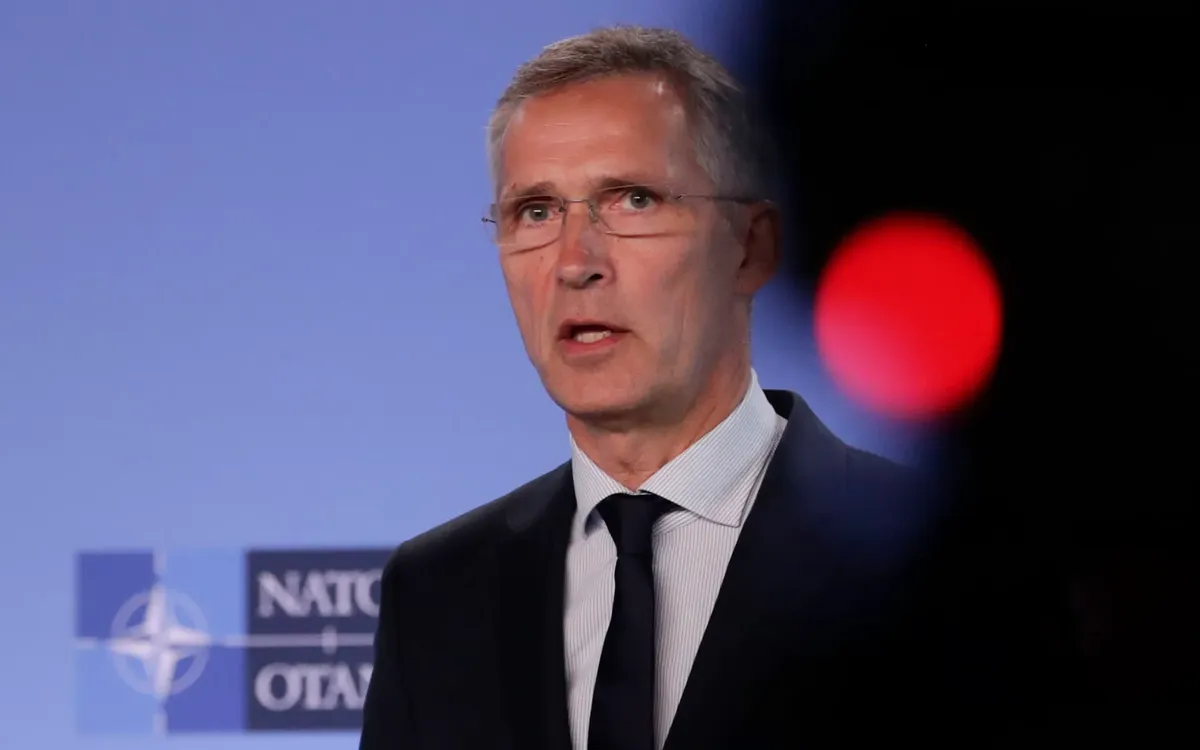
The theme of the latter before the summer holidays of the press conference at the Brussels headquarters of NATO was long known. On Friday, Jens General of Jens Stoltenberg, journalists were waiting for the declaration of measures prepared in case of the preceded death of an agreement on medium and smaller missiles (INFMD).
Although measures were agreed by the Ministers of Defense back in June, Stoltenberg still refused to disclose them, repeating as a mantra that he would have to learn to live in the world without the INFMD, but that Russia has time to change his mind to Dadlin's August 2 and return to the implementation of the contract.
Actually, this time he did not reveal many secrets. But he spoke very excitedly, demonstrating the significance of the moment. Like, for more than three decades, the contract has been a guideline in the field of control over weapons. Now you will have to live in a less safe and less predictable world.
For the NATO Secretary General there can be no doubt that the contract has ceased to exist because Russia has deployed the SSC-8 missile system (the Novator 9M729), which, according to NATO, is prohibiting , which would be the Russian military. New Russian missiles are equipped with nuclear charges, mobile and difficult to detect, they can reach European cities in just a few minutes.
All NATO members believe that Russia is exclusive liability for the termination of the contract.
“There are no new US missiles in Europe, but in Europe there are new Russian missiles,” Stoltenberg repeated more than once.
According to him, this decision of Western countries has a long background. The United States and many NATO allies have long warned Russia that it violates the INFMD, "for years they tried to convince the Russians to return to compliance with the contract." The US decision to get out of it is based on objective intelligence data.
The head of NATO said that the alliance would respond "balanced and responsibly." He is not going to mirror the mirror what Russia does, and does not intend to place new terrestrial nuclear missiles in Europe.
A package of measures agreed by the Allies on the bloc includes military exercises, reconnaissance and observation, strengthening of air defense and missile defense. The answer will be proportional and cover only ordinary weapons while maintaining reliable nuclear deterrence. Some of these measures can be implemented quickly, others will take time. But the alliance does not intend to force their implementation and will try to refrain from hasty and rash steps.
“We do not want a new arms race,” the NATO Secretary General emphasized.
He had to repeat this phrase more than once, because for journalists such a statement was not convincing enough. Has the arms race has not yet become a fact? If not yet, is it possible to avoid it?
In the end, Stoltenberg almost agreed that she was already coming. He noted that the deployment of new missiles is only a part of a more common model of Russia's behavior, which for many years invested significant funds in new military potential, including nuclear forces. The North Atlantic Union has already begun to react to this increase in military power in Russia, raised its collective defense to the highest level from the end of the Cold War. He had combat -ready troops on the eastern flank, and a common combat readiness was increased. After many years, NATO countries begin to increase them, investing in new weapons, buying advanced air defense systems and pro, modern aircraft.
So, the exhausting race of weapons is inevitable?
Not quite, says Stoltenberg. It can be avoided, but then Russia needs to change its model of behavior. The deployment of new SSC-8 missiles is only part of this model.
He is “absolutely sure” that in the end, Russia will understand that it will only benefit from effective control of weapons. As I understood during the Cold War, after the deployment of medium-range missiles in Europe began in the 70s. And in the end, she agreed to the 1987 agreement, which forbade all these missiles.
NATO continues to strive for constructive relations with Russia, when Russia's actions allow such an opportunity - as the NATO Secretary General of NATO determined a new formula for relations with the country, which after the end of the Cold War was considered a strategic partner. The main absent link in this new formula is trust. The proposal of the deputy head of the Ministry of Foreign Affairs of the Russian Federation Sergei Ryabkov about the moratorium on the deployment of missiles in Europe Stoltenberg rejected on the move as "not worthy of trust." Because, he reminded, Russia, for years without recognizing this, developed and posted new missiles in Europe, and there is no point in the moratorium on rockets that have already been deployed.
“The proposal to replace the moratorium with an effective legally binding agreement does not deserve confidence,” the NATO Secretary General said sharply.
We will have to learn to live without a contract and without trust. And pay, pay, pay ...