
Translated material
Freedom to be or beat
Why is religion often become an foundation for aggression?
Yakov Krotov: This release of the program is dedicated to violence against children. In the Moscow Studio of Radio Liberty - the Orthodox priest, father Evgeny Piskarev , from Daugavpils on Skype - Orthodox theologian, culturalist Dmitry Korobkin .
In the modern world, in Western Europe, in a huge number of countries, it is probably even forbidden to apply mental and physical violence to the child. In the US, the situation is more complicated. But the main thing is that it is formed that the parents who arrange their family, using violence against children, are, first of all, religious, while people from secular, secular positions are protected by children and against violence. And this seems to many believers completely wild: as from the god of love and mercy, from the god of freedom, do a family built on strict and forced principles? And why do unbelievers are often closer to the Gospel, religious ideal than believers?
We have a small interview with an unbeliever, psychologist, specialist in child-family relations Natalya Strievskaya-Kolmanovskaya .
Natalya Strievskaya-Kolmanovskaya: To begin with, the child is basically not free. In the religious sense, as far as I know, freedom is the responsibility to do as you think it is necessary, make decisions, but at the same time make sure that your decisions do not infringe on anyone, do not bring anyone unpleasant. And in this sense, freedom to educate your child is, first of all, the responsibility for this child, so that he grows up a normal viable person. And the same freedom, in fact, has an animal, only the animal obeys instincts, so its freedom is realized according to a certain program: to teach a child what the cub needs to teach - to fly, swim, further in the text.
A person teaches a child, first of all, in words, he modifies the learning program, because life could change while a new generation has grown up. And the child is not free, he is as if inside the psyche of his parent, he was born only physically, so there can be no freedom.
But if you take responsibility for this child, then you are responsible for him to be good. You can answer in order to teach him to obey. Most of the life of mankind was built on growing subordinating people, so severity in education was necessary and justified. For example, the child did not learn to obey his mother, who had to be afraid more than the fascist, because if his mother said: “Quickly under the table and be silent,” then you didn’t have to ask: “Mom, why?” “You had to climb under the table without asking, and be silent, and then there was a chance to escape.” But, look, my granddaughter is 16 years old, that is, this is the third generation of people who did not know war and difficult circumstances. When there is no threat to life, and the most difficult technologies have penetrated life, severity prevents the child.
The totalitarian state as such controls authoritarian, and we simply have not yet grown from the totalitarian state. You know that everyone is worthy of your government. It’s just that people who are educated a little more understand a little more, they already see that totalitarian restrictions have begun to interfere with development.
In one region, the teacher asked me: "Tell me, please, do you have any training to learn how to talk more?" I ask: "Why do you need louder? You have a normal voice. There is a scene, you can use some tricks." She says: "You understand, the children do not hear. You say to them, but they do not hear." The children's psyche is arranged so that if something is not useful, if it is harmful, then the child ceases to hear. Children have already stopped hearing an authoritarian tone, it is no longer possible to operate on them. They get out, crawl out of control, so you need to change.
Today the Russian state is less totalitarian than Russian believing families
Yakov Krotov: The intrigue lies in the fact that today the Russian state is less totalitarian than the Russian believing families: the state seriously considers the question that it is impossible to beat children. Of course, this, perhaps, is just a sheep’s skin on the wolf, the state imitates Europeanism, humanity, but what are believers! Why do they assume the functions of a totalitarian state and are even ready to defend, as they believe, to beat their freedom to beat the child: to beat in a word, deed or thought?
Evgeny Piskarev: The trend of violence is not so much a Russian phenomenon as came to us from America. There, violence against children exists to a much greater extent than in Russia. This is mentioned in the housekeeper, another thing is how it is realized. In America there is no home building, but there is much more violence. And the sensitivity to violence there is also more, there everyone is fighting for their rights. We are talking about how to make the children do not go out of parental control so that they grow adaptive to the environment, and that they develop at the same time. Practice indicates that total degeneration occurs, and one of its signs is the one who does not know how to. Children do not feel danger, and, having left the control in an extreme situation, they will be inappropriate.
Another thing, why should we wait for an extreme situation? An extreme situation arises where people do not feel boundaries and constantly violate each other's boundaries. A person who does not feel the other, busy with himself, self -centered, selfish, crosses these boundaries. Violence, as I understand it, is called to some extent to pretend. What will I learn under the table, silently? Maybe humility. The colleague said that the state raised subordinate people, but is it not the same in obedience in the monastery? So, only having learned to listen and understand the situation, you can say something to people. And the behavior of children often - "may my will be."
And the second thesis - "so that the child is good." Okay - in what sense? Good now or good then? But now it’s good - to eat chocolate sweets, but more, and then - teeth, diabetes, and so on. Everyone thinks as he thinks, and realizes his vision. This is parental law. As a person was brought up, to some extent, he then replicates this or compensates for defects, also to the best of his understanding. As far as I know, we have no courses for parents. Previously, there was a concept of conscious parenthood, but now there is also little awareness. In the Old Testament, in the housekeeper there were direct instructions on the "massage" of different parts of the body for certain days and cases.
Dmitry Korobkin: In the Gospel, there are literally three words on the question we are talking about. It says that Jesus was in obedience. The question is - what is this obedience? I have a persistent vision that it was not obedience under the table, not some form of violence, but something else. And the form of obedience, probably, followed something higher, the spirit of freedom. For example, when the child obeys his parents not because he is scared, not because he feels some violence, but because he simply believes dad and wants to make him pleasant or simply observe subordination, he will obey.
But why in religious people in modern life the theme of violence in the family often becomes more relevant than in social people? At the end of the century before last, Vladimir Soloviev said that unbelievers do more for the Kingdom of God than believers. Religious people have these molds - obedience forms, behaviors, and everything is specifically and understandable - here are the forms of behavior, and my children will grow like that. And secular people have more dynamics, they do not have these molds, and therefore they are, as it were, more obedient to the spirit of freedom. And everywhere, where a person partly has this freedom (and often secular people have more it, although it should have been the other way around), the Lord can act.
In the words of a secular psychologist there is more love for children than in the words of other very authoritative church figures
So we see that in the words of a secular psychologist there is more love for children than in the words of other very authoritative church figures, and you understand that I would not want to be their child.
Yakov Krotov: Nevertheless, should the war really be the main criterion in raising children? And is it only on the Internet that the circumstances are humanized? For us, believers, the creator is dominant, relations with him. The child is not free, said Natalya Strievskaya, but before God the child is largely more free than an adult. The adult is crushed by everyday care, and over the child - the angels of God, because he still has no passion for domination and so on.
Evgeny Piskarev: No, this is not so. All people, all biological creatures tend to be dominance. Not all children are ready to share delicious.
Yakov Krotov: Yes, we all strive to be alpha mights and alpha samks, but we are people, and the child as a person turns to God.
Evgeny Piskarev: Does the child have human self -awareness? Don't know.
Yakov Krotov: And I know: there. An adult is necessary to free oneself from sin. The child intuitively grows in front of God.
Evgeny Piskarev: The colleague said that the child is inside the psyche of his parents, that is, he, in general, was not born as a person. This mental pregnancy continues.
Yakov Krotov: And before God the child is in the arms of the Father of Heaven?
Evgeny Piskarev: Does the child have a feeling of this secret life: everything is for a reason, I was born for a reason, is there any meaning in this?
Yakov Krotov: Maybe many children do not have this, up to four years old do not ask such a question, but they have more - they have flesh of eternity. They did not die in their souls, but this is vividly the consciousness of God.
Evgeny Piskarev: There is a phenomenon - the child does not obey the mother of saying “thank you” or not say at the table, but you never know what mother says ...
Yakov Krotov: And if the child says: “Mom, I want to pray, I want to go to church,” and my mother replies: “What are you? I am a member of the Union of Militant Atheists. Forget about this nonsense!” - It happened in history recently? It happened. And the mother should beat the child so that he does not go to church?
Evgeny Piskarev: No, she can explain to him that there is no God.
Yakov Krotov: And for strength to give a slap.
Evgeny Piskarev: Maybe if he considers it necessary.
The woman turned to Natalia Strievskaya with the question of whether there are courses to strengthen her voice, says that she has no resonance with children, she cannot establish relations with them.
Yakov Krotov: But these are her problems, not children.
Evgeny Piskarev: Yes, and she connects the degree of controllability of children with the power of her voice: she has such thinking. Perhaps Natalya Strievskaya somehow explained to her that the matter was not in the power of the voice, but in other components of contact with the child. In the future, the child will have to arrange with other people about the quality of life together, about how they will live on with fellow practitioners, in his future family. This is all a relay.
There was such a sociologist Pareto , who put forward the concept of the rotation of the elites: people born at the top of the social pyramid go down. In Moscow, we see that migrants occupy key positions, and Muscovites ... Migrants are more adaptive and more motivated. And the well -fed and satisfied Muscovites, who have no motive to develop on subsidies and so on. They have apartments, and these people have a lot of biological and social tasks, they need to rise.
Yakov Krotov: And at the same time, in the families of migrants from Muslim countries, parents are more tender and kinder to children than in well -fed, prosperous elite families.
Evgeny Piskarev: That's right. People in well -fed elite families are not ready to overcome difficulties that they did not even want to realize.
Yakov Krotov: They are ready, but by military way - beating.
Evgeny Piskarev: This is not a sign of elitism, this is just a sign of primitiveness. If I, by my own child, like a microscope, knock with a hammer, exclusively with the aim of improving his functions, then the microscope as a thin mechanism will work much worse. Any violence, in fact, from powerlessness, from the inability to solve the problem in another way. This is actually attracting an energy resource. There is no other resource, empathy, cognitive, perhaps emotional, either - either it was in a shortage, or for some reason it was exhausted.
Yakov Krotov: You worked with a children's suicide all your life, children passed through you who made the most terrible form of escape, trying to commit suicide, their parents passed. There were many among the children who said that they wanted to commit suicide because their parents beat them?
Evgeny Piskarev: No, this was not. There was a misunderstanding. The children found themselves in a difficult life, everyday situation, and they had no one to share with. They did not want to share with their parents, because they did not believe in the possibility of understanding. Contact is disturbed. I worked in an emergency, and in long therapy people went around this topic, they wanted to forget about it: who wants to remember the bad?
Dmitry Korobkin: There is a well -known phenomenon - DVR, children of believing parents. This is when the child seriously and forever grew up and said: "Mom, everything, and I will not bring my children to church." This is probably similar to some kind of injury. This form of religious violence, when it covers with some higher authority, of course, is terrible. I don’t even know how to heal it later. Any violence against a child gives rise to this abyss.
I really liked how Father Eugene said about the energy deficit - empathy, cognitive and so on, when the parent simply has no resource inside to establish a living connection with the child to get something living. And then they act on children in a very simple way - manipulation, violence, some formal communication, and this destroys all living ties. And this is really very sad.
Yakov Krotov: Here is an episode from the memories of the childhood of father Alexander Me . Their confessor, the catacomic priest, father Seraphim Batyukov , during the war sent his mother, Elena Semenovna, with a child of seven years old and the youngest, four years old, to the front line, near Zagorsk. And if a German comes? Then they, Jews, would be doomed to death, and they knew it. And yet he said: "You will survive there."
Evgeny Piskarev: But this is faith.
Yakov Krotov: So it's about that! I cannot imagine the mother of Father Alexander, Elena Semenovna (I knew her), who would scream: "Climb under the table." Never!
Evgeny Piskarev: In this case, it was about life and death. This violence is not in the families of believers, it is in religious families. Religiosity and faith are different things. Religiosity is the fruit of the system, it is a human education: do it like that, it is supposed, so it is open, charter, law ...
Yakov Krotov: And what is bad?
Evgeny Piskarev: There is no life, no development. When the so -called believers eventually turn into a herd of monkeys, we are talking about the fact that the team for the "titanium" is brought up, where you need to obey the captain, and the iceberg floats - this is not your business.
Yakov Krotov: Pavel Men told: when they were in Zagorsk, at some point without mom ... "Alik was leaving somewhere, and I was left alone, there were bombing, and I was terribly afraid, and they told me" read "our Father," and I had fear. " They didn’t shout, they didn’t say “climb under the table” (the table will not help from the bombs), but read “Our Father”. What is this a spell, a formula or trust in the Heavenly Father?
Evgeny Piskarev: Appeal and trust. The man believed and read, and his inner state of fear went away.
Yakov Krotov: In your opinion, how do we perceive God more - how strictly, a harsh father or as a father who forgives and never punishes? Do he attribute all our misfortunes to him - is he raising us so much? Or somehow, to set yourself up for questions to the heavenly father?
Dmitry Korobkin: Of course, I prefer the second option. I have a favorite phrase of Father Alexander, which I recently often repeat to myself: "Christianity is just beginning." And this is not only about the historical situation of the 80s, but, as I feel now, this is even what is happening to your child. Christianity, Christ in your family, in your life, in the life of a child is always unique, it is always some new beginning, a new life. This is always some kind of openness, some risk. If we are believers, and not religious, then we will not look for some rules binding on the child, some robes and so on, and scold him for this, we will be happy, to monitor how the Lord acts in our life and try to invite him to our lives.
Evgeny Piskarev: The whole question is whether I have a dialogue with God. If I have a dialogue with God, then I will have a dialogue with a child.
Yakov Krotov: Parents - Orthodox, believers, and Catholics with Protestants who defend their freedom to beat children, spend their freedom -love. If you defend something from the state, then not the right to beat, but the right to mercy, the right to understand and the right to be the children themselves before God.
-
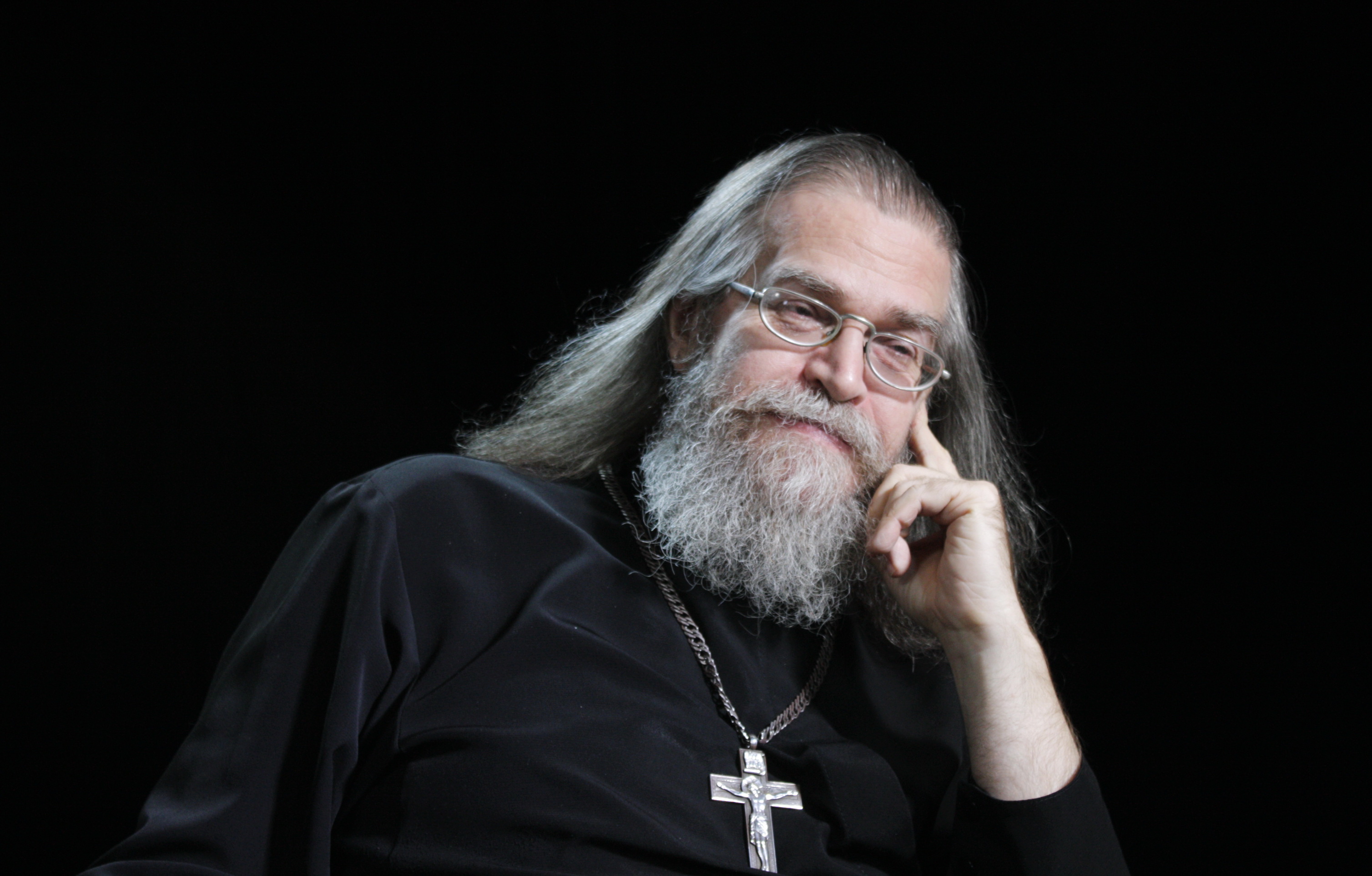

Yakov Krotov
Historian and priest, leading Radio Freedom Radio "Between Vera and Belief"
ykrotov@yahoo.com