
Translated material
Where to settle three million new Muscovites: architects tell how the capital will change
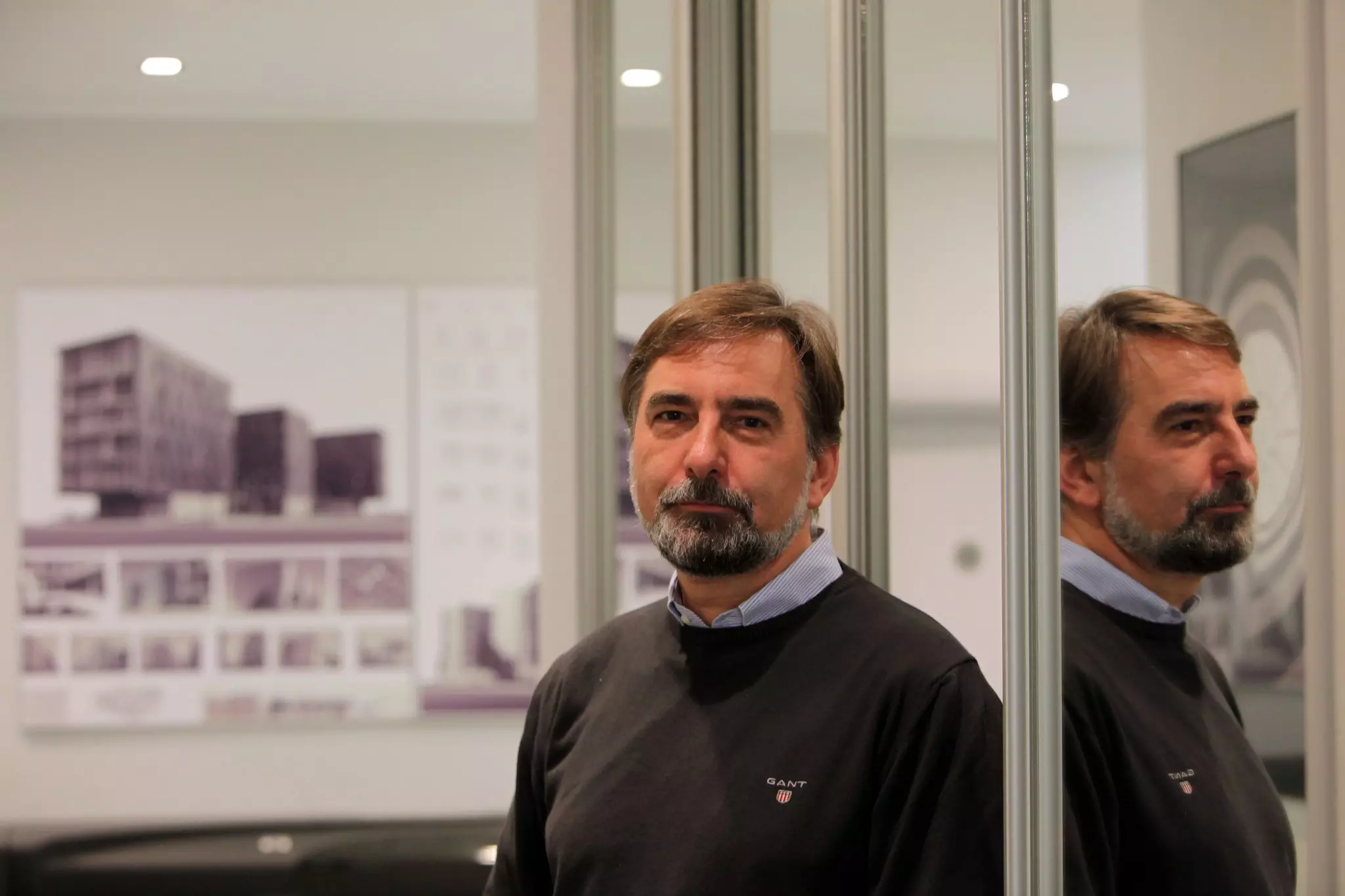
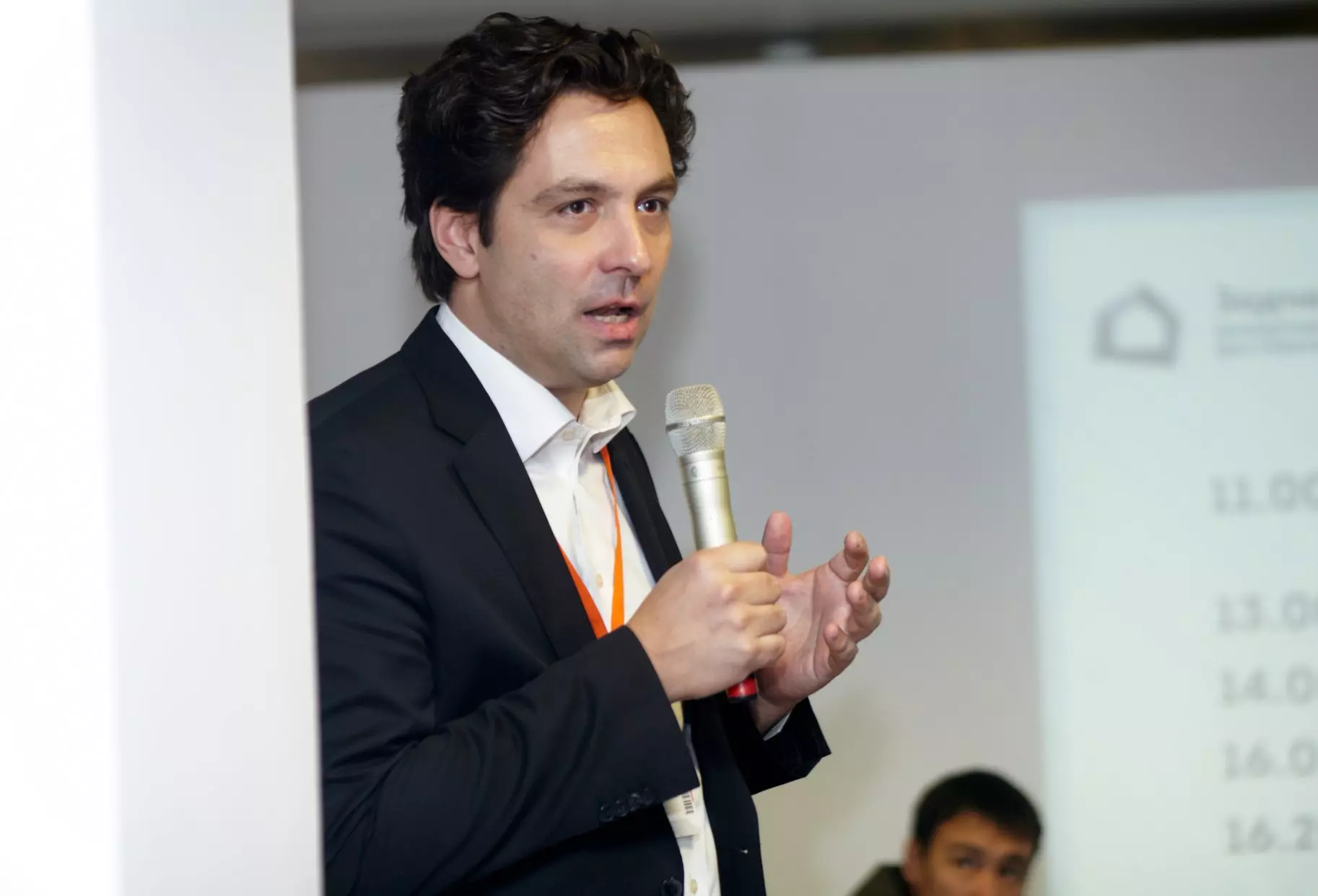
Architects Sergei Skuratov and Ilya Zalivukhin, whoproposed to increase the population inside the garden ring four times at the Moscow Urban Forum , tell the MBH Media, which, in their opinion, should be the capital's center and where several million migrants who will inevitably come to Moscow.
Like in the center of London
Ilya Zalivukhin, deputy chairman of the architecture commission in the Public Chamber of the Moscow Region and the founder of Yauzaproekt, assures: he said four times about the increase in the population inside the garden ring to “aggravate the topic”. Zalivukhin is convinced that inside the third transport ring (TTK) you can resettle up to five million people instead of 770 thousand living here now. Moreover, first of all, you need to build up the territory between the TTK and the garden ring.
“Inside TTK, density is 110 people per hectare. This is a normal life density outside the city where there is no infrastructure - and here it is all, ”says Zalivukhin. - If you increase the population inside the garden ring four times, then the population density will become, as in the center of London. This is a good example for Moscow in terms of the reorganization of urban territory. There, the center is actively built up with high -rise buildings. London was held until the 2000s, then they wanted to be at the level of America and Asia. Against the background of skyscrapers: Tokyo, Australian cities, New York, which is quite an old city. But there are also resident cities-Paris, St. Petersburg. ”
The population of Moscow agglomeration is estimated at about 20 million people, their number increases annually by 300 thousand - this is 3 million over 10 years. These residents, explains Zalivukhin, must be effectively distributed.
“It is rational annually to set up 150 thousand within TTK, another 150 thousand - at transport nodes: MCC, MCD , metro. The main thing is to avoid the resettlement of visitors around Moscow. There is a limit when living conditions become impossible, but the problems will not be in the center, but if we begin to build cities around Moscow, where there is no infrastructure. Think about who will live on the outskirts without infrastructure and transport? It is much more effective to build in the existing city, including in former industrial zones. ”
Member of the Board of the Union of Moscow Architects Sergey Skuratov claims that the words about the four -time increase in the population in the center of Moscow were attributed to him by the media who interpreted them as “hostile to the city” and scared people. “I said that the historical center is very“ loose ”and it can and should be built there,” explains Skuratov. - In the center of Moscow between the Kremlin and TTK there are a lot of construction projects, and they continue. I know a giant number of sites in Moscow that are empty. These territories can be rethought for modern needs. In addition, there is dilapidated housing. ”
“I am doing about 10 projects in the center of Moscow - this is a new development. I try to smooth out possible conflict situations and not create new ones. Walk around the alleys, look into the yards, look - it is full of collapse, she does not represent any value. In this place it is necessary to build normal housing, social structure and so on, ”Skuratov assures.
You can increase the population inside the garden ring primarily due to the re -profile of office buildings to residential. All profitable houses, Bulwukhin believes, must be allowed to transfer to the housing stock: it is beneficial to the owners of these houses.

Lonely young visitors
Zagliukhin sees the main residents of the renewed city center of the city, who, including, can rent new housing: “Our task is that the visitors are socialized are more intelligent so that the visiting high -quality specialist does not seek to leave further west. The settlement of the center is hindered by the old norms that oblige to provide housing in the center with schools and kindergartens according to the norms of the sleeping area. Young people need a small rental apartment, not parking and a kindergarten, so as not to take a mortgage on the outskirts. In the entire developed world, up to 50% of housing is rental, especially in Germany. ”
To increase the availability of housing, Zalivukhin offers to make it small: “Apartments in the center can be about 20 square meters. In some cases, in such houses there may even be common kitchens. As an example-our proposal to build a skyscraper in the center of Artplay: with a cost of 300 thousand rubles per square meter, a 20-meter apartment will cost 6 million rubles. In such an apartment, a person does not have to live all his life. A person can migrate around the city: first live in the center, then - in the area with a school and a kindergarten, then, for example, in a cottage outside the city. There should not be such that you live, like attached, in an apartment in a mortgage. ”
Zalivukhin is sure that there should not be problems with parking and traffic jams, because thanks to well -developed public transport, it is not necessary to use a car in the center: “Inside the garden, walking distance to the metro is everywhere. Why in the center a car? If you want to have a car, have your expensive parking underground. ”
Officials - to exit
“The center was empty because the Stalin General Plane suggested the resettlement of this“ bourgeois viper ”into sleeping areas,” says Zalivukhin. But now the center is full of officials and organizations performing metropolitan functions.
Sergei Skuratov hopes that this is not forever. “Some of these functions will generally cease to be necessary when society and the state sign a new public treaty to reduce the functions of state power. These, of course, are dreams. But who knows, still dreams sometimes come true. Maybe the state of the near future will not need huge quarters for the buildings of the FSB, the Ministry of Internal Affairs, the presidential administration, countless ministries, departments ... The center of Moscow will still change. When the officials will move to City and its surroundings, or somewhere else, these buildings will be released, they need to do something, carry out reconstructions. Now a colossal number of territories is not used for the city and its inhabitants. ”
Highness is the light in the windows
Zalivukhin believes that new skyscrapers can be built in the territories near Paveletsky, Kursk, Leningrad Stations, in the area of the new Arbat. At the same time, nothing is required to be demolished - "there are enough voids there."
“ Moscow was historically flooded with dominants - temples, towers, bells,” says Skuratov. - Most of them she lost, like Sukharev’s tower. It's okay if new high -tech, elegant, subtle dominants appear in this zone . ”
So that the high -altitude clusters do not damage the historical ensemble, you need a new high -rise regulation for the center of the capital, explains Zalovukhin.
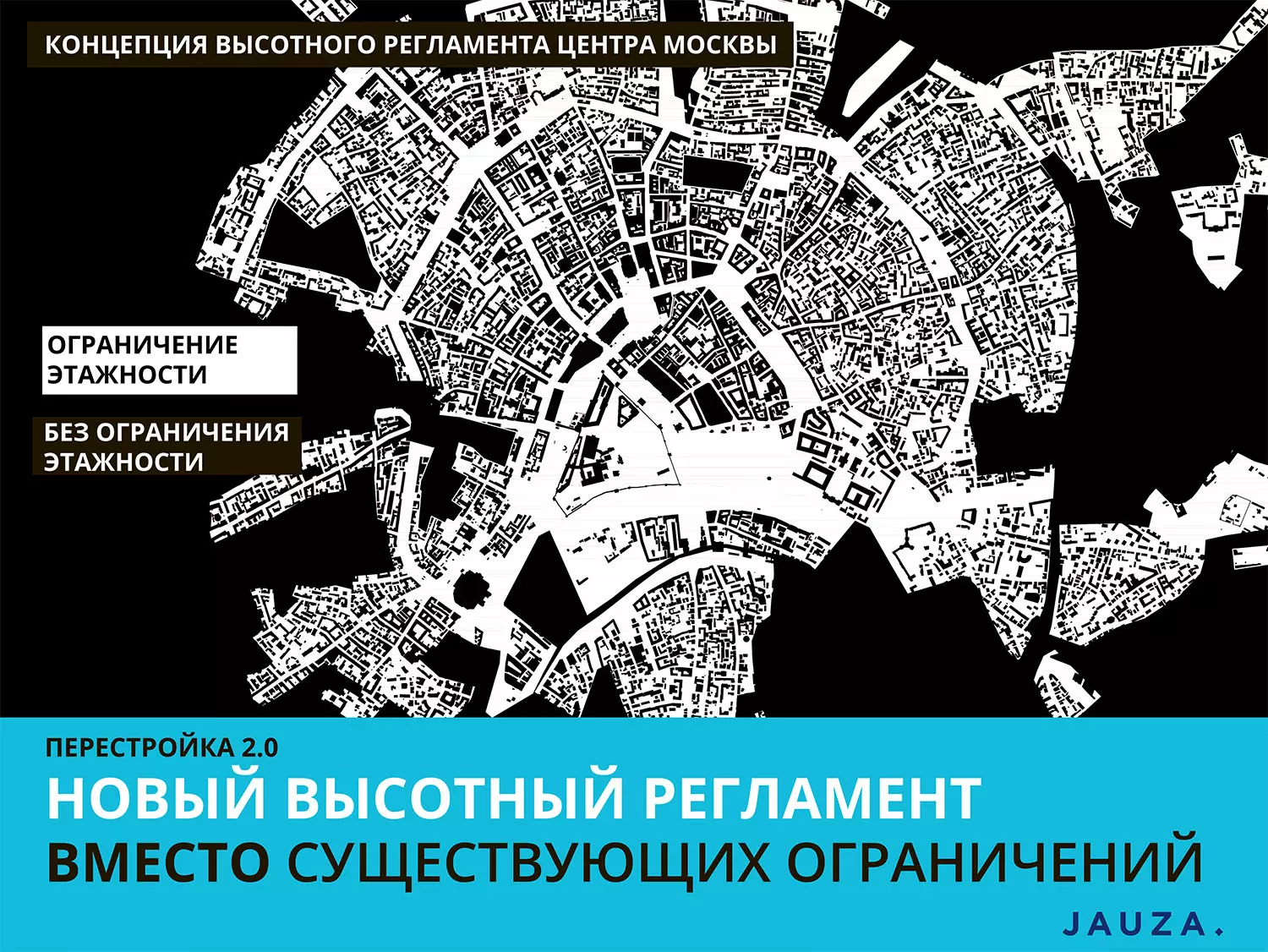
“We have developed a master plan for the development in the Kursk station, which involves the appearance of many skyscrapers and looks like“ Moscow City ”. But “City” is a ghetto for skyscrapers. Unlike City, greens are planned here, its own street-road network. Now near the Kursk station there are many abandoned non -historical buildings, a territory that does not participate in the life of the city. To Ilyich Square, ”Zalivukhin is sure,“ there must be a high -rise building where you can live without cars. ”
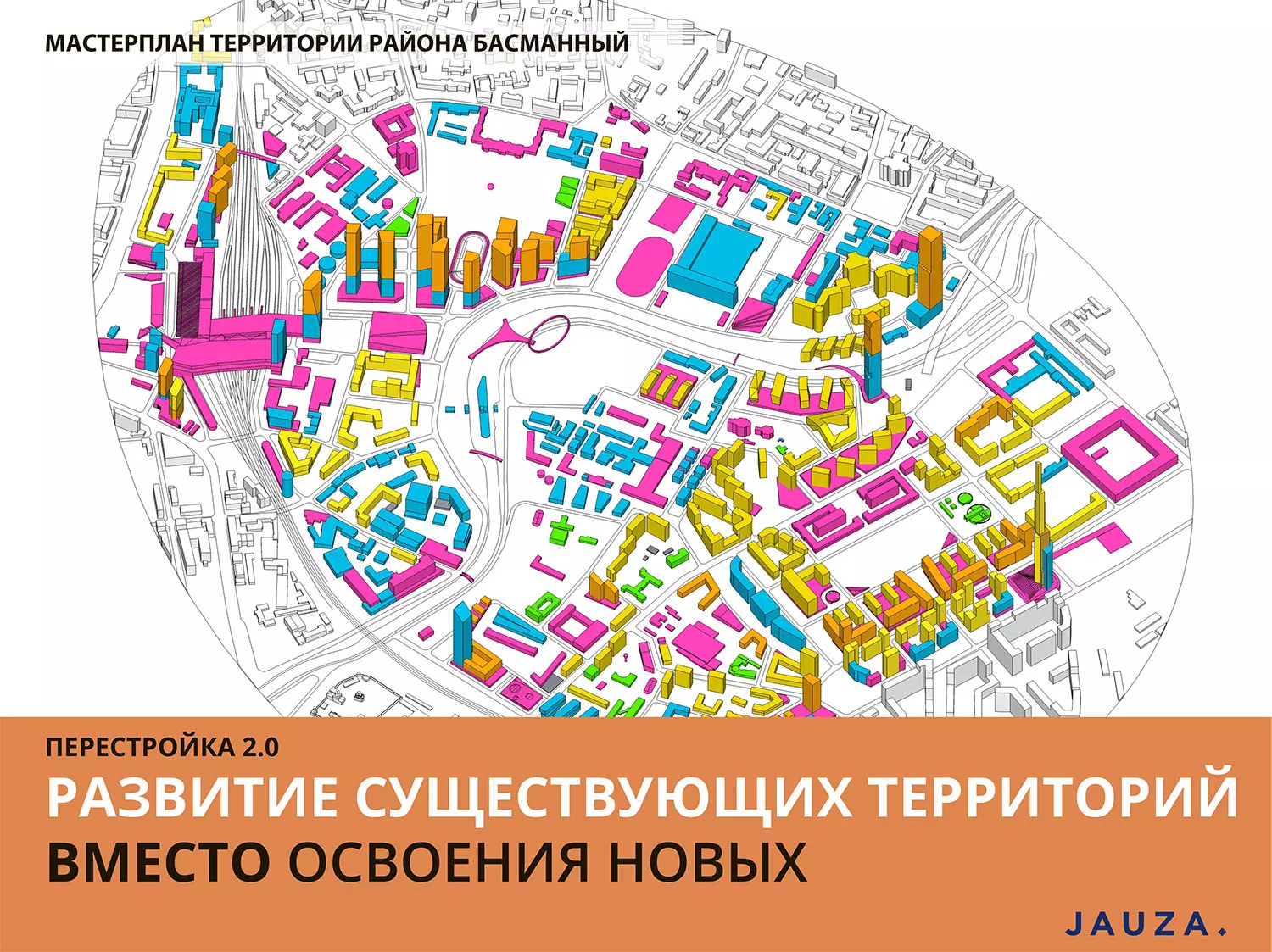
“For skyscrapers, not an awesome height is important, but the money that they bring to the city, and how their lower level is made. It is important how the buildings are perceived up to five floors, and no one sees what is up there. In City, the bottom is very poorly made. People feel that it is bad below - it means that the skyscraper is to blame. ”
At the same time, tall buildings are more than light in the windows, good species and more greenery due to the economy of the Earth, Zalivukhin assures. “You can make the density of the courtyards, or you can make towers. Highness is bad when it is not justified by anything, for example, in the fields. Well, the panorama of the city will change - so the 21st century! ”
The architect admits that high -rise buildings are not allowed everywhere. For example, according to the plan for the planning of the territory of the territory at the Mosselmash platform, height and dense development will be both at the railway station itself and two kilometers from it. Zalivukhin insists that dense buildings can only be in walking distance of large TPUs, metro stations, and the farther from them, the less dense it should be. But the construction lobby, admits Zalivukhin, wants to build everywhere.
"We are all immigrants"
Muscovites living in the city for a long time, high -rise buildings do not like especially. Developers do not take into account their interests, regularly violate their rights, so the townspeople constantly rally against point development, and the struggle with it includes not only opposition candidates, but evenpro -government ones . The main reasons for protests are a violation of the usual and convenient urban environment, construction on the site of five -story buildings, squares, parking lots. Often, rallies end in clashes: for example, in Kuntsevo residents dissatisfied with the construction of the peak group of companies in the courtyard under the old demolition program of five -story buildings, the Chopovtsy dispersed , and in Lublin to overclock the residents who defend the square, they drove a bulldozer. The police are either inactive, or appears on the side of the developer, the local authorities are silent or react with a delay. Because of this, the townspeople treat any grandiose construction projects of the government with a wary.
“After the urbanforum, streams of hatred fell upon me,” says Zalivukhin. - The population can be asked about the yard, but when you ask about Moscow, they have one answer - not to build anything! But building a wall around Moscow will also not work. The slogans “Moscow for Muscovites” are completely unacceptable, world capitals are places where they come from around the world. ”
Zalivukhin believes that the city’s development strategy should be explained to the townspeople and openly discuss it with them, including visitors, because “we are all immigrants”. In order not to have protests, these ideas need to be introduced into the masses, and not do in steadily. And municipal deputies, according to the architect, should increase their level and advocate the development of their areas, and not engage in struggle.
The same - with the defenders of the historical environment. Their position, assures Zalivukhin, often harms the historical buildings themselves, leads to their dilapidations or just break down. The construction of new buildings will just help to financially preserve and develop a cultural heritage and give it development, the architect believes. So far, unfortunately, everything turns out the other way around - over the past ten years in Moscow, 159 architectural monuments have been destroyed .
Rubber Moscow
Millions of Russians, like the rest of the world, gravitate towards moving into large agglomerations, centers of economic growth. “It should not be Moscow, it can be-Krasnodar, Novosibirsk, St. Petersburg, Vladivostok and so on,” says Zalovukhin. But even the development of other agglomerations, in his opinion, in the near future will not significantly reduce the flow of Russians into the capital. Moscow agglomeration only officially amounts to 20 million people, and there are still unregistered residents. Three years ago, Sergei Sobyanin suggested that 40 million people participate in the life of Moscow agglomeration. Cities similar to Moscow are units, and these are not European cities. “Near Moscow are only Asian megacities,” Zalivukhin claims. -The European city can be considered St. Petersburg, which, by the population, approximately like Paris. And Moscow is like Tokyo or Shanghai. ”
In the list of the largest agglomerations in the world, Moscow is still in 16th place. Much more people live in Tokyo agglomeration-38 million, Seoul-24 million, Shanghai-22 million, New York agglomerations-21 million. At the same time, assessments of the population of agglomerations may differ by several million depending on the calculation methodology. According to the Strelka Institute, Seoul and Tokyo effectively cope with the growth of the population at the expense of the organization in cities of several centers of attraction. Zalivukhin believes that such centers in Moscow should be created in the area of the intersection of metro stations, railway transport and the MCC, there should also be high -rise buildings. “The problem is that Moscow and the Moscow region are different subjects of the Federation; They need to create a common master plan, ”said Zalovukhin.
In the USA and Europe, the share of the rural populationhas been declining in recent years . “If you look at Canada, almost no one lives at our latitude. To say that we need to preserve all the villages, are behind a certain breadth - it is pointless. The lagging cities are like children who are 30-40 years old, and parents still help them, ”says Zalivukhin. "Maybe they will start working?"
Ilya Zalivukhin - deputy chairman of the commission on architecture in the Public Chamber of the Moscow Region. The founder of Yauzaproekt, which specializes in comprehensive solutions in the field of urban planning and architecture. Among the clients of the company is the Department of Construction of Moscow, Sberbank, the Administration of the Moscow Region Cities of Obninsk, Odintsovo, Naro-Fominsk and others.
Sergey Skuratov is a member of the board of the Union of Moscow Architects. Among his well -known projects are the implemented “House on Mosfilmovskaya”, the LCD “Garden quarters”. Two projects are being built in Moscow City: the highest skyscraper in Moscow 104-storey One Tower by order of the Moscow government of Mosinzhproekt and three 270-meter residential towers of Capital Towers. Opposite the Kremlin, a complex is being built on Sofia Embankment.