
Translated material
Cold War is a hot expectation
The latest hypersonic weapons will destroy the doctrine restraining humanity from a nuclear blow
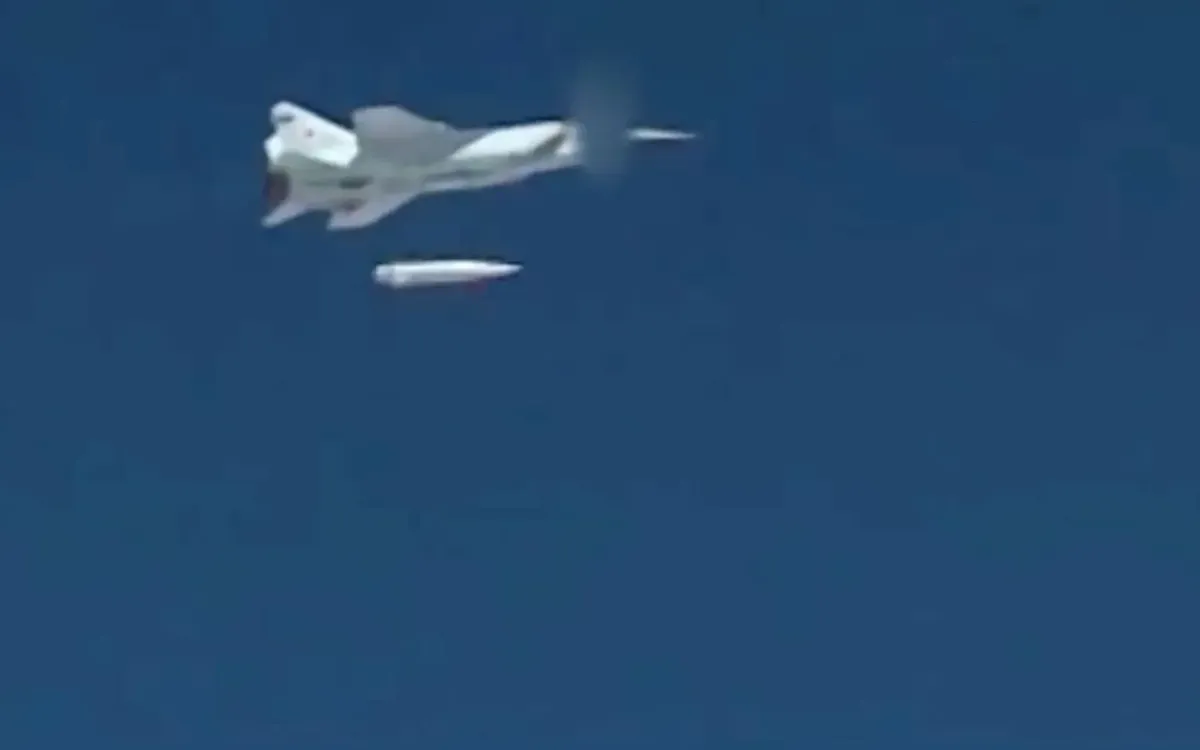
It seemed that the nuclear weapons race was over. But the world, terminating the production and placement of missiles, returned to the previous confrontation. The generals and their faithful friends - weapons manufacturers hastily create a new superweapon to intimidate the enemy.
Little is about with such enthusiasm and enthusiasm as hypersonic weapons. This is a new weapon whose speed is fifteen times higher than the speed of sound, falls on the target with terrifying accuracy. A hypersonic rocket kills before a person hears the noise of her approach. A passionate desire to possess this weapon covered the United States, and Russia, and China.
There is no time to solve!
The hypersonic rocket resembles a giant drill that breaks through any armor protection and spreads the target to the fluff. Hence, there is a desire to use them to destroy Russian intercontinental ballistic missiles before they have time to take off ... These missiles are able to break through the steel decks of all eleven American aircraft carriers and turn them into a herd of harmless hippos ... Hyperzoval missiles are also ideal for the elimination of the country's higher military and political leadership ...
In other words, this is a weapon of the first blow. Hypersonic missiles can destroy the strategy of mutual guaranteed destruction, a fundamental doctrine, which is believed to save humanity from mutual destruction: both countries refuse to use a nuclear blow, because they know that a response will be no less destructive. But if you deprive the other side of the possibility of a response impact, then you can try ...
Hypersonic missiles are more dangerous than ballistic. An unusual flight trajectory and the ability to maneuver mislead existing detection methods. And, unlike ballistic missiles, they will reach the goal faster than something can be done.
And this is the main thing: the speed with which hypersonic missiles reach the goal, they practically do not leave time to make the right decision.
When reconnaissance satellites detect the launch of enemy missiles, this is immediately reported to the head of state. He must give an order to deliver a response. What if this is a random start? Or a computer failure of a missile defense system (which was more than once!), Or a sophisticated hacker attack - a conscious provocation of a third party?
Now there is about half an hour to make the right decision: you can have time to figure it out and make the right decision. Hypersonic weapons reduces this time to several minutes.
American experts calculated: if a Russian ship, while in the Bermuda Islands, will release such a rocket, then it will fall into the Pentagon in just five minutes. Chinese missiles will need a couple of minutes less to destroy American submarines and combat aircraft deployed on guam.
And if the launch was spotted at night? When the head of state will be woken up, he will have only a couple of minutes to make the right decision. What can be in time during this time? And the military will say weightily: it is necessary to immediately deliver a response and destroy the enemy. The war will begin, in which both countries will burn. And then it turns out that these modern hackers deftly imitated a missile attack ...
The main goal is China
The contract has stopped action, which prohibited America and Russia to produce missiles of medium and lower range. The presidential administration Donald Trump left the contract, referring to the fact that this Russia violated its conditions by developing a new ground -based winged missile capable of carrying a nuclear warhead.
In Moscow, the very existence of such a rocket was denied for a long time. Then it was reported that its range is less than permitted five hundred kilometers. And in turn, Washington was accused of violating the contract.
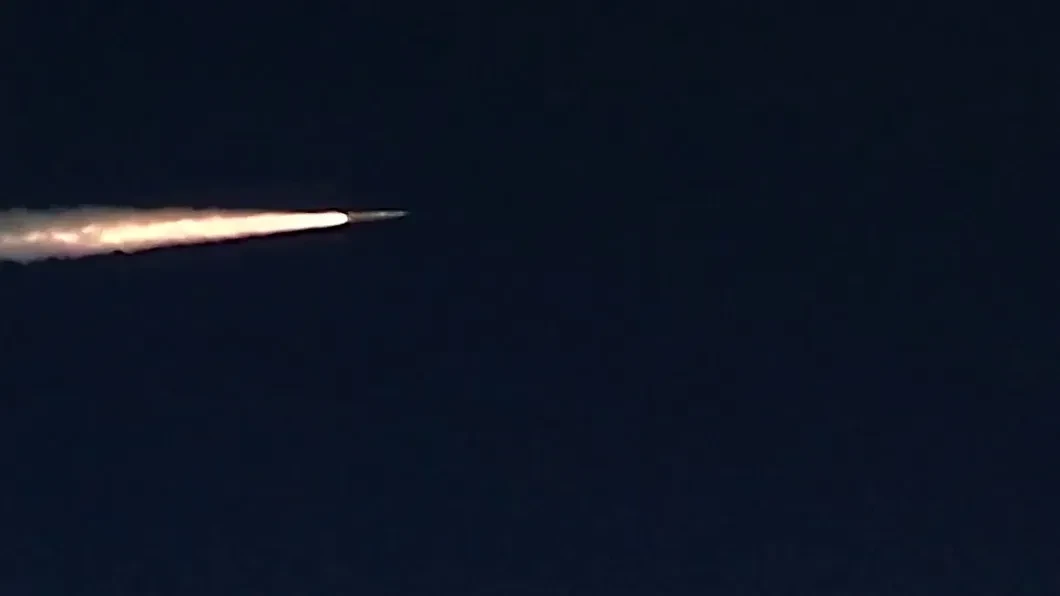
All these disputes could be easily resolved by experts. But both parties easily parted with the contract, because it interferes with both the Russian and the American military.
The Pentagon is most concerned about the rapid growth of Chinese weapons. Beijing created an arsenal of medium -range missiles, and Washington's hands are connected by an agreement with Russia. The new US Minister of Defense Mark Espper has already stated that now that the contract has ceased to operate, American missiles will be deployed in Asia:
- It's time to pursue your own interests. For the Chinese, there should be no surprise that we also want to have the same opportunities.
US military efforts are addressed to China. President Trump ordered a blow to chemical facilities in Syria precisely at the moment when he received the chairman of China Xi Jinping. They had dinner at Trump's Florida residence.
“We were given a dessert, brought the most beautiful chocolate cake of all that you saw,” Donald Trump said in a television interview. - The President of SI liked him very much. And then I said: Mr. President, let me explain something to you. We just released fifty -nine missiles, and they all hit the target, which is incredible, given what distance they overcame.
Trump willingly specified:
- Our technologies, our equipment is better than anyone, five times. From the point of view of technology, no one can even compete with us.
After Donald Trump informed Xi Qingin about launching missiles, the Chinese leader was silent for ten seconds. And he asked the translator to once again translate him the words of the American president.
"Regional Power"?
But the confrontation of Russia and America is only growing. It seems that the Trump administration intends to allow the expiration of the contract on the reduction of strategic offensive weapons of the START-III in 2020, and not to extend it or begin negotiations on the conclusion of a new agreement.
William Perry, who was the Minister of Defense of the United States in 1994-1997, says:
- If this happens, for the first time in almost fifty years we will not have any agreed restrictions on nuclear weapons, and negotiations will not be conducted on how to limit nuclear danger.
Over the two years of staying in the post of Minister of Defense, I met with the Russian Minister of Defense five times, and we have reached agreements on very important issues. We reached such a level of understanding and trust that if there was a problem , we could discuss it and solve it until it got out of control. But this normal way to solve security issues is replaced by new abnormality, which does not provide for bilateral meetings at the level of ministers or their subordinates. And, oddly enough, almost no one pays attention to the fact that such a dialogue is not conducted.
In relation to Russia, American public opinion has changed radically. The policy formed during the years of Gorbachev and Yeltsin is completely revised. The "reboot" remained in the past. As well as cooperation in international affairs. How to call a new Washington course? This is a deterrence policy, and maybe discarding.
In March 2014, President Barack Obama was asked if he agreed with an assessment of the prominent figure of the Republican Party Mitt Romny , who called Russia the largest geopolitical enemy of America.
“Russia is a regional power, and not because of strength, but because of its weakness, it is a threat to some of its neighbors,” Obama answered with obvious neglect.
- Russia's actions do not pose a number one threat for the national security of the United States.
The Americans are not sure that Russia is a great power, since in the modern world the country's power is determined not by the ability to destroy another state with the help of nuclear missile weapons. The great power is primarily a rich, prosperous country with an effective economy.
Vice President Joe Biden spoke about Russia:
- Their population is reduced, their economy weakens. Russia was in a situation where the world around changes, and it clings to the fragile past.
But President Obama was mistaken. Russia is by no means "regional power during the sunset." After the successful reform of the Armed Forces, Russia is capable of, in the words of modern Kremlinologists, "to hold its historical territory, to project military power into neighboring regions and steering enemies."
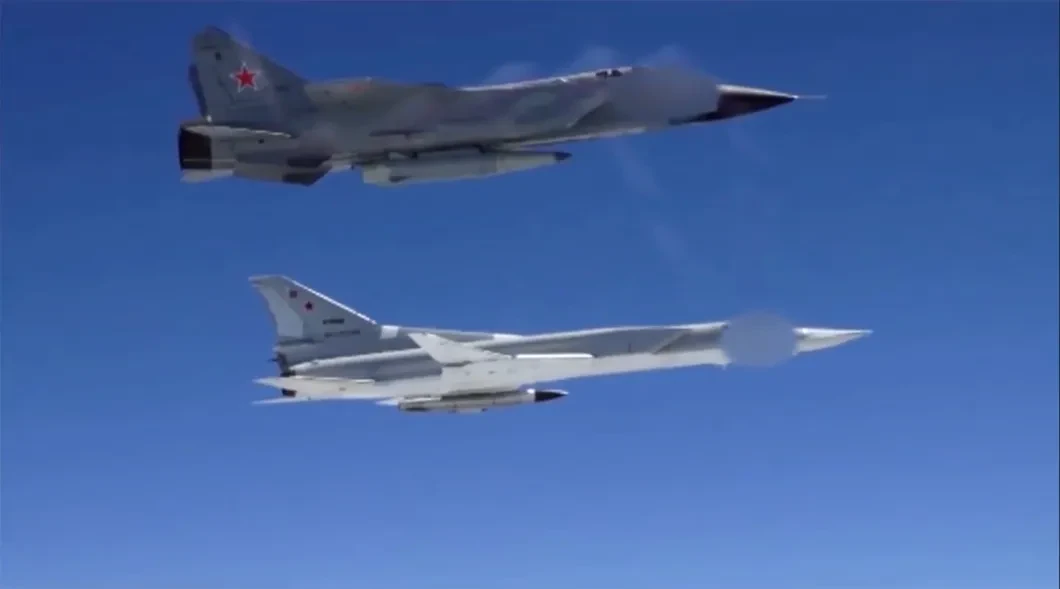
The Russian view of the world was formed by dramatic events in the country after the end of the Cold War and the collapse of the Soviet Union. In Moscow, they are sure that it is possible to maintain the status of a great power only to confront the United States, and not cooperating with them. America is an enemy. No steps towards the West, the restoration of positions on the territory of the former USSR.
Russian leaders believe that Washington intervenes in their domestic policy in the hope of organizing a change of regime in Moscow. And the Kremlin must show the world that he is ready to answer. And the ability to win is determined not by economic potential. The courage and decisiveness, readiness for offensive actions will make the enemies be afraid of you, and allies - to appreciate your friendship.
Who came up with this?
“The world has returned to the era of the Cold War,” stated at a meeting of the Security Council Antoniu Gaterrish, UN Secretary General. - The mechanisms that previously restrained the escalation of the tension between the United States and the Soviet Union, apparently, are no longer there.
The expression "New Cold War" does not leave the language. But what does this concept mean and when, in fact, it arose?
The phrase “Cold War” to describe relations between the United States and the Soviet Union was first used on April 16, 1947, Bernard Barukh, invited to speak in the House of Representatives of South Carolina.
Baruch served as an adviser to many American presidents on economic and foreign policy issues. In the First World President Woodrow Wilson, he put him at the head of the military production department. The US economy has doubled over the years of the war. Field Marshal Paul von Hindenburg (future president of the country) resentfully said that it was Barukh who won Kaiser Germany.
The congressmen in the state of South Carolina expected the guest to limit themselves to a brief performance, but Baruch made an excited speech. He called on the country to unity to help the world to upgrade physically and spiritually - let the trade unions refrain from strikes, and entrepreneurs - from dismissal. It is necessary that American business and industry unite, warn Baruch:
- Let's not be deceived - today the height of the Cold War. And we can only rely on ourselves. The world around the world is the goal of our political system, and this will mean the defeat of those who are against us.
The expression “Cold War” was perceived as an accurate description of the situation between the United States and the Soviet Union: war without shots and bloodshed, but nevertheless war.
The most influential American post -war journalist was Walter Lippman. The whole country read it. In the summer and autumn of 1947, Walter Lippman published a series of articles in the New York Herald Tribun in the New York Geralt newspaper, which he united in a book called Cold War. This expression has become common.
By the way, then US President Harry Truman did not like the expression “Cold War”. He preferred another - "war of the nerves." And he was also right.
Gorbachev and Reagan
That cold war ended when our country was headed by Mikhail Gorbachev. He needed to withdraw the Soviet Union from the hostile environment, reduce external pressure, and give the opportunity to do internal affairs. The whole world was overwhelmed with weapons, and they could not ensure a tolerable life to their citizens. Oil sales brought the country billions of dollars, and regiments were empty in stores, in cities they introduced coupons, and the queues stood behind the most necessary. According to the Minister of Finance, and then Prime Minister Valentin Pavlov, a third of the country's national income-an unprecedented figure went to military needs!
The foreign policy pursued by Gorbachev turned the whole Ptolemye picture of the world.
If the United States and NATO are not going to attack, if the West is not an enemy, but a friend, then why maintain such an army and Samoyed military economy?
Why scare the country in the imminent war and call people to delay the belts?
Gorbachev managed to overcome many years of distrust between the Soviet Union and the United States, when any step of a partner was perceived as a threat, when any negotiations began with the listing of mutual claims and accusations and sometimes ended with the same.
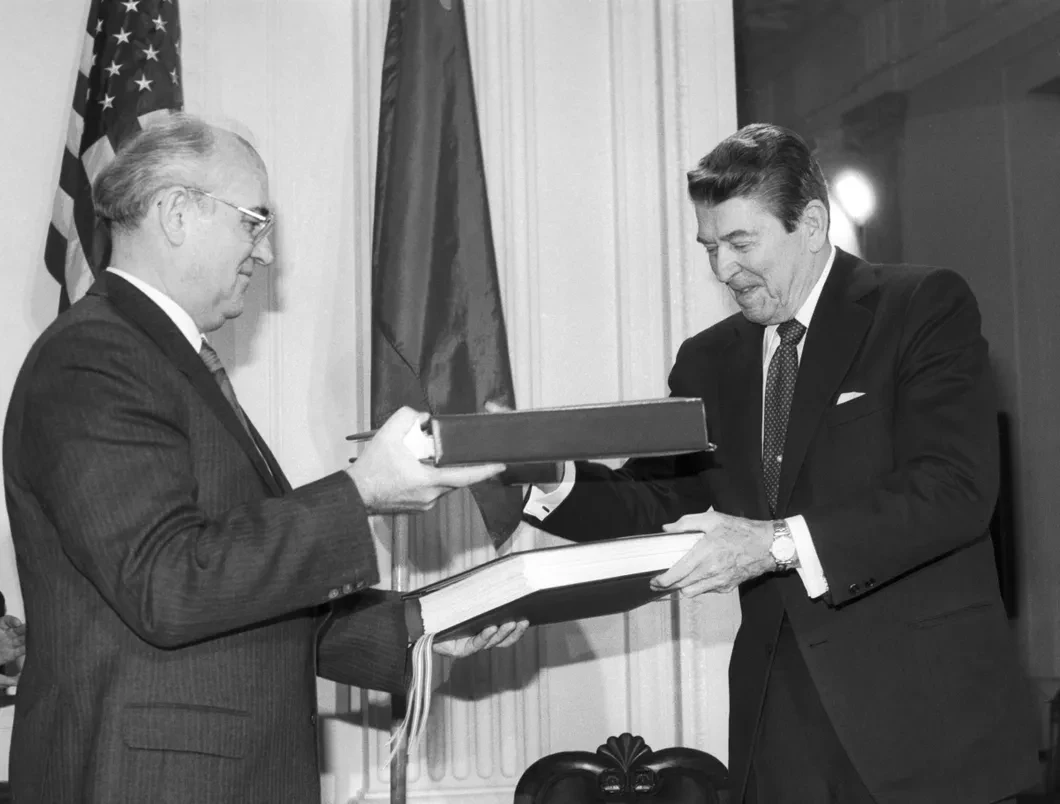
Gorbachev and President Ronald Reagan in December 1987 signed an agreement on the destruction of a whole class of weapons - medium -range missiles with nuclear warheads. This historical agreement, backed up by the process of mutual inspections and inspections, reduced the constant nuclear threat that hung over Europe. And it marked the beginning of a long subsequent process, in which Washington and Moscow seriously reduced their nuclear arsenals.
During a meeting in Malta in December 1989, presidents George Bush and Gorbachev agreed that the confrontation between the West and the East remained in the past. The eighty -ninth generally seemed a year of miracles - especially when the Berlin Wall collapsed.
On November 21, 1990, twenty -two European countries, as well as the United States and Canada, signed the Paris Charter, formally ending the Cold War:
“The era of confrontation and split in Europe is over. We announce that our relations in the future will be based on respect and cooperation. Europe is freed from the past. There is a new era of democracy, peace and unity. ”
Gorbachev to this day is accused of weakened the state, withdrew troops from Eastern Europe, and reduced the arsenals. But we note: no one took advantage of our weakness, did not attack our country! On the contrary, the threat of war disappeared, whose reality was spoke with anxiety on the eve of Gorbachev’s arrival to power - at the very moment when the Soviet army reached the peak of its power.
In 1990, a public opinion survey showed: only thirteen percent of the country's population feared attacks on our country. Gorbachev’s policy saved the Soviet Union from many enemies and created new friends. The country has never felt such a security. In 1989, 213 thousand American troops were deployed at 858 bases in Europe. A few years later, 26 thousand at 80 bases remained. NATO combat potential has sharply reduced.
The next step?
What will happen now, when an agreement on medium -range missiles is no longer valid?
Many European politicians grew up during the fierce debate of the time of the Cold War about whether it is worth placing American medium -range nuclear missiles on European land. And not everyone wants them to return to the continent. Then you need to increase the missile defense. The United States has deployed such systems in Romania and Poland, but they are designed to intercept Iranian missiles, not Russian.
The priority reaction will be the accelerated deployment of troops in countries bordering Russia, and the activation of military exercises that are already held in Eastern Europe almost constantly. The North Atlantic block does not stand still. The contradictions within NATO do not lead to a reduction in military efforts. Vice versa!
The general “Dengency Strategy” has been adopted, which means the transfer of the American armed forces to Europe. If Europeans are difficult to part with money, then the United States is significantly significantly increasing the military budget and military power. The world's largest economy will not suffer.
You need to understand the gross simplicity of Trump's worldview: "We are America!" What does that mean? Friends are not needed, enemies should not be afraid.
Diplomats cautiously warn:
- Destabilization is dangerous!
- Damn with two! Trump answers calmly.
From his point of view, constant destabilization creates an advantage to the Americans. The United States is still the most powerful country on earth. Over time, Trump is sure, all opponents of America will be convinced that arguing with her is useless. In the new American budget, so much money was allocated for the first time to increase military potential and for the confrontation of Russia. But each step of one side does not remain unanswered.
George Schulz, the then US Secretary of State, who played an important role in preparing an agreement on the destruction of medium and lower -range missiles, noted bitterly:
- When a contract of such importance is lowered into the sewer, this means that people simply lost fear of nuclear weapons.
The understanding that a nuclear war could not be won have disappeared. None of the world leaders pronounce this formula. On the contrary, the modernization of nuclear weapons is discussed - this is not a terrible danger, but an effective tool.
The point is not only in politicians, but also with the mood of society: no one wants to compromise. Therefore, there are no conditions for a trusting dialogue. In general, there is no desire to negotiate - there is nothing to negotiate! And I don't want to!