
Translated material
A heightened sense of freedom
Galina Yuzefovich - the memory of the writer Tony Morrison, who fought with racial prejudices in literature
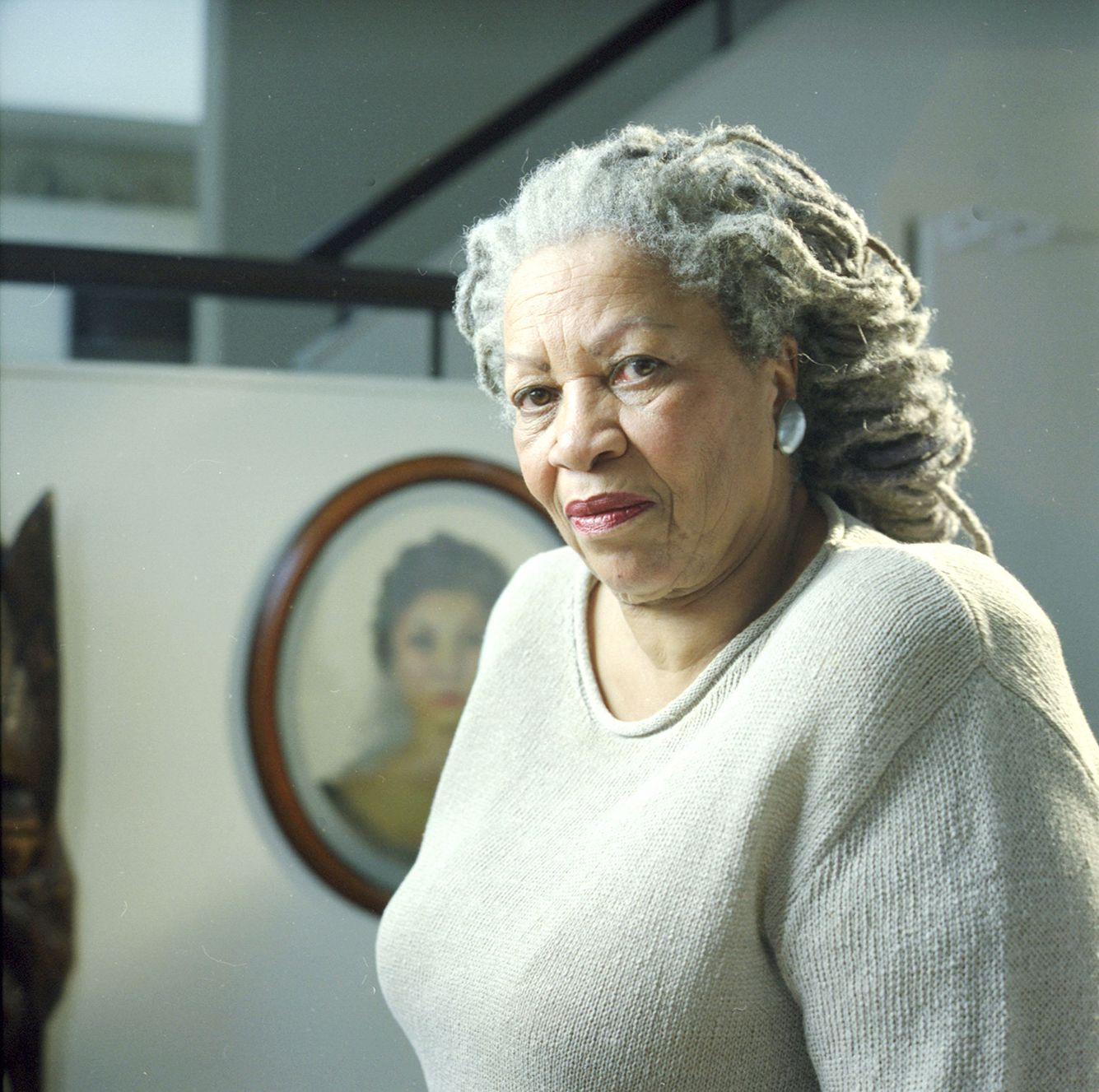
On August 5, American writer Tony Morrison died in New York. The literary critic Galina Yuzefovich tells how the Laureate of the Nobel Prize fought with racial prejudices in literature, and why the heroes of her books fell in love with the whole world.
In his scandalous and polemic book “Western Canon”, the American culturologist and critic Garold Bloom formulated a criterion that allows distinguishing truly great authors from writers of talented, interesting, witty or simply urgent ones. The essence of this criterion briefly boils down to whether the writer managed to noticeably change the channel on which literature flows or not. In the case of the Nobel laureate Tony Morrison, who died on August Fifth in New York at eighty-ninth year of life, the answer to this question will be “definitely, yes”. Over the long fifty years of her literary career (the first novel by Morrison, the most blue eyes, was published in 1970) and with its direct active participation “black” literature from a curious cultural marginalia turned into an integral, non -intelligible and organic part of the American and - wider - global literary mainstream.
The true glory came to Tony Morrison in 1987 after the release of her fifth and best novel “Beloved”. The main character, the black slave of Seti, runs from her cruel owner, but her trail is taken by hunters for slaves. Fearing a possible return to the plantation, Seti makes the worst decision that her mother is capable of: she kills her two -year -old daughter, believing that it is better to die at large than living in slavery. However, after many years, the ghost of the girl (or a clever impostor, leaving herself for the murdered) returns from oblivion and settles in the house of Seti, disturbing her soul and destroying the remnants of what was once her life.
In a matter of weeks, the “lover” flew up in American sales ratings, and a year later, the US creator brought her creator - the Pulitzer Prize in Literature. In 1993, Tony Morrison was awarded the Nobel Prize, and five years later, the “Beloved” reached a new round of popularity after the film by the novel was produced by the main fan of Tony Morrison, the TV presenter Winfrey, who played the main role in it.
Both the “beloved” and all the novels that followed her made a trick with the reader, as obvious as not represented to Morrison. In each of them, the racial affiliation of the heroes was an important factor (for example, the hero of the novel “Home”, a veteran of the Korean war, again faces a segregation forgotten during the service in the army, and the heroine “God, keep my child” loses maternal love because of her too black skin), but not determining and certainly not the only one that affects their life. From the object of exposure to white people (not so important, beneficial or - more likely - malicious), from the victims of racial oppression or heroes of the struggle with him, the heroes of Morrison turned into independent and self -sufficient entities who have something to think about in addition to understanding their poor position. Strong and weak, charming (like the hero of the novel “Love”, who led the peromonas, who turned his heads and broke their hearts for several dozens of women) and repulsive, created by Tony Morrison, the characters live their lives, breaking out previously the mental paradigm “white - black”, “oppressors - oppressed”.
In a sense, Tony Morrison made for African American literature about the same thing as the writers-feminists did for literature, until recently, condescendingly called female-she also erased the humiliating border, sharing writers in varieties depending on their racial or gender affiliation. And it is precisely because of this traction to universalism and community on top of any artificial barriers to Morrison - the creator of almost the most striking images of black women in the literature of the XX and the beginning of the 21st century - consciously distanced from feminism and from all forms of African American radicalism. Any closed, narrow-group discourse was unacceptable for her, since he came into conflict with her hewn feeling of freedom.
It is this unique, absolute freedom - both the writer and human, a conscious rejection of the objectification of black heroes and, at the same time, the fundamental unremarking is associated with community smaller than all of humanity as a whole, became the main contribution of Tony Morrison to world literature. And if today we can read the novels of Marlon James, Paul Betty, Colson Whitehead and other black writers, last to think about the race of their own and their heroes, then this is a considerable extent the merit of Tony Morrison. Women who have changed the color of the literary card and already because of this deserving place in the host of the Great.
Galina Yuzefovich