
Translated material
FSB succumbed to Zharov
It seemed to the special service that the locks of Roskomnadzor were working too slowly
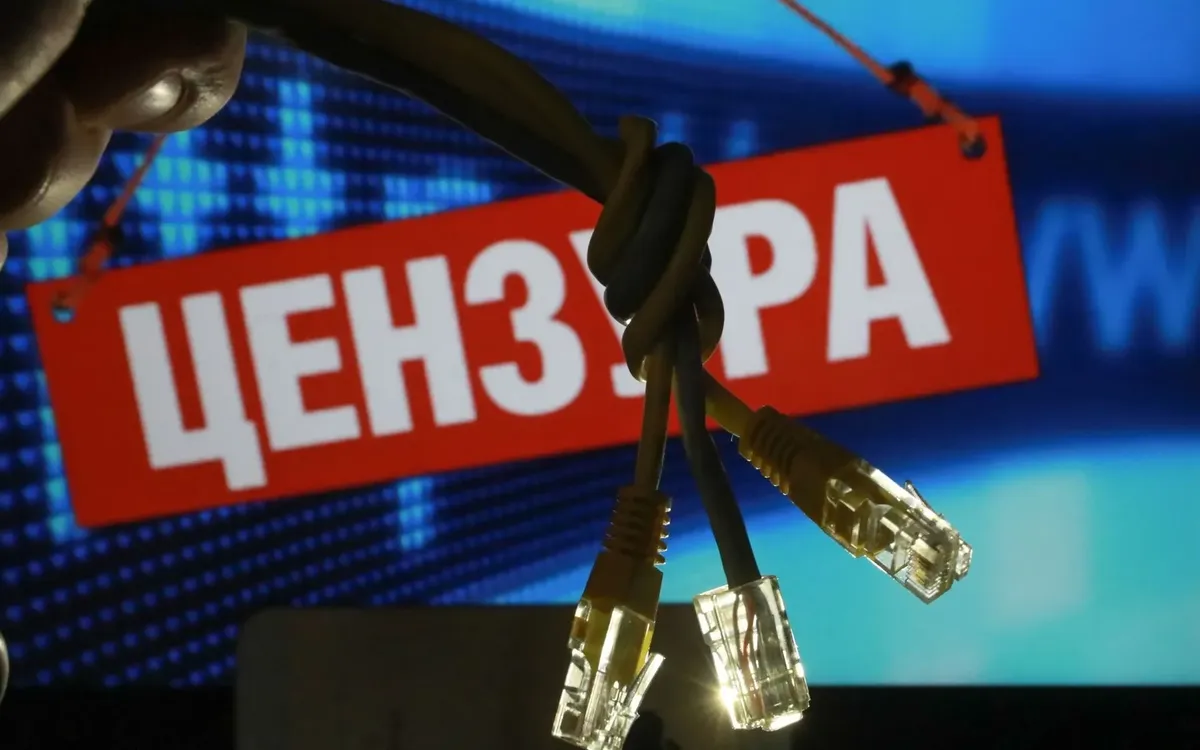
Nine organizations included in the Coordinating Center of Domaine.ru/. RF (KC), including Roskomnadzor, Kaspersky Laboratory, the Internet League, Group-IB and the Central Bank, have the right to separate the Internet domains in Russia.
Now the structure of the FSB - the National Coordinating Center for Computer Incidents (NKTSKi), also has these powers, Kommersant said.
This is a more radical measure than the traditional locks of Roskomnadzor. The domain name is a record in a special database that the resource is located on a particular IP address. In case of locking, the regulator limits the user access to a specific domain name. It can be circumvented using VPN. When dividing the domain, the recording of the IP address is actually destroyed: either a plug appears on the site or an indication that the resource does not work and is free to register (and VPN will not help here).
The official goal of the NKTSKI is the fight against cyberism and Internet canom. The Group-IB “New” said that the decision to initiate a domain blocking is made if the site is posted on the page designed to collect confidential data (logins, passwords, secret SMS codes, payment and personal data), which in parallel misleads users. For example, if it is a web page of a bank, a social network or a non-existent partner program.
- The competent organization sends a motivated appeal to the registry of the domain name, which indicates the category of violation, as well as screenshots and links leading to the phishing page. In parallel, we, for example, in Group-Ib, save the HTML copy of the phishing page and all technical information about the web resour in case of further proceedings. If it is established that phishing was placed as a result of hacking a web resource, an additional notification of the owner of this resource is initiated, provided that the contact details are available, the company said.
However, Internet blocking in Russia often wear signs of political censorship.
"New" talked with IT experts about why the FSB actually received the authority to remove sites without a court decision and how this can threaten the Russian Internet.
Mikhail Klimarev
Executive Director of the Internet Protection Service
- The special services have no grounds for deciding on the separation of domains, it is just a desire for the left heel. In Russian legislation, nothing is spelled out in this regard. It is believed that this is the work of self -regulatory organizations. Now nine organizations have the right to divide domains, which include the odious “safe Internet League”, Roskomnadzor, Kaspersky Laboratory, and the NKSCA FSB will now join them.
Why give such powers of the FSB, no one knows. Apparently, they have some departmental friction. This is a bureaucracy of pure water. Roskomnadzor makes documents to justify the lock, some pieces of paper are written. I think that the FSB thought that Roskomnadzor was working too slowly.
This opportunity will certainly be used for political censorship. We were told that there would be a blocking only of child pornography and drug trafficking, and we received a blocking of political resources.
We were told that the Russian Guard is being created to combat crime, and we see how it beats with batons of cyclists. This is exactly the same.
In fact, more or less political resources have long been left from domain.ru. Even Pavel Durov first made vkontakte.ru, and then translated to.com. This began a long time ago, when they created a structure to divide domains, which makes decisions arbitrarily.
Registers in the country are about a thousand. Only they can technically divide, the KC itself cannot divide anything. KC is a certain hub so that the FSB is more convenient not to contact each registrar separately. And already CC, since he has direct agreements with registrars, he puts pressure on them. They write a letter: either divide in accordance with such a paragraph, or there will be a violation of the contract.
To make an Internet business-consider potential income and expenses, evaluate risks. In Russia, the risks associated with the state exceed all reasonable limits.
You open an online store, and some court decides that you are trading something wrong and you will be blocked. For some reason, some FSB officer decides that you have something wrong on your unfortunate website, and your domain is taken from you.
There is a report that the CC was divided by about 500 domains for July. Not a single document on conducting this activity has been published. There is phishing, there is fraud, but the blocking procedure is opaque. We seek that in Russia this topic becomes public.
Artem Kozlyuk
Head of the Public Organization "Roskomsvoboda"
- Separate the domain, that is, to deprive you of the right to access to your domain name, the site registrars have the right. Then the site simply ceases to exist. Separation is possible only in Russian domain zones. Roskomnadzor and the FSB will not be able to do this in the domain zone.com, or if the owner registered not with the Russian registrar. As a result, if the FSB will indicate the division of inadequate quantities, then this will once again encourage owners of sites and users to leave the domain zone.ru and open sites on other national domains, where there is no such aggressive pressure from the regulators.
This will hit the market for the sale of domain names that are in the field of subordination of the CC.
In Russian conditions, the owner of the site cannot be sure that the FSB, Roskomnadzor and other government agencies will not come to him for quite legal activities.
We do not see documents that regulate the activity [on the division of domains]. Perhaps they will appear on the portal of regulatory legal acts, or maybe not. It is possible that there will be a direct line with an FSB officer who will give instructions to the CC or directly to the registrars, which domains must be divided. Moreover, without any regulations on which this decision is based.
Something tells me that the powers to make such decisions will exceed. As practice shows, government agencies tend to interpret the concepts as widely as possible, including extremism and cyberism. That is how [the head of Roskomnadzor Alexander] Zharov perceives Telegram: terrorists communicate through the messenger - which means that it is cyberurosis. We see this according to many laws that have already been adopted.