
Translated material
Who needs the dead on the Internet
Researchers from the Oxford Institute of the Internet believe that by 2070 on Facebook the number of dead profiles will reach five billion; If the social network does not close earlier, there will be more dead people in it than the living. Already today, on the Internet, you can stumble upon special groups that collect photos and links to the profiles of the dead - they consist of a couple of hundred to four hundred thousand participants who discuss the death of strangers, leave caring comments and share traumatic experience. The author of Samizdat Emma Barsgova found out who wanders and why wanders along the pages of the dead.
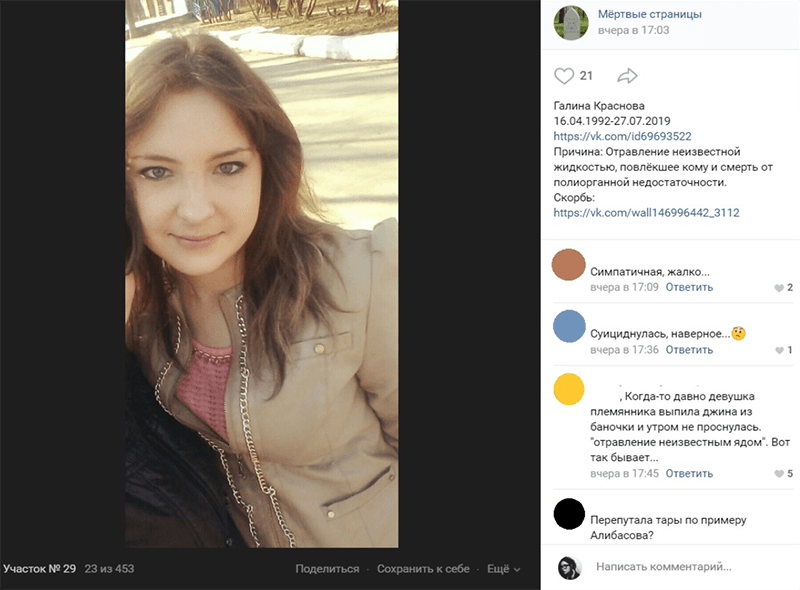
In childhood, Vika lived next to the cemetery for three years and often walked among the crosses and monuments, examining photographs. With friends, they came up with their own game - to find an untidy grave and put it in order: tear out the weeds, clean the tombstone, put a flower. Today Vika is thirty -six, she works in a bank, raises her daughter, but still wanders around the cemetery almost every day, looking at the forgotten graves, only now they are on the Internet. For the past seven years, Victoria has been in the Dead Pages group on VKontakte, where users collect photos and links to the pages of deceased people.
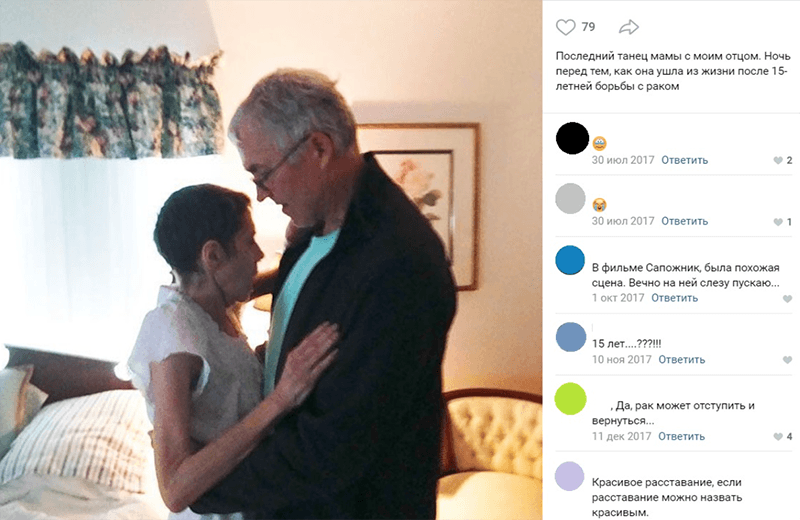
First, someone dies, then one of the old photos of the deceased is poured into the album, and the description appears in the description, the cause of death, links to the page, the mournful posts of relatives and friends, and sometimes publications about death in the media. The three largest in VKontakte groups with the name “Dead Pages” from thirty -eight to four hundred thousand subscribers, many of which monthly leave comments under the photo: discuss the appearance of the deceased, express their condolences and compare the dead with their acquaintances. In such albums, you can find celebrities, victims of terrorist attacks and wars, suicides and people who died in an accident or from illness. All of them are strangers whose death is peeped by other strangers.
Tourism theory
The contemplation of death and visiting places associated with it is not a new occupation: even an ancient religious pilgrimage involved a visit to the graves of saints and martyrs. Philip R. Stone, a member of the Institute for the Study of Dark Tourism, writes that in the era of romanticism of the 18th - 19th centuries, visiting houses and graves of deceased authors was the most accurate and convincing way to “touch” the death of an revered person. In their memoirs, the wife of W. Wordsworth, the English poet, notes that during a trip to Scotland in 1803, Wordsworth and his sister looked at the grave of the poet R. Burns.
Today, such leisure has become a full-fledged sentence of travel agencies: Dark Tourism is an ominous, dark tourism is growing as a industry: for example, in 2016, Auschwitz, the number of victims of which reaches four million, has visited two million tourists, a separate show of places characteristic of dark tourism has been published on Netflix. Radioactive Team for three and a half thousand rubles per person offers to go from Kiev for the whole day to Chernobyl with a visit to the nuclear power plant and Pripyat. From the places close to Muscovites there is a Vagankovskoye cemetery, where the tour costs about five hundred rubles (if you are a child under seven years old - for free): in two and a half hours you will learn about local legends, deceased and their graves. But spending on a trip and even leave the house is not necessary - traces of death can be found on the Internet.
According to the Media Agency of We Are Social and Hootsuite , right now three and a half billion people are registered in a particular social network, and there are already dead among users. Because of this, in 2012, Facebook introduced a “ memorable status ” specifically for such “dead pages” in order to fence off the living from the dead.
“VKontakte” has been with us for thirteen years, and many pages belong to those who have already died. The architecture of the social network is arranged so that not only relatives and friends of the deceased, but also unfamiliar people, come to the “dead pages”.
Those who observe someone else's death and the mournful process of strangers are called “tourists of sorrow”: they travel along the pages of the deceased in social networks, studying how a person lived and died. Death researcher Jocelyn Degraut writes that tourists of sorrow, observing someone else's death and reacting to it, are doing so “emotional curiosity”.Therapy
The case is not limited to simple contemplation, often tourists leave mournful comments and notes to the deceased: “I did not know you, but I am very, very sorry that you were gone.” Jocelyn Degraut indicates that often commentators feel a certain connection with the late stranger: “This connection can be based on similar life experience, the age of the deceased, the cause of death or on a bright description of the case in the media.” Sometimes she can remind of her own loss and make the experience of a clash with the death of loved ones re -survive.
A sense of solidarity connects not only a tourist and an unfamiliar deceased, but also subscribers among themselves. For some, participation in “dead pages” is a kind of group therapy. “Share your stories and tips, support each other,” the subscriber Margarita calls in one of the groups. “The discussion here can help someone to cope with the loss.”
People really share - in albums you can stumble upon personal stories:
“Accept my condolences. I myself without my mother since 2002, "" And my cat was called Oliver, affectionately olives. Unfortunately, also died and is present in the album ... ”,“ Our neighbor. Kingdoms of Heaven ”,“ Not a good feeling when the surname is like yours, but a full name and surname as your sister's sister. The kingdom of heaven to you, girl. Rest in the world. "
Are you interested in death? Listen to the story of a living classic and the best storyteller of the nineties Lyudmila Petrushevskaya " Black Coat " on the radio " Glagolev FM "
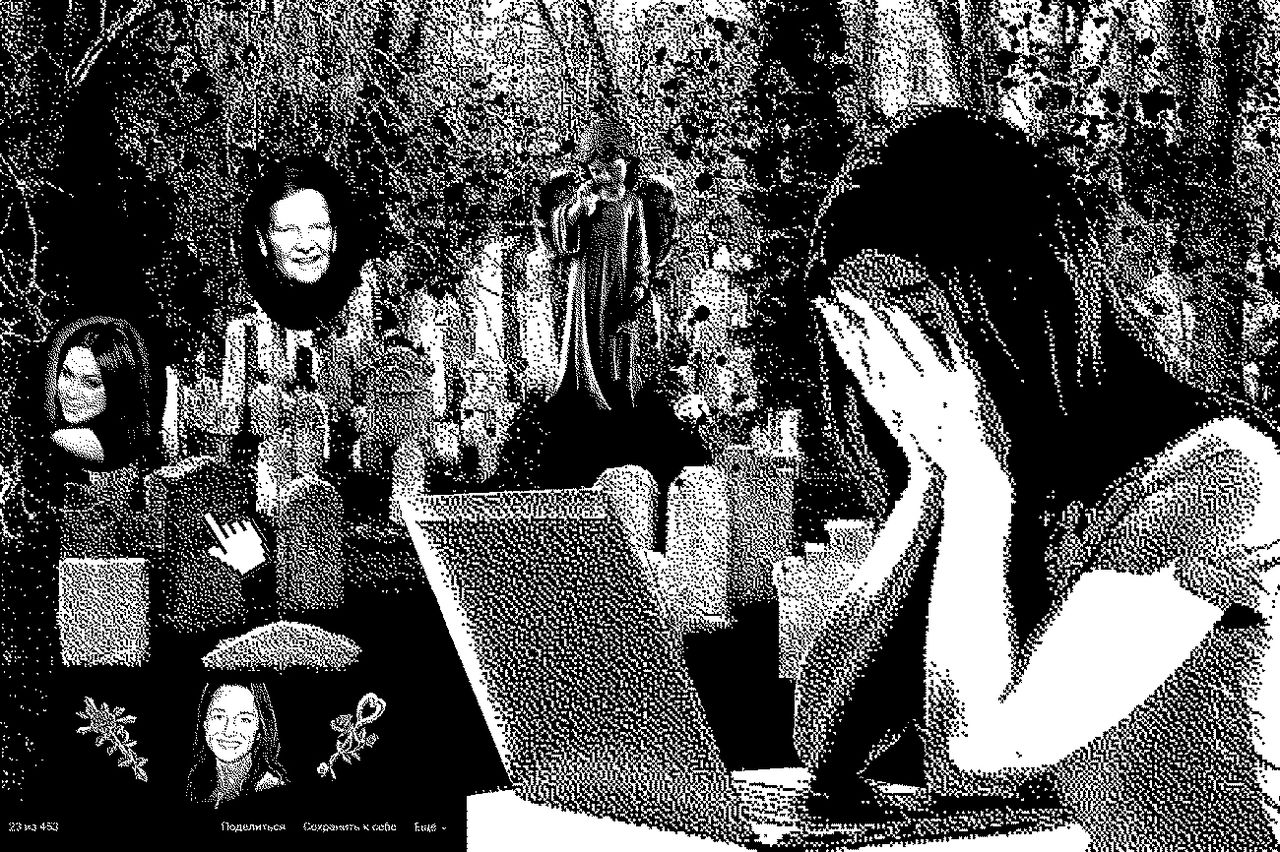
A member of the Paradise group (the name changed), which, in addition to “ dead pages ” is also signed for “ bad news ”, “ Russian epitaph ” and “ terrible stories ”, believes that the group can help people with loss, because “the separated pain is already half of the pain”. At Rai herself, the first husband performed suicide, over the past six months she buried two relatives, and another now at death.
“There are two options: to learn how to live with this pain of loss or leave your head. I brought up a callousness in myself, ”says Raya. - A little more than ten years ago, I was afraid to be in the same room with the deceased. Now I can quite calmly put the corpse in order. ” In the group of Raya finds understanding among the same "hardened death." She shares: “Support on the Internet is also support, and their problems against the background of someone else's tragedy do not seem so difficult.”
For some, observation of the death of strangers may work as compensation for undisguised emotions. The thirty-year-old housekeeper Tanya, hiding behind other people's photos on the avatar, has been signed for five years to the group “ Dead Pages ”, which has existed since 2009. When her relatives were dying, the woman always held on calmly and could control the situation, calm her relatives: “My grandmother has been not for 13 years, and I still miss her. But at the funeral, I kept calmly and confidently. " Tanya believes that emotions that did not appear in life affect the strangers on the Internet.
Community of tourists
Entire communities are formed around photographs of the dead: many subscribers of the Dead Pages groups consist in them from three to nine years old and write comments daily, communicate under the photos. People of different ages with different motives of participation are signed on the page.
The twenty -four -year -old student Vitaly from Tomsk has been sitting on “dead pages” since 2011 and refers to public as entertainment, here he satisfies his emotional curiosity: “It is strange to experience strong emotions from the death of a person whom he did not know. I think these impressions are no different from watching a thriller where you are worried about the protagonist. ”
Forty of Stavropol is forty -eight, her “wall” “VKontakte” resembles the pages of most of her peers: thoughtful quotes, jokes and reposts from public “Coism” and “without a cat and life is not the same”. There are no friends in Lera’s life, but for five years she has been communicating in the “Dead Pages” group. “I'm used to it, here are all my friends, there is a backbone of the most active. Plus the theme - it is interesting to touch the page, knowing that there is no longer a person, ”says Lera, but there is no grief in her words. She warmly responds about people in the current “bone” and says that they can communicate freely here, because they are united by a common traumatic experience: “In the group, people who have already encountered death situations in life, without breaking and without losing a sense of humor, are sitting in the group. This is a company of friends who understand and accept me. ”
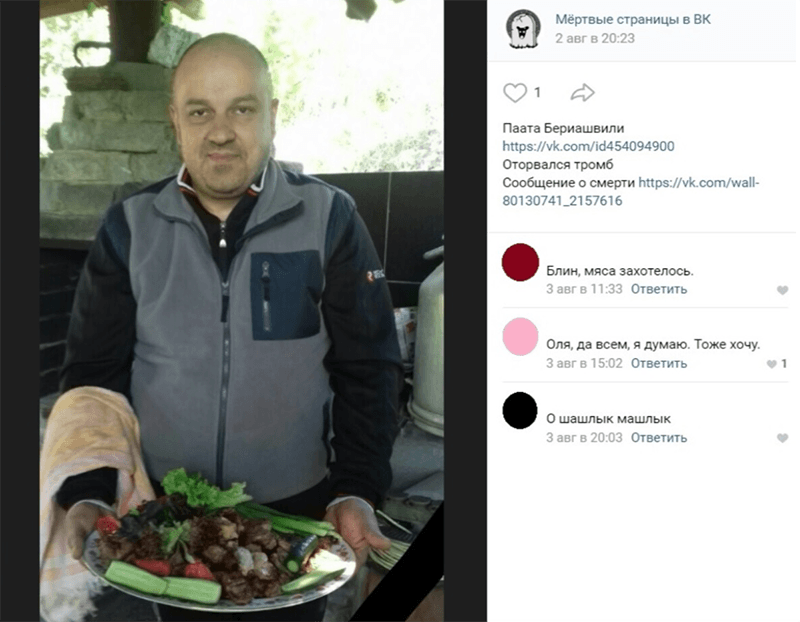
Subscribers freely communicate in the comments of memorable albums, on the "wall" and in "discussions". Olesya, an administrator of one of the groups , says that "participants celebrate their atmosphere, many come precisely for communication."
Olesya has been engaged in a group for almost five years - her last project on the same topic for aggressive advertising through personal messages was blocked by the VKontakte administration. Olesya was always interested in death and mysticism: already at the eleven years the girl read the whole of Agatha Christie. Now Olesya is thirty -eight, she works at the factory and devotes almost all her free time to the group. Creating public, Olesya was based on her own interests, building “dead pages” as a comfortable space personally for herself.
Today, several administrators are managed by the group, Olesya does not control them, but asks not to post “frank tin”. The group has rules of conduct and disclaimer 16+, and the community itself is closed - all submitting applications for the entry are controlled by admins and editors. The rules are not entirely ordinary: for example, in the group it is forbidden to write “lol” and “cup” - you can get “ban”, and applications for the entry of users with closed pages are not approved.
Death like memes and porn
Another participant in the group - Victor, a thirty -year -old electrician from Krasnoyarsk, believes that photographs of the dead are the same content as memes and porn. In his opinion, the group is more like a morgue, with its humor and its own rules and even its “autopsy”. Participants in such communities often play guessing, trying to name the cause of death from the photograph. Lera says that they have signs: if in the photo a person with fish in their hands is definitely a drowned man, a beautiful young girl is an accident or homemade violence, and suicidists are almost one face. Participants in the discussion often pay attention to the facial expressions of the deceased, his gaze. According to the local representation, if the eyes seem muddy, then most likely a person was sick.
In addition, each group must have sites where participants can talk about important and often philosophical issues. For example, to discuss which death is the most pleasant and which is the worst, or to speculate about what is happening with the soul after death and how to survive the death of a loved one.
All this may look strange and frightening for those who first came to such communities, but the genre of everyday discussion of death did not arise in VKontakte. Polina Kolozaridi, Internet research and teacher of the Higher School of Economics, indicates alternatives on offline: “We can see examples in books of the 19th century, which describes leisure conversations at the funeral. Say, in Chekhov’s stories, people regularly go to the funeral, meet there, they say about the deceased. ” At the same time, we are still surprised when we stumble upon such behavior online. Polina explains this by the fact that such communication often goes or went through other media - TV, radio, newspapers: “Of course, they don’t show dead people on TV, but they talk endlessly about disasters. It is very difficult to talk about them calmly and everyday - the tone of media in such cases is always tragic. Against this background, the everyday tone of publics seems strange. But the Internet is not a newspaper with necrologists, it allows more than just media. People there interact there, and not just learn about death. ”
Administrator Olesya and Subscriber Vitaly, who is now engaged in the creation of his own public like “dead pages”, say that finding content for memorable albums is quite simple. On VKontakte, the department of dead pages from the living works is weakly works, so you can find such by scoring in the search engine “grieve”, “eternal memory”, “condolences” or other standard phrases. “According to these requests, sorrows come out, and finding the very page of the deceased on it is no longer so difficult. It happens that the reason cannot be found, and the page of the deceased is closed. I reject a lot of such people because there is no reason for discussion, ”says Olesya.
At the same time, in some publics the subscribers themselves can and add a photo to the album on their own - to replenish content or for the memorialization of a loved one. For all cases of death, Julia Kozlovskaya , Valeria Belobragina, the author of Samizdat understands what transformations are experiencing ritual services in the world and whether Russian cemeteries are ready for digitalization
My teacher is death
The search for causal relationships in the death of a stranger gives participants in “dead pages” the opportunity to obtain certain knowledge about death and life. Olga has long been signed for “ dead pages ” and travels along the pages of the dead not for the sake of emotions. She is a physician, graduated from TsMOM PB in Moscow with a specialization in adult psychiatry. Olga uses public as an archive of cases on which she can train knowledge gained during studies. When a woman sits in albums, she goes to the pages of the dead, looking for prerequisites for suicide, looks at the photograph, tries to reconstruct the identity of the deceased. As a doctor, Olga also draws attention to the poses of a person in the photo from the place of death, monitors facial expressions, tries to determine whether death or natural was forcible.
He studies at someone else's death and Vika, whose childhood passed in the cemetery. She often enters the albums to see the updates, but she does not always leave comments - she must hook. Most of all, cases of teenage death, especially suicide, touch Vika. If she stumbles upon a photo of a teenager who committed suicide, she cannot pass by: “Many profiles shout for help, but for some reason no one hears them. This is very scary, ”says Vika. Her adolescence was also difficult: she tried to commit suicide - she drowned, swallowed pills, but there were friends nearby who came to the rescue on time.
Viku helps Vika not only to work out the deaths and pages of deceased adolescents: the girl's two -year -old daughter is growing, the group helps her to better understand teenage problems.

When Vika sees the case of a teenage suicide in the album, she goes to the page to the deceased, looks at the latest notes, tries to recreate a person’s logic, make out the prerequisites and think through the future tactics of her daughter’s upbringing in order to protect her from troubles. Vika notes that after a long stay in the group, her attitude to education and motherhood changed: “I have become more careful, even a little manic. I come to visit where there are young children, and I am indignant at the negligence of my parents. The husband for this, too, periodically flaunts me, ”says Vika.
A journey through other people's deaths can provoke previously unusual caution and more careful attitude to health and their safety. An electrician Victor from the company of regulars writes that in the three years that a group has been in the group, he has passed several examinations for oncology, the administrator Olesya ironically notes that half of the group members “at least learned to cross the road correctly”. At the same time, Tanya, who also began to better monitor her health and go to the doctors - she has problems with her heart and gastrointestinal tract - and ask her husband to be careful on the roads, notes that for her this is rather extra nervousness.
Most subscribers note that the main conclusion from publications in a group is an understanding that death will occur with each and it is necessary to appreciate every moment of life. Here are a couple of examples from answers in the “Discussion” section: “Thanks to this group, you begin to appreciate your life and the lives of other people. You are more attentive to your health ”,“ you begin to appreciate relatives and friends and understand that everything is not forever ”,“ life is quick, and the finale is unpredictable, so we must try to live one day. ” Polina Kolozaridi believes that such an impact on subscribers is quite natural: “Going to doctors and safety on the roads is a consequence of the aesthetic and examinal function of representation of death. In this sense, public - like Vanitas and still lifes in art: speaks to those who look about the inevitability of the death and fleetings of life. ”
At the same time, participants often do not find understanding outside their circle. Many subscribers are in groups with memorable albums from fake pages, do not like likes and do not make reposts so that friends do not learn about their hobby. Vicki's husband knows that she sits on “dead pages”, and periodically peeps for what his wife does in the public, but does not go there. «Когда совсем жесть, — пишет Вика, — я рассказываю друзьям или знакомым, на что реакция примерно „ой, не надо, убери, зачем ты вообще там сидишь“». Таня тоже изредка рассказывает друзьям о ярких случаях, которые она увидела в паблике, но умалчивает про сами памятные альбомы, как и про прогулки по «мёртвым страницам». Её можно понять: близкие другой участницы, Ольги, относятся к участию в группе с пренебрежением и в лоб высказывают своё недовольство.
Шутить о смерти
Среди путешествующих по страницам умерших появляются и тролли. Двадцатичетырёхлетний Никита сейчас выбирает магистерскую программу в Томске, а в свободное время троллит мёртвых. «Раньше я просто шутил в комментариях неадекватно, потом начал стебать участников разных пабликов, посвящённых матерям, коммунистам и патриотам. И теперь самое жёсткое — стёб над мёртвыми», — рассказывает Никита. Он ходит по страницам покойников, находит фото в памятных альбомах и оставляет иногда агрессивные, а иногда безобидные комментарии с чёрным юмором. К примеру, под фотографией утопленника в памятном альбоме Никита как-то написал «Буль-буль карасики».
Исследователи из Лондонского университета Брунеля в книге «Geographies of Trolls, Grief Tourists, and Playing with Digital Transgression» отмечают, что троллинг — это тоже реакция: «В наиболее невинном проявлении троллинга молодые люди используют чёрный юмор, чтобы пролить свет на серьёзные и зачастую табуированные темы. Некоторые взрослые „юмористы“ используют чёрный юмор как инструмент изучения рамок дозволенного — чтобы вызвать дискомфорт, заставить задуматься или ради развлечения аудитории».
Никита шутит не только про покойников, но и про тех, кто их обсуждает: «Есть особый тип людей, который меня сильно раздражает: это самонадеянные ребята, живущие одним днём. Они склонны списывать несчастья на судьбу и случайности. Если комментарий несёт подобный посыл, тут я начинаю спорить с человеком, оскорблять и отпускать шуточки». «Сама, шлюха, виновата, что уебалась», — приводит в пример Никита свой комментарий, который он оставил в ответ другому подписчику, обосновавшему смерть незнакомки судьбой. Такая попытка восстановить субъективную справедливость для молодого человека — стандартная практика.
«Когда в жизни раздражает какая-либо черта характера знакомого человека, бывает, что желаешь ему за это смерти, но не говоришь. И потом узнаёшь, что похожий человек с такими ценностями болезненно умер или был убит. От этого становится на душе хорошо и приятно», — рассказывает Никита, которому уже не раз угрожали расправой.
«Меня уже много раз обещали избить и убить за это. Присылали большие письма в ВК с угрозами, искали через друзей, один раз узнали адрес. Я тогда удалил страничку и ходил по улице очень осторожно». Никита уверен, что «у каждого человека есть склонность к наблюдению насилия или страшных происшествий с кем-либо и получению от этого приятных злорадных ощущений. Это как во времена инквизиций, когда огромные массы людей наблюдали казни своих сограждан».
В пабликах троллинг не приветствуют. Администратор Олеся просит редакторов своей группы банить таких, как Никита, чтобы не причинять боль и дискомфорт своим подписчикам.
Зачем нужна смерть в интернете
«Скорбный туризм — это чаще интересное, нетривиальное и безопасное путешествие в мир мёртвых, — считает культуролог и доцент Высшей школы социальных и экономических наук Оксана Мороз. — Оно позволяет — хотя бы и удалённо — прикоснуться к смерти. Учитывая, что смерть пытаются исключить как минимум из созерцания человеком, это способ её вернуть, присвоить». Оксана отмечает, что в этом смысле скорбный туризм глубоко терапевтичен как сигнал к готовности и желанию множества людей объединяться вокруг смерти и избавить тему от табуированности.
Группы вроде « Мёртвых страниц » создают открытое пространство для взаимодействия — туристов, медиков, троллей и других путешествующих по чужой смерти. Здесь у людей есть возможность поговорить о табуированной теме: в каждой такой группе есть раздел «Обсуждения» с такими топиками, как, например, «Что происходит с душой после смерти?», «Были ли вы на волоске от смерти?», «Как вы пережили смерть любимого человека?», «Кремация или захоронение» и прочие, где набирается до тысячи комментариев от участников сообщества.
Помимо площадки для обсуждения, группа выполняет и функцию «цифрового кладбища». В некоторых группах пользователи могут самостоятельно добавлять фотографии в памятные альбомы. Елена (имя изменено) однажды выложила туда фотографию отца, с соответствующей подписью — с именем, возрастом и причиной смерти. Елена говорит, что это решение далось ей просто: «Попадание в альбом помогает человека помнить. Посочувствуют, посопереживают — так легче становится».
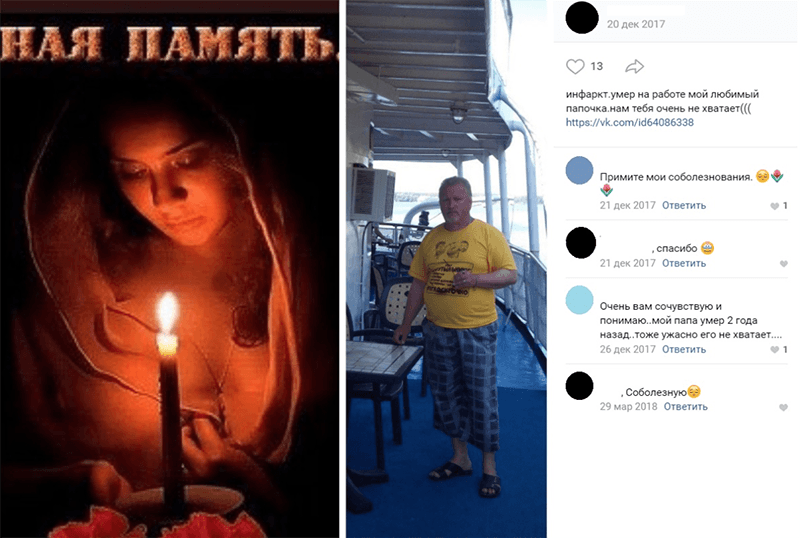
Однако не для всех этот шаг приемлем. Подписчица Рая однажды наткнулась в альбоме на фотографию крестника подруги: «За день до этого я была на его похоронах. На мои просьбы удалить администраторы отказали. Пришлось ставить в известность родных. В итоге заработала бан и ушла в другую группу». Проблему удаления из альбома знакомых публично подписчики не озвучивают — в «Обсуждениях» группы и посте о жалобах из более пятисот комментариев только один с просьбой удалить фото знакомого. Олеся и другие админы берут информацию из открытых ресурсов, а дисклеймер в группе предупреждает: «Все материалы, которые выкладываются в интернете в свободном доступе, могут копироваться и распространяться. Если вы не хотите распространения фотографий, то следует закрыть их настройками приватности».
Вика говорит, что своих умерших знакомых она в альбом не добавляла: «Не считаю, что имею на это право». А вот Виктор из завсегдатаев группы относится к такой ситуации спокойно: «Я даже не против, если однажды и я там окажусь. Ржака будет точно».
Администратор Олеся старается идти навстречу подписчикам, банит троллей и заботится об атмосфере в коллективе. В своей группе она видит просветительскую ценность и подчёркивает, что многим участникам она помогла пережить утрату и стать осторожнее в жизни: «Мы не так уж и бесполезны. Практически у каждого есть определённый опыт, который группа помогает пережить. Плюс кому-то интересно крестиком вышивать, а кому-то — читать о смерти». Олеся соглашается, что группа и правда выглядит странно для того, кто впервые её видит, но созданное место для обсуждения важно и для неё, и для участников: «Можно подумать, что, если не говорить о смерти, её не будет».