
Translated material
The curtain is falling on YouTube
The Russian authorities began a campaign against the most popular video hosting in the world
Talking about the “real organizers” of protest shares in Moscow, the authorities came to a non -trivial conclusion. On the evening of August 11, Roskomnadzor, without lifting to work on Sunday, carried out the “black mark” of Google and the most popular video hosting in the world of YouTube, since they were allegedly used to advertise such shares. “A number of structures with YouTube channels acquires advertising tools (such as PUSH notifications) from YouTube in order to disseminate information about unauthorized (illegal) mass events, including aimed at disrupting the elections of federal and regional significance,” Roskomnadzor said and added that these “guns” even come to those who do not come to them who do not come to them who do not come to them. Signed.
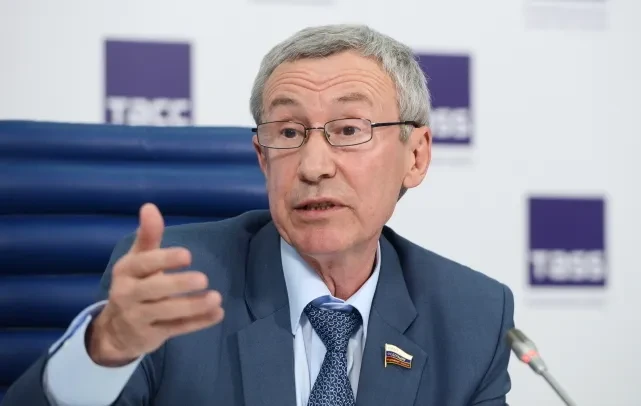
Google did not publicly respond to the claim of Roskomnadzor and, perhaps, just did not understand it. The roots of what is happening, however, should be sought not in the department, but in the Federation Council, where the West was almost openly accused of what are happening in Moscow, and YouTube of the Senators' understanding turned into a instrument of promotion of “riots”. Senator Andrei Klimov, in his blog with the speaking name “incitement” on the website of the Federation Council writes that “it is one thing when foreign platforms provide our citizens with the opportunity to find out something, they say, do not want to see our sites, and another, when Russians have no reason to receive information on their mobile devices that they did not sign up from sources that they did not subscribe.” Klimov, being the deputy chairman of the Committee on International Affairs, has already once made a YouTube warning. “Now, it seems, they have taken up the old,” the senator argues. “We will deal with this along with the relevant Russian structures.”
Klimov refused comments, referring to his absence in Moscow and employment. “At the same time, the scenario that the senator described so eloquently on the blog is technically impossible at all,” says Mikhail Klimarev, director of the Non -profit organization Society for Internet Protection. “Until now, not a single case has been recorded for you to send a push notification from the channel that you are not subscribed to YouTube,” he says “New”. - In general, it is not clear that the same Klimov was sent. First, show this notification, and then you can talk about something. ” “There is a possibility that in fact, this is not even about notifications, but about the recommendations within the YouTube website itself,” the IT specialist adds, but even in this case, the announcements of those videos that more or less correspond to the requests of the person himself will be shown. ” “Klimov saw something there, and since he was an influential uncle, he called Roskomnadzor, and they gave this strange press release on Sunday,” Klimarev grins.
This is not the first time the Russian authorities threaten Google structures, but so far there has not been able to establish any way of communication, except for the constant receipt of fines, with one of the Internet giants. The position of the authorities is to be able to control the Russian users Google. But the company regularly ignores the attacks on the part of the same Roskomnadzor, and the requirements of the register of information distribution organizers. With YouTube, communication seems to be thinner. For example, the head of the Committee on Information Policy, Information Technologies and Communications in the State Duma Leonid Levin, before the very parliamentary holidays, introduced a bill, which involves the creation of a single operator for Internet broadcasts of television channels. The task of this operator, by the way, will also be the struggle against advertising, which is added by YouTube himself while watching the rollers.

But this, rather, is the technical regulation of YouTube (although no one will prevent the deputies from the next step to try to prohibit all the broadcasts that do not go through the state operator) and it can also be ignored or bypassed. In principle, it is impossible to take control of YouTube, Mikhail Klimarev clarifies, and the only way to deal with it is to complete the video hosting in Russia:
“Technically, this is quite possible. The whole question is in a political decision - whether officials are ready to take such a scandal. ”
Maybe so far they are not ready, but they are moving rapidly to this, remarks political scientist Dmitry Oreshkin. “We are dealing with the quasi -Soviet system: in Russia, in any of the social environments, it becomes only worse, and the authorities are forced to move from luxurious expansionist rhetoric (“ We will build a bright future ”) to a defensive strategy (“ Do not go into the territory of our sovereign democracy, ”Oreshkin explains. “A monstrously ineffective, collapsing huge number of ties is built.” YouTube becomes in modern conditions an analogue of “enemy voices”, which must be jammed at the first opportunity. “Officials do not even have to lead, they themselves understand that it is increasingly difficult to convince ordinary people, that Russia rises from the knees. So the only way out is isolation from sources of any alternative information, ”the political scientist states.
“The attacks on YouTube is a consequence of the thoughts supported by the authorities about the global anti -Russian conspiracy, such a solid paranoia,” adds Dmitry Oreshkin. - As in Soviet times, the nomenclature is afraid of democratization, because it means the loss of the feeder. True, there are a number of comrades who really believe in the theory of conspiracy, that the statement of the fact of rallies in the Nerossian information space is already interference in its internal affairs. The next step will be the ban on departure from the country. Perhaps the situation will probably not reach the complete Soviet senile, but we resolutely walk back in that era. ”
The state salary is rapidly losing YouTube, but nothing can offer in response:
The Internet in the struggle of the TV and the refrigerator performed on the side of the latter, but the authorities do not want to forgive this.
In fact, this means the transition to the Chinese model of the relations of the state and the Internet, but in Russia it seems not to mind.

The official representative of the Foreign Ministry, Maria Zakharova, said that Russia wants to offer China to look for interference in the internal affairs of countries through the Internet together: supposedly, protests in Moscow and Hong Kong may have a common basis. On Monday, August 19, an extraordinary meeting in the State Duma has been scheduled for possible foreign interference in the elections-they have sarcastically notice that this coincides with the date of the GKChP until the day of the week, in the 91st year it was also Monday. How it ended - everyone remembers.
At the same time, possible sanctions against YouTube, if we are talking about its full lock in Russia, are again similar to a shot in their leg. Even in the case of the ban on YouTube, Russians will be able to use them normally with VPN, local media business will suffer (including Internet broadcasts, which deputy Levin is baked).
Russia has a similar YouTube infrastructure - the Rutube service - but compared to the global platform, this is heaven and earth. It is enough to compare some digital indicators of non -building content: for example, the average number of views of the most popular children's animated series in Russian “Masha and the Bear” is about 500 thousand views per series on RUTUBE. On YouTube, only one episode called "Elusive Avengers" on the official channel watched more than 367 million times. And Rutube itself does not allow online broadcasting and is, in fact, a video storage, and not a full-fledged platform.
It is very difficult to imagine that the audience rushes to absorb content within the framework of the “sovereign Internet” on domestic services with poor functionality. Probably, in response to non-Soviet methods of censorship, we are waiting for non-Soviet double-domed, if only officials do not think of something like criminal liability for viewing prohibited services. To hope that the deputies have enough desire or ingenuity, so as not to touch YouTube, somehow do not have to.