
Translated material
Microplastics spreads by the wind through the planet: high concentrations are detected even in the Arctic
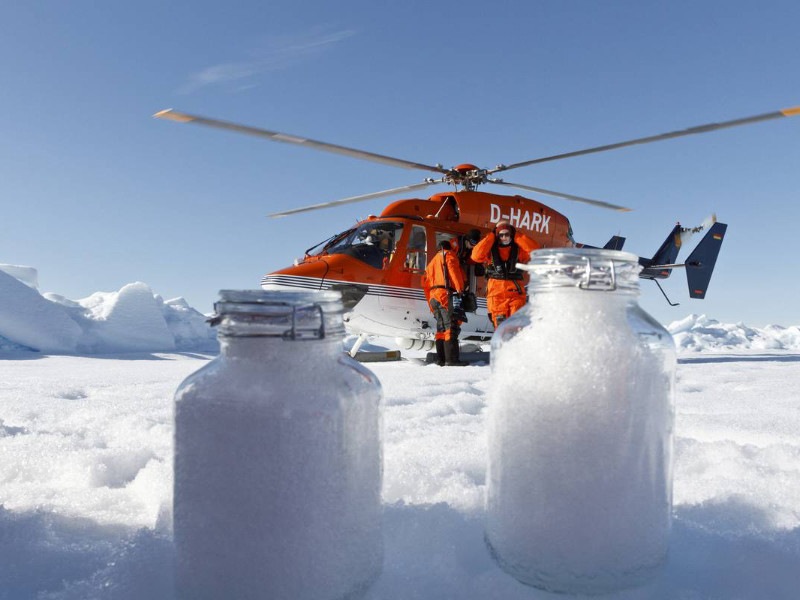
A team of scientists of the German Institute of Polar and Marine Studies named after Alfred Vegener (AWI), headed by Dr. Melanie Bergmann and Dr. Gunnar Gerdts, conducted a study of snowmates from Helgoland, Bavaria, Bremen, Swiss Alps and Arctic: all of them contained high concentrations of microplasty - even in remote areas of the Arctic The island of Spitsbergen and in the snow on drifting ice floes.
In their opinion, its particles are transferred in the atmosphere to huge distances and fall out with precipitation, especially snow, reports StormNews with reference to AWI . Research results are published in the journal Science Advances .
“It is obvious that most of the microplasty in the snow comes from the air,” says Melanie Bergmann. Her hypothesis is confirmed by past studies conducted on pollen grains, in which experts confirmed that pollen from medium -widths is transported through the air to the Arctic. These grains are approximately the same size as microplastic particles. In the same way, the dust from sugar can cover the distance of 3,500 km or more, reaching the northeastern regions of the Atlantic.
The high concentration of microplasty (154000 particles per liter), AWI researchers found in samples collected near the rural road in Bavaria. In the Arctic, concentration reached 14,400 particles per liter.
The types of plastic found also vary greatly in different regions: in the Arctic, researchers mainly discovered Butadiene-nitrile rubber, acrylates and paints. Butadien-nitrile rubber, given its resistance to various types of fuel and a wide temperature range, is often used in sealing gaskets and hoses.
Placs containing plastic are used, for example, to cover the surfaces of buildings, ships, cars and sea oil towers. Next to the rural road in Bavaria, samples contain, in particular, various types of rubber, which are widely used, for example, in car tires.
#Microplastic Driefting Down with The Snow: In the Alps and the Arctic, #Awi Scientists Confirm the Present of Plastic in Snow. https://t.co/0qb7wgnyh0
- AWI Media (@Awi_Media) August 15, 2019
(????: kajetan deja) pic.twitter.com/z7c0nrczg5
AWI also notes that in the results of the concentration of microplasty they get much higher than in similar studies. Gunnar Gerdts believes that this is due to the fact that, firstly, they investigated snow, and secondly, with the analysis method-they used infrared spectroscopy, which allowed even particles the size of only 11 micrometers.
The problem of microplasty acquires more and more serious importance for humanity. The oceans are full of plastic debris: year after year, several million tons of plastic fall into rivers, coastal waters and even deep -sea arctic seas. Thanks to the movement of waves and to an even greater extent ultraviolet radiation of the sun, it gradually breaks up into more and smaller fragments - microplastics. It is found in sea deposits, in sea water and in sea organisms. In this regard, scientists find out the consequences of microplasty entering the organisms of animals and humans along with food. After the new opening, another aspect appeared, requiring a more attentive study in the future.
"As soon as we determined that large quantities of microplasty can also be transported through the air, naturally the question arises of how much plastic we inhale. More old results of medical studies offer promising starting points for work in this direction," said Melanie Bergmann.
In 2018, Austrian scientists for the first time in history discovered the smallest particles of plastic in the content of human intestines. It was found in the samples of Kala 8 people from Europe and Japan. On average, the researchers found about 20 particles of microplasty per 10 g of intestinal contents, reports NHK .
So far, there is no evidence that microplastics threatens people's health, but scientists plan to continue research to determine potential risk.