Translated material
Aleksandrov - the capital of Russian death
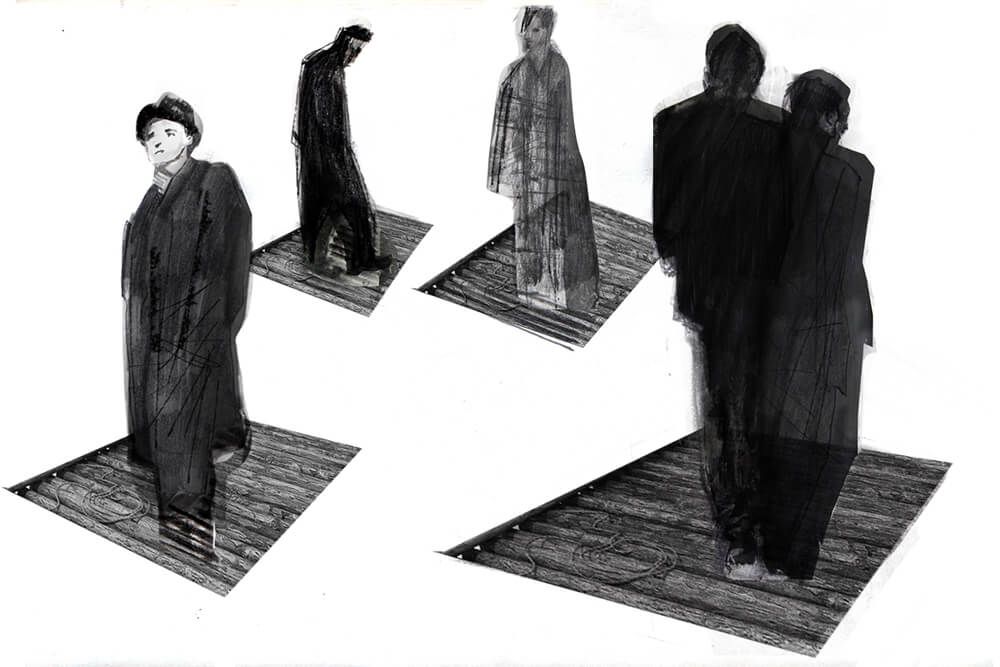
At first glance, the city of the Vladimir region is a typical springsfield of the middle lane: architectural monuments in the center, 60 thousand populations in emergency housing around, a pack of gulls above the dump of Moscow garbage and a legend about the library of Ivan the Terrible under the monastery. But each cliche has a flip side. On the instructions of Samizdat, Anna Popova went to the former capital of the 101st kilometer and discovered a city that practices all types of Russian death at the same time, but continues to live, even if some believe that he has already died.
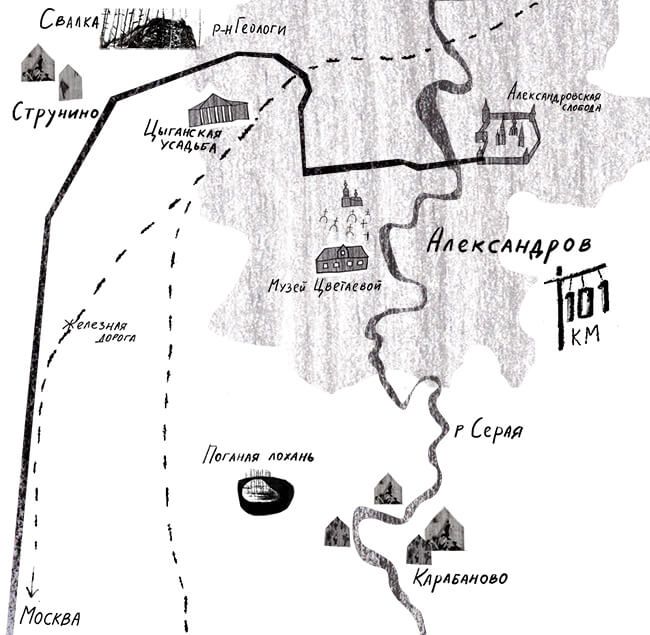
Death I: Mor
Once next to the city market of Alexandrov was an old cemetery where Marina Tsvetaeva loved to walk. “The favorite walk of children, three -year -old Ali and Andryushi. The point of attraction is a failed crypt from the ground with viewing icons, ”the poetess recalled in the“ History of one initiation ”. The cemetery was formed after pestilence in the XVIII century, then representatives of the local merchants began to bury here, arranged, built a gate church. The house where Tsvetaeva lived in Alexandrov with her sister and their families was located nearby.
Today is at the place where there were graves - residential buildings and shops. In the postwar years, the gate cemetery bell tower was blown up , and the cemetery was ruined. “We arrived bulldozers and bucked the ground with the dead with the dead,” says the director of the Alexander Museum of Tsvetaeva Lev Gotgelph. “People, as far as I know, got a lot of gold from the coffins then.” According to the local city legend , subsequently grave plates were launched on the foundation for a local club. When the pits dug, the bones and skulls were lying on the surface.
In the Soviet years, the liquidation of cemeteries did not seem something out of the ordinary, so the destruction of the Alexander Necropolis did not get widely publicized. In the USSR, Alexandrov was known for other reasons. After the appearance of the Gulag, he turned into the "capital of the 101st kilometer."
Death II: oblivion
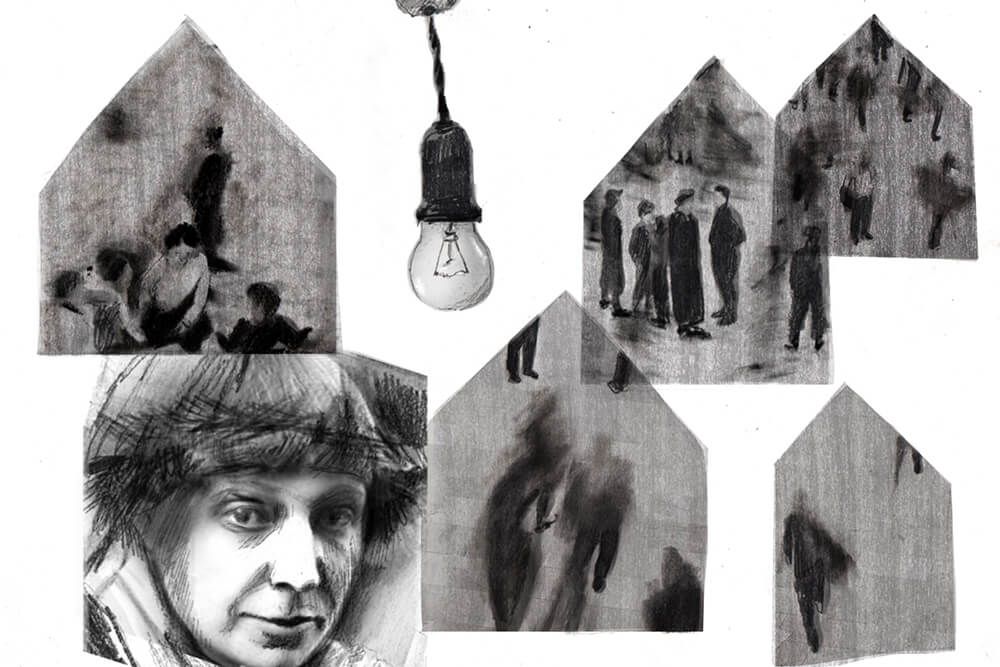
In Soviet times, Aleksandrov became a place of accumulation of former camps and exiles, who, after liberation, were forbidden to settle closer than 100 kilometers from large cities. To Moscow from here is 110 kilometers and a convenient straight train for two hours. Those who settled on the 101st kilometer could be divided into two categories: “political”, mainly intelligentsia and dissidents and criminals. “They largely formed the current Aleksandrovites. Those who grew up in the houses where the criminals were housing also mostly chose the criminal path. And those who talked a lot with the intelligentsia now go to our museum, ”said the director of the Tsvetaevsky Museum.
Gotgelph himself came from Gomel and came to Alexandrov in the 1960s not from exile, but simply by distribution. “After moving, I could not find an apartment in any way,” Gotgelph recalls. The hostel was crowded, and once a friend brought him to his grandmother, who helped to look for housing for certain money. She talked with him for two hours, was interested in the details of his biography, and at the very end she asked: “Okay, but by what article did you sit?” When he replied that he was not sitting, her grandmother was terribly surprised: it seems that she first had to look for housing not a former prisoner.
In 1978, Disante and writer Anatoly Marchenko and his wife, human rights activist Larisa Bogoraz, settled in Karabanovo-Satellite Aleksandrov. In 1968, Larisa received four years in Czechoslovakia for participating in the protest against the introduction of Soviet troops into Czechoslovakia. Marchenko called himself an “eternal prisoner” at all: he fell into the camp several times and spent half a life in exiles. Earlier, Marchenko had already lived between the pursuing in Alexandrov, but this time he ended up on the 101st kilometer with his wife and son, decided to settle down and began to build a house with his own hands.
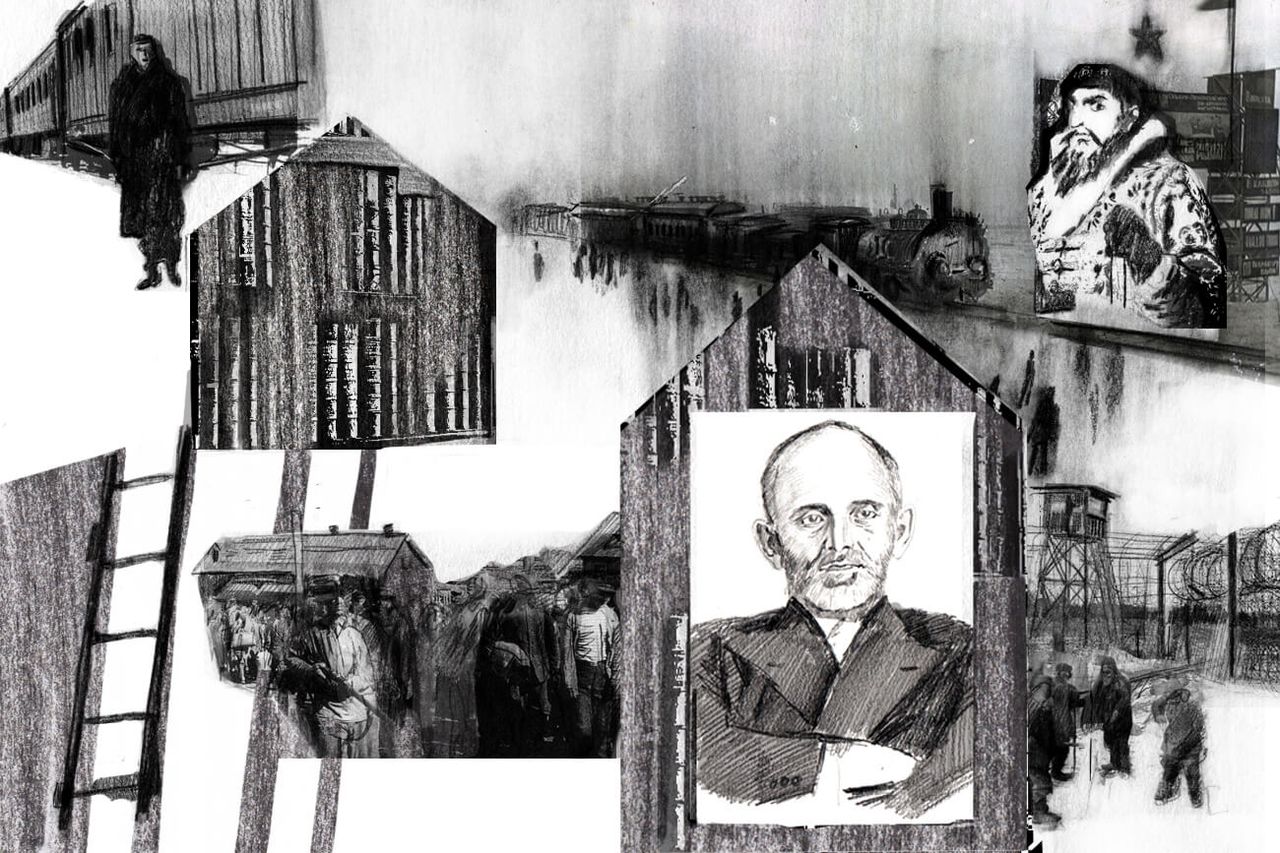
In 1981, he was arrested on the next political charges, an unfinished brick house was declared self -building and tried to demolish the bulldozer, as the merchant necropolis was demolished near the Tsvetaev house. When it turned out that the heavy equipment could not cope, the building was blown up by order by order of the authorities.
Marchenko himself was not destined to return to Aleksandrov: he announced an unlimited hunger strike in prison with a demand to release all political prisoners and died on December 8, 1986 in prison. His death made a huge impression on Gorbachev, soon all convicts were released under political articles, and restructuring began in the country. There is no memorable board about the last Soviet dissident who took the 58th article with him to the next world, in Alexandrov-today the city authorities are more busy with the question of where to erect a monument to Ivan the Terrible.
Death III: State
In the 16th century, Alexandrov became the center of the oprichnina. In 1564, Ivan the Terrible moved from Moscow, the name of the Alexander Sloboda, then bore the name of the Alexander Sloboda and brought with him the treasury, the library and the first instrument of total terror in the history of the country.
The Alexander local historian Victoria Boravskaya believes that Lake Karinskoye received its name from the word "kara" located in the city. According to legend, on the elevated shore of the lake, the guardsmen "mercilessly tortured local peasants."
The seventy -year -old resident of Aleksandrova Svetlana Andreevna, retelling the city legend, explains that the Gray River, dividing the Alexandrov into two parts, is also connected by the history of the oprichnina: “There Ivan the Terrible in the carriage was launched from the steep monastery coast. There is a legend that he was so cruelly punished by his husband. For some time here, on the embankment, there was a monument to Grozny, but then it disappeared-apparently, something did not like something. The new monument should be erected by the City Day. ”
In fact, the tradition of death in the river is associated with Maria Dolgoruka, which in some sources is called the fifth wife of Ivan the Terrible. In the "Time of Troubles of the Moscow state at the beginning of the 17th century. 1604–1613 ”historian of the 19th century Nikolai Kostomarov writes that Grozny decided to kill his wife when he found out that she" had already lost her virginity before. " The day after the wedding, he ordered “to clam it in the Kolymag, lucky on the greyhounds and overturn it into the water”, lowering the Alexander Sloboda from the shores.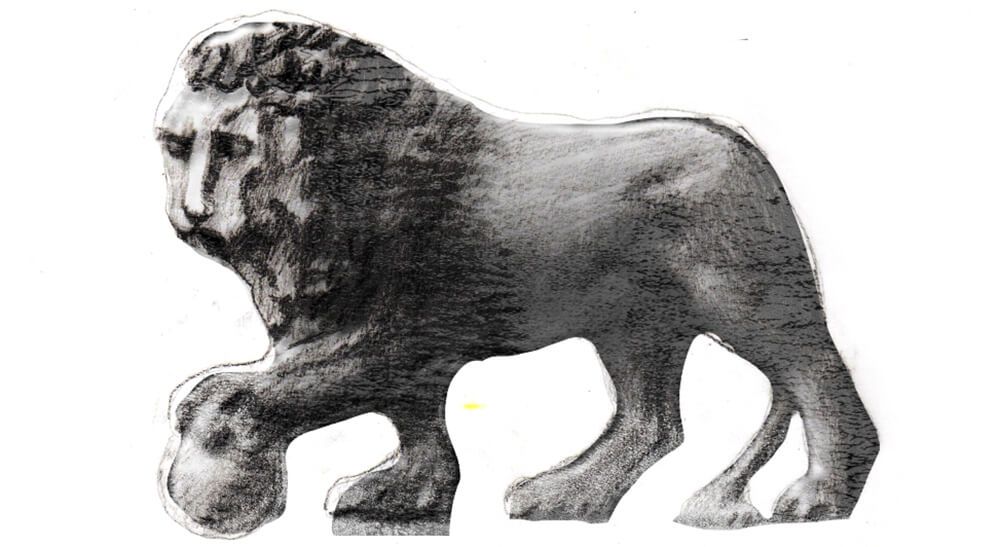
Today, the Aleksandrovskaya Sloboda is a tourist center of the city and the main place for wedding photo shoots. In an anonymous vote in Vkontakte, the All -Russian Popular Front of Slobod was recognized as a symbol of the city: almost 60 % of respondents voted for it. In second place is Ivan the Terrible (about 35 % of the vote).
In the settlement there is a crucifixion church-bell, tall and white as a candle. According to legend, once Nikita-Kholop flew from her on home-made wings and flew to the other side of the river with a gray, snaking around the monastery. However, Ivan the Terrible also executed him.
Svetlana Andreevna has been living here since the 1960s. When her family moved here from Rzhev, Alexandrov seemed gray to her: the streets, then sharply leaving down, then steeply rising up, were densely built up with wooden houses. Then Svetlana did not think that she would live in Alexandrov all her life and marry her son sent to one hundred and the first kilometer of the communist.
“When we just arrived, we lived in the first house from the station. Now my mother and I have a plot near the monastery. There is a gorgeous place: we live under the cover of a bell ringing, ”she says.
Death IV: Nonsense
From the settlement I walk towards geologists - the area on the outskirts of the city. Aleksandrov is such a "green" city as if it had grown in the forest. Sunny, houses are doubled and are reflected in dark puddles, on Khrushchev, the colors of Khaki rise rusty letters: "Our Glory to our Motherland." In the air there is a honey smell of LIP.
An hour later, having already ended up on the very edge of the city, I go to the shop in the wasteland. Behind the counter are two saleswoman:
- Why do you need here? There are no monuments, ”says one.
- I want to talk about the Alexander garbage training ground.
“Ahh, about our main attraction,” the saleswoman smiles.
The other adds:
- I lived next to the landfill, but when Moscow garbage began to be carried from there, I left for the birds. Lucky! But Lenka, - she nods towards her partner, - still there. Her mother -in -law has a house directly opposite the landfill.
- And how, a strong smell? I ask.
Lenka shrugs.
- No, but the garbage grows not by the day, but by the clock. Soon we will ski from her in winter, ”she laughs, and then he notices seriously:“ And so the devil knows that with this landfill and how it processes it. ” Once we woke up, and everything was covered with blue smoke. As if with a dawn fog. It turned out that this landfill was smoking.Today, the height of the landfill is with a 10-story house, and the new KamAZs come daily-local residents once counted 86 trucks per day. Ruslan Menshikov notes the editor -in -chief of the local newspaper “New City of Aleksandrov” that garbage along with emergency housing is the main problems of the city. Secret Life Plumbing Adelaide Sigida , Lena Gordeeva The life of ordinary plumbing is more mysterious than fiction - gypsies, novels at work, salvation of Thai masseuse from sexual slavery, Masonic cassocks
- If you pass by the garbage mountain, then there is a smell, especially on hot days. In the center, however, he is not, ”says the journalist. - And about five years ago, everything was much worse. When there was a terrible heat, the landfill literally poisoned the air, from time to time it light up. So the inhabitants were very categorical and were going to protest. The Ecoline-Vladimir service company promises to turn a landfill into a green hill with the help of hydroposev technology. The governor of the Vladimir region Vladimir Sipyagin put forward another proposal: to make a ski resort from the garbage mountain. When the authorities began to fight with the smell, the protest of the inhabitants partly came to naught.
Yuri Saenko - chairman of the house number three on Geologists Street and one of the activists who continue to fight against Moscow garbage. Recently, Yuri is also fighting with the head of the Aleksandrovsky district, achieving her resignation, since Moscow garbage teams continue to use the Alexander training ground.
“Let's immediately decide on my advantages and disadvantages. Advantages - I am an honest person. A simple Siberian man who wants his children to be alive and well. So I don't know how to lie, do you understand? " - He says. An unshaven man of about thirty is connected to the conversation. It smells of vodka. The man is interested in what I needed in geologists.
- Dear Mikhail Sergeyevich, calm down. This is a journalist, we work. Do you have something to say on the merits - about the landfill?
- What creature?! -For some reason, Michael is indignant and moves menacingly to Yuri. Yuri evades the conflict and offers to go to him to continue the conversation in a calm environment, but warns: “We are proud but poor. Very poor. So don't be scared. ”
As the chairman of the house, Yuri was supposed to be six thousand a month. His wife works at the factory and receives about ten. Yuri puts a kettle, and then sits nearby and begins to show me photos of the garbage training ground. Yuri knows the history of the Alexander landfill by heart. Every Tuesday, he goes to a local prosecutor, once a month - to the administration of the Aleksandrovsky district.
- We have nothing to lose - we do not ask someone else. We only defend ourselves and protect our children and grandchildren. I have three children; Thank God, all adults, parted. But why should we die here in Alexandrov?
We have been talking about a landfill for a long time, Yuri shows documents, explains how it is better to act to residents to win. The forgotten teapot on the stove has long cooled down. In the end, I ask Yuri whether he really thinks that Alexandrov is threatening Moscow garbage.
Yuri smiles thoughtfully and answers: "The city does not die - he is already dead."
Death V: alienation
In 2016, the administration of the Aleksandrovsky district gathered a round table to discuss the “state and dynamics of development” of local gypsies. A foggy wording implied a discussion about problems in the relationship of the gypsies with the inhabitants of Alexandrov. In particular, representatives of the gypsy diaspora complained that the ambulance ignores their challenges.
In response, the chief physician of the Alexander District Hospital Vladimir Anuchin said that the gypsies call an ambulance twelve times more often than the rest. At the same time, paramedics are afraid to come to gypsy families: according to Anuchin, they do not let the ambulance go until she examines all members of the community.
According to the chief editor of the newspaper "New City of Aleksandrov" by Ruslan Menshikov, in the Aleksandrovsky district there are several villages, tightly populated by gypsies. In Ivano-Sobolevo, for example, they actually remained the only permanent inhabitants: the rest of the houses are empty or sold to the dachas of Muscovites. In Alexandrov itself, the gypsies almost do not live and settled in the main nearby, as if on their own 101 kilometers from the largest city in the area: in addition to Ivano-Sobolevo, their communities are in the village of Tsemkino and the city of Strunino. Almost every month, the police arrange raids from them, looking for people without registration.
There is no exact data on the number of gypsies in the Alexander district, but the representative of the Vladimir gypsy diaspora Tina Burkevich believes that the community in the Aleksandrovsky district is quite numerous. “To be a gypsy means to always be on the alert. You don’t know which side you will strike. Each gypsy has to experience a lot of grief in life. Tough traditions used to help the gypsies survive, and now they kill them, ”Tina notes. By tradition, it means, in particular, early marriages.
She notes that the gypsies do not consider themselves a single people: there are a lot of ethnic groups, and about each “you can write a book”. Tina herself several years ago left Vladimir to Krasnodar and no longer communicates with gypsies. “This was influenced by many factors. I did not find a common language with gypsies, so I decided to move, ”she adds. - I do not hide my nationality. But if other gypsies come to me, I send them in three letters. ”
Death VI: Emptiness
Blogger Marina Morilco knows well -abandoned factory buildings and loves “abandonments”. A few years ago, she moved from Moscow to the village of Buzhaninovo and started a YouTube blog , in which she talks about her life. In his free time, Marina often comes to neighboring Alexandrov and sometimes visits her favorite abandoned building - an old boiler room.
Marina and I find ourselves at an abandoned boiler room at sunset. High ceilings were blackened, in the floor - breaks. If you look inside one of the breaks, you can see the lower floor, immersed in the dark. On the wall is an opening from the door leading to nowhere: followed by real jungle of densely overgrown greens. Tall wooden skeletons of windows make a former boiler room similar to the ruins of the cathedral.
Two girls are sitting on the second floor, listen to music and indifferently escort us with their eyes. There is no part of the wall on the floor, as if a bomb had hit the building. Piercing screams are heard. These local teenagers are trying to scare each other. A dark -skinned boy with dark eyes sweeps by and disappears on the upper floors. “And we play hide and seek here,” the second teenager explains for some reason, running past. On the walls of the boiler room - drawings: luminous eyes, pesues of the head, black hearts - a secret language, understandable only to local teenagers. On one of the bricks of the wall masonry, the inscription: "Life is useful for the psyche."