
Translated material
The mind is a shovel
The expedition of the RVIO completed the excavations in the Karelian tract Sandarmokh, but promised to return. Diggers plan to rummage in these graves annually
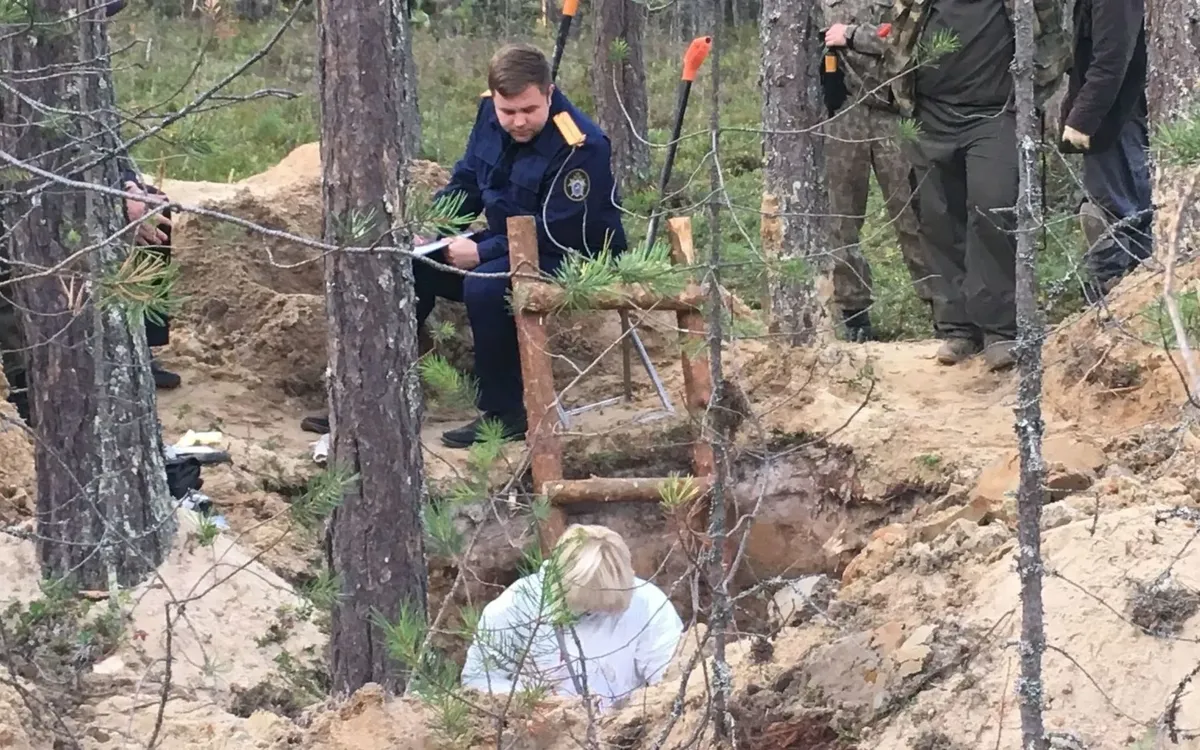
The explanation of their perseverance was unexpectedly discovered this year: the memory of the victims of the Stalinist repressions “is actively used by a number of countries in the destructive information and propaganda actions in the field of historical consciousness,” and “speculation around the tract ... will harm the international image of Russia” and consolidate “anti-government forces”. As Novye already wrote, such a letter was accidentally lit up in his folder by the head of the expedition and RVIO employee Sergey Barinov, when he agreed to show reporting documents to reporters. Therefore, now the military-historians will dug a sanarmoch, until, finally, they will prove that the victims of the Stalinist terror, but the Red Army are buried there. And that the executioners were not employees of the NKVD, but the Finnish invaders.
Recall that last year, diggers in three days removed five bodies, bullets and sleeves out of the ground. And then the press conferences were convened twice to announce: the remains of military overcoats were found on the skeletons, which were worn by Soviet prisoners of war, and bullets and sleeves relate to the weapons that the Finns used. But experts did not find signs of overcoats, and ammunition could rather be associated with the NKVD than with the Finnish army.
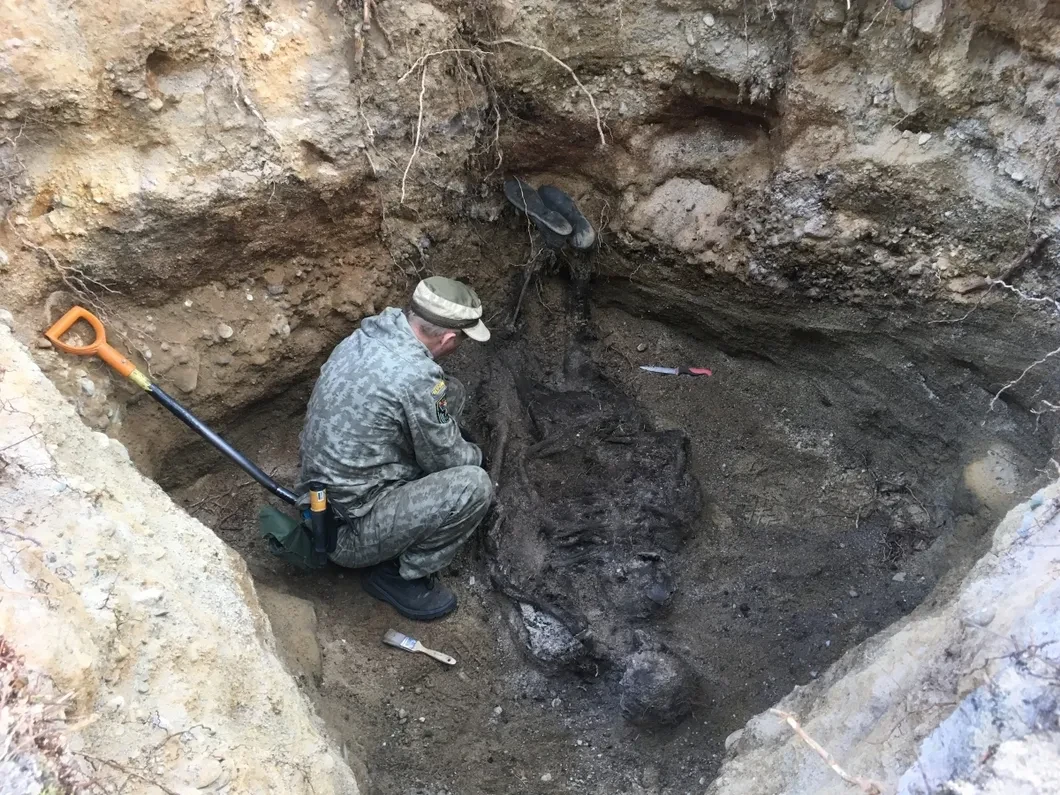
The current excavations lasted 9 days - from morning to dusk. Diggers dug pits in the very center of the memorial. We took out 16 tel. At the feet of the dead, shoes with the remnants of rubber, very similar to home -made galoshes, guessed. Diggers nodded with satisfaction: "Dike not camps." And they explained that the prisoners of the Soviet camps could not have home-made galoshes from something similar to car tires. Having discovered a number of journalists, they hastily added: "Presumably." And they continued to rejoice at the finds.
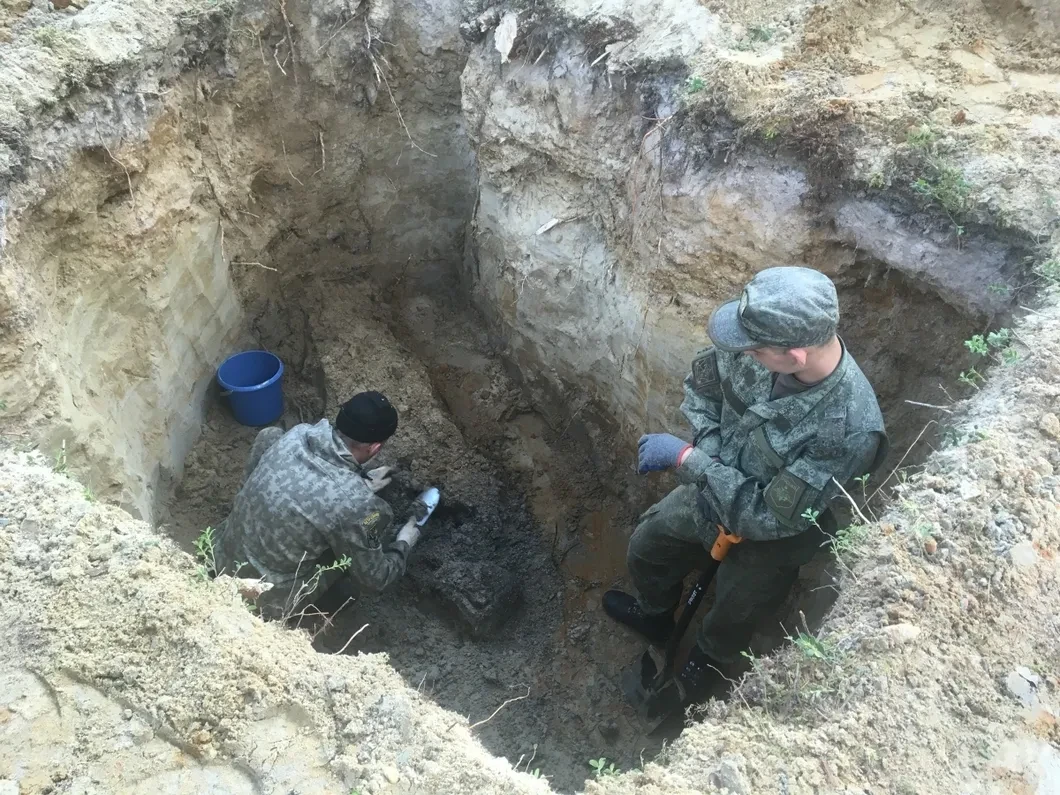
The trouble is that, although diggers are trying to replace the Soviet repressions with Finnish, they own a question weakly. Like a year ago, these historians demonstrate bad knowledge of history. Therefore, let's go from the excavations.
Alexander Solzhenitsyn, “One Day of Ivan Denisovich”: “Shukhov looked in different orders with shoes for eight years of the seat: it happened, and at all without felt boots they walked around the winter, and they didn’t see those shoes, only bast shoes (from the trunk rubber, trace of automobile)”. Homemade shoes called ChTZ (Chelyabinsk Tractor Plant) are described by Elinor Lippner, who spent 11 years in the Stalin camps: “They were made of slightly broken felt and a stuck burden. High and wide shinners reached the knees, and below the noses and heels were sheathed with oilcloth or dermatin. The sole - three pieces of the old car tire. " Well, this is so, educational program for historians from RVIO.
In the dumps from the holes where the bodies were found, bullets and sleeves were found with the help of metal detectors. On some sleeves, the marking was clearly read: “45 ASR REM”. “American! - solemnly announced Barinov. “Remington.” He looked at me and carefully said: "Presumably."
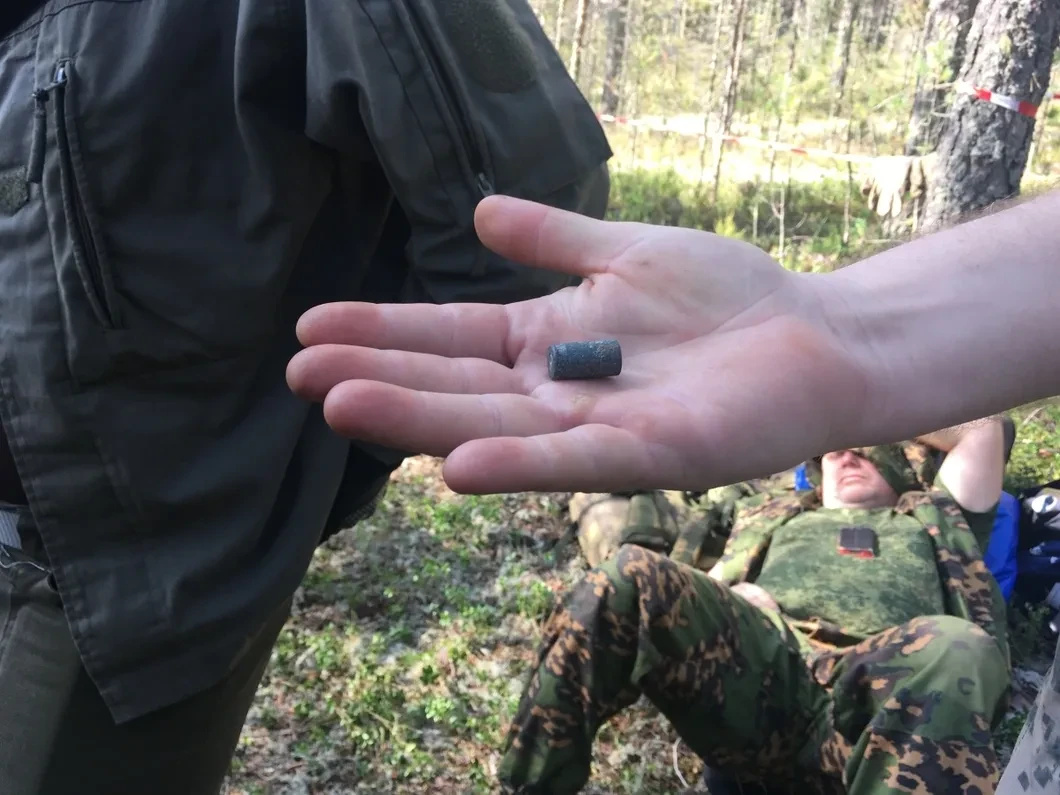
And again let's go aside. Thus, cartridges were marked, under which several varieties of weapons were made. The most popular variety were the long -barrel pistols of the truly American Colt and Remington factories, produced at the beginning of the 20th century. The magazine "Weapons and Hunting" (April 2008) wrote about the purchase of such weapons by the Russian army during the First World War. American sources report the supply of 12,977 pistols “Colt” M1911 in the USSR during the Second World War on Lend-Lease. The Germans were also trophy "colts". The Finns could well have. In the Karelian forests, from which they just did not shoot, and next to the current Sandarmokh completely passed the front line.
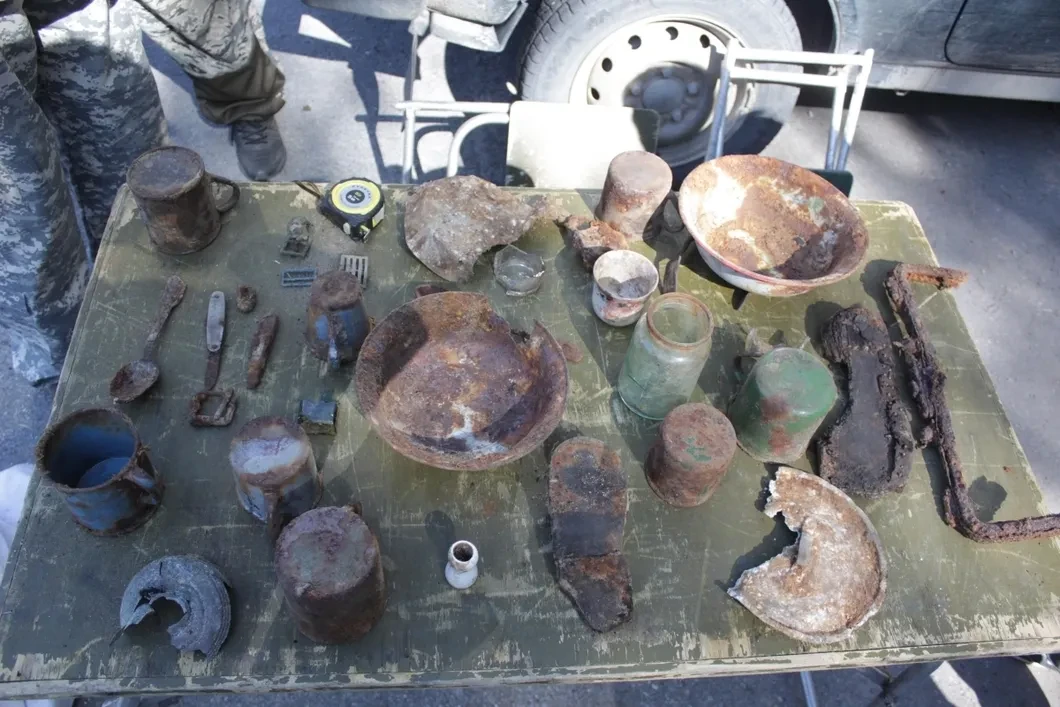
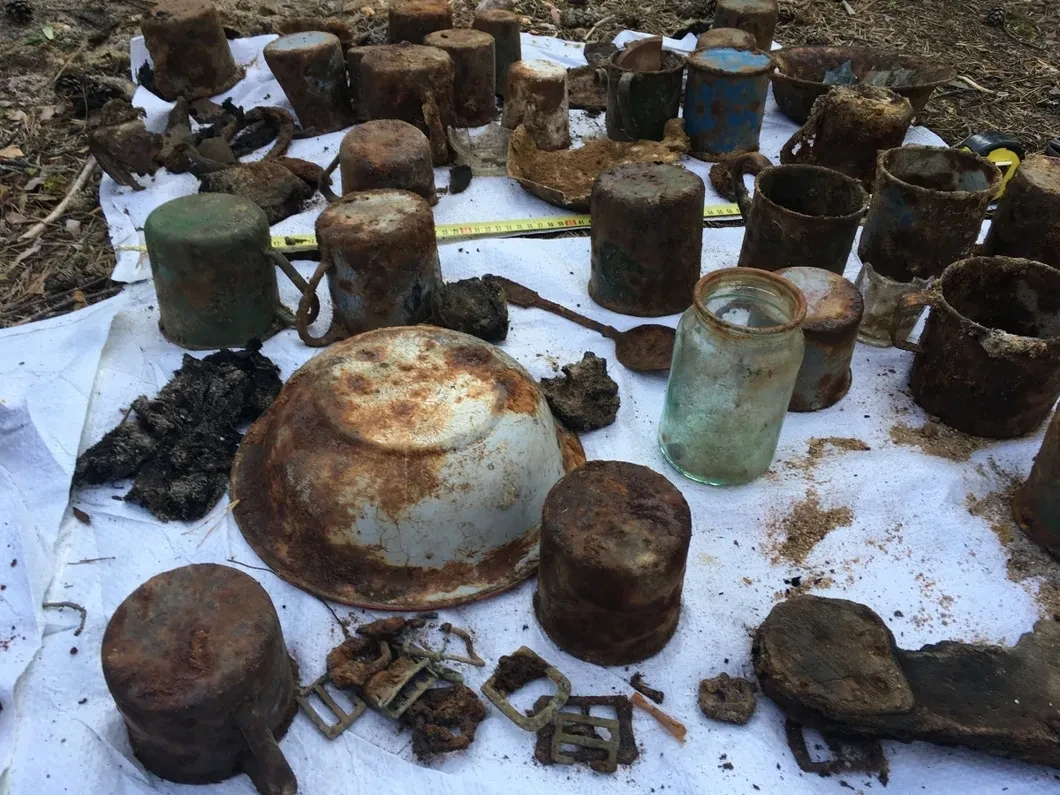
The metal detector howled very persistently from the search engines right at the very path in the middle of the tract. They lifted the turf - and at a depth of less than half a meter they found a whole treasure: rusty metal mugs, rough cups made on the pottery, fragments and whole cans with labeling, and other utensils.
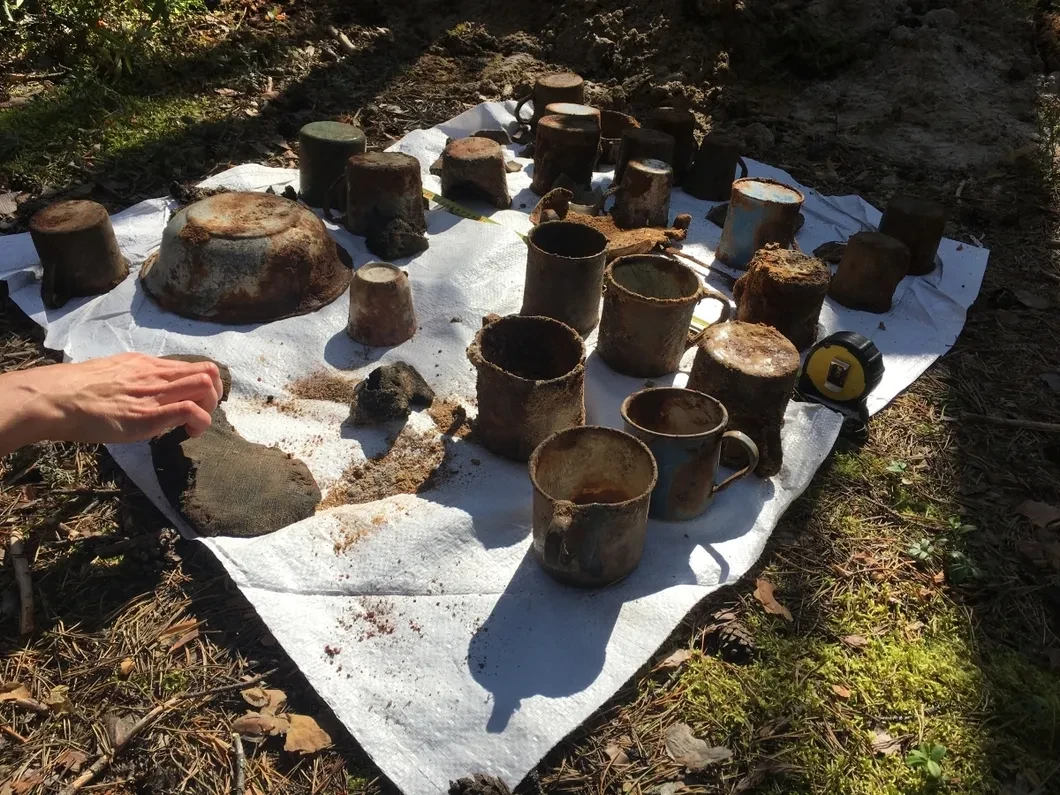
Glasses with bifocal lenses, which belonged to a middle -aged person. The button with the coat of arms of the Grand Duchy of Finnish: the two -headed eagle of the Russian Empire, and on his belly - a lion. Such buttons wore civil servants in Finland until 1918. Soviet coins of the 1930s. Metal buckles, pieces of iron, similar to handles of bags and corners of suitcases. All this, I repeat, lay completely shallow, as if a once thrown out a bunch of garbage was overgrown with turf.
Two finds were especially delighted with diggers: strongly rustled pieces of iron, in which a safe razor and a folding knife were guessed. “It’s definitely not camps,” diggers rejoiced again. "Where did the camps have knives and razors from?" Another knife, strikingly well -preserved and open, suddenly arose among finds when the hole was already reclaimed. I asked Barinov how and where he came from. He assured that just from the excavation.
Since the captive Red Army soldiers were also unlikely to be allowed to keep knives with them, the search engines had a new version on the move: yes, things belonged to civilian, but the Finns were still shot. It was they who took civilians directly from the house with things and drove to kill.
And again I will have to break away from the excavations. In the book “Web of the Great Terror” Anne Appelbaum is the memory of a prisoner who was sent with a stage from Solovkov. This was one of those stages that were taken to executions by order of Yezhov of July 30, 1937. “At the end of October, all the inhabitants of the open cameras of the Kremlin were unexpectedly expelled ( meaning the Solovetsky Kremlin. - I. t .) For general verification. At the verification, we read out a huge list - several hundred surnames - sent to the stage. The training period is two hours. Collection on the same area. The terrible bustle began. Some fled to lay things, others - to say goodbye to friends ... From the insulators they brought the columns of prisoners with suitcases and backpacks ... "
And further: "There is evidence that some took with them knives and before the execution in the tract of Sanddormokh in Northern Karelia."
Recently, "New" published the history of Elizabeth Delibash. In 1937, her mother, Nina Delibash, came to her husband in the camp and got a job there. She had a room in the hut, it was not forbidden to have, for example, knives, for example, by civilian. At the same time, Nina Delibash was shot at the same time by the Solovetsky stage, about which the Appelbaum writes.
However, the diggers from the RVI, apparently, realized the futility of these finds in terms of searching for the Red Army. And another story is not interested in them. All 427 items left for bags and brought to the Medvezhyegorsky Museum of Local Lore. There, 38 pieces were recognized as valuable exhibits, the rest was returned to the diggers. Where rusty pieces of iron dug in Sandarmokh will go further is unknown.
The fate of the remains raised in Sandarmokh a year ago remained a mystery. The examinations did not confirm the version of the Red Army, and now these skeletons are in the storage of the Medvezhyegorsky investigation as an uncertain thing for anyone. Although, probably, at first RVIO had some plans for their account.
To bury the Red Army
As Novye already wrote, before the start of the expedition, the RVIO sent a request to the investigation department of the UK in the Medvezhyegorsky district on the issuance of the remains of five people found in Sandarmokh in August 2018. The head of the department, the captain of Justice Anatoly Anisimov, replied that all examinations have been completed, no investigative actions are no longer supposed to be given the rest for the burial. And the whole question was how the procedure would be furnished: is there enough RVIO of arrogance to declare those killed by the Red Army, despite the lack of evidence? The intrigue stretched to the very end of the expedition.
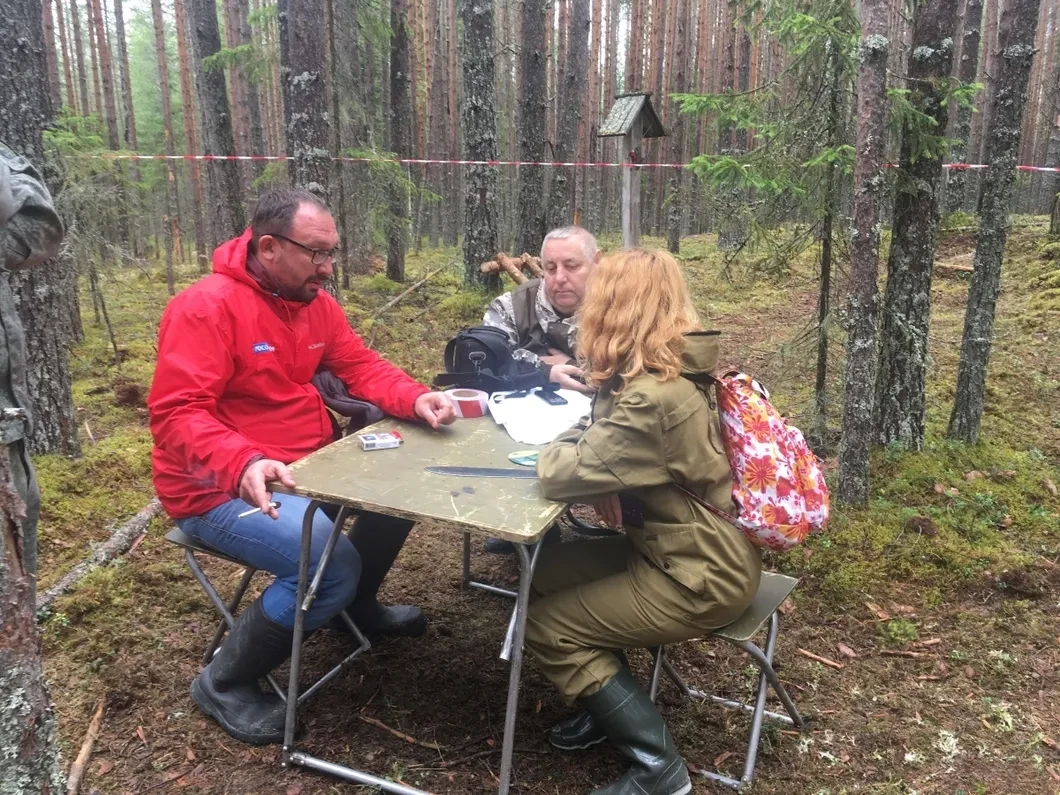
On the last day of excavations, the Minister of Culture of Karelia Alexei Lesonen came to Sandarmokh. He is the head of the local branch of the RVIO. It was precisely that his department was the same letter - about the memory of victims of repression as speculation, spoiling the image of Russia, and a destructive propaganda action. The Minister and I took place a very long, but fascinating dialogue.
- When is the burial of the remains found last year planned?
- Now I can’t say anything specific in the dates. If I had information, I would tell you.
-Why then did the military-historical society send a request for their issuance?
- I can't say the exact date.
- Name at least a period of time.
- I do not want to make a mistake. The question is scrupulous. Any comments on my part, which will not be confirmed later, will be perceived as a kind there ...
- What does the date depend on? The investigation is ready to give out the remains. The expedition is still here, the soldiers too - there is someone to dig holes.
-I will bring the position of RVIO at a press conference.
-Will it turn out that even before the press conference, they will dig quietly?
-You ask some questions ... no one will quietly bury them.
- And how will you bury them? How are the Red Army, executed by the Finns, or as the victims of the Stalinist repressions?
-Let's still at a press conference, the Investigative Committee will give all conclusions ...
-The Investigative Committee has already given all conclusions to the military-historical society and confirmed this to us.
-Ask in a military-historical society.
“Don't you have a relationship with him?”
- I have. But let's cover this question at a press conference.
- What prevents you from illuminating it now? How do you bury these people? How are the Red Army?
- I now have no information in what format we will bury these remains. I have no understanding yet.
- What factors will this format depend on - when, in what quality? What are the options if the bodies are found at the burial site of the victims of the Stalinist repressions - and nothing confirmed that it could be the Red Army?
- Well ... you ask strange questions ... Naturally, not like the Red Army, because there is no confirmation.
Taking advantage of the advice of the Karelian Minister, I turned to a military-historical society, to his head branch in Moscow. The press secretary of the company Nadezhda Usmanova promised the "new" that if the burial ceremony takes place, then the public will be known about it in advance. But actually, she said, the burial of the remains-outside the competence of the RVIO, local authorities should do this. It turns out that they should now pick up the bones raised by diggers, and put it back in the ground. Why then the request was sent by RVIO - it is not clear.
The head of the Medvezhyegorsky district, Sergei Yalyaev, was very surprised to learn that he had to organize a funeral in Sandarmokh. Nobody warned him about this.
If you go from Sandarmokh to Medvezhyegorsk, the old -timers will show the forest to the right of the highway, where hundreds of Red Army soldiers are lying in the ground. They died in battles for their homeland. Their remains must be raised, installed and reburied with honors. But these soldiers are apparently uninteresting to the military-historical society. It is more interesting for military historians to dig the history of Sandarmokh.
"Destructive propaganda action"
I will not get tired of quoting these words from a letter from the minister of the Minister of Lesonenen to the RVIO, which are called the days of memory of those killed in Sandarmokh. In parallel with the expedition, an action was deployed on the territory of the memorial, which, apparently, diggers consider constructive. This is not only the excavations themselves, but also the PR works organized by the RVI, taking into account the failures of the last year.
Let me remind you that, unlike last year, this time in Sandarmokh the military-historians came secretly. Now journalists learned about the beginning of excavations post -facts. Only on the second day, the St. Petersburg Memorial, then “New” managed to come to Medvezhyegorsk.
But from the first waves of the shovel, the Russia 24 TV channel was present, its employees landed in Sandarmokh along with diggers.
“Yesterday they raised three bodies - the boots on them are definitely army,” the channel employee confidently informed me.
He introduced himself: Stanislav Bernwald. I remembered: it was like that was the name of the correspondent who told the world about how he was beaten by Russophobes in Tbilisi during recent events. I did not have time to ask about Russophobes, because a colleague from the Memorial came up. Bernwald gave a sign to the operator and began to deliberately loudly, squinting at the camera to shout to the girl: why is she lying, as if RVIO tells everyone about army boots, there was no talk of any boots.
“Didn't you tell me about the same boots?” - I was surprised.
So that only the “right” journalists remain on the spot, diggers sent the police at me. Barinov had to figure out that an American citizen was spying in the Karelian forest - and then explain with the district police officer, which is why the citizen has a Russian passport. Fortunately, the police in Medvezhyegorsk were surprisingly adequate, they simply refused to remove us from excavations. After the next call, the girls from the Memorial signed explanations and asked the district police officer what to add at the end. “Add that they are rams,” the policeman muttered evilly, who was tired of waving stupid challenges.
People in Medvezhyegorsk are very different, but the excavations do not like everyone I spoke to. Tourists who rode in Sandarmokh purposefully, and completely opened their mouths, seeing diggers. But Nadezhda came from Sochi simply to his niece. She dragged aunt in Sandarmokh, and Aunt all this was not very interesting, she sat next to me on a bench. We talked about the fact that yesterday at sunset over the Onega Lake, the sun was huge and red. Suddenly, the employees of the Russia 24 television channel grew up five meters.
Bernwald, beaten by Russophobes, screamed into the cell that liberals arrived in Sandarmokh and set up the local population against excavations, they did not like their homeland at all.
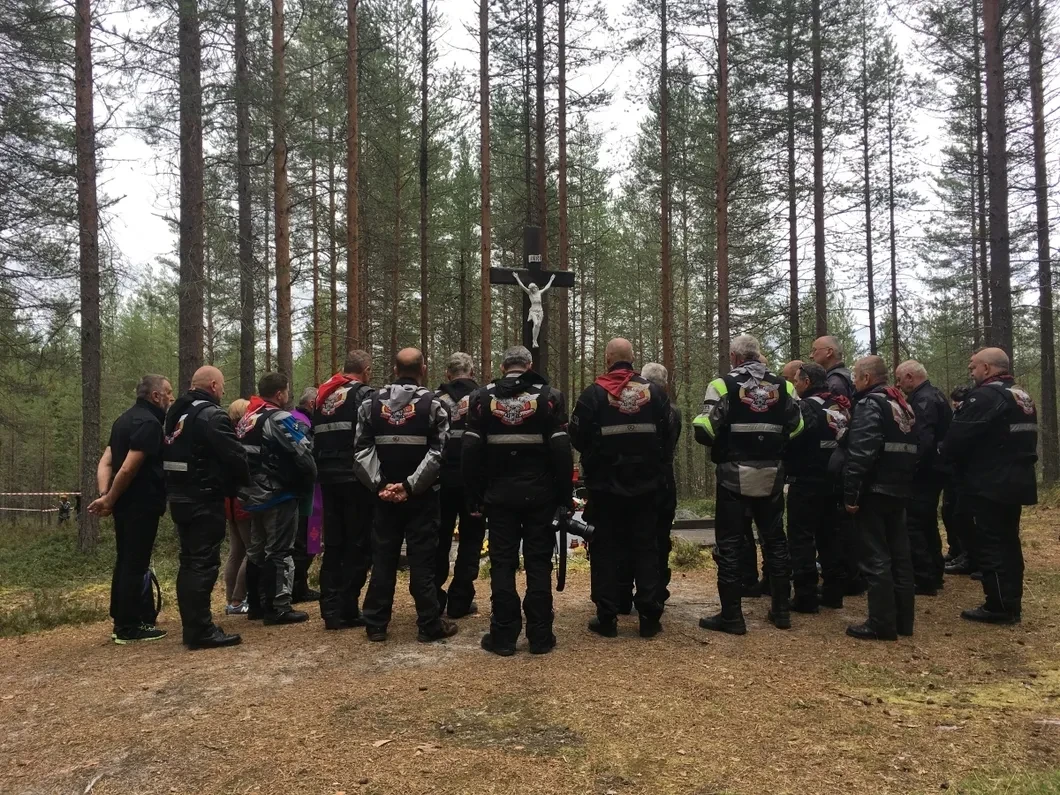
Then bikers from Poland arrived, they had on their jackets, the Katinsky raid stripes were on their jackets. The biker gave me one such sticker. I stood and told him about Sandarmokh in English when I saw the television camera again out of the corner of my eye. “Now they will say that exactly an American spy,” I thought.
For some time the channel was not visible. But suddenly I heard Bernwald's loud cry, turned around - he was seeding next to a thin gloomy girl, aiming a smartphone camera on her. The girl walked silently and tried to obscure from the camera.
“I went to the search engines and asked me to tell you why they dug up that hole,” the girl later told me. - Suddenly this man ran up and said that he knew everything here, was present everywhere and now he would explain everything to me. I saw him “Russia 24” strip and asked how much the telecorrhevers were authorized to comment on excavations. He waved his hands, called the operator and began to ask some questions. I poked my microphone right in the face. I said that I do not want to talk, and demanded not to shoot me. Then he took out the phone, began to shoot him. I shouted that I seemed to be obscenely expressed ...
It seems to me that I did not express it at all, because I was just stunned. Then he already ran next to me, shot a telephone and asked how much I sold Russia ...
It was Katya - the daughter of Yuri Dmitriev, who opened, if anyone does not know, Sandarmokh. But how did the employee know how to know this? The other day, state television will show the correct and constructive story about excavations in the tract.
And at the end of the excavations in Sandarmokh, especially valuable guests came down. Professor of Petrozavodsk State University, Doctor of Historical Sciences Sergey Verigin, the author of the version of prisoners of the Red Army, arrived with Karelian journalist Armas Mashin. Together, they wrote a book: in the first part, the scientist sets out his hypothesis, in the second journalist, as the “new” cars told, analyzes critical publications about it. As it is analyzing - this is not yet recognized, because they published the book in Finnish. They say the Finns were really asked.
One of the Finns, who, apparently asking for such a book, came to Sandarmokh along with the authors. This is the famous human rights activist Johan Bekman. The one who told the world about a high level of crime in Finland is higher than in Russia, convicted “juvenile justice” in the West and stayed in the Crimea in a referendum, then to announce how impeccable the procedure for the will of Crimeans was. Now this honest man will tell the truth about Sandarmokh.