
Translated material
Trump adviser to National Security John Bolton is going to meet with Lukashenko. Oh, how this might not like Russia
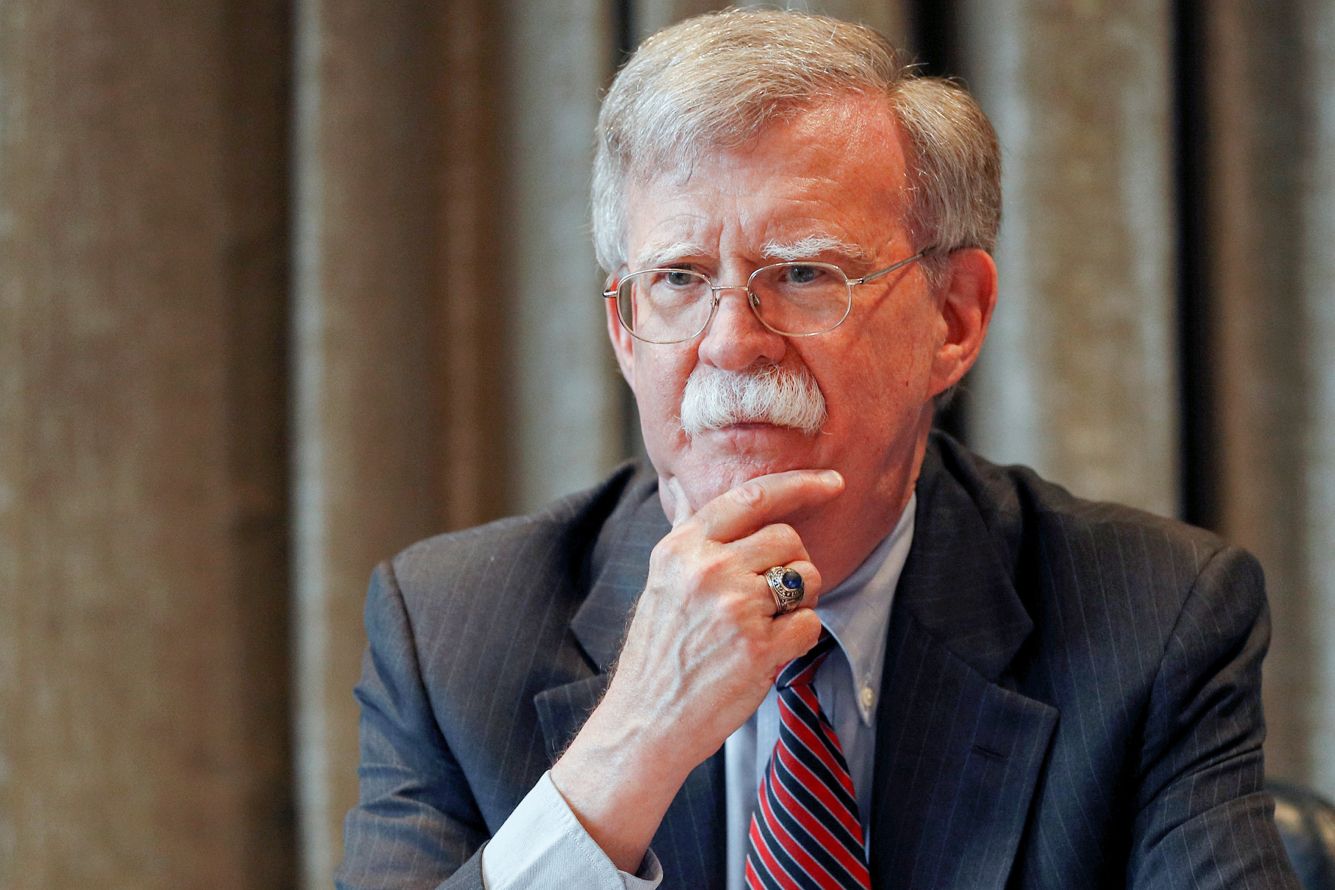
Advisor to US President Donald Trump on National Security John Boltonplans a visit to Belarus. This was reported in the administration of Alexander Lukashenko. It is still unknown exactly when their meeting will take place, but it is assumed that no later than Thursday, August 29. Bolton will become the highest -ranking American official who will visit Belarus in recent decades. The leaders of this country are under American sanctions for a long time, but after the accession of Crimea, relations with the West began to gradually improve - especially against the backdrop of rumors that Russia wants to join Belarus.
Now John Bolton is perhaps the main person in American foreign policy. And he has a reputation "Hawk"
John Bolton became Trump's adviser in March 2018. A veteran of American foreign policy, he has a reputation as a “hawk”, which advocates the most stringent methods for solving international problems. In particular, he prepared an invasion of Iraq and the overthrow of Saddam Hussein in 2003. For a year and a half, he significantly strengthened his position in the administration of Trump and, to this day, became , perhaps, the most influential person in it. He is close to the traditional republican political establishment, and this is his important advantage over Trump's relatives and business partners.
The sharp tightening of the US policy towards Iran in 2019, with a high probability, is associated precisely with the position of Bolton, which is traditionally configured by anti -Iranian. True, the forecasts that the national security adviser will eventually literally force Trump to start the war until they were justified.
Bolton is also considered a supporter of a tough line in relation to Russia. On the other hand, it was he who prepared the meeting of Trump and Putin in Helsinki in the summer of 2018. The US president entrusts his adviser to visits to the most important points of the world. Now he solves not only issues related to the development of a unified international position in relation to Iran, but, for example, convinces the UK not to postpone the exit from the EU, even if it is fraught with economic difficulties.
American-Belarusian relations deteriorated for a very long time. In the United States, Lukashenko was called the "pillar of tyranny" and "the last dictator of Europe"
In the first years of the reign of Alexander Lukashenko, who came to power in 1994, his relationship with the United States was slightly different from those that other post -Soviet leaders had. Already in 1995, Lukashenko made a visit to the United States - despite the fact that he quickly began an attack on a democratic opposition (as, indeed, many other presidents of the countries of the former USSR). True, the next year, the American authorities did not recognize the results of the Belarusian referendum, which sharply expanded the presidential powers.
A real exacerbation of bilateral relations was during the period of stay in the power of George Bush Jr.-the last president-republican to Trump. The US authorities accused Lukashenko of persecution of opposition, human rights activists and independent journalists, as well as laundering the money of Iraqi dictator Saddam Hussein. In 2004, the US Congress unanimously adopted the “Act of Democracy in Belarus”, which contained the requirements to release political prisoners, to disclose information about the fate of the missing opponents of the regime and hold free elections. Before the fulfillment of these conditions, any financial assistance to Belarus was frozen. Lukashenko called this law “stupid pressure” and stated that the US authorities themselves provide him with evidence of the conspiracy of his enemies.
The then Secretary of State of the USA Condoliza Rice ranked Belarus to the "Pillars of tyranny" - along with Cuba, Myanmar and Zimbabwe. The President of Belarus, who began to be called the "last dictator of Europe", as well as many representatives of his immediate environment, were included in American sanctions lists. At the end of the presidency of Bush Jr., ambassadors in both countries left them .
Some warming of relations began under Baraka Obama - an important signal for this was the consent of the Belarusian authorities to abandon the remnants of a highly enriched uranium, which the then Minister of Foreign Affairs of Belarus Sergei Martynov expressed at a meeting with Secretary of State Hillary Clinton. At that time, the US Congress delegation visited Minsk. However, the warming began sharply broke off after the Belarusian security forces harshly suppressed the opposition’s performances in 2010. American sanctions were strengthened, and relations were actually frozen.
The situation began to change again after Russia annexed Crimea in 2014, and Alexander Lukashenko took on the role of the receiving party during negotiations on the settlement of the conflict in the Donbass. Although the American authorities continued to criticize the Belarusian president for human rights violations, the contacts between the two countries have become closer. In October 2018, Belarus was visited by the assistant to the head of the US State Department for Europe and Eurasia, Wess Mitchell, and before Bolton, he was the most high -ranking American official who came to this country in more than a decade.
Bolton’s visit was preceded by rumors: Trump wants to return Russia to the “Big Seven”, and Putin - to attach Belarus
At the end of 2018, the relations of Russia and Belarus worsened sharply. The reason was the decision of the Russian authorities to increase the price of oil for Belarusian oil refineries, which is why the Belarusian budget may lose an important revenue. Even then, many experts were looking for a political component in an economic dispute. It was said that the Russian leadership requires “advanced integration” - the creation of a single currency, court, the Accounts Chamber and Customs, and unification of the tax policy. And everything should end with the full reunion of the two countries. As Bloomberg noted , this, in turn, would allow Vladimir Putin to remain in power after 2024 without violating the current Russian constitution. At the same time, Lukashenko rejected the very possibility of such a development of events.
On April 19, Belarus announced an accident at the Mozyr refinery due to the oil-winged chlorganica party received at the Party. The reason is the entry of polluted raw materials into the Druzhba oil pipeline on Russian territory. Only on June 10, the oil pipeline resumed the work, and the “spoiled” oil continued to find there further, and the Belarusian operator of the Druzhba oil pipeline, the company Gomeltransneft Friendship, accused Transneft of preventing the creation of a joint system for monitoring the quality of raw materials.
Against such a background, just a few days before Bolton’s planned visit, information appeared that the Belarusian authorities plan to purchase oil in the United States. To do this, it is necessary to achieve the removal or at least weakening of sanctions. In addition, experts doubt that such a deal is economically advisable. But neither one nor the other stopped the government of Belarus, which, according to Radio Liberty, hired the lobbyist David Jencarelli to promote the transaction. Considering that one of Trump’s European politics is one of the priorities - to ensure that the European raw materials are purchased instead of Russian - the intention of Belarus looks like a curtsy towards the United States.
The Foreign Policy magazine, which was one of the first to announce the upcoming visit of Bolton to Minsk, has no doubt that he will cause great irritation in Moscow, which considers Belarus exclusively as a sphere of influence. This can be perceived as a signal - the United States support Lukashenko in his desire to maintain the independence of his country. An additional context of the visit creates that Bolton will visit Belarus after a trip to Ukraine, once again demonstrating that the post -Soviet space remains in the field of US interests and under the Trump administration.
True, Foreign Policy sees Bolton's visit a testimony of friction surrounded by Trump. On the eve of the Great Seven summit, the US president at the end of last week proposed restoring Russia's membership in this group and even, according to The Guardian, quarreled because of this with other G7 leaders. Representatives of his administration, meanwhile, continue to lead a tough line against Moscow.
However, Bolton’s trip can also be considered part of the policy of Trump himself: he quite often provokes other Western countries with statements on relations with Russia, but does not reduce pressure on Moscow. From this point of view, Bolton’s visit to Belarus is quite logical - and Russia is really unlikely to appeal.
Dmitry Kartsev