
Translated material
“To the stars” of James Gray: too serious and archaic film with Brad Pitt as an astronaut
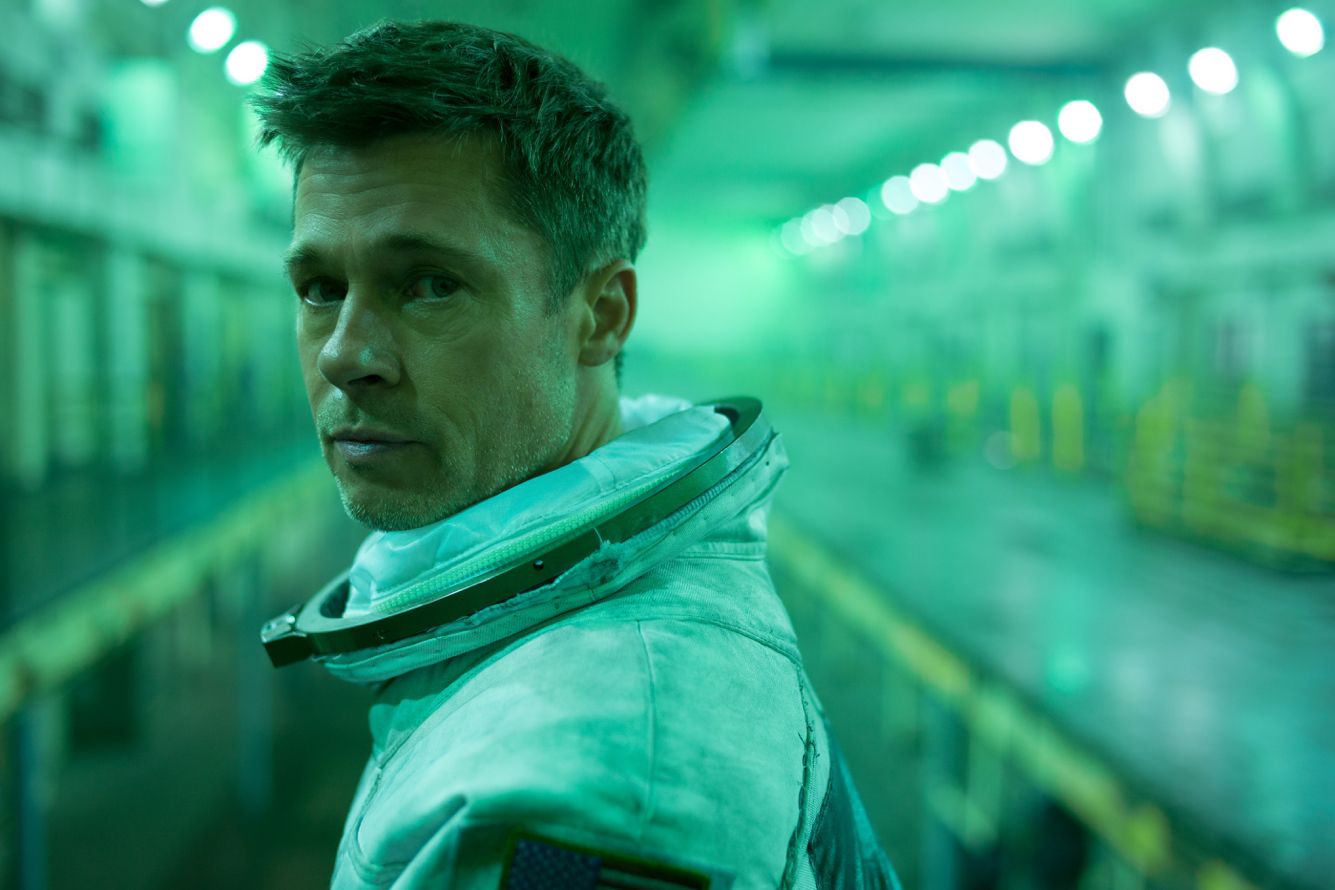
On August 29, the premiere of James Gray’s fantastic film “To the Stars” was held at the Venice Film Festival, the main role in which was played by Brad Pitt. His hero goes into space to save the Galaxy from the disaster. A father who flew to Neptune 30 years ago (Tommy Lee Jones) should help with the mission. The film critic "Medusa" Anton Dolin tells why the "film about real men" turned out to be archaic and disappointing.
In the future, land and humanity are facing destruction (what, again? Yes, again!), This time from powerful energy storms that covered the galaxy. Fortunately, there is Roy McBride (Brad Pitt), a fearless astronaut whose pulse never exceeds the norm. It is sent to the very edge of the solar system - either to find out about the causes of the disaster, or to prevent it. The key to solving the problem is Clifford McBride, another legend and part -time Father Roy. He was sure that Clifford had long been no living; It turns out that his mission was simply classified. Clifford flew to Neptune to find an alien mind. Maybe he will help us? Of course, if Roye manages to get in touch with his father, who in thirty years in orbit, apparently, went the roof.
From this, a pretty decent “Armageddon” could have turned out - especially since Liv Tyler plays the role of a rivery girlfriend. But it would take Aerosmith songs or some kind of vulgar group, a Russian astronaut in a Ushanka and a fair amount of humor, who, unlike Michael Bay, is completely deprived of James Gray, the director of the film with the pompous name “To the stars”: the original is written in Latin-“Ad Astra”, because it is part of the considerable expression "Through thorns to the stars." For Gray Odyssey Roy, the absolutely serious Yungian-Freudian plot, and the cosmic surroundings to it were added only for decorative attractiveness. We can say that science fiction plays the role of a kind of autopilot. From time to time, the hero hibernates or plunges into reflection so deeply that he does not see or hear anything, and the ship continues to go along the course, and the plot as if moves its turn.
Gray, who has earned cult fame - but rather among critics than the audience, and rather in Europe than in his native states - claims to be the image of a modern Scorsese (this is evidenced by his puffed dramas “Little Odessa”, “Yardy” and “The owners of the night”), or Hertzoga (“Lost City Z”). Sometimes it is brought into the territory less brutal and more romantic (“lovers”, “fatal passion”), but he invariably returns to the origins: films about the so -called real men. But - or that is why - actors adore it. He was played by the best of the best: Tim mouth, Charlie Hannem, Robert Pattinson, Mark Walberg (twice), Joaquin Phoenix (four times!). So it is hardly surprised that Brad Pitt immediately agreed to the main role in the new picture - and received almost monofilm. His dramatic structure comes down to the fact that the hero meets with insignificant opponents or interlocutors, and then again dramatically enjoys cosmic loneliness, looking beautifully past the camera. The second -plan roles went to the previous generation supermarys - Donald Suserland and Tommy Lee Jones.
We must pay tribute to Gray: he is a perfectionist who is unusually carefully working on each frame and gluing. The non -stop perfection of the image, speaking in truth, begins to bore to the finale, although the operator Hoite Van Hoytem deserves a long -term ovation (however, he has already done something similar in Interstellar). But the absurdity of the directorial intonation, which sounds in each replica of rudimentary-improving dialogues-and especially in a sunbeam, reminiscent of a bad copy of the late Terrence Malik-does not allow to enjoy visual images. When the heroes are silent, weary of their own dramas, Max Richter's music begins to fry - so much so that at least shut your ears. “To the stars” would be much better if the sound in it was disconnected at all: they say that in space it is very quiet.
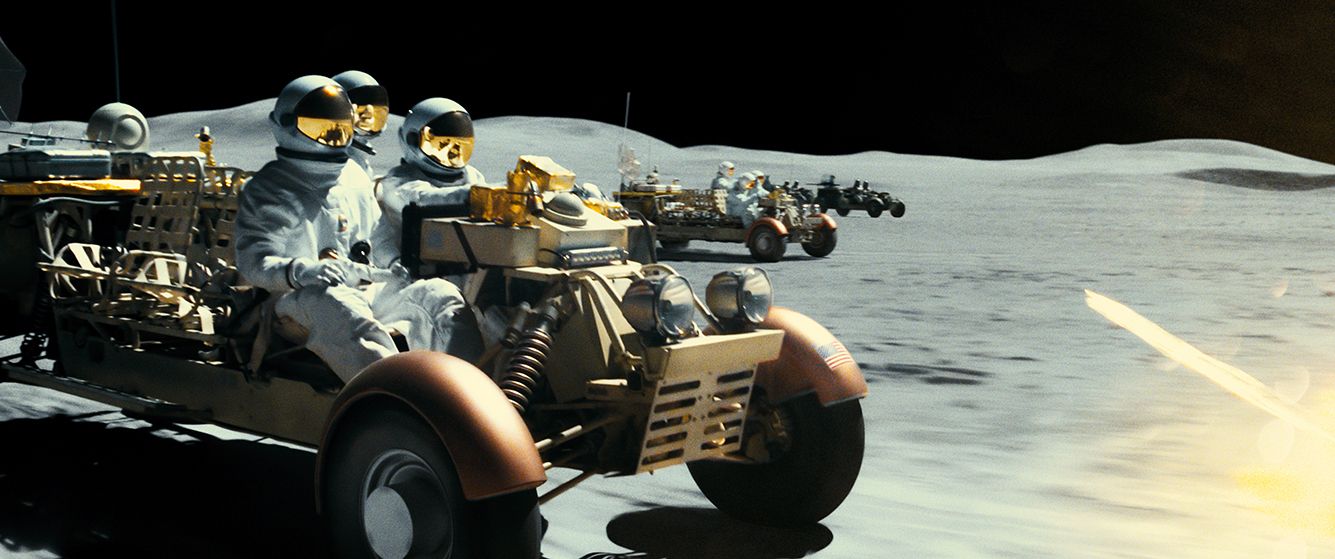
The banality of the ideas on which the picture is being built is going through. You do not believe yourself when you realize that in front of you is the stomillion variation of the “heart of darkness”, that the Father is a kind of version of the sleeping God, and the son should grow up, having met with him, and symbolically deal with him. It remains to enjoy a few plot surprises. For example, along the way, Roy’s ship accepts the SOS signal from the Norwegian spaceship, where the hero suddenly encounters ... However, we can do without a spoiler, only hinting that the quote from the “Cosmic Odyssey” is hinted here.
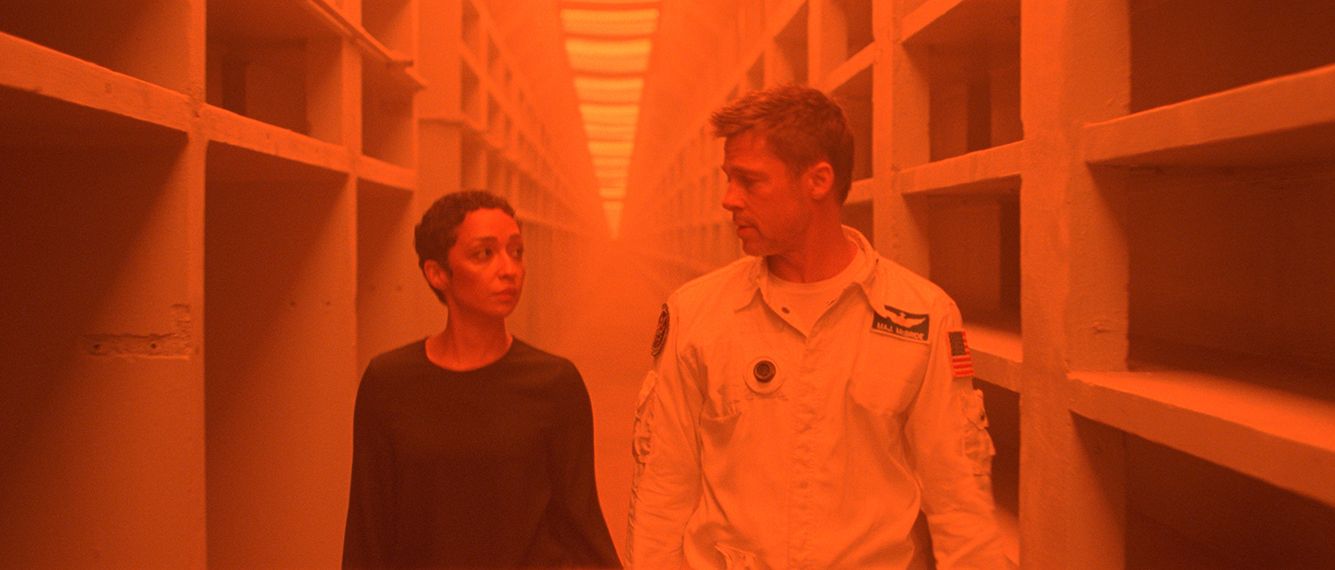
“To the stars” is a film about the future, but it makes an incredibly archaic impression, with all the technological advancedness. It is based exclusively of the problems of white men, their suffering about their uselessness, the verbalization and implementation of adolescence complexes, and the measurement of their own ego. The attempt by James Gray somehow looks like to somehow overcome this: as if through power, he inserts a black heroine (Ruth Negg) into an intrigue, who suddenly rushes to help Roya, for the sake of risking his career and security, and then disappears without a trace. Look at it awkward.
Almost simultaneously with Gray’s picture, the premiere of the new cartoon Konstantin Bronzita “He cannot live without space” (not to be confused with almost the same name “We cannot live without space”, with which the current film is a dilius). Brilliant and heartbreaking work, which was 15 minutes, is the story of a boy who was born in a spacesuit and dreamed of escaping from a single mother into space all his life-about the same as his father once escaped. Gray tells the same fairy tale, only mothers are not in her. At some point, Roy and Clifford are even connected by one space cable as an umbilical cable; Not so much a father and a son, but two eternal babies, thrown into the airless weightlessness of the infantiles who "cannot live without space." It is similar to his characters and Gray, who sincerely seems that he reached the edge of the universe-but in fact, his entire cosmos is limited by the foggy helmet of the spacesuit, where oxygen is about to end.
Anton Dolin