
Translated material
“Before my eyes is the street. Each house has a coffin cover "
15 years ago, terrorists captured school No. 1 in Beslan. We talked with journalists who illuminated the terrorist attack
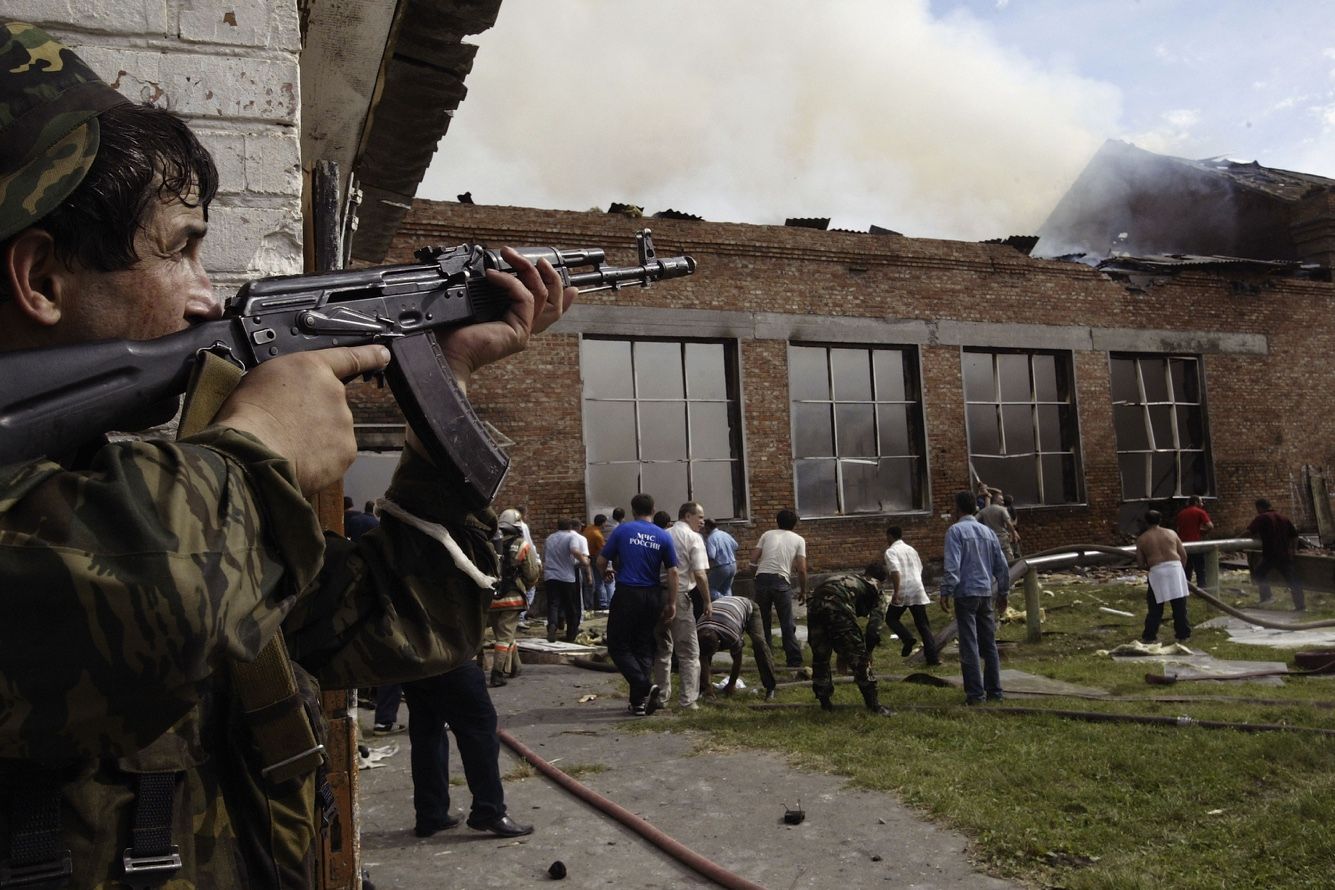
On September 1, 2004, terrorists captured school No. 1 in Beslan. For two and a half days, terrorists held 1128 hostages in a mined building - children, their parents, and school staff. As a result of the attack, which became one of the largest in the history of Russia, 333 people were killed, 783 were injured. All these days, Russian and foreign journalists worked at the scene - the terrorist attack in Beslan became one of the tragedies, illuminated by the press on the air. 15 years after the Medusa terrorist attack, she talked about Beslan with reporters who worked there during the capture of the school.
This material was first published in 2019.
Madina Shavlokhov
In 2004 - journalist "country.ru"
The information that terrorists are going to commit an attack in North Ossetia was already in August. This was reported to me by the former military who were in Chechnya. On September 1, colleagues from the [Japanese agency] NHK called me and said that according to their information, terrorists seized the school. They invited me to go to Ossetia as a producer with them. Before leaving, I contacted the republic - in one of the structures, the information confirmed the information. You know, I did not want to believe that the end could be tragic. I hoped that these were children, but no one is fighting with children, and they would be released.
The driver on the road from the Ministry of Council to Vladikavkaz began to tell what actually happened. He said not to believe the official version that the school has 120 people. According to him, this is the first school and it is the best in Beslan. Everyone knows her and everyone is trying to arrange their children there. That there are almost 950 people now - adults, friends, relatives go to school on September 1 to support children.
We drove up to the House of Culture - relatives and close hostages gathered in front of him. People rushed to each other: “What do the authorities say? Can no one go in and talk with terrorists? " Representatives of the authorities went out and repeated the same thing: negotiations are underway, hostages 124. I remember how the parents ran to the assistant to the head of the republic Lev Dzugaev and indignantly said: “Why are you lying, there are not 120 and not 300 people, there are more than 900.” The women had lists of people from school in their hands, and their number exceeded one and a half thousand. He replied that these 124 were confirmed, the rest were not. Parents asked for a meeting with the leadership of the republic, security officials, to explain what was happening to them. They were asked to calm down, as they are nervous. It didn’t fit in my head, as several dozen people took such a huge number of people hostage and where the law enforcement agencies were at that moment.
Local police officers approached us, journalists several times - they decided that among us there are people who are sympathetic to terrorists. We were almost taken to the site, but I contacted the editors, raised a noise that I won’t go anywhere, because I fulfill my duties. And if they want me to have accreditation, let them show a press center that is responsible for this.
On September 2, I with one colleague made my way to Lermontov Street, she led to school. There we accidentally stumbled upon riot police, who dispersed everyone. We managed to quietly hide behind an unfinished garage. The military man built people in uniform. His armpit was a huge Watman. He began to tell that this is a scheme according to which terrorists with hostages can come out. And if the terrorists go with the children, then they cannot be shot, and if they go with adults, then none of the criminals should leave.
In the afternoon of the same day, a rumor passed that Aushev arrived, who would go to communicate with the bandits. Indeed, he went to school and after some time returned from school with children: he was able to agree that children and mothers would be released. On September 2, there were many negotiations and conversations that the terrorists agreed to let the children go and they were about to let them go.
On September 3, in the morning we were waiting for new negotiations. Then one primary school teacher told me that they were woken up that day early in the morning and said: “We will either let you out today or kill.”
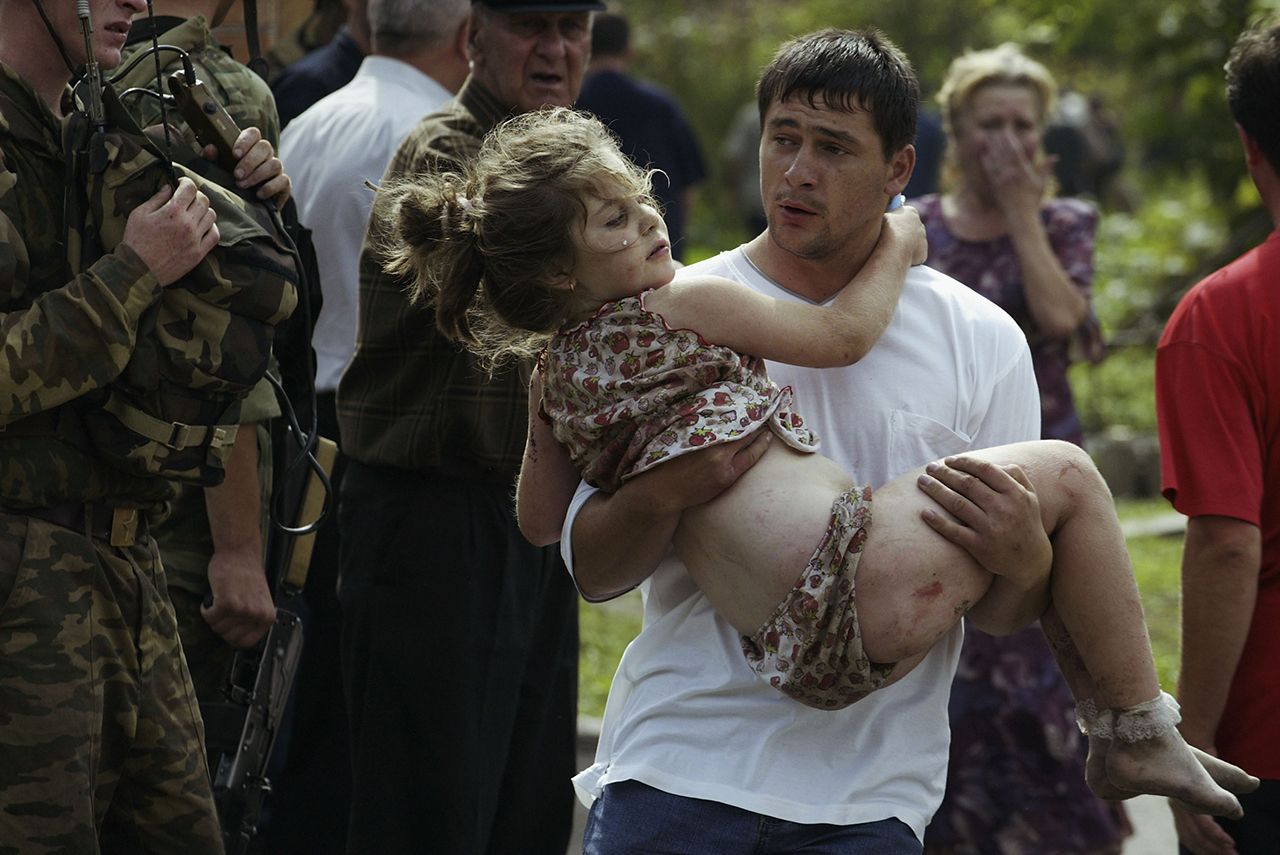
The first explosion was at 13:03. I called the Strana.ru and informed them of this. I could not fully realize how this could be, but how are the children? I saw how children in their arms, someone in the sheets, from the building. In the editorial office they asked: where are the military? She replied that they were not yet visible. After about 20 minutes, a shootout began, they began to squeeze people out of school. Adults cried and carried children. They were taken out to the house of culture, someone in passing cars was taken to the hospital. The hostages were all in the blood, frightened, exhausted.
Terrorists could not be knocked out of school for a long time. At lunch, a tank was adjusted, which shot at the school in an idle shell to make a hole in the wall of the dining room, where at that moment the hostages were. Then they will say that the shell was combat, but this is not so. I saw the dining room almost on the second day. There are others from the combat shell of destruction. And the hostages themselves then confirmed that it was a blank, not a shell. Today everyone is speculating with this topic.
We stayed there until the beginning of October and saw how we buried the dead. The street is constantly in front of my eyes. Each house has a coffin cover. Then it rained. The sky seemed to mourn with the people their grief.
Margarita Simonyan
RT editor, in 2004 - special correspondent of the Vesti program
15 years ago on September 1, we put a camera in one of the rural schools in Karachay-Cherkessia. Together with the journalists of the Kremlin pool, the president was waiting. The [Alexei] Gromov, the then spokeswoman [president], entered, and said: "There will be no Putin-they seized school here." We asked him: "What, how many people?" - “There is horror. The man seems to be 200. " At first, 200 seemed horror. We loaded into a helicopter and flew to the Ministry of Walls. They took a taxi there and went to Beslan.
The city was already cordoned off. Half an hour of calls and negotiations - and we were allowed. Inside is a heavy equipment, a lot of military, army turmoil. And the grave silence of the school. We launched cameras in the square near the school and spent three days there with relatives. All these days, shooting came from school in bursts. No one cried or shouted - neither children nor relatives.
The local policeman sheltered us for the night. His house was inside the cordoned zone, but we were passed. Everyone waited for the assault at night. There was no assault on the first or second night. On the third day - terrible explosions at school, there was no such roar these days. And immediately behind them - terrible shooting. Special missiles began, at first every 15 minutes, then a little less often. Continuous shooting from all sides, half -naked children in the blood. I squatted on the air, it was scary to straighten. My colleague Edik Bondarenko covered me with a body armor, and he was left without him.
When it ended, the city ceased to be silent: an inhuman heartbreaking howl reigned. He did not stop all week of the funeral. Never - neither before nor after - she sobbed so. We went into one yard - six coffins on stools. In another house, a naked first -grader is sitting and his sister is nearby: they have burns, they cannot be dressed. There are no parents, only the grandmother looks at the wall.
I remember how they walked along the street and saw a man. He swayed from side to side, and his face was dead. It turned out that his wife and two daughters were at school. The wife of the youngest daughter pulled out, but the elder could not. The eldest daughter was crushed by a stove. And this man - their father - did not know how to live with it.
After Beslan, I started an idiopathic urticaric: when a foot, or a brush, or eye suddenly swells completely swelling. And at night the same dream was repeated, about a burning school. There was nothing worse than Beslan, nothing was in my life.
Zurab Dvli
Journalist "Radio Liberty", in 2004 - head of the Moscow Bureau of Georgian Television Company "MZI"
As soon as the hostage seizure in Beslan occurred, they called me from Tbilisi and told me to urgently go there. I got [to the city] on September 2, since all tickets were already bought out for the 1st. Colleagues had already set up the camp by that time, there were mobile television stations, tents. I was told that there is the only hostel for the entire Beslan where you can stop. I came there, but all the beds were busy. Not knowing what to do, I asked the first taxi driver where you can stay overnight. We traveled for a long time, and then met a woman whose whose he specified something. She allowed her to stay with her, and only then it turned out that this woman was the mother of a girl who was hostage. Despite this, she showed sympathy for me. Unfortunately, I do not know the fate of her daughter. Then I settled in a family where my grandmother and granddaughter lived very poorly.
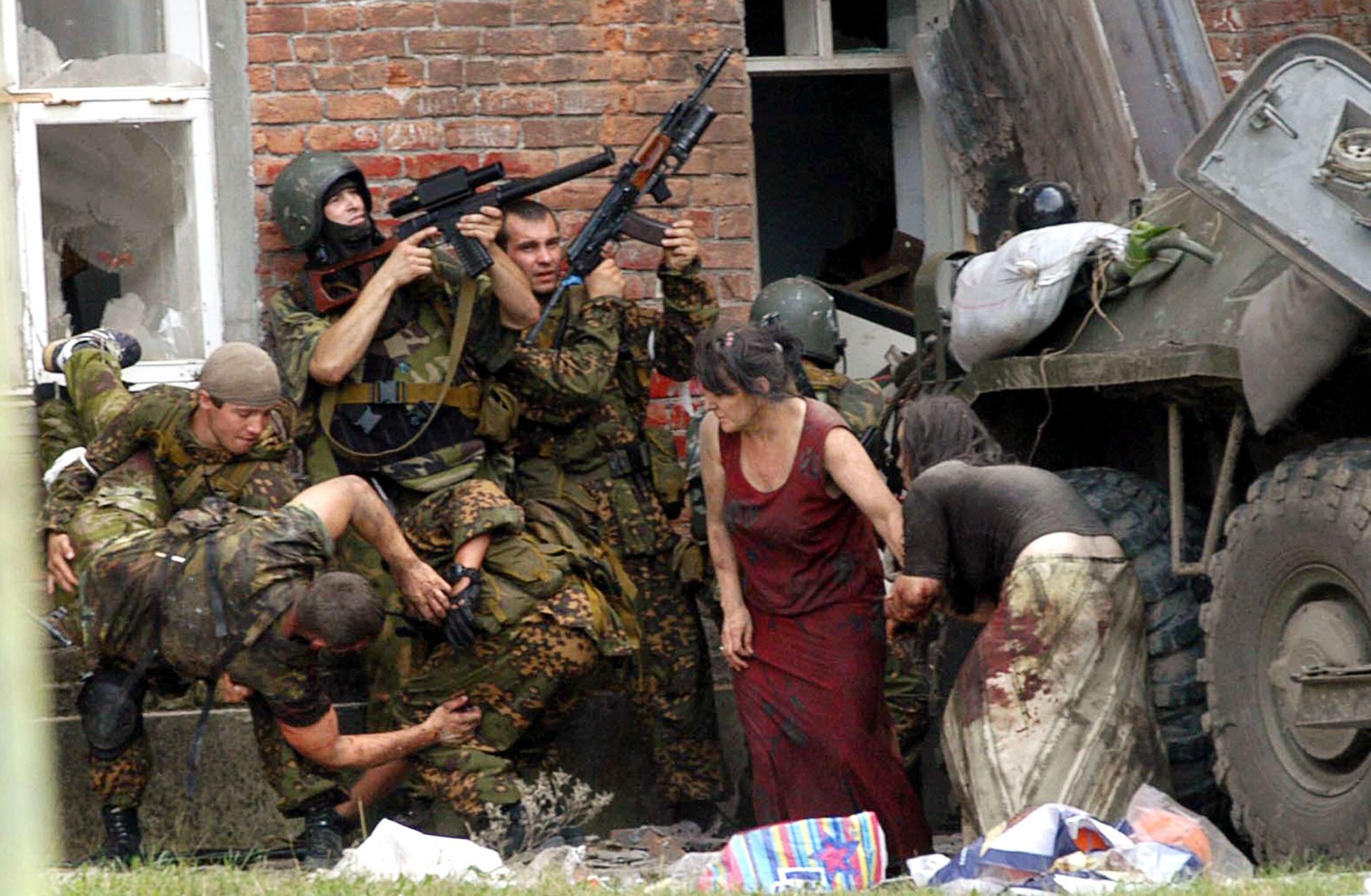
I worked in Beslan for 14 days. The situation was heating up that there was no information that was happening at school. There were no negotiators, representatives of local authorities - there was an information vacuum. Everyone pierced the information from their channels, and sometimes we received more information on TV when news releases were released. Something was true, something untrue. There were many journalists from the central television channels, but they held apart from others.
Chaos reigned, literally crazy with ignorance by parents, militias with machine guns who tried to break into school, separately special forces, an anti -terrorist group and a local police. The complete lack of coordination between them, each acted in their own way. It was felt. When I talked with the local guys, they said: “Some strange story, when we arrived on September 1, there was not a single patrol car.” It turns out that they were all removed from the posts and transferred to some event. And by coincidence or malicious mind, but then there were no police officers in Beslan. I could not say anything good [during my inclusions] in relation to the Russian authorities, said that chaos and people reigns in horror. Chaos is the most central impression of Beslan.
General Aushev arrived, brought several children and said that terrorists are ready to free the rest if Putin says that he stops the anti -terrorism situation in Chechnya. But Putin gave a sharp answer that he was not negotiating with terrorists. Therefore, there was a chance to save children, and large losses from the Kremlin were not required. And for me a shock, when I found out that Putin did not go to it and thereby predetermined the fate of the hostages.
On September 3, everything was quiet, and then sudden shooting began. There was a complete lack of coordination between the security forces. And the whole story of the beginning of the assault came from the fact that someone took the initiative and began to shoot at the windows and terrorists. Explosions occurred after shooting from firearms, and not vice versa. When the terrorists realized that the assault began, they decided to undermine the bomb.
In the morning we were told that Putin flew at four in the morning, literally ten minutes twisted in the hospital, saw the wounded and flew away. He did not have enough civil courage to go out to people during the day. Bedied, without informing the press, secretly, he arrived, said a couple of on -duty phrases and flew away. The central television channels lit this, and the people who were in Beslan found out that Putin came to them, only from the TV.
After the tragedy, the security forces in open text told me that I would leave until the problems began. There was aggression after rumors began to be actively being actively executed that the terrorists came from Georgia ( in particular, the State Duma vice speaker Sergey Baburin said about this-approx. Medusa ). And people were distraught, it became clear that they could break on whom he wanted. When I returned to Moscow, I was depressed. This horror that we experienced there - and in Moscow it is peaceful, good, restaurants, clubs, life are in full swing.
Then there was a shock, despite the fact that I was in Abkhazia and Chechnya in the war. In the war, you are psychologically ready for corpses and blood, and when it comes to children, it is wild horror - the world around you collapses at one moment. Especially when you understand that children could be saved. And then, when you find out that Beslan’s mothers shut their mouths every year and forbid to open their opinion openly, their hair stand on end. People who have lost their children prohibit saying that they lost their children because the authorities did not want to negotiate.
Timothy Borisov
Military correspondent of Rossiyskaya Gazeta
I am the first journalist in the world who learned about Beslan. This happened by chance. On August 29, 2004, the presidential elections in Chechnya were held, I worked on them and decided to return to Moscow through North Ossetia, since the airport in Grozny did not work yet. But there were no tickets at the box office, and then I called the chairman of the parliament Taimorezov Mamsurov , who knew me well. It turned out that we are both here. At that time, he met a delegation of deputies from the Duma Rodina faction, led by Dmitry Rogozin, who were going to go to South Ossetia to look with their own eyes at that time, the outbuildings of the Ossetians with Georgians. Teimuraz offered to go to Tskhinval with them, and the next day, along with Rogozin, fly away at nine in the morning.
I agreed, we visited the hospital in Tskhinval, talked with wounded fighters, and then drove into the residence of the [President of South Ossetia] Eduard Kokoita. There was a huge table where homemade wine was served in huge horns. Everyone raised his horn, spoke a toast and, as it turned out later, it was our salvation. When we returned to the night in Vladikavkaz, Taimurazov Mamsurov asked Rogozin to speak on a line at school: “We have a school in Beslan, where my children study. You are a person from the TV, tell the children a few words, they will be pleased, five minutes and go to the airport. ” Rogozin agreed. So by the will of fate we had to perform in the Beslan school in that very fatal morning. And it saved us that Rogozin slept and lingered for 15 minutes. This delay saved our life, otherwise we would also be hostage.
When we drove up to the school, we saw how teachers, parents, children flew in a panic. The only thing we managed to learn from them was that some terrorist captured the school. This was the very first information on which Rogozin and another deputy, my former colleague in the workshop, leading the television program “Our Version under the Greek Secret” on the TVC Mikhail Markelov, reacted with lightning speed: “So, we go to school, talk with a terrorist, offer him an exchange for children.” And they went, but managed to take only a few steps, as a shot from a grenade launcher rang out. The terrorists shot from the window of the school towards the railway, in the tank standing there at a dead end. And immediately it became clear that everything was serious. I called the editor and asked what to do, go home or stay here - they say, there is a serious terrorist attack. I was told to return - there was no information in the ribbons of the agencies - and I began to look for transport to the airport. But after a couple of minutes they called me from the editorial office, and I got home much later.
I was lucky, I was the only journalist who spent all these tragic three days in the operational headquarters, which was located in the building of the Beslan administration. When on the night of September 2, special services arrived and all journalists began to expel from the administration building, I took advantage of my acquaintance with Rogozin, went up to him, and they took me for his assistant. That is why I heard everything that was said in the operational headquarters, how they were developed, and then the options for special operations were disclosed one after another.
For the first time in my life I saw the confusion of power. There were several options for the assault, they were all carefully and continuously worked out, but by the end of the second day it became clear that this was impossible. In addition, Teimuraz Mamsurov came to the headquarters and categorically said that he would not let the school to storm, since there are children - including his children. The special services realized that the situation is completely patho: the impossibility of assaulting neither on top nor from the bottom through the basement, which was not, neither through air, nor excavations - in no way. All this was discussed. There was no plan for what to do.
Already in the evening of September 2, the head of the republic, Alexander Dzasokhov, went into a small room where the only phone stood. He talked with the Kremlin, and then went out and said that the children are more important and the authorities are going on to negotiations. Everyone realized that we were waiting for the next option as during the Basayevsko-Raduev’s captures, when the terrorists will give a bus and fulfill their requirements or part of the requirements. Everyone was waiting for negotiations, and refused the special operation. But the next morning, unexpectedly for everyone from the school, an explosion was heard. Then, after a couple of seconds, individual shots began to sound. At first, liquid, then more, more and then after 15-20 seconds of shots merged into one continuous cannonade.
At that moment, I got through to me from Moscow from the radio and I had to go out about five times on the Echo of Moscow. It was the most difficult thing - to comment on and talk about the terrorist attack on the air for the media, in which I do not work and which has an opposition image. I commented on everything that happened, not knowing how it would turn towards me, but I considered it necessary and important for myself as a journalist. I myself work in a government publication and understood that I could lose my job. We must pay tribute to my leadership, they did not even try to dismiss or fight me.
After Beslan, I realized that the terrorists should be fought uncompromisingly, not to flirt. Мне понятна позиция израильских спецслужб, хотя она и жестокая, когда они не переговариваются с террористами и уничтожают всех, даже если есть угроза заложникам, чтобы следующие потенциальные террористы знали, что захват заложников бессмыслен, ибо переговоров не будет. Поэтому я думаю, что теракт в Беслане был вдохновлен предыдущими успешными для террористов терактами в Кизляре и особенно в Буденновске, когда террористам позволили вернуться в Чечню и пошли на их условия.
Саймон Островский
Корреспондент PBS NewsHour, в 2004 году — журналист The Moscow Times
В то время я работал в The Moscow Times в Москве. Как только узнал о трагедии, попросил редакторов меня туда отправить, но у газеты было мало средств. Согласилась другая газета — The Sunday Times. Так я поехал в Беслан и сразу писал для трех изданий — The Moscow Times, The Sunday Times и People Magazine.
Я был на месте во второй день захвата. У меня произошел инцидент с силовиками: российские государственные каналы распространяли ложную информацию, что захват школы инсценирован иностранцами. Они говорили, что эти иностранцы — это исламисты, но ОРТ, например, просто заявляли: «Следователи рассматривают иностранный след». Все это сказалось на журналистах-иностранцах, которые освещали события в Беслане. Местные стали подозревать, что они одни из тех, кто устроил захват. Как-то я побежал в магазин, так как мне нужно было перезарядить карточку в телефоне, и кому-то показалось подозрительным, что я бегу. Несколько парней скрутили меня и отвели в милицию, где продержали около суток. Я просто исчез и не имел доступа к телефону, но до этого успел отправить сообщение коллеге. Я написал три буквы «ФСБ», и только благодаря этому меня начали искать. Меня держали сначала МВД, потом ФСБ. В конце концов кто-то позвонил из МИДа и сказал, что я журналист и меня нужно отпустить. Были случаи с самосудом: люди были очень озлоблены на всех журналистов, потому что говорили и про иностранный след, и в это же время официальные новости заявляли неверное количество детей в школе. И всю злость местные выкидывали на журналистов.
Альбина Олисаева
В 2004 году — журналист РИА Новости
31 августа я договаривалась с редактором РИА Новости, куда только хотела устроиться, что сделаю им пару материалов, чтобы они посмотрели. На следующий день в аэропорту в Беслане проходила пресс-конференция с Рогозиным. Я из Владикавказа поехала на нее. Она спокойно шла, и тут по залу проходит шепот, все передают друг другу что-то. А потом кто-то произносит вслух, что в Беслане захватили школу. Я позвонила в РИА и сообщила, что произошло. Было решено, что я поеду туда работать. Конференция остановилась, мы все поехали к школе.
3 сентября, когда произошел взрыв, я была в здании штаба по освобождению. Туда было сложно попасть, но мне помог знакомый работник. Взрыв был такой мощный, что стало понятно — что-то произошло. На фоне и до этого все время гремели взрывы, но тут появилось чувство чего-то непоправимого. Стало понятно, что начали умирать дети. Я выбежала из здания, и тут произошел второй взрыв. А я забыла диктофон внутри, хотела вернуться за ним, но меня уже не пустили обратно. В тот момент началась перестрелка. Мне кричат: «Пригнись!» Я легла, пытаюсь набрать в агентство, связь рухнула, тишина, невозможно дозвониться, никаких гудков. В один момент я дозваниваюсь до оператора и что-то начинаю говорить, и в это время выносят первого мальчика с глубоким ранением в спине. Все происходит за несколько минут. Этот мальчик до сих пор у меня перед глазами.
Самое страшное — это похороны. Похороны были все в один день, и все поле было в могилах. Я тогда ехала на совещание в аэропорт. В Беслане аэропорт от города находится в пяти минутах, а кладбище расположено между городом и аэропортом. Я попросила знакомого отвезти меня: мы едем и попадаем в пробку из катафалков. Бесконечный поток машин с гробами на крыше. Это был сконцентрированный ужас того, что произошло.
В какой-то момент, когда я слышала или рассказывала про Беслан, то сразу начинала плакать. Это тяжелая трагическая история, но чтобы плакать постоянно — это не совсем в порядке вещей. На эту тему я общалась с психологом, потом это прошло. Мне объяснили, что это посттравматический синдром. Но мне смешно говорить о своих переживаниях по сравнению с теми, кто потерял своих детей. Я очень восхищаюсь матерями Беслана — это мужественные женщины, которые прошли через все. Их пытались приписать к сумасшедшим, их не всегда понимали — когда они начали получать гуманитарную помощь, у людей была странная реакция. Эти женщины прошли через огромное психологическое давление и сумели остаться порядочными и мудрыми. И они до конца пытаются настоять на расследовании. Сейчас они многим помогают в Беслане: стали теми, к кому все обращаются, если возникает проблема.
Recorded Alexander Sivtsova