Date
Author
Арнольд Хачатуров, Дарья Козлова
Source

Preserved copy
Translated material
Not saved
A few units will be able to receive cumulative pensions in Russia
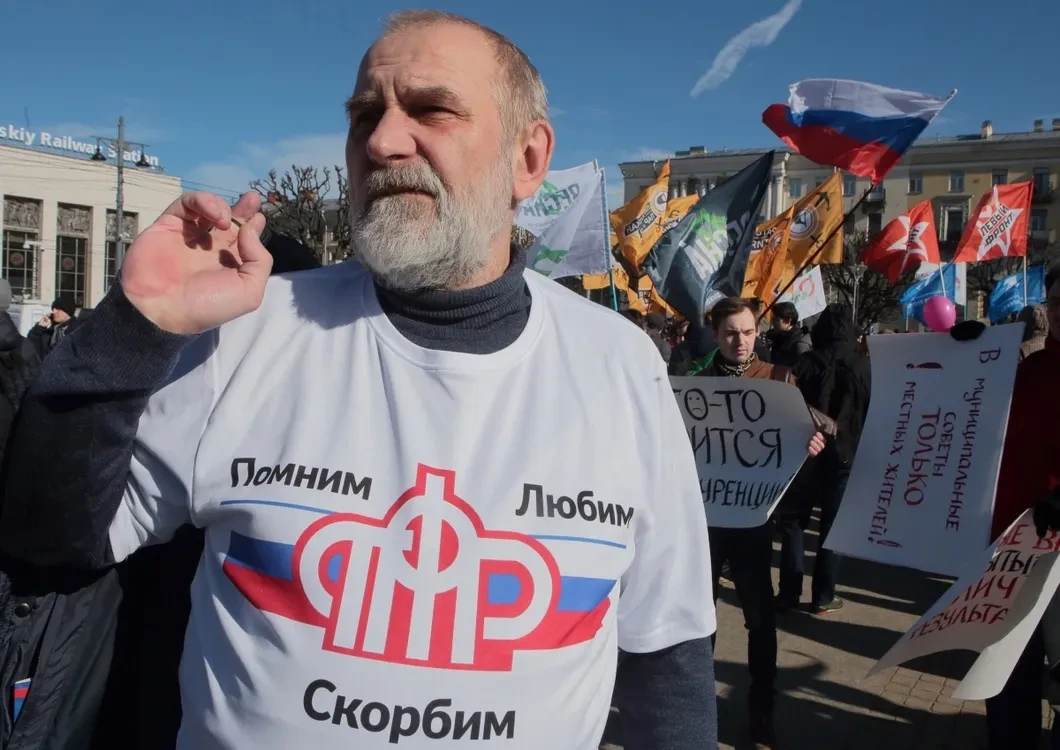
The Pension Fund of Russia (PFR) proposes to change the mechanism for the payment of funded pensions. Only those pensioners will receive monthly payments who, by the time of retirement, managed to accumulate more than 20% of the federal subsistence level. To do this, there should be approximately 450-500 thousand rubles on the pension account, the expert of RBC calculated. To all the rest (and the vast majority of such pensioners) will pay pension savings in the form of a one -time payment.
If the PFR proposal is accepted, then the threshold of accumulations below which pensioners will receive a one -time payment will increase from 700 rubles to 1770 rubles. Now the average account of the insured person in the NPF is 73 thousand rubles - less than 300 rubles in terms of monthly payments. At the same time, about 130 thousand rubles, the Russians did not count due to the freezing of pension savings, which was first announced in 2014 and was regularly extended.
News talked with experts about what was left of the savings of Russians after numerous attempts by the government to reform the institution of funded pension.
Evgeny Gontmamer
Doctor of Economics
- This is a technical proposal, I would not give him a great political meaning. Politics was when the funded system was frozen in 2014. At first they said that for a year, then - for two.
But now it is clear that the funded part is frozen forever, this must be accepted as a fact.
If we announce “Let's defrost,” then there will be a question of how to compensate people with what they have not received their accounts over these few years. The state will definitely not go to this.
But the following problem remains: what to do with the money that have already accumulated on these accounts? The rule still applies that if a person retires and he has accumulated a little money (up to five percent of the average pension), then he receives it right away. In principle, this is normal, because such a little money is monitoring, storing and serving is purely technically very expensive. In those conditions when the funded part was frozen (which, of course, was a mistake), there was no other way out.
Now the Ministry of Labor proposes to increase the threshold when people will pay savings at a time. It seems to me that this is also associated with administration. The vast majority of people who have a funded part, and so get it one -time. People have already got used to the fact that the accumulative part is not replenished.
The fact that the institution of funded pension has not taken root in Russia has not taken root in Russia. As experience shows, people before freezing began to actively transfer money from the state management company to private management companies. The interest of people in their pension money began to wake up.
The state was supposed to contribute to this, develop financial institutions and help this movement.
But it acted in the most radical way - it took and froze everything, because suddenly the money was needed, as Siluanov said, "to the Crimea."
This killed interest in independent financial behavior, which had just begun to wake up among people.
Now there were only proposals for additional and voluntary pension accumulation, such as individual pension capital (IPC). But after raising the retirement age, the most wealthy part of the population (not the richest, but the middle layer), which could participate in the IPC, shied away from this reform. She saw that the state sharply changes the rules of the game, and not always in favor of people. It turned out that the IPK will not particularly have coverage, that these will be the next lotions that will not affect pension affairs. Therefore, I strongly doubt that the IPC will be introduced, but if it is, it will be a little popular scheme.
Alexander Safonov
Vice -Rector of the Academy of Labor and Social Relations
- It is necessary to understand that the Pension Fund wants to receive this change: whether it applies to the previous history of the funded pension, which is now frozen, or is it within the discussion about the future of individual pension capital. We have already got rid of compulsory storage pension provision. After freezing new contributions in 2014, it does not develop. Certain obligations that need to be fulfilled have simply accumulated.
But the law still does not have retroactive force, so it makes no sense to change the rules that have already been introduced. Any proposals regarding the changes in the format will mean an attempt to abandon existing obligations. Therefore, in this case, one must be very careful about such statements. Otherwise, this will finally undermine trust in any state system.
If the PFR initiative passes, then the fuss with frosts will still not end. They offer to change the form of payments, not everything else. Problems that have not been resolved will continue to exist.
As for the new discussion about the IPK, which is still ongoing, any proposals can be considered here. In order for the accumulative system to exist, people should have a decent income. And in conditions of low earnings, the number of people who want to participate in cumulative pension insurance will strive for zero.
The voluntary nature of the funded pensions will lead to the fact that the number of participants in state pension funds will not increase, and this, of course, is not satisfied with either the Ministry of Finance or the Central Bank. Therefore, they think about the elements associated with the creation of an additional incentive to participate in storage pension insurance. For example, the formula can be changed: not a voluntary conclusion of agreements, but an auto subscription by default.
If we take world practice, we will see that the funded pension is sometimes an obligatory element for people who receive salaries above a certain line. This practice is characteristic of the UK, for Germany and for many other European countries. Here you can already establish your own orders. As for the old system, it is not necessary to touch it.