
Translated material
"We returned to the Dolynobyl country." What actually happened near Severodvinsky
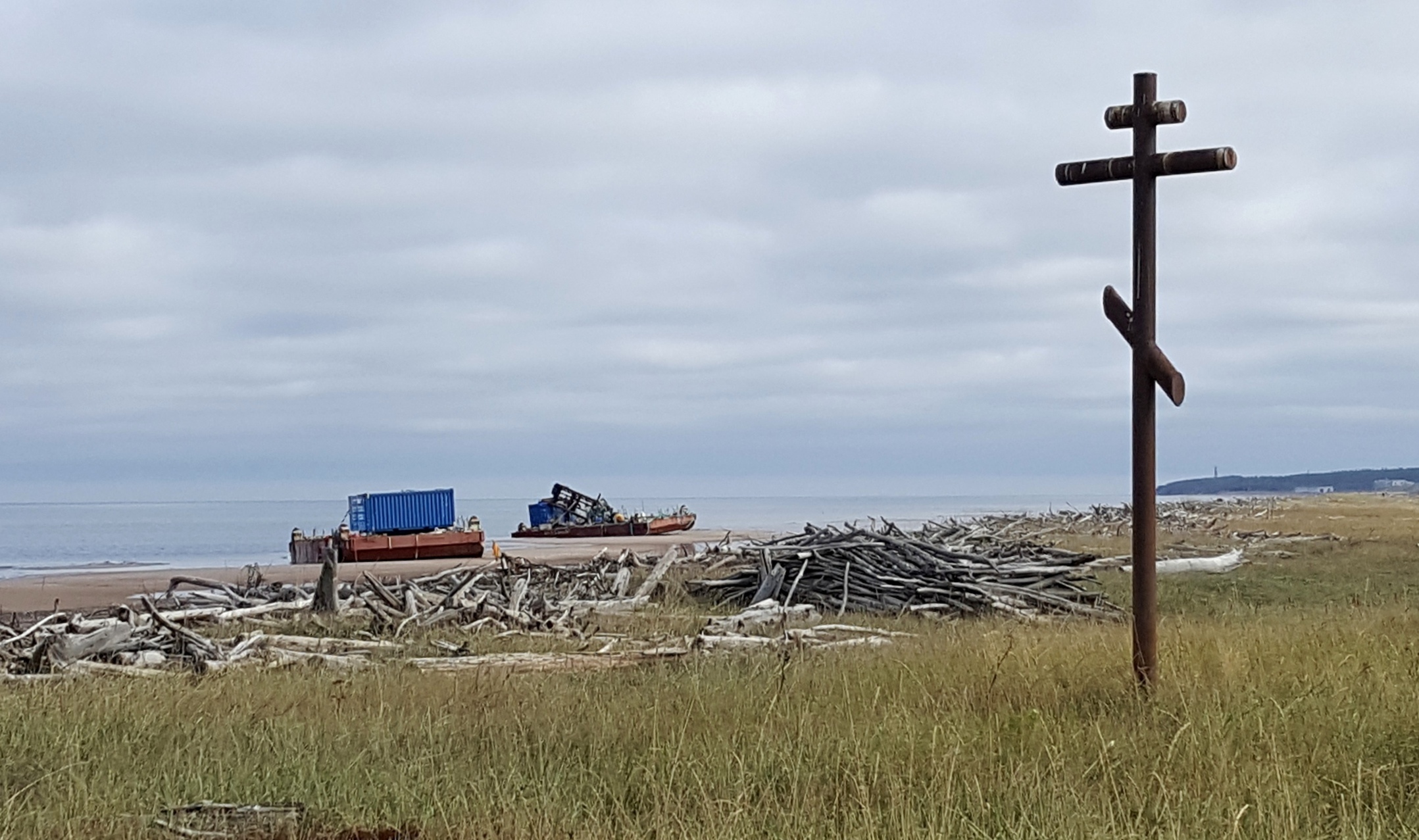
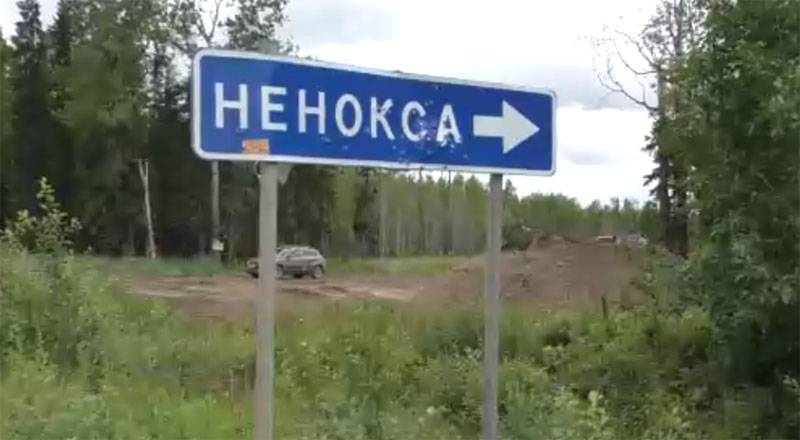
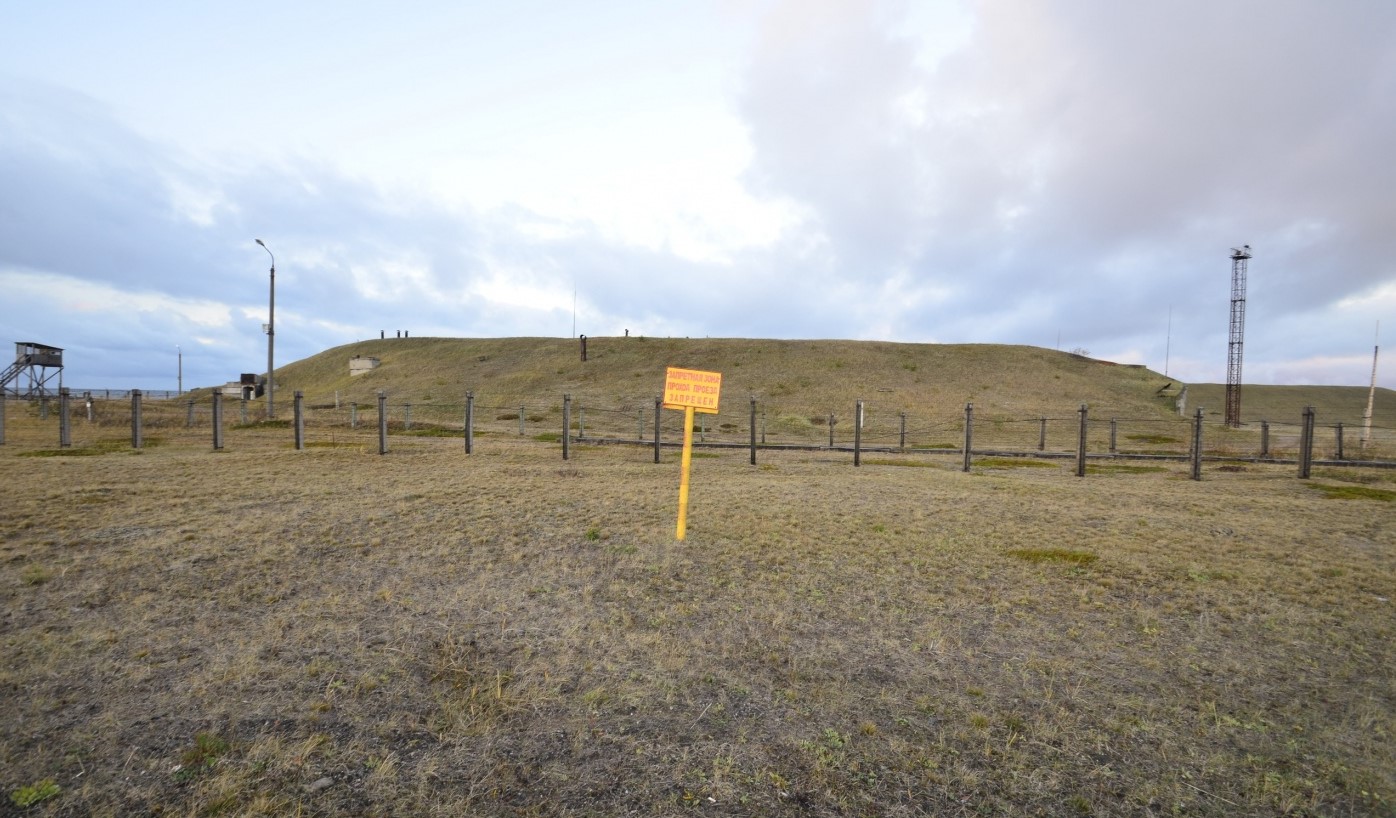
On August 8th, an explosion occurred at the Severodvinsky (Arkhangelsk Region) training ground. Seven people died: five Rosatom employees and two military personnel. But the information about what happened that day began to appear significantly later, and there is still no complete clarity on this score.
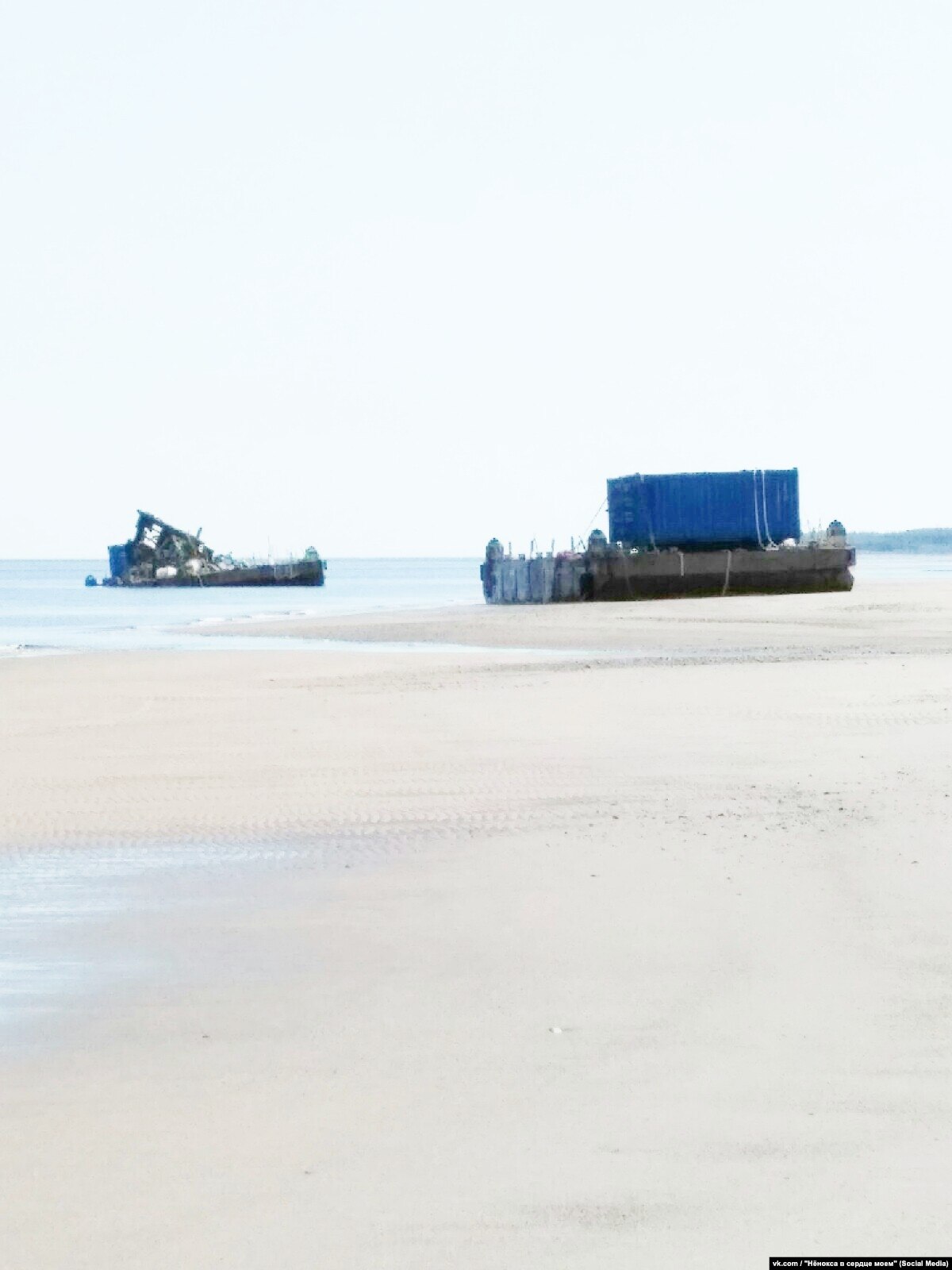
On September 3, it became known that the radiation background near two pontoons affected by the explosion exceeds the norm by several times. This was reported by the agency "Belomorkanal", whose journalists measured the radiation level in this place. At the same time, the publication lists several versions of what exactly could happen in Nyonoks at once. These versions appear in different sources, and not one of them is still officially confirmed.
Figures of silence
Initially, it was stated that during the tests the "nuclear battery" exploded. "The tragedy occurred during the period of work related to the engineering and technical support of isotopic power sources at the liquid motor installation," the Rosatom said in the official statement of Rosatom. Information about the dead did not immediately appear. As well as an increase in the radiation background in Severodvinsk. Only on August 10, two days after the emergency, Roshydromet said that in the city the dose of gamma radiation was exceeded 4-16 times compared to the norm, but in a few hours the radiation background was normalized.
Then the silence followed again. The simultaneous stop was not explained in any way after the accident of radiation monitoring stations in Dubna, Kirov, Altai Territory and Chukotka. And soon it became known that employees of the hospital, where the victims of the training ground were delivered, did not warn that the patients were irreparable and contaminated with radionuclides. At least 90 people were in contact with them.
Information about what happened at the training ground near Severodvinsky began to appear almost three weeks after the explosion. On August 26, Roshydromet said that "the composition of samples selected in Severodvinsk showed the presence of short -lived technological radionuclides, <...> which are products of inert radioactive gases." The department mentions the isotopes of the strontium, the two isotopes of the barium and his daughter radionuclide Lantan. On the same day, Niles Niels Boher said Norwegian nuclear security expert: the presence of such radionuclides leaves no doubt: a nuclear reactor has occurred in Nyonoks. However, the Permanent Representative of the Russian Federation at international organizations in Vienna Alexei Karpov at the same time said that "the tragic accident has not to do with nuclear tests" and that "there is no danger of the life and health of the population in connection with the incident on August 8 near Severodvinsky."
"In this regard, they would like to ask on what basis and for what need we are asked to provide information about what happened on August 8?" He said.
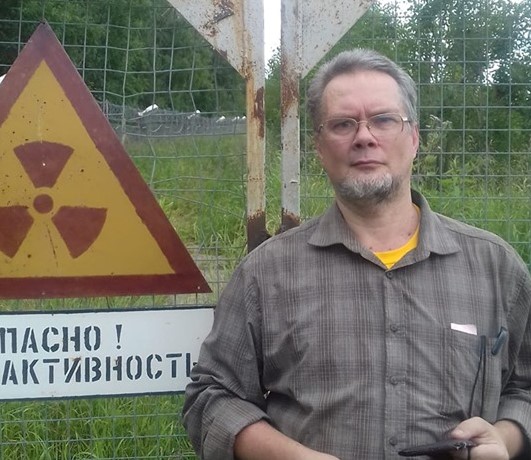
About why we know so little what happened near Severodvinsky and what can be the consequences of an emergency, an interview with Andrei Ozharovsky , a physicist, an expert of the Radioactive Waste Security program of the Russian Social and Ecological Union.
"Everyone from the very beginning knew that it exploded"
- Andrei Vyacheslavovich, explain to people far from physics: Niels Biemer’s conclusions about the explosion of the nuclear reactor and the statement of Alexei Karpov about the lack of danger to people - mutually exclusive?
- Karpov is a diplomat, he has his own work, and I would not comment on what he said. As for the timeliness of the statements, only one thing is important here. It does not matter what kind of secret thing exploded there - a rocket, a comet or a torpedo. The military has every right to keep their military secrets. But if the radionuclides after the explosion entered the environment, it is necessary to immediately assess their danger to human health and take measures to minimize the consequences. We have a ban on concealing information about the state of the environment. A good law, the adoption of which is largely dictated by an accident in Chernobyl . It was accepted precisely so that no one - nor the Ministry of Defense or Rosatom - had no desire to downplay the consequences of his activity.
The task of August 8 was simple: tell the society what happened. But this was not done
- Why are applications for an emergency at the training ground is made late? Was there enough data?
- Both Rosatom and the Ministry of Defense from the very beginning knew very well that they exploded and which radionuclides went into the environment. Their task that day, August 8, was very simple - to tell the society about this. But they did not. The reasons ... I think they are obvious. Our civil society is weak, the authorities consider itself above the people, and some corporations too. Rosatom, for example, comes out a newspaper called the "country of Rosatom", as if they are not in the same country with everyone. Nuclear holders continue to cultivate the image of themselves as some superhumans - and this is still from Lavrenty Beria, who, as you know, was the first leader of the Soviet atomic project ...
So here we see not a lack of data, but a silence traditional for our country. Like after Chernobyl. Like after the explosion of the radioactive waste storage in Tomsk in 1993. As after the accident at the Leningrad NPP in 1975 ... you can list such cases dozens. After any radiation accident, we have attempts: a - getting puff and b - downplay the consequences.
"The price of lies is the health of people"
- In your opinion, are the consequences of an emergency in the Arkhangelsk region comparable to the listed accidents?
-How this accident differs from others-in this case, automated systems for monitoring the radiation situation (ASKRO) still worked and issued information about gamma radiation, accompanying alpha and beta-decompade. That is, it was already clear that a few hours after the explosion a radioactive cloud over Severodvinsky passed. But these stations, although fast, but rather primitive and information about the isotopic composition do not give. And it is important to know him in order to predict how certain isotopes will behave in the environment, how they can be dangerous for people's health and what protection measures must be taken.
Only a nuclear reactor could produce these isotopes
Now here about the gamma-paces they say that its increase was short-term. They say right, but it is incorrect to conclude that it is safe. The inhabitants of Severodvinsk, who at the time of passing the cloud were on the street or, God forbid, went in for sports in the fresh air, got radionuclides inside themselves. And the people who were breathing in them, in general, are still short -lived or long -lived. Moreover, short -lived in this case is more dangerous - they break up faster, and a person in a short time receives internal irradiation.
- The last message of Roshydromet with the listing of isotopes fully gives ideas about the consequences of the explosion?
-Indeed, this department finally, three weeks after the accident, published information about three and a half isotopes. "Half", because Lantan is a subsidiary of barium. The Roshydromet report emphasizes that these are short -lived isotopes. But short -lived isotopes are those that have just been produced. And only a nuclear reactor could produce them (just in case, I remind you: the basis of its work is a chain reaction of dividing the nuclei of uranium or plutonium). And I, like many experts (in particular, this is stated in the Greenpeace of Russia Greenpeace), there is a great suspicion that not all radionuclides that have published in the environment are listed. It does not happen that only three isotopes come out in the accident, while others remain. I suspect that there were about 2000 isotopes, and not only short -lived, but also those that have a half -life of a year or more.
- Why are only three mentioning now?
- It is strange to say this about isotopes, but these three are the most “convenient” for the authorities. Once short -lived - you can say with a clear conscience: well, that's all, they are no more. Well, yes, they flew over Severodvinsky, someone was irradiated, this, of course, is bad, but now everything is fine. But then where are the rest? Obviously, traces of these radionuclides should be sought in water and food. Let me remind you that the accident occurred in the White Sea. And it is productive - they catch fish there, there they collect sea cabbage. That is, now the price of a lie - if we once again deal with it - this is the health of people who, having believed official statements, continue to eat fish from the White Sea.
And another very important point. We were called isotopes, but they did not say anything about their number. How many Beckerels (unit of measurement of the activity of a radioactive source. - Approx. Ed.) Per square meter of loss? Or - how many radioactive substances were contained in a cubic meter of air? There is no these data in the Roshydromet statement. It seems that the message was published, but in fact nothing is written there. No one can say without numbers whether it is dangerous or not. Maybe there are really trace concentrations and there is nothing to talk about. Or maybe serious excesses. And this is “maybe”, in my experience, appears precisely when they want to hide or underestimate something.
"Secrets are more expensive than people's lives"
- The situation with doctors who did not warn about irradiated patients obviously says the same thing?
- Yes, this is the same. The question of the medical consequences of what happened is not to me, I am not a doctor. I can only say that there are no safe doses of radiation.
If there was no specific task to hide the information, then what is the problem to tell doctors - carefully, these are people from the radiation landfill? No one would have cleared anything thereby - everyone knows that tests are undergoing in Neonoks. From all points of view, doctors were obliged to warn about it - both from ethical and medical. Imagine that the Chernobyl firefighters are brought to the hospital and do not tell the doctors that they are irradiated! But the absence of such information not only threatens the health of doctors, but also reduces the chances of saving the victims of the explosion. The country again ended up in the Dolynobyl era, when secrecy is above all, and a person’s life is not enough.
- Nobody really explained anything about the stop of four radiation monitoring stations either ...
Having the truth from fellow citizens-for someone a synonym for protecting the honor of a uniform
- And I will not explain. But I do not believe in random coincidences. I can’t blame anyone right, but in the existing context, the almost simultaneous stop of four stations in different regions at least looks at least suspicious. Maybe the reason for this is precisely fears that it will become known not only about three isotopes, but also about the rest? Of course, it’s not caught - not a thief, but it hurts all alone to one.
- Against the backdrop of this “silence”, the media appeared that the radioactive cloud from the Arkhangelsk region moved on to the east of the country. Is this really possible?
- Of course, Fukushima iodine through America flew to Europe, but in insignificant concentrations. So to say that the cloud has reached Siberia, in this sense, is correct. The wind during the tests really blew east. It is possible that the date for them was chosen specifically: the atmospheric conditions during the tests are taken into account, and, possibly, the western wind and waited for the radiation to not take Norway and Finland.
- That is, an explosion near Severodvinsky can theoretically “respond” in other regions of the country?
- Now the information about the radionuclides entering the environment is fragmentary. It will be possible to evaluate the real danger only if the information is complete.
But even if the concentration of radioactive substances over Severodvinsky was small, and then the cloud gradually “diluted”, risks for people remain. There are no safe radionuclides - only in Rosatom they love to talk about it. The ingress of radionuclides into the body does not necessarily lead to noticeable individual effects. But there is such a thing - stochastic effects: we are talking about the so -called collective dose, which consists of individually received doses. If a huge population fell under the radioactive cloud - millions of people - of course, not everyone get sick. The irradiation will affect a small percentage of the population. But taking into account the number of inhabitants, these will be hundreds and thousands of sick. And this is practically inevitable.
We admit that we are treated as people of the third grade
But while people continue to lie. And here no one will help us. The West is absolutely indifferent. There, who needs it, and so they know that it was not that we have not flew - they are better aware of this. But this is not the task of Western intelligence - to inform Russian society. Therefore, there is only one way out - to demand the disclosure of information from the Ministry of Defense, Rosatom, Roshydromet ... to explain that any emission of radionuclides is dangerous. And that the disclosure of the composition of the emissions in no way will declassify the secret crap that exploded there.
But, apparently, the concealment of the truth from fellow citizens is for someone a synonym for protecting the honor of a uniform. Unfortunately, we admit that we are treated as third -grade people who can not speak the truth.