
Translated material
The Ministry of Economic Development called the conditions for the transition to a four -day working week
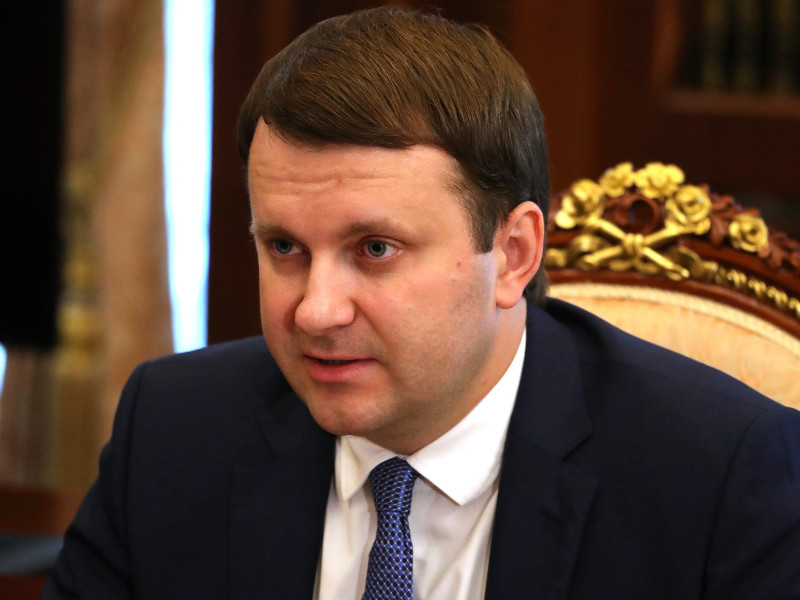
The head of the Ministry of Economic Development Maxim Oreshkin called the main conditions under which Russia will be able to switch to a four -day working week, as Prime Minister Dmitry Medvedev wants this - higher incomes of the population and a high level of labor productivity. "This is precisely what opens up the possibility for practical discussion both in terms of a four -day working week and other labor innovation," Oreshkin said on the sidelines of the Eastern Economic Forum.
According to him, now the reduction in the working week is associated with a decrease in wages, as well as performance. Oreshkin refrained from forecasts about the possible timing of the reduction in the working week in Russia, noting that it is important to concentrate on the phased fulfillment of the conditions for the transfer to a four -day.
According to Oreshkin, the possibilities for increasing labor productivity and income of the population will open up large -scale projects to introduce artificial intelligence. The minister explained that this is largely due to a change in the structure of the labor market and existing professions. “People will need to spend more time on retraining and gaining new skills. Therefore, the time of time is spent on work and retraining, the time of time for training will increase. Therefore, the reduction in the working week should be partially replaced by an increase in the time that a person spends on education throughout his life,” the minister concluded (quote for RIA Novosti ).
For the first time, the head of government Dmitry Medvedev first spoke about the possibility of transferring the Russian economy into a four -day working week, speaking at a conference on work in Geneva. Medvedev noted that the constant pursuit of success turns into systemic fatigue and chronic stress, and this entails a decrease in labor productivity, which, in turn, affects economic indicators. At a meeting in August, with the head of the Russian Union of Industrialists and Entrepreneurs (RSPP), Alexander Shokhin Medvedev, like Oreshkin, called the conditions of transition to a four -day increase in labor productivity and salary conservation. Meanwhile, the income of Russians has only been declining recently, and the number of poor is growing .
Now in Russia, the maximum duration of the working week at 40 hours has been legally established. However, the Ministry of Labor has previously noted that only the upper bar of working hours is regulated in this way. By agreement of employers and employees of the enterprise, an enterprise may be introduced for a four -day week now . In developed countries of Europe, the duration of the time spent at work is in some cases below 40 hours a week.
However, according to the VTsIOM survey, almost half of Russians (48%) do not support the idea of switching to a four -day schedule, as they are afraid of reducing income level, which is critical primarily for the poorest and most vulnerable sections of the population - pensioners and villagers. Supporters of a working week, on the contrary, expect to more productively use the released time and thanks to it to improve the balance between work, rest and personal life.
For a reduction in the working week, Russian independent trade unions (FNPR) also spoke, noting that high-performance work in certain countries, sectors and enterprises has already made a 35-hour working week a reality today, and Headhunter research and research service showed that the reduction in the work week was in the top five to optimize labor laws. Other experts call this proposal populism , since to maintain wages at the current level, the appropriate level of labor productivity is required. The first deputy chairman of the Bank of Russia Sergey Shvetsov said that it would be possible to seriously discuss the introduction of a four-day working week in Russia in 13-15 years.