
Translated material
The maturity of authoritarianism
Grigory Yavlinsky-to the 20th anniversary of the reign of Vladimir Putin
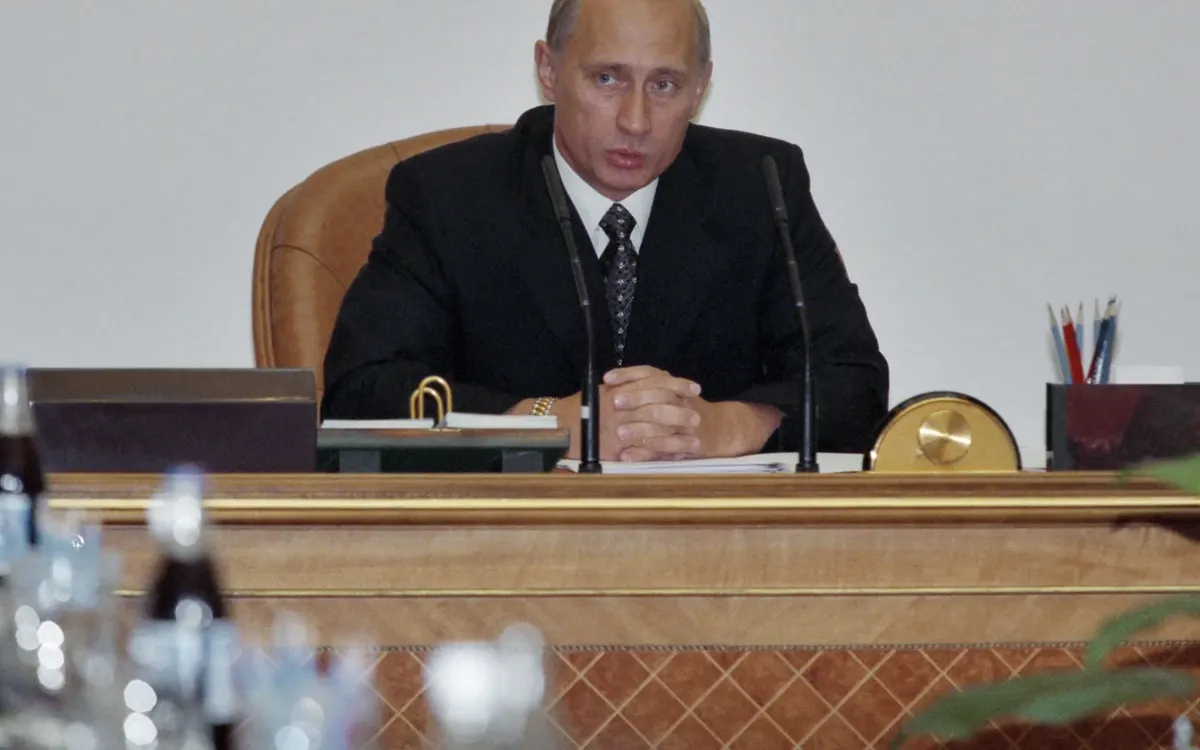
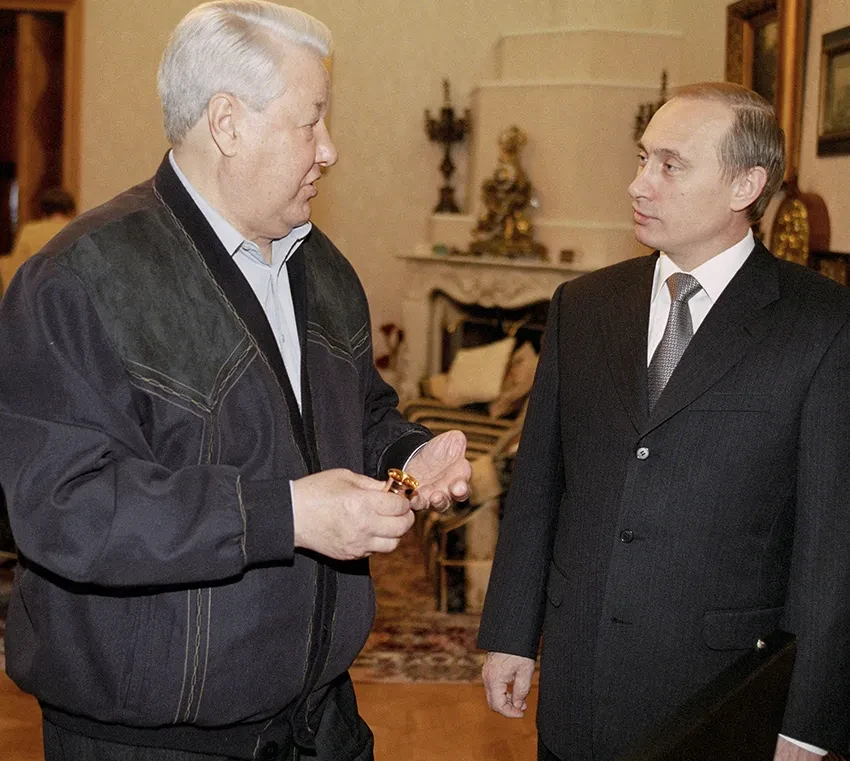
In August 1999, the young director of the FSB Vladimir Putin was appointed chairman of the Russian government. By the end of the same year after early departure from his post, the first president of the country Boris Yeltsin, he began to fulfill his duties. Putin's long -term opponent Grigory Yavlinsky discusses the phenomenon of the new Russian authoritarianism, summing up the results of two decades.
The role of personality
The achievements and failures of Vladimir Putin over the past twenty years have been comprehensively analyzing almost all Russian media. The vast majority of analysts and experts personally associate with Putin everything that happened in Russia in the 21st century. And this is understandable, the president, of course, personally bears responsibility for all turning decisions in the fate of the country. But the fact is that and this is extremely important for understanding the modern model of the Russian state-that almost any official with a similar biography could be in place of Putin: the ruling group in the late 1990s needed a reliable, proven native of system-forming structures.
First, hyperinflation and confiscation of savings, then fraudulent privatization, which gave rise to the merger of property, authorities and business, the abandonment of the competitive political system and the separation of powers - all this together laid the foundation of the mafia state.
To protect the criminal foundations and ensure the safety of beneficiaries of the system built in the 1990s and Putin was chosen.
Therefore, evaluating the results of two decades, one must understand that the matter, of course, is not only in Putin himself, but also in those people surrounding Yeltsin who created this system. Any other successor would be in the same starting position.
Could Putin change something in this initially vicious system, did he have the opportunity to act differently? Could. And there was an opportunity. If in the mid-1990s the post-Soviet Russian political system went through its first fork, between the competitive and authoritarian model, and made a choice in favor of the second, then in the early 2000s the second most important fork was completed. Then there was still a choice between the authoritarianism of the modernization type, a kind of “authoritarianism for the sake of progress”, and the authoritarian power of the conservative-and-resistant type, the main task of which to put blocks on the path of any changes that can weaken the control of the ruling group over society. So, in the early 2000s, Putin, due to his personal qualities and professional characteristics, refused to pass this fork in the direction of modernization. Instead, Russia turned to a path that blocks any political changes that potentially threaten the stability of the authorities. As a result, political development has stopped in the country.
The result of the passage of this fork we observe today with all the obviously. Three decades after the collapse of the USSR led our country to the political system based on the irreplaceable power of one dominant group of the highest bureaucracy, at their discretion of the appointing leaders of all power, administrative and basic economic institutions. To the system that excludes the replacement of the ruling group without the simultaneous breakdown of the system itself and a deep political crisis. To a system working for its own reproduction and excluding the possibility of natural evolution or self -Russia in accordance with a changing situation. Finally, to the system, the basis and essence of which is the distribution of administrative rent and which, due to this, is vital in maintaining unchanged economic and social conditions that allow this rent to extract further. To the Putin system.
Elections without elections
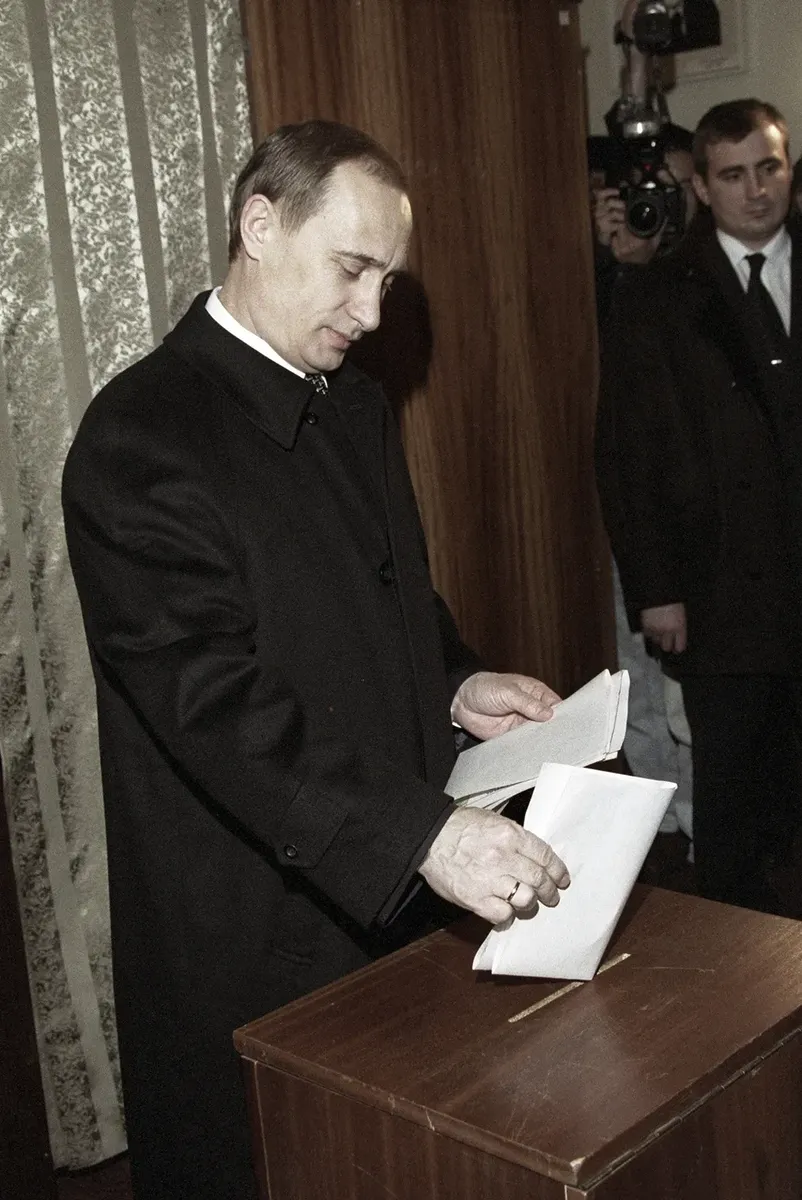
The authoritarian political device, which has finally formed during the years of Putin’s reign, does not imply the use of elections as a mechanism for determining the circle of persons or groups that gain access to the levers of state power. The highest power in the person of the ruling group is fundamentally irreversible in this system. And although the personal composition, of course, undergoes certain changes, personnel permutations in the system are never taken to the court of any external arbitrators and are carried out only by decision of the system nucleus, which, with all changes, remains stable. The elections in this system are either absent at all, or play a decorative role, drawing up already adopted personnel decisions and, as it were, visible them with “public” approval.
In cases where the authoritarian system uses the election procedure (in order not to violate the usual scheme, to achieve additional legitimation or with other goals), the preferabness of the voting results is a premitted condition for this procedure. How is this achieved? With the help of total control over the entire electoral process (it is assumed to intervene power in the process at any stage) - from collecting signatures for nominating candidates to the counting of votes with an official summary of the results. Why does the authorities are so afraid of the unpredictability of elections? Because unpredictability is a sign of a competitive system, and this, in fact, is an antithesis of an authoritarian model. As a result, any decrease in the predictability of voting results entails either the improvement of the control methods used or the refusal of elections in general.
Within the framework of the current system, the election institution will act as long as the authorities can control their result.
The non -control of the outcome of the elections will mean the collapse of the authoritarian system.
Administrative rent
Corruption in power today will not surprise anyone. Over the past decades, corruption schemes in the government of the state have arisen in different parts of the world. And despite the fact that the nature and nature of corruption are different everywhere, the leaders of the authoritarian regimes are completed approximately the same. Why, despite such obvious risks, Russian officials are so zealously trying to climb higher and higher along the corruption ladder? What is so attractive to participation in this system? The answer is very banal: personal enrichment. And the Putin system just provides the ruling group with the opportunity to extract a special administrative rent from its monopoly political situation.
As a monopoly owner of a political resource in the state, a group holding power can absolutely uncontrollably and arbitrarily establish a reward for the implementation of the functions of managing society. However, this is not limited to the profitability of the leaders of the corruption system. The profit received by senior officials may not be tied to the performance of managerial functions, sometimes it stems from the monopoly right to violence and direct extortion. As a matter of fact, this is precisely what happens in Russian power structures.
At the same time, it is impossible to limit the claims and appetites of the ruling group in such a system, in fact, as well as completely clarifying the size of rental income and methods of receiving it. The only motive for self -restraint of the leading elite is the threat of a social rebellion. If this threat is devoid of severity, it is not relevant enough, then the brakes do not work and private appropriation of administrative rent is increasingly increasing in nature. In conditions, when power has access to huge, unlimited and opaque income, the solution of any problems requiring a significant planning horizon and long -term implementation and control is simply impossible.
Paradoxically, it is precisely the scale of this phenomenon that indirectly confirms that the post -Soviet authoritarianism in Russia entered the mature stage: all the essential features of this model have already appeared and are now acquiring more or less complete forms. In other words, this indicates that Putin’s authoritarian regime over the past twenty years has already overcome all the impulses and attempts that have no time for him - there is no longer a place for personal ambitions and errors of its leaders. Objective patterns and properties of this form of the political structure of society - authoritarianism are now coming to the fore.
Authoritarian tuning
In recent years, Putin has taken measures that significantly tighten the Russian authoritarian system. As a result, the range of opportunities to change the situation in the country for the next ten to fifteen years has narrowed even more.
The first reason for this is the obvious ideologization of the regime. Back in the mid-2000s, the peculiarity of the Russian government was the lack of clearly expressed official ideology. The authorities assumed the loyalty and political passivity of the active part of society, but did not formulate in explicitly ideological concepts, mandatory for mass acceptance and organized propaganda (it is enough to recall the infinite and barren searches of the “national idea”). Only by the end of the 2000s the foundations of the new official ideology began to crystallize: the Xenophobic “patriotism” and faith in the “Great Imperial Mission”, the denial of the growth of the welfare of the population as a value and its replacement for sacrifice, the concept of “unified and indivisible power” and its, this power, sacralization.
In recent years, all this has become a generally accepted and unusable part of the official ideology, the so -called "commitment to traditional values." Moreover, the Kremlin ideology during this time has incorporated some elements of traditional Russian nationalism. This is the concept of “special Russian civilization”, antagonistic European (the so -called “Russian world”), and interpretation of the country's history as a constant and consistent implementation of its special mission. At the same time, the central place here is occupied by the power that stands over the people and is a means of implementing this mission, and not an instrument of organizing the daily life of citizens. Having mixed up some leftist views into the official ideology (such as the conventionality and secondary of private ownership of large assets, which are still considered “sovereigns”, hostile attitude to large globalized business, etc.), Putin tried to formally reconcile the pre -Soviet and current periods of Russian history. The whole history of Russia in the new version turned out to be only a form of survival and the eternal struggle of the same “Russian civilization” with a hostile outside world, which initially seeks to destroy the “Russian world” with its unity of people and power. The rapid and all -encompassing spread of this ideology became possible thanks to the control of the media controlled authorities, primarily federal television channels with multimillion coverage, thanks to the loyalist part of the Russian Orthodox Church, which enjoys certain authority among the Orthodox population of the country, and to a large extent thanks to the state education system.
The second “achievement” of the system in recent years is a noticeable progress in getting rid of elements alien to it as multi -party. It is characteristic that after the elections to the State Duma in 2016, the question of the party affiliation of “people's chosen ones”, as well as the question of their party views, almost ceased to interest both the media and society as a whole. In today's Russia, these issues have lost any practical importance.
And the third important change in the end of the 2010s is the final personalization of authoritarianism in Russia.
Now in the system there are generally no counterweights standing at the top of the power pyramid for a person. There are no more institutional checks, no collective bodies like at least the Politburo of the CPSU Central Committee in the late Soviet period.
The process of preparing the most important solutions is today under personal control of a single person and is completely closed not only for the public, but also for the rest of the ruling group, not to mention the so-called “party in power”, which in political life is the same phantom as formally opposition parties in the State Duma.
And yet. The events of recent years, first of all, the war in the Donbass and the annexation of Crimea, finally isolated the domestic political processes in the country from external influence. First of all, this is the result of the actions of the Russian authorities, which deliberately sought to destroy the very possibility of such an influence. Constantly expanding the interpretation of external influence, the authorities prohibited more and more new forms and activities in Russia. Many NPOs were under hard pressure. Any potential conductors of external influence in the information field are subjected to shameless trolling. At the same time, the political reputation in the eyes of foreign counterparties completely ceased to take care of the Russian power.
As a result of all these processes, the Kremlin got powerful levers of influence on political processes. With the help of these levers, it was possible to build a system of centralized management of the country, getting rid of competing centers of the authorities, uncontrolled sources of financing and significant opposition political activity. Obviously, this system did not arise from scratch and not as a result of the cunning combinations of some odious personalities. The Putin system is the logical result of the policy of the 1990s, the result of how reforms were carried out after the collapse of the USSR.
Our estimates
How to evaluate twenty years of Putin's reign?
And how to evaluate, for example, the first decades of the reign of the Communists? By hunger in the Volga region and Ukraine or by large -scale industrialization? By a large terror, having claimed millions of lives and destroyed tens of millions of destinies, or in victory over Nazism?
How to evaluate the era of Khrushchev? According to the “thaw” and not too successful, but still an attempt to free the country from Stalinism or by invasion of Hungary in 1956? According to the first companion and flight of Gagarin into space or by the execution of workers in Novocherkassk?
How to evaluate Brezhnev’s reign eighteen years? By the invasion of Czechoslovakia in 1968 or to sign the Helsinsky agreements on the inviolability of borders in Europe? Or maybe in the war in Afghanistan and the lost arms race in the 1980s?
Giving a historical assessment of the political course of the ruling party and many years of activity of the heads of the state, we ultimately evaluate what happened to the country in the era of their reign. Thus, the main result of the collective activity of the Soviet leaders is the collapse and disappearance from the political map of the world of the state, to which they have abstractly led almost 75 years. Who is now interested in the record growth rate of cast iron and steel or valiant, really the second in power in the world, the Soviet armed forces that were so proud of in the USSR?
So with the assessment of two decades of Putin's reign. You can rejoice at the volume of GDP, which grew from 4.8 trillion rubles in 1999 to 103.6 trillion rubles in 2018 (at current prices). It is possible to evaluate the activities of the president in terms of annual inflation rate, which decreased from 36.6% in 1999 to 4.2% in 2018 (these indicators are usually especially pleasing to the IMF officials and the World Bank). You can also calculate the pools built in Russia: last year they were put into operation four times more than twenty years ago.
However, twenty years nowadays. And it is necessary to evaluate such a significant period from a historical point of view. And for this it is necessary to answer the question: what has been done over the years so that the country can successfully cope with the challenges of the nearest and distant future? What are the mechanisms of solving critical and dangerous problems of the 21st century, on which the very existence of Russia will depend?
Here are just some (far from all) the problems that are already facing Russia and will inevitably aggravate.
In politics: the actual absence of legitimate mechanisms for changing power and systems of independent justice; uncontrolled and opacity of power structures; an increase in society in a sense of fear, uncertainty in the future and confusion.
In the economy: growth and deepening of inequality of income and capabilities of various population groups; the merger of property and power; The dominance of state corporations and monopolies; The prospect of reducing the number of jobs and the disappearance from the market of a number of professions, supplanted by artificial intelligence.
In ecology: climate change; duties of natural disasters; forest fires and mass deforestation; floods during rivers spills and the risk of flooding of large cities; The problem of pollution and waste.
In the field of technology: the threat of technological and genetic manipulations leading to extreme forms of social inequality; The threat of security of private life in the ubiquitous implementation of surveillance and control systems.
In the social and ethical spheres: the growing atomization and the emergence of “asocial society” in Russia.
В геополитике: тяжелый и кровавый конфликт с ближайшим соседом — Украиной, и военное вмешательство в гражданскую войну в Сирии, последствия которых будут сопровождать Россию многие десятилетия; развал совместной российско-американской системы контроля над вооружениями; северокорейская и иранская ядерные угрозы; глобальная экспансия Китая.
Что было сделано за последние двадцать лет для решения этих проблем? В ответе на этот вопрос определяющая часть оценки деятельности Путина на посту главы государства. И ответ здесь очевиден:
не было сделано ничего! At all! Вот и вся оценка.
Сегодня в России установлена вполне зрелая авторитарная система власти, идейно и организационно оформленная, с персоналистской формой правления и стабильной внутренней поддержкой при минимуме угроз извне. Однако такая система неспособна ответить на вызовы современного мира и обеспечить сохранение и развитие страны в наступающей эпохе. И это, пожалуй, главный итог двадцатилетнего правления Путина.
But there is good news. Как и любая автократия, система Путина не вечна — по крайней мере потому, что внутренние дефекты не позволят ей долго сохранять эффективный контроль над политической и экономической жизнью. На каком-то этапе низовые звенья авторитарной системы неизбежно выйдут из подчинения. Если к тому времени в России появится крупная оппозиционная политическая структура со своей программой и лидерами, то станут возможными как минимум переборка всего механизма, а как максимум — коренное переустройство политической и экономической жизни на иных, новых началах. Однако до этого момента системе придется пройти тяжелый путь — от мнимого торжества до фактического краха. Жаль только, что вместе с ней этот путь придется пройти и всей стране.