
Translated material
The justification of the holivar
New film by Andrei Loshak: why not Runet not take control of the state

On September of September, the premiere of Andrei Loshak’s documentary “Holivar” took place on the Prazhsky television channel “Present”. Runet history. " The current time channel for obvious reasons (created by RFE/RL with the participation of the Voice of America) cannot boast of the state handicap in Russian expanses, so the vast majority of spectators were able to get acquainted with the new project of Andrei Loshak on the same channel in the Uytube.
In the official announcement of Kholivara, the plan of the film is directly linked to the evolution of the country's socio-political life: tape
“He talks about how the Internet, nicknamed the rune, arose in Russia, and how it changed over time. The development of Runet reflected all social and political changes in Russian society: complete freedom in the 90s, a rapid growth of the economy in zero and the introduction of censorship and prohibitive laws in the tenths. For the past seven years, the state has been actively trying to take control of Runet. ”
The evolution indicated in the announcement lies on the surface and does not require additional efforts to demonstrate.
In relation to the author’s plan of Andrei Loshak, I would prefer, however, to bring this evolution from the primitive of purely political discourse to a higher level, especially since this level sounds a leitmotif in the speeches of the heroes of the film: “Holivar” is the history of the turning of the Runet from free horizontal information into a vertical structure that the state today is trying to use to promote its own agenda.
Andrei Loshak in an interview with Echo of Moscow explains the name of the project by close terminology:
The nature of the Internet is horizontal, so it is an ideal platform for the emergence of civil society.
The Internet helps people unite, and the authorities are used to the vertical, so the conflict is inevitable. The state is trying to take control of Runet, but Runet does not take control in any way, hence the holivar (from the English Holy War - a sacred, that is, a religious war between two beliefs).
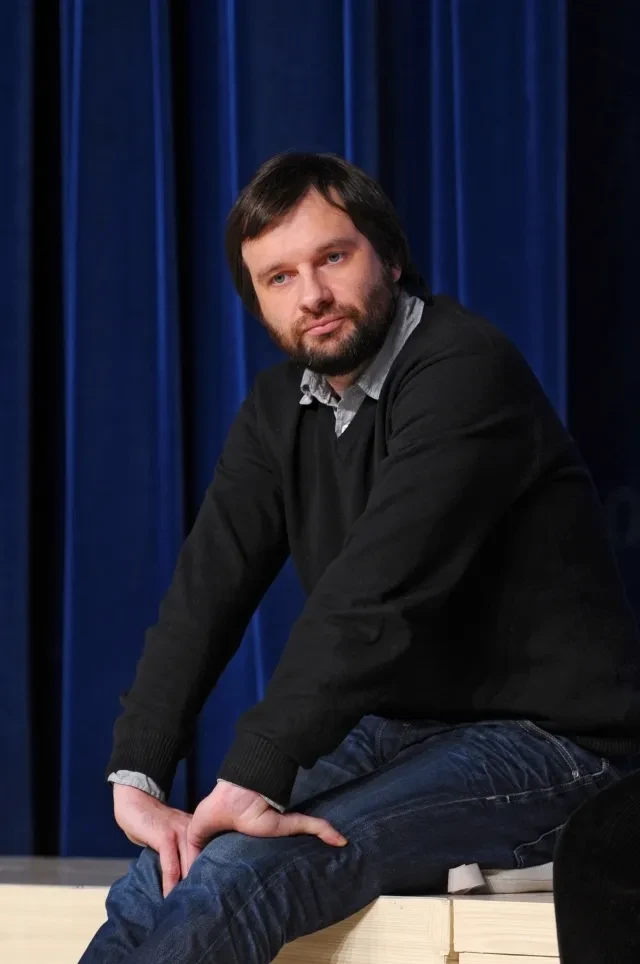
It is assumed that the final of the confrontation of horizontalists with verticalizers (I deliberately use the terminology in the spirit of Jonathan Swift to avoid the same political primitive alien to me) should become, according to the author, the defeat of verticalizers, inevitable due to the stupidity and corruption of power. In the sense that the state is so mediocre with a horizontal rune that sooner or later discredit itself completely.
It is not necessary to talk about whether the author managed to fully realize this idea, because in the first series of the series, the plot has not yet reached the actions of pro -government verticalizers . But with an excess, the motivation for the forces of horizontal development, which stood at the source of the Runet, revealed.
It suddenly turns out that the motivation of the “Runet Fathers” is represented in the first series of “Holivar” in such an unsightly form that, contrary to your own will, you begin, if not justifying, then, at least, to understand future verticalizers . Or in a very direct text:
Andrei Loshak brought such a panoptic on the screen that even the author’s comments behind the scenes do not save horizontal business.
To clarify the analysis that I am going to present to the reader, I will allow myself a microscopic excursion into theory.
So, a thesis and lapidar. The artist never takes on work without already formed ideas in advance. The absence of a priori idea means that the author has taken up the plot that is not interesting to him, and from such conjunctural approaches, nothing good is not possible. Andrei Loshak created a deep documentary movie, so I have no doubt that his product was inspired by the original creative message.
Next. The artist has only two ways to broadcast his thoughts of the audience: either in direct text (the so -called tendentious art), or indirectly through the images displayed by him.
The documentary cinema genre creates special difficulties for transmitting copyright ideas. Here, the characters of the director are not artistic ( man -made ) images, but living people. It is impossible to force living people thoughtlessly to broadcast the idea of the author (as they make fictional characters). One can only hope that the replicas and actions of the heroes will coincide in one way or another with the creative idea. If there are no coincidences, you have to dilute the contrast opinions of the heroes with their own maxims in the form of a direct text (the voice of the announcer behind the scenes).
Now, armed with the theory, I will present the plot of the first series of “Holivar” as I saw it. The action begins with the history of the California hippie Joel Shaz, who, after taking on the chest of the next portion of lizerginic acid, suddenly illuminated: to bring bridges with the USSR and stop the cold war.
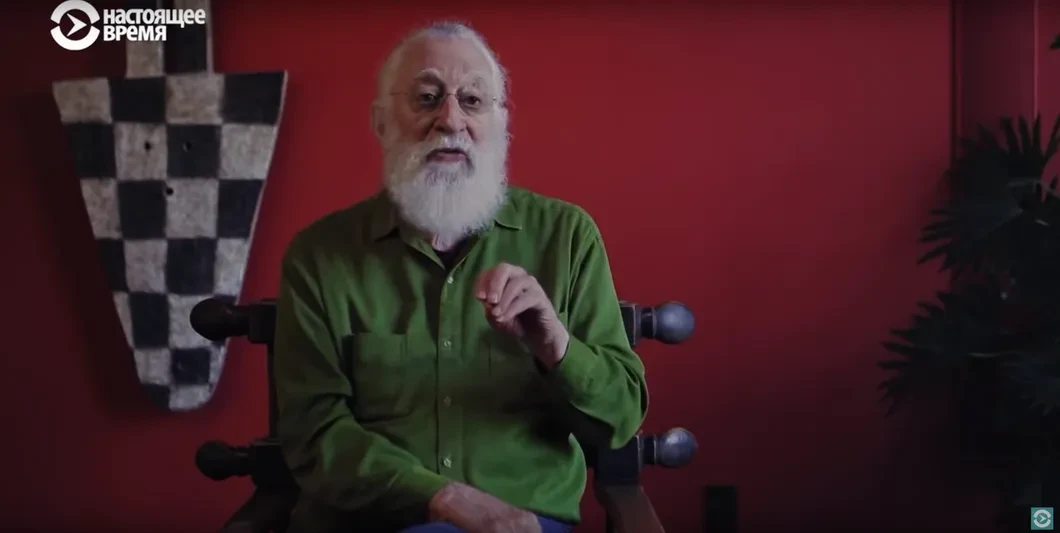
Shatz arrived in Moscow and, together with the All-Union Scientific and Research Institute of Applied Automated Systems (VNINISPA), established a structure called San Francisco Moscow TelePort (SFMT) in 1983, based on the first Soviet Internet provider to the Navam Teleport.
More significant persons and structures took part in the creation of this project - for example, the US government and George Soros - but they are not mentioned in Kholivar, apparently not to tease the verticalizers once again with the two most unpleasant jugles for them.
The birth of the domestic Internet took place against the background of the other two sign events. Joseph Goldin, along with Julius Gusman and Steve Vozniak, introduced the first teleconference between the USSR and the USA on September 5, 1982 (the same one where “we don’t have sex and we categorically against this”).
Around the same years, Soviet people captured, took them secretly from Afghanistan and Russified UNIX operating system, on which the entire American Internet was built. On the basis of the Unix at the Kurchatov Institute (under the leadership of Alexei Soldatov), they created the “original” domestic OS “Demos”.
The originality was that the “demos” knew how to work on an prohibitively unpretentious domestic computer “gland”.
The development of Demos developers, the Soviet state issued a prize of 480 rubles and presented awards in the Kremlin itself.
The history of these people - Mikhail Paremsky, Leonid Egoshin, Mikhail Popov, Alexei Rudnev - is described in the first series of “Holivar” immediately after Shats. At first, these “Maines -Keospeshniks” and the excesses worked for the defense industry. When the Soviet state fell apart, they lost their jobs and tried to integrate into the Internet business, but failed: from there they were quickly squeezed out by new “merchants”. Then the “Runet Fathers” waved their hand and emigrated almost without exception, mainly in the United States.
The fact that the Ocean of the Runet Fathers has grown together, you can judge by the Holivar's personnel, on which the remains of the Internet Guards are gathering in the California mansion of the widow of Mikhail Paremsky, they remember the former and densely smear red caviar onto the pancake (the director literalizes the metaphor “life a success” for us).
Approximately at the same time, when Joel Shatz and Joel Shatz also gathered from Russia from Russia to the west. In the film, he says in direct text that he came to our country not on permanent residence, but to bring bridges. The bridges have been hung out of the same way:
The “owls of the Teleport”, whose co -founder was the California hippies, first resold Goldendelecom, and then “Beeline” for more than four billion dollars.
On this, the technological stage of the history of Runet ends and the mercantile stage begins. It is connected with another, even more peculiar landing.
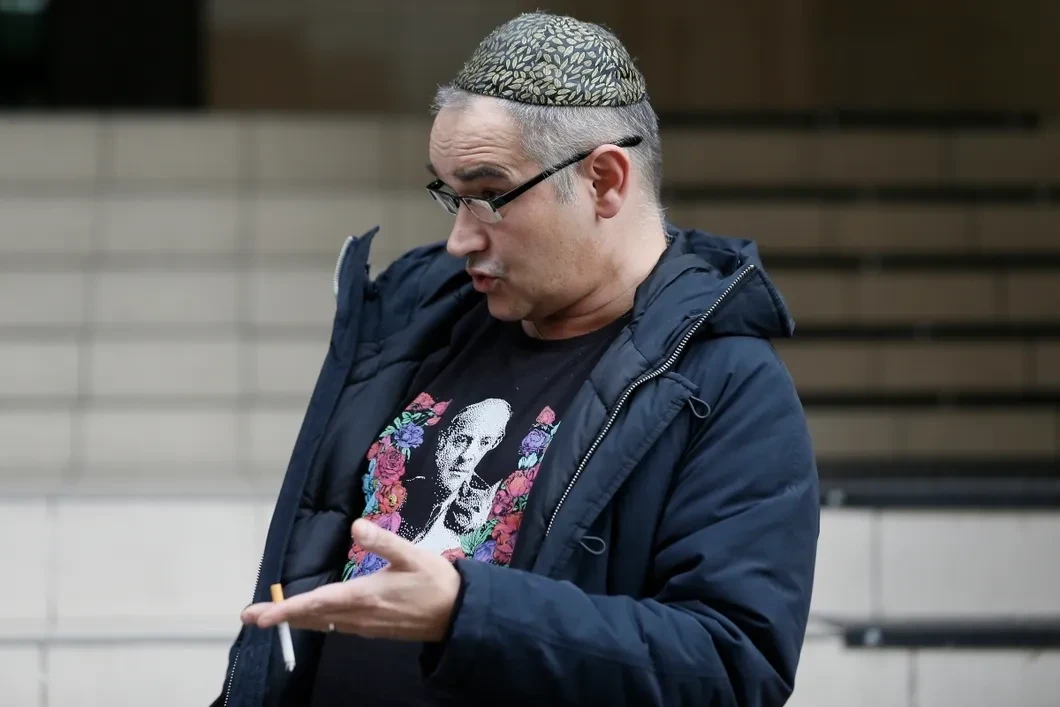
At some point, everyone realized that no one needed the Internet in its pure form (as a technology) without interesting content. Friends of the Moscow Third Meda Arsen Revazov came from Israel with the creative content of an empty technological frame (in the film he tells how he sang with friends on the streets of Jerusalem for Shekeli and Chips), Anton Nosik (the future Runet Apostle reveals the motivation with direct text: “That could be earned on the Internet in the tiny tiny Israel could not compare with the prospects and forecasts of Russia ”) and Demyan Kudryavtsev (tells in“ Holivar ”that friends had no money, but they wrote texts, sang songs, fell in love with the fact that they were simply the intellectual center of Jerusalem).
Artemy Lebedev, who returned from America in the 90th year, pulled up to create content.
Emelyan Zakharov studied in the third honey with a nose and revazov, but he did not leave Moscow.
In short, friends gathered together and founded a phenomenally successful Internet company called Citiline. Egor Shuppe, a friend of Emelyan Zakharov and son -in -law, Boris Berezovsky, became the general director of Citilin. We learned from Kholivar that Boris Abramovich gave money for promoting the first Russian Internet provider, that he was a great achievement in itself, because, according to Shuppe, it was unrealistic to pull out a penny out of Boris.
Created by Runet content and other people. The “Pupils of Yuri Lotman” attached his hand - Roman Leibov and Dmitry Iskovich. In Iskovich’s apartment, the main Internet testing of Russia was in full swing and such iconic projects as “Journal.ru” and “Polit.ru” were born.
He threw a career as a scientist at the University of Kentukki, Dmitry Werner and also went to Moscow - to develop his project “Anecdote.ru”, which quickly turned from a hobby into the portal No. 1 of Runet in traffic to attendance.
Unfortunately, in Moscow, Dmitry Werner was thrown a little: “Citilin” suggested “a professor from America from this world” (as the hero in “Holivar”) permanent employment with a good salary in exchange for owning a domain name describes himself. Werner repeated the fate of the biblical Isava: he exchanged birthright for lentils, which he regretted bitterly, learning the post -fact that Citilin was resold his domain of RBC VNICHARA and VITRIKS.
Gesheft, however, are the trifles of life against the background of the content itself, which was filled with the Runet emigrants of different waves.
“The Chief Designer of All Rus'” Artemy Lebedev painted purely for money (by his own definition) sites for the Central Bank of the Russian Federation, State Duma and all the others, not because he was an outstanding artist, but because he worked for days and customers “there was nowhere else to go”.
Roman Leibov and Anton Nosik established a competition of network literature “Tender”, which found the first winner in the person of Bayan Shiryanov. His novel about the heavy share of drug addicts “The lower aerobatics” shocked former Soviet people to such a depth that it remained only to tear books to shreds at the public events of the Posoputinsky movement “Walking together”.
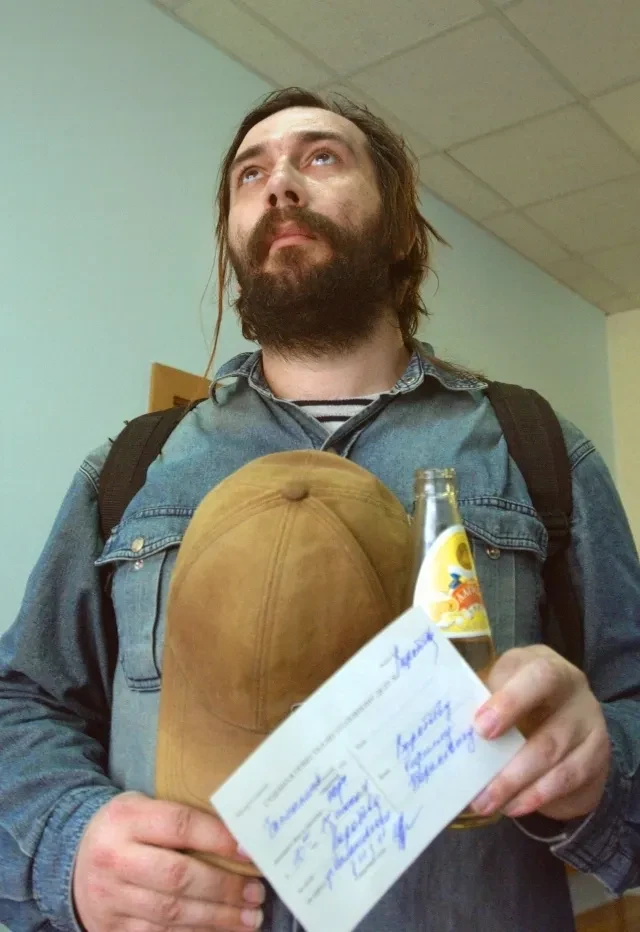
In Kholivar, another outstanding content-appropriation of the “second wave” is remembered-the pornographic newspaper “More”, which the winners of the network literature competition “Tender” were awarded as a special prize.
It is funny that at that moment on the stage next to Bayan Shiryanov was the current deputy head of the presidential administration Sergey Kiriyenko.
This, by the way, is the only episode of the first series of “Holivar”, in which the upcoming verticalizers came into direct contact with representatives of the horizontal Runet.
In a word, the first series of documentary history Runet was a success. I am by no means fingering, but only state the amazing power of Andrei Loshak as an artist. The director began shooting a film with ready -made assessments of Runet's evolution, not because he is tendentious and politically blisor, but because every honest person who is not accustomed to disappointed in democratic values at the first demand of the authorities cannot evaluate this evolution otherwise. It seems that even the child understands that the verticalization of free single -ranking communication means the end of all normal communication.
But then a small miracle of art happened. Under the pressure of reality, the speeches and actions of the Holivar’s heroes themselves - the uniqueness of the distribution of good and evil in the history of Runet by the end of the first series quickly came to naught. I will not say that the director was disappointed in the original plan, however, in the final comments behind the scenes, the lack of confidence was even supplemented with notes of bitter irony.
A similar evolution of the artist-what is called “material led”-is a kind of golden sample put on the product of creativity. And for me this is a sign of genuine quality!