
Translated material
"The Germans waited for when the USSR finally entered the war"
Historian Oleg Budnitsky - On the invasion of the Red Army in Poland 80 years ago
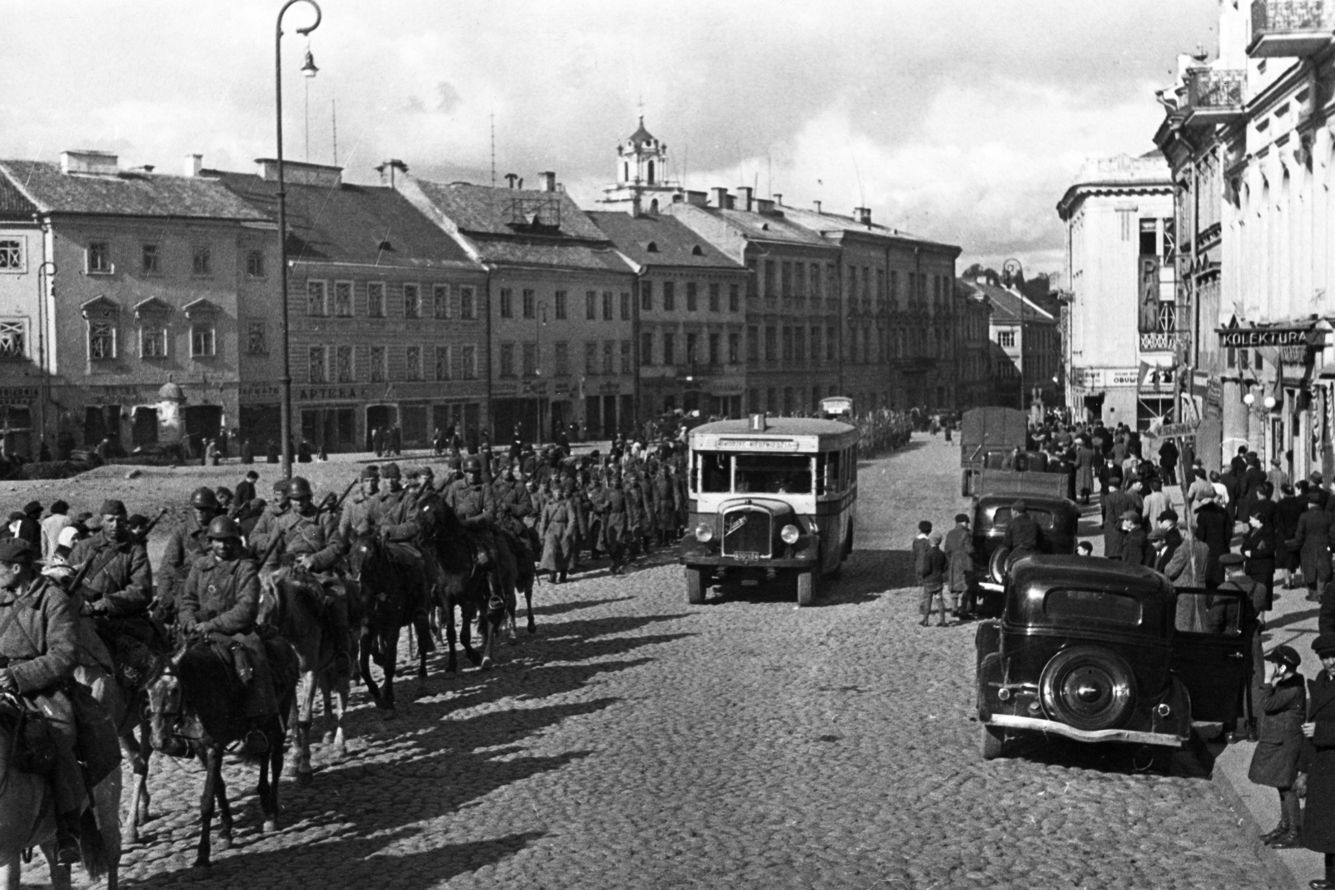
80 years ago, on September 17, 1939, the Red Army attacked Poland, which was attacked by Nazi Germany on September 1. Poland could not cope with two large powers - and by the beginning of October the last centers of resistance were destroyed; Thus ended the first month of World War II. The east of the country, which became Western Ukraine and Western Belarus, departed to the Soviet Union. In modern Poland, the actions of the USSR are considered as an occupation similar to the German, and on September 1, 2019, the Russian leadership did not invite solemn events, dedicated to the anniversary-although the same Red Army subsequently liberated the territory of Poland from the Wehrmacht. In Russia, this was called "a manifestation of complete political ingratitude." The “Medusa” talked with the director of the International Center for the History and Sociology of the Second World War and its consequences of the Higher School of Economics, Doctor of Historical Sciences Oleg Budnitsky with the director of the International Center for the History of World War II, about the consequences of the USSR in Poland in 1939.
"Poland had a chance to extend the resistance, but it is unlikely to survive"
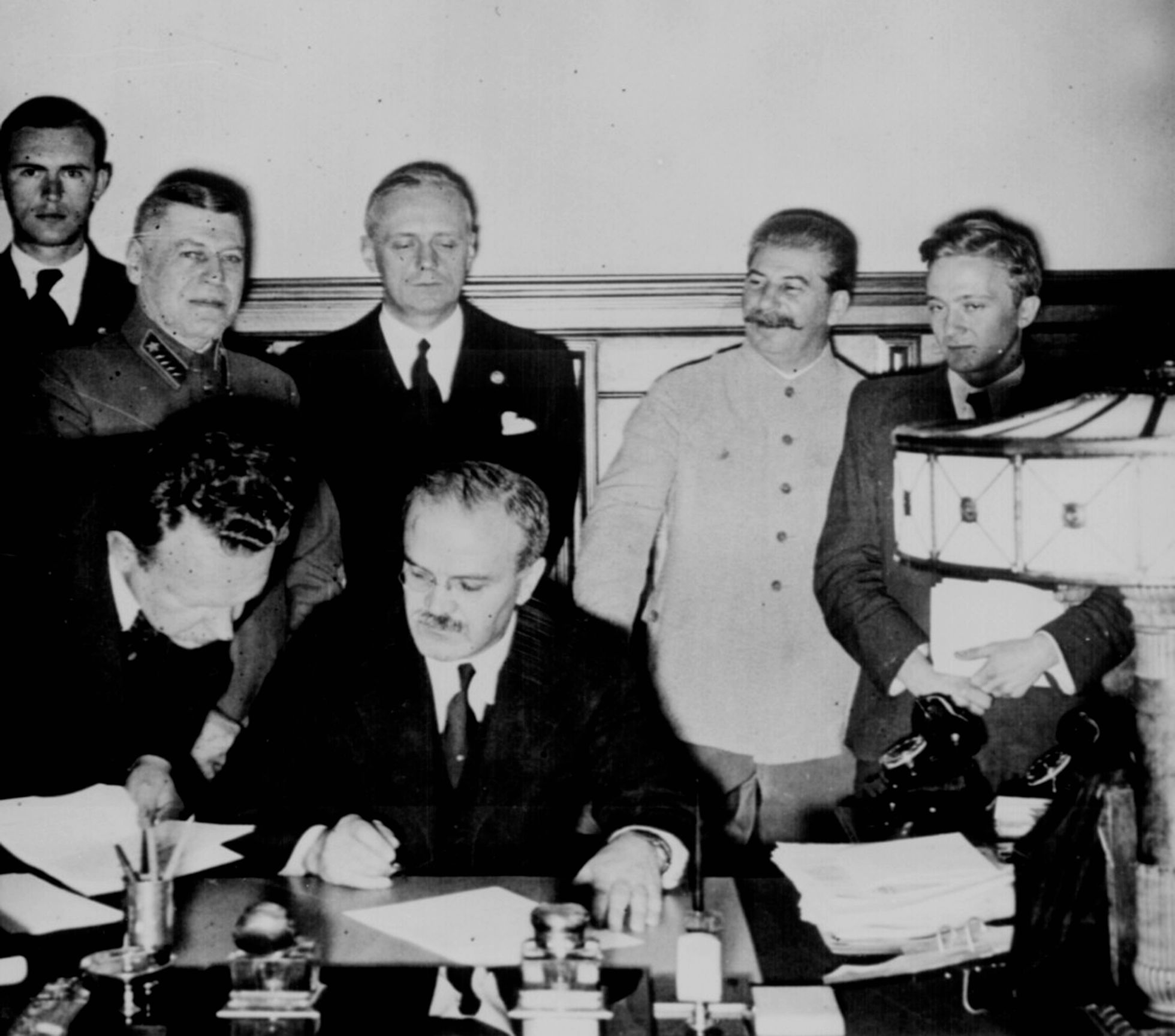
- On September 17, the Red Army invaded Poland. This was preceded by the signing of the Molotov-Ribbentrop Pact and the attack of Germany on this country. Did the pact predetermined the Soviet invasion?
- I would say - yes, and no. The secret protocols do not spell out that the Soviet Union will enter the war against Poland. The section of the sphere of influence is agreed there and that in the case of territorial changes, the interests of the USSR will pass along certain lines - or rather, not too definite. It was a declaration of intent, even though everyone understood what was being discussed.
Concrete things: when the USSR enters the troops into Poland, how the fighting will go, whether they will be coordinated with Germany, and so on - all this was specified in the course of [further] negotiations between Soviet and German representatives. At the final stage, Stalin participated in them, and it was he who said that the troops would be introduced into Poland.
- Germany wanted the USSR entering the war against Poland?
- Sometimes we have the impression that the war against Poland was a slight walk for Germany. This is wrong. The paintings where the Polish cavalry attacks German tanks is more from the field of mythology. The very least lost the Wehrmacht-I will name the exact numbers-10,572 people killed, 3409 disappeared (most likely, they also died). Total about 14 thousand people, 30,322 people were injured. Moreover, the Germans also lost military equipment, in some cases quite a lot. They lost 229 tanks, which was not very critical, but more than 500 planes. It is a lot! They only had about 4 thousand combat aircraft at that time.
So it was not such a campaign, and that’s why the Germans were waiting for when finally the USSR would enter the war. When this happened, Warsaw continued to defend herself. One of the terms of the agreement between Germany and the USSR was that he would enter the war when Warsaw falls and it can be said that the Polish state no longer exists. This did not happen in any way, neither a week nor two, although the Germans promised: about now, now. Warsaw was desperately defended, and, in general, if the Polish authorities did not give an order to surrender, to stop this meaningless resistance at the cost of the life of civilians, then she could continue to defend herself.
The USSR, by the way, initially provided some practical assistance to Germany. Radio -beacon in Minsk gave the call sign for German aircraft, German vessels got the opportunity to hide in Murmansk from the British fleet. The goods were transported from them through the territory of the Soviet Union by rail. So the story is not very beautiful, I would say.
- Poland could withstand if the USSR had not entered the war?
- It was unconditional to extend the resistance. It is unlikely to survive. Still, the advantage of the Germans was significant. In battles against Germany, the Poles lost a lot - 66,300 people killed, 133,700 people were injured.
But the Germans did not decide in advance what to do with Poland [after victory]. Either eliminate the Polish state in general, or there to create some kind of puppet state, dependent on Germany, in the remaining territories. Perhaps, do not enter the USSR into the war, do not enter the territory of Poland, they would limit themselves to creating some kind of puppet state, like what was later in France . But this is a fortune -telling of pure water.
- Why did England and France not provide real assistance to Poland after the German attack, although they had allied obligations to it? In historiography, their actions remained as a “strange war” .
- Hitler, although there was an adventurer, he accurately calculated that England and France, if they get involved in the war, would behave very carefully, because there was too strong the memory of the First World War, which they entered the great and powerful powers, and in theory this war won, but in fact, they lost - they suffered giant losses and weakened in many respects.
In principle, they had the opportunity to assist Poland, by going on an offensive on Germany. But this would mean very big sacrifices. It must be understood that France is a country whose population was almost two times less than the population of the German Reich (if you count with Austria and the Sudeten Germans). With very low birth rate, France lost about 1.3 million people over the years of World War II. France just did not want a new meat grinder. Great Britain, in turn, did not have a strong land army.
So it was a matter of political will and willingness to sacrifice human lives. It would be at least about tens of thousands of dead, even if the war ended in victory. And they needed to fight for Poland, for a foreign country. We are often forgotten that in 1914 after Germany declared war on Russia, France announced mobilization on the same day in accordance with allied obligations. Then Germany, taking advantage of the far -fetched pretext, declared war on her. It is clear that at that moment it was already a formality, the war would have begun in any case, but nevertheless. They didn’t want this anymore.
"If Stalin played Hitler, his role is secondary"
- In modern Russia, Poland is often accused of indulging in Hitler's aggression, taking part in the section of Czechoslovakia , and thereby bears its share of responsibility for the beginning of the Second World War. How do you assess the then actions of the Polish government?
- As a vileness. How else can they be evaluated? When the tending of Czechoslovakia began, Poland and Hungary took part in this. But this is not, of course, the outbreak of World War II.
But here I will take a step back so as not to reason in the paradigm that sits in the heads of the vast majority of our compatriots, and not only our compatriots. To begin with, no one planned a world war, starting with Hitler. This must be understood. He is a madman, but not to such an extent as to get involved in the war with the whole world, for its outcome was predetermined. Hitler hoped to resolve territorial issues through a number of lightning strokes, in no way of a protracted war.
But the initiator of the war against Poland, that the de facto became the beginning of the World War, was Hitler, and there is also no doubt. And when they have equal responsibility to Germany and the USSR for the world war - I would not equalize them in any way. Another thing is that in the then situation, the Soviet Union, or rather, Stalin, made, from his point of view, the most profitable choice. After Hitler contrary to all his promises to the Western countries occupied Czechoslovakia, and it became obvious that the next object of his aggression was Poland, the USSR suddenly turned out to be very important, almost a key player. Then [Stalin] had the opportunity to choose: to support Poland and Great Britain with France, which gave her guarantees of security, or to begin cooperation with Germany. He chose, from his point of view, the most profitable offer. From my point of view, I miscalculated.
- Because then I had to pay 26 million own citizens for this?
- That's right. To declare the signing of this Covenant with a triumph of Soviet diplomacy, as is done by some of our figures today is either not at all to understand the meaning of the historical events that are taking place, or to believe that people can be inspired by anything.
But if we are talking about responsibility for the Second World War, then, of course, Nazi Germany bears it. If Stalin played Hitler, then his role is secondary.
“If you look from Moscow, this is an accession; If from Warsaw - occupation "
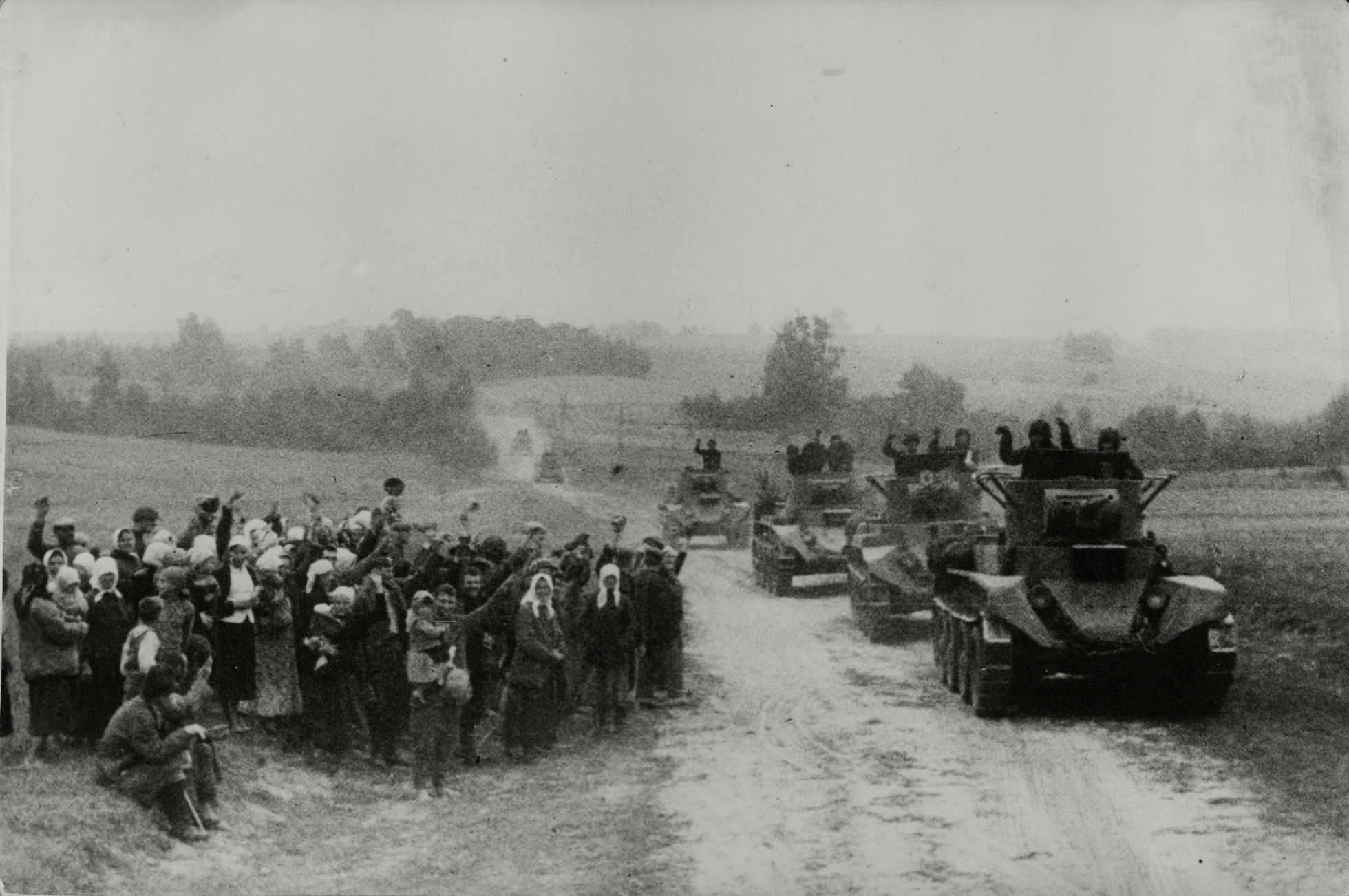
- How did the Soviet invasion go? The Polish army resisted, or the Red Army soldiers, on the contrary, greeted joyfully?
-It was different. This depended on the national composition of the population [in a particular area] and on many other factors. When the troops of the Red Army began to cross the Polish border, there were relatively small battles on the border - the Polish border guards resisted. The Red Army lost a certain number of troops, but these were relatively small losses. Judging by the reports, some Red Army men simply drowned when crossing water barriers.
It is important that the Polish government and command did not immediately understand what was happening at all. Some even thought that the Red Army entered the territory of Poland to fight the Germans. At first, there were instructions not to resist, to figure out what was happening.
Then everything was different. Of course, the Polish army was significantly demoralized [by the German invasion of the beginning of September], somewhere there was no resistance. Moreover, in some cases, the Poles, judging by the documents, preferred to be captured by the Russians than to the Germans. But somewhere there were battles, both with the troops of the regular army and with self-defense forces. Say, Grodno was taken by storm. This is very colorfully described in the diary of the future Marshal Eremenko , published several years ago, who personally stormed the bridge on the armored car and was even wounded several times.
In total, the battles were going on for about two weeks. We have quite accurate data on the losses of the Polish army and the Red Army. This was published both in Polish and Soviet publications, and I emphasize that these are the official publications of our Ministry of Defense and the General Staff. The Poles lost in battles against the USSR 3.5 thousand people killed, about 20 thousand were missing or, possibly, were injured. The USSR lost 1173 people killed and 302 was missing.
- What should be called what happened to the Polish territory after the invasion of the Red Army? Is this an connection? Occupation? Annexation?
- Depends on where you are looking from. If from Moscow, then this is an connection; If from Warsaw, this is an occupation. The borders of the Polish state were recognized by the international community, including the Soviet Union; Moreover, there was a non -aggression pact between the USSR and Poland. One of the explanations for the outside world, why the USSR introduced troops, served as the fact that the Polish state collapsed, it is not. And if not, then there is no agreement with him. But when the Red Army entered the territory of Poland, the Polish government still remained on its territory, it has not yet crossed the Romanian border. Therefore, Soviet arguments were at least distorting, and from the point of view of the international legal, this, of course, was annexation.
From a point of view, if you like, historical, the question is more complicated. But if you operate with the concept of “historical justice”, you can agree a lot to it, and there is nothing worse than the clarification, who lived where it had lived before. Walking along this path, we will only do that the world's world.
Yes, in Poland, after gaining independence, Ukrainians and Belarusians who used to live as part of the Russian Empire really turned out to be. Undoubtedly, the Ukrainian and Belarusian population not only oppressed, but neither one nor the others were a full minority. Even if it was not spelled out in the law, but it was de facto. Not to mention Jews who were sitting on separate benches at universities and so on. So the Polish state was by no means an example of European democracy, this is undoubtedly. Do not forget that in the then Soviet leadership there were quite a lot of those who went through the Soviet-Polish war -including Stalin, Voroshilov-and they also had their own scores.
But on the other hand, the same Galicia was never part of the Russian Empire at all, it was part of Austria-Hungary, it was a different culture, almost different civilization, Lviv-in general, consider the Polish city. It is no coincidence that in modern Ukraine such a difference is still between the East and the West - the ancestors have grown in different worlds, this is not so quickly erased.
And the idea of a liberation campaign was generally born along the way. Initially, a clear ideological justification was not developed, but then there was a need to explain what was happening. Then Zhdanov composed an article that says that the Polish army suffers defeat because Poland itself provoked a war. And also because the Poles oppress Ukrainians, Belarusians, and there are everywhere popular uprisings.
"The Germans looked at the Poles as a subhuman, the Soviet government tried to advise them"
- What policy did the USSR conduct in the annexed territories?
- First of all, before the start of the Great Patriotic War between Western Ukraine, Western Belarus and the rest of the USSR, there is an internal border - so that the Soviet man does not come to the poor part of the former Eastern Poland and does not see normal shops, a lot of churches, land without collective farms. The lion's share of churches and cathedrals in the pre -war USSR were in the annexed territories. They were not immediately ruined so as not to cause too much discontent among the population.
But otherwise there was a Sovietization. This, on the one hand, is the democratization of power. In what regard is democratization? In the direct. When the demos, that is, the people, takes part in the authorities. Of course, the people are “appointed”, but these were people from the people, they received positions instead of aristocrats, bourgeois, and so on.
On the other hand, the liquidation of a market economy was going on and, of course, cleaning began. Before the invasion of Poland, special mobile groups of the NKVD were created, which followed the fighters of the Ukrainian and Belarusian fronts and established a system of power in the field. Lists were compiled, whom to arrest: the first - political leaders; Religious hierarchs were almost not touched.
Four deportations of the so -called “alien elements” passed, largely according to the ethnic principle, that is, Poles. First of all, these were “seders”-veterans of the Soviet-Polish war, to which the Polish state provided land in these territories of the former Russian Empire.
In essence, a revolution arranged from the outside took place, the Red Army. That is, the same as in Russia, but at an accelerated pace. True, they did not do everything: let's say, there was no collectivization at first in these territories and the collective farms did not plant.
- How did the local population react?
-Very differently. According to Talleyrand, the revolution is thousands of new vacancies. Someone rose on a social elevator, occupied administrative and household posts. There were people who sincerely believed in the ideas of socialism, communism. The Jewish population, in a large part, supported Soviet power. Choosing between Nazi Germany and the Soviet Union, it is clear what was [for them] less evil. Then the fourth deportation touched refugees from the western and central regions of Poland, and a significant part of them were Jews.
It is bitter to talk about this, but this expulsion saved people from the German destruction in the very first weeks after the attack on the USSR. I just now had to review the book called “Shelter from the Holocaust”-about Polish Jews, who were sent somewhere to the north, to the Urals, to Siberia, and so on; As a result of this expulsion, they were saved.
In general, judging by the NKVD reports, according to some party documents, the population for the most part was still displeased. Dissatisfaction was primarily related to the economic situation. The deficit occurred immediately.
- What regime of the occupation turned out to be harder for the Polish territories - Soviet or German?
- The Germans looked at the Poles (not to mention Jews) as a subhuman. As for the Soviet regime, they tried to integrate the population into Soviet society, they wanted to make it Soviet. Of course, the usual mechanisms of social engineering acted: repressions, expulsions, executions - all this was. But the main mass sought to Sovietize.
I once had to participate in the seminar based on the book of Timothy Snider “Bloodlands” with the participation of the author himself and historians from different countries, including from Poland. Директор одного из польских музеев сказал: как можно уравнивать? Немцы уничтожили 6 миллионов поляков, а русские только 200 тысяч! Я не поручусь за цифру 200 тысяч, не занимался этими подсчетами, но то, что касается шести миллионов — это польские потери за годы Второй мировой войны, они вторые в Европе после Советского Союза. Из этих шести миллионов 3 миллиона — это польские евреи. Нацисты ставили своей целью даже не физическое уничтожение польского народа, а его исчезновение как нации.
— Как быть со знаменитой фразой Юзефа Бека , что с «с немцами поляки рискуют потерять свободу, а с русскими — душу»?
— Немцы проводили сознательно политику геноцида, уничтожали польскую интеллигенцию, уничтожали священников, потому что считали, что это и есть душа нации. Когда они захватили Львов, одним из первых расстреляли польских университетских профессоров, которые уже пережили советскую оккупацию. И это происходило по всей стране.
— Почему для польской национальной памяти настолько значимой точкой оказался Катынский расстрел , учитывая, что в эти годы страшные вещи творились со всей Польшей?
— Прежде всего, военнопленных убивать не принято. Тем более, не в ходе боевых действий. Кроме того, очень много людей просто взяли и убили без всяких видимых причин. Это же в общей сложности свыше 20 тысяч человек. Убили не потому, что они что-то сделали — просто было принято решение, что они вредные, и лучше их уничтожить. И большинство убитых были не кадровые военные, а те, кого призвали на службу, кто только проходил военную подготовку. Это, безусловно, одно из самых гнусных преступлений сталинизма.
Dmitry Kartsev