
Translated material
A slave sword against a drone
The most modern air defense systems are useless where there is no way to organize effective combat duty
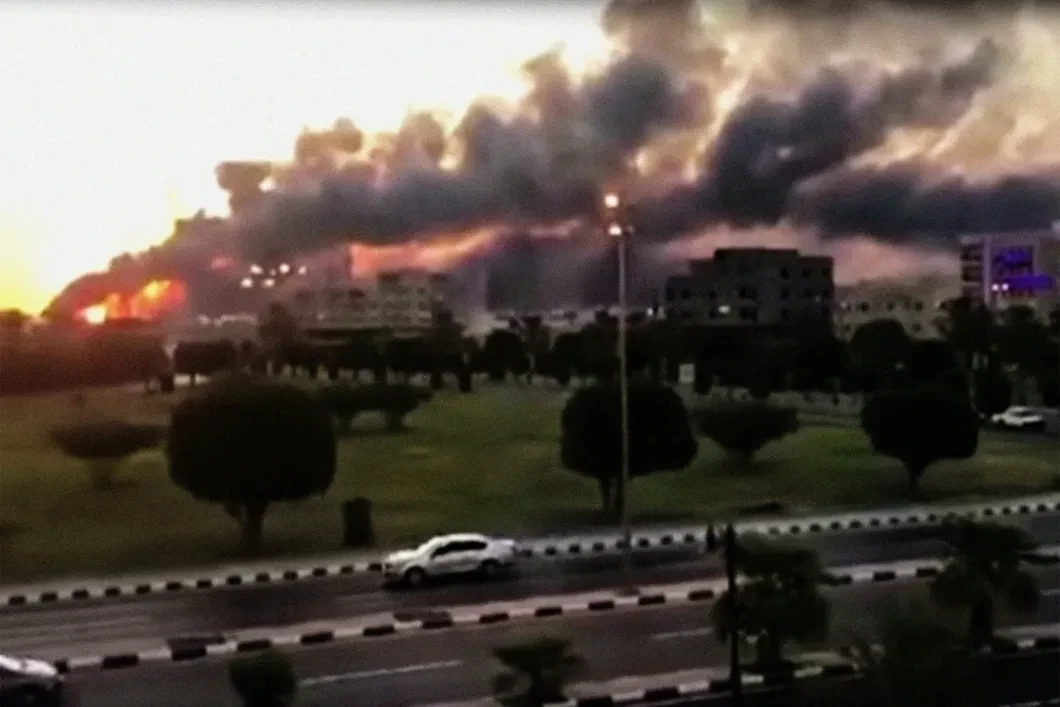
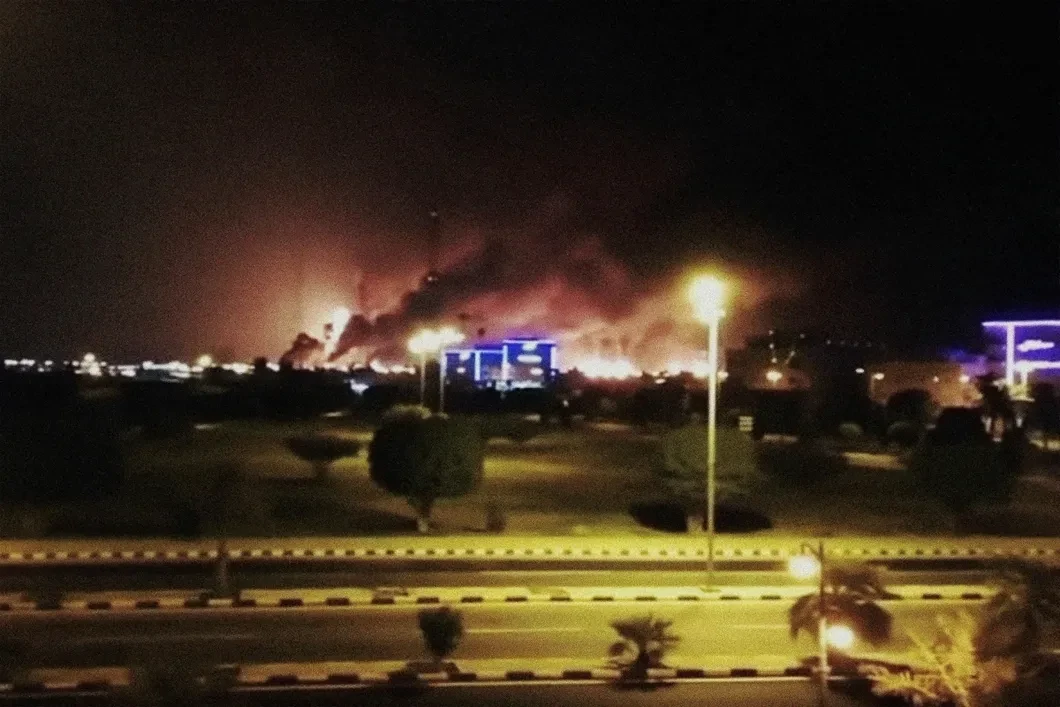
The attack of missiles and drones at the world's largest oil purification factory in Akabka in the east of Saudi Arabia on the night of September 14 ended with unprecedented success. The shipment of oil for export was halved (5.7% of the world market), and all the largest countries felt it. Anyone who organized an attack showed everyone how to “influence” modern and inexpensive military technologies into the world economy.
The world enters the new stage of technological history. From the statement of the head of the Ministry of Energy Novak, it is clear that Russia will now, perhaps, will revise safety standards at many industry facilities. It must be understood that the difficult experience of the Great Patriotic War still dictates its conditions. The processing and production of oil, for example, cannot be in one place - in case of bombing. And in ABAKAK they are almost united.
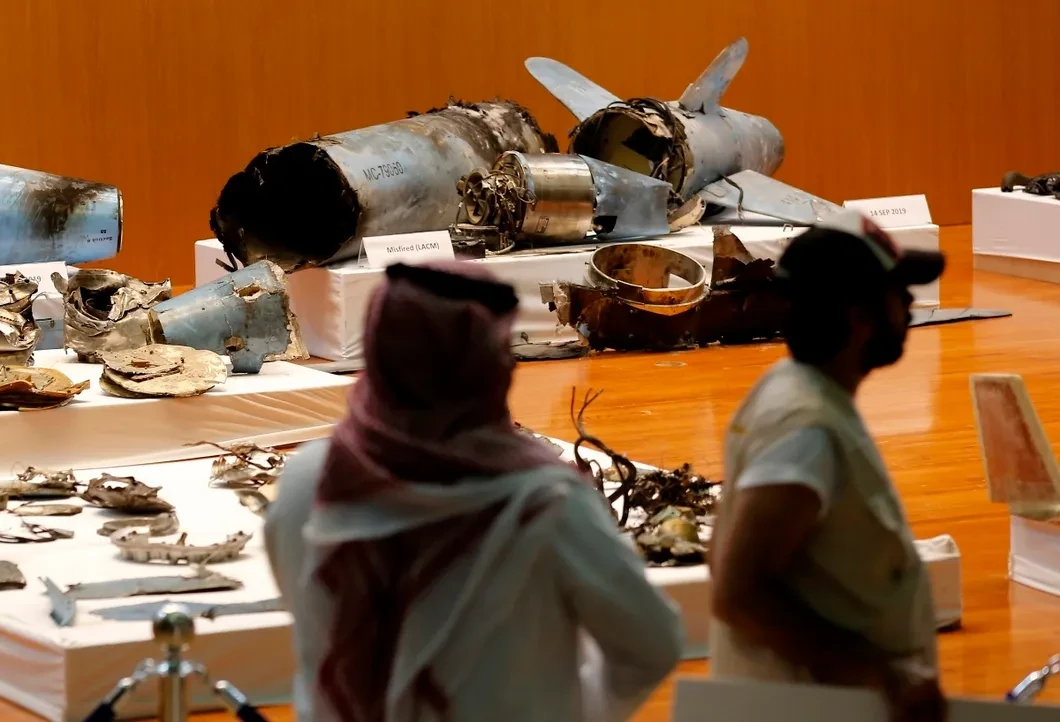
Although neither the composition of the attacking group, nor even the starting place itself has been reliably established, the high -ranking source of the Trump administration informed the ABC television company that the Saudi Aramco company attacked more than 20 drones and 12 cruise missiles from the territory of Iran. In total, there were at least 19 hits. About the use of missiles - and this makes serious changes in the final picture - on Monday reported by The Wall Street Journal.
However, officially the United States has no final opinion about the raid organizer and is waiting for the guilt of Tehran from the Saudis.
The fact is that if the missiles flew from the north, they flew right over the two largest military bases in the United States, or in the most immediate proximity to them. For the image of the Pentagon, this is even worse.
The consequences of the shocking, unprecedented for the damage to the missile strike, the Saudi officialdom and allies met with vigorous statements. “Saudi Arabia and Saudi Aramco specifically possess the situation. There is no reason for force majeure, ”a source in OPEC reports.
In terms of defense costs ($ 67 billion in 2018), Saudi Arabia is the third country of the world. It overtakes Russia and inferior only to the United States and China. The leadership of the country attracted weapons and the best military specialists from the USA, the very advanced country of the world in the current prices.
“And the best air defense systems are sometimes mistaken,” Secretary of State Mark Pompeo told reporters. Not the strongest position, I must admit. The US press also tries not to delve into the analysis of purely military aspects of the situation, having escaped with news. On the Internet, it is easy to find a video where the American anti -aircraft artillery complex Phalanx Ciws demonstratively knocks on the authorities one after another Tomagavk cruise missiles. But a missile raid on Akayk showed that in reality it does not work out.
Similar attacks from the territory of Yemen on oil infrastructure objects of Saudi Arabia last for more than one year and are calculated in dozens. There is no talk of any operational surprise of the Saturday attack. At the same time, the radar of the air defense did not even notice a whole flock of goals: a senior Saudi official on Monday noted that their military is now being investigated, "from what place they were released." Apparently, this is called "completely own the situation."
From the point of view of an inexperienced reader, Saudi Arabia is defenseless. In addition, the efficiency of the Patriot air defense system, the foundations of the country's air defense of the country, is precisely during the war in Yemen is disputed by the Americans themselves in an independent study of the Middlebury Institute of International Studies (USA, California). Today we publish an opinion about this incident Mikhail Hodarenk, a recognized expert who made a career in the air defense troops up to the posts in the General Staff. And it does not fit into “patriotic” or “liberal” templates that readers can easily find in a polemic on this subject in social networks: life does not give simple answers that the audience crawls like that.
Mikhail Hododenok
Military expert
- For exhaustive analysis, experts still do not have accurate data on the organization of the air defense of the oil complex in ABAKAK. Iranian missiles or their copies that participated in the attack were created on the basis of Ukrainian design documentation, at one time transmitted by Iran. Therefore, we can accept the performance characteristics of them as the original, we know them well. But this is almost all: data on the deployment of existing air defense systems in the country is too general.
In the theory, Saudis and American specialists should have acted as follows. If the protected particularly important industrial facility is close to the areas from where the threat comes, the organization of its air defense must meet any options for the development of events. That is, it should be complex. It is necessary to understand what ranges we can impress the attacking systems.
Typically, the height of the winged missile or unmanned aerial vehicle (UAH) is 60-100 m. Regardless of the radar potential at such altitudes, we find the target ideally at a distance of 22–24 km. This is if the surface is absolutely flat. It does not matter much whether it is American Patriot or Russian S-400. But usually a low -flying target at such a height is found at a distance of 17-18 km.
There is practically no time. As soon as the mark arises on the indicator screen, you need to switch to some kind of target support and immediately open fire. Under such conditions, the meeting will occur at best at a distance of 11–12 km.
Therefore, the possibilities for shooting at goals of this type in all existing air defense systems are very limited, they require literally an instant reaction.
We do not know whether the air defense group was expanded around the oil refinery. And if it was, then what came from those who built it? The dimensions of the petrochemical complex are of great importance. If its length with a residential area is three kilometers, then it is better to have two groups of S-300/400 or Patriot divisions-expensive pleasure.
But more importantly, not weapons, but the organization of collection and processing of radar information. The radar cannot be kept in the on the on the cooked day. Due to the fact that the shooting distance for goals of this type is very small, a very competent system of combat duty and radar intelligence without gaps, with a high coefficient of overlap of the radar field, need. The task is actually non -trivial.
After all, on airplanes like Avax, you also cannot rely entirely, like a panacea. These are heavy cars, after eight hours they must be planted and the following. Do you have such a number of prepared crews to ensure combat duty in the air for a month? This is exhausting the flight composition. And if the Husites will wait a month and on the 31st day they will launch a dozen missiles?
Even such a rich country as Saudi Arabia may not cope with such a task. The ground -based radar reconnaissance system costs cheaper and works more reliable.
Although I'm not sure that the Saudis is done as it should.
But there are even more important circumstances. It is known that the best plane is the one that the best pilot controls. This rule applies to all kinds of troops. Critically depends on the professionally prepared personnel, primarily officers.
This is easy to explain on the example of our Khmeimim air base in Syria. There, the air defense system is reasonably balanced. The S-400 of a large range is supported at close distance distances of the PAPRIS and Thor systems. The radar operates on schedule and tied to information collection systems and target designations.
But the most important thing is that there are prepared personnel, people get there in the competition. The local crews of the Torah have several dozen real combat firing, and all successful. They knock enemy drones with dozens. Anyone who saw the base with their own eyes admits that there is no funnel, destruction, broken technology or traces of fires there.
Therefore, even if Saudi Arabia purchases, as Putin advised, the S-400 complex, this will not save it. Here it must be understood that the public had a distorted opinion that this is a kind of sword-ladder. No, this is not a magic wand that resolves all issues without effort. Although this is a very good complex, Patriot can also be considered comparable to S-400 in terms of characteristics of the system. But if you are faced with the task of creating a reliable anti -aircraft defense of an important object with a mixed composition group that works at different frequencies and ranges, you will quickly understand that the quality of the weapon is only one of the necessary conditions.
Is it possible to solve all issues simply by selling the Syrian army of our modern systems? Excluded.
In order to reliably withstand the means of attacking Israel, you will have to create armed forces comparable in combat potential with its army.
And at the same time have a highly motivated and prepared personnel. Is this real in the current conditions?
The most powerful weapon of the struggle against drones is a radio electronic struggle. But the electronic warfare requires special training, this is almost art today, he needs to devote half his life to correspond to modern equipment. It is impossible even to assume that the pampered representatives of the aristocratic families of Saudi Arabia competently organize everything and will carry continuous intense combat duty. That they are able to sacrifice themselves, without which there is no victory. The military, familiar with the practice of wars in the Arab world, is not surprised when the personnel leave home on vacation on weekends.
It turns out that President Putin, offering the Saudis to buy a S-400, by default involves a comprehensive purchase of the PAPPIR, Buk, Tor systems, hire our advisers who will build an integrated air defense system on modern foundations. It is difficult to say why the Americans did not build such a system of Riyadh. Maybe their condescending attitude towards the enemy plays a role: all the wars that they had to wage in this region were like the battle of a knight chained in the armor, enjoying the crowd of peasants with braids and sticks to the left.
With an enemy, equal in strength and capabilities, the US Army after the Second World War has never encountered. But even the losses in the poorly developed Vietnam showed how it is dangerous to underestimate the enemy.
It is enough to say that the S-75 complex, standing on the equipment of the division, which I once commanded, shot down 1370 aircraft in Indochina.
This forced the command to constantly work with brains, change tactics, modernize weapons. But now the memories of that war have gone the past with a change of generations in the officer composition and with the advent of the latest means of armed struggle. As you can see, the situation has changed again - Husitov or Iran cannot be thrown with caps. And the miscalculations in the organization of the air defense of Saudi Arabia are to a large extent on the conscience of American experts - after all, the United States supplied weapons.
In the war with the Husites, Americans could help their aircraft, as soon as two of their largest bases are located nearby. Their fighters calmly affect winged missiles and drones if they are on duty in the start zone and receive timely target designation. But here you need very close interaction, implying high professionalism and outstanding personal qualities of personnel on both sides.
That such military are found in the US Army are no particular doubt. You can’t say that about the Saudi army. The organization of a single air defense system of the two armies is a very difficult task. Apparently, it does not work out very much, taking into account the results of the raid on Akabka.
Nevertheless, it is impossible to say in any case that the bombed oilfield has discredited American weapons. I repeat, the TPS is only a brick in the wall. The fact of buying weapons does not guarantee you anything, you need to be able to use it.
There are a number of circumstances that apologize to the US military in this particular case. The Saudi Army is waging a war with the Husites with combined arms, this is not a fight of missiles and anti -thresholds at long -distance distances. The attack on Akabak is only an episode of the whole campaign.
You can not leave air defense means with an air enemy one on one. If the first rocket has taken off, you must immediately strike at the place of start. Already choose what is given to you for this - a fleet or artillery - but you cannot allow the launches with impunity
It is necessary to attract shock weapons to suppress the calculations of the Husites or any other enemy, if there is a chance of the start of a winged rocket or drone from the explored area. And if the Saudis watch for four years how to launch missiles in their objects with impunity, then any ally will have their hands. Normal military would have long plowed these positions deep into 10 meters throughout Yemen.
Therefore, the main culprit of this shameful defeat, otherwise you can’t name the oil department, is the military leadership of Saudi Arabia.
The conclusions are sad. Numerous dangerous industrial facilities around the world, especially in developing countries, are unrealistic to cover in full and only air defense means. We are on the threshold of a new era. If you imagine a swarm of inexpensive inconspicuous drones controlled by artificial intelligence, it is very difficult to protect the dam or even nuclear power plants. After all, even a low -range anti -aircraft missile is a very expensive weapon. And the drones, as we see, are not too competent people in the sheds of Zadeshevo. To find these conditional sheds and destroy until the drones have taken off is the task of more special services than the army.
Help "New"
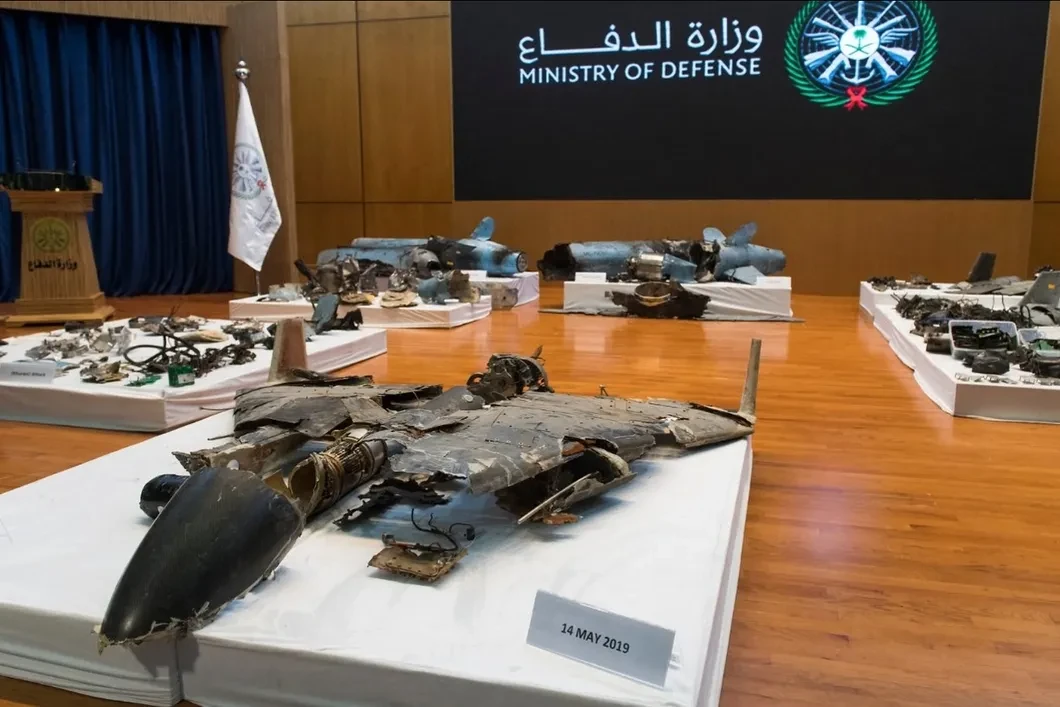
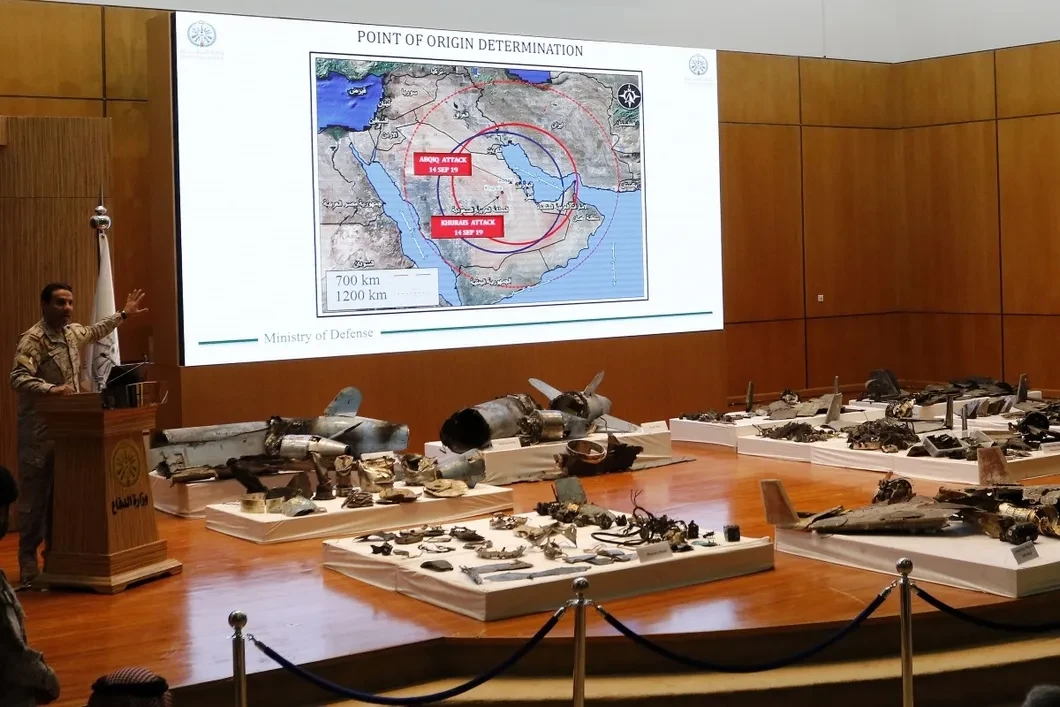
The Saudi Arabian Air Defense System (allocated to a separate command) is fragmented. The main forces cover the country from attacks from Israel and Iran. A separate Patriot battery covers the capital. The Saudi air defense systems of large-range Patriot and ThaAD American systems, towed by 35 mm anti-aircraft artillery installations of Oerlikon Contraves Skyguard (started in 1985), the modernized French air defense system with a radius of action of 10 km. As a means of early detection, relatively modern American radars AN/FPS-117 (90s) and even AN/TPS-43 created 50 years ago. The Air Force contains well-proven in a lot of local conflicts of long-range radar detection aircraft E-3 Sentry, as well as SAAB-2000.Judging by the photos of fragments of the attacking complex in Abanka missiles, the enemy applied the low -flying Quds cruise missiles demonstrated in July by the Khusita leadership. Either it is just repainted Iranian KR Meshkat (replicas of the Soviet missile bought in Ukraine, for the first time collected back in 1976), or the result of their large-sized assembly in Yemeni workshops. The engine is similar to the TJ-100 of Czech production freely sold in the market.
It is especially worth saying that the attack was held 180 km from Al-Udeid, the main American air base in the Middle East, several kilometers south of Dochi in Katar. Here are the advance point of the Central Command of the Armed Forces of the United States (CentCom) and the headquarters of all combat aircraft attributed to CentCom. Near Al-Udeid, Patriot air defense systems were placed, aircraft of military transport aircraft, electronic intelligence, refueling, interference, fighters, bombers, drones are based on GDP. Here are employees who are responsible for communications between the Armed Forces of Russia and the USA in the Middle East.
Even closer, 100 km from the unfortunate Neftekomplex in Akabka, is Manama (Bahrain) - the base of the fifth fleet of the US Navy, which is fully responsible for safety in the Persian Gulf zone. It includes the ships of the Atlantic and Pacific Fleets on a rotational basis. And the fact that the massive missile blow inflicted in the immediate vicinity (by military standards) was unnoticed, does not honor the relevant specialists of the two largest foreign military facilities in the United States.