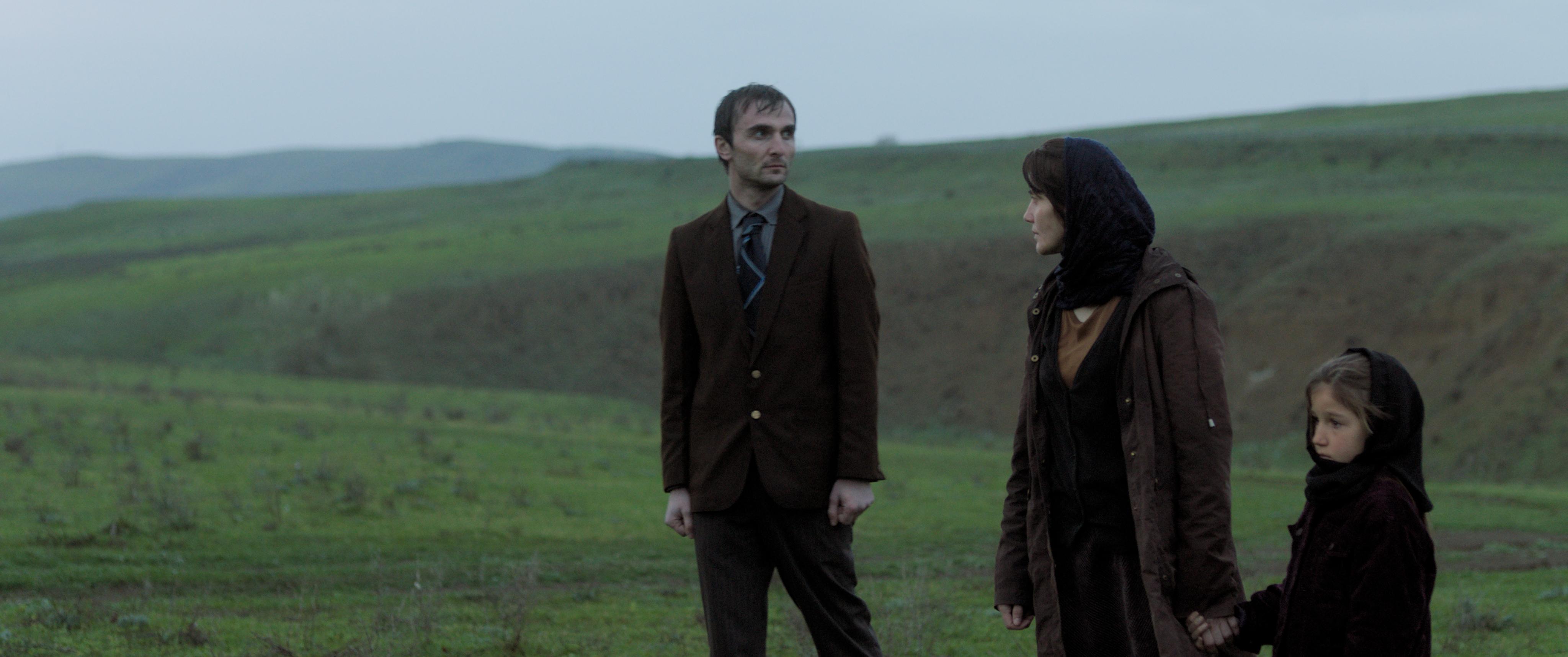
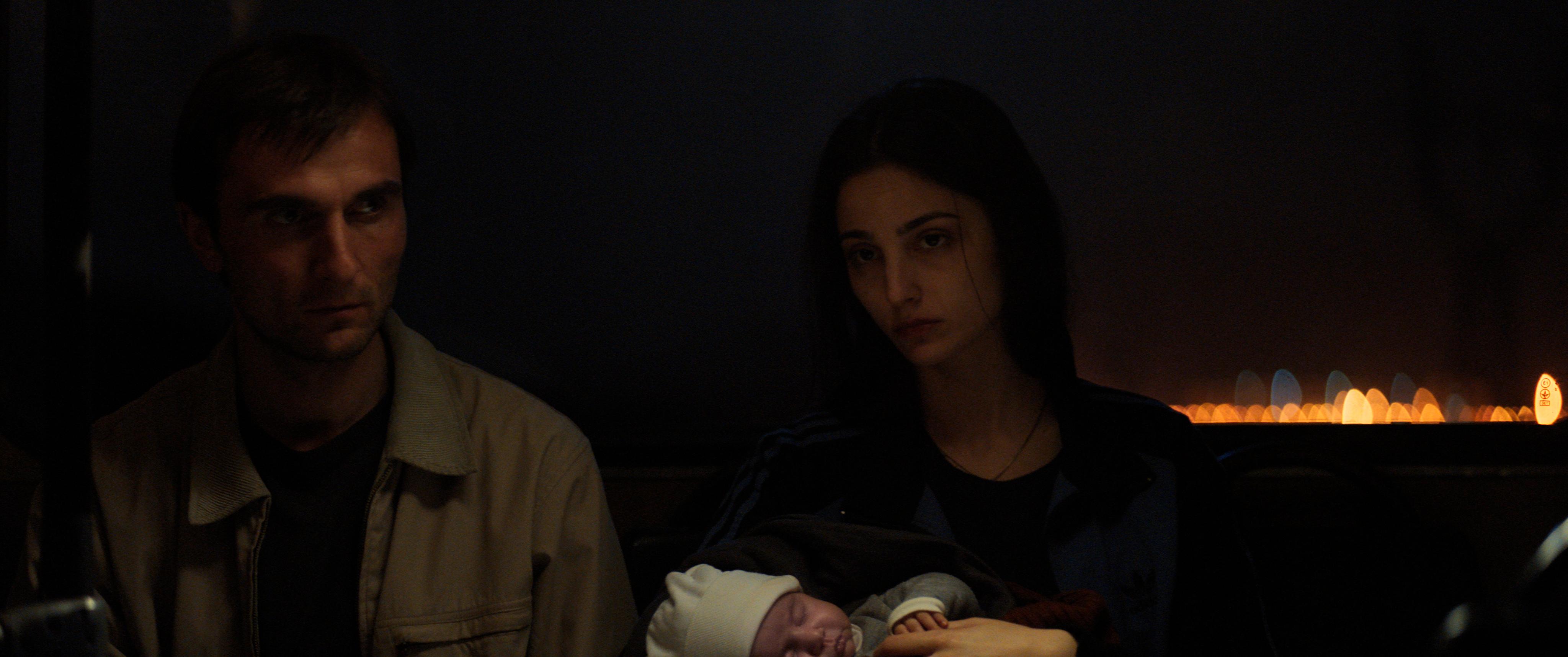
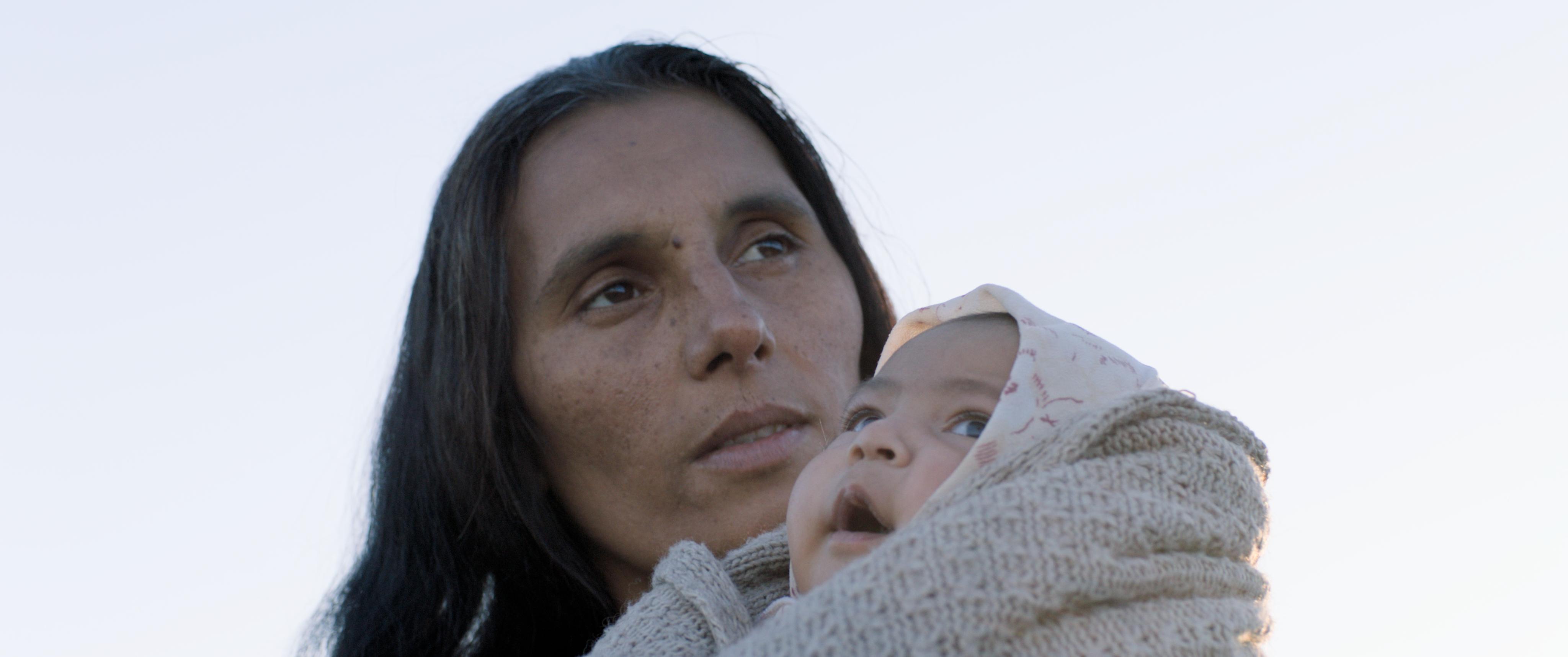
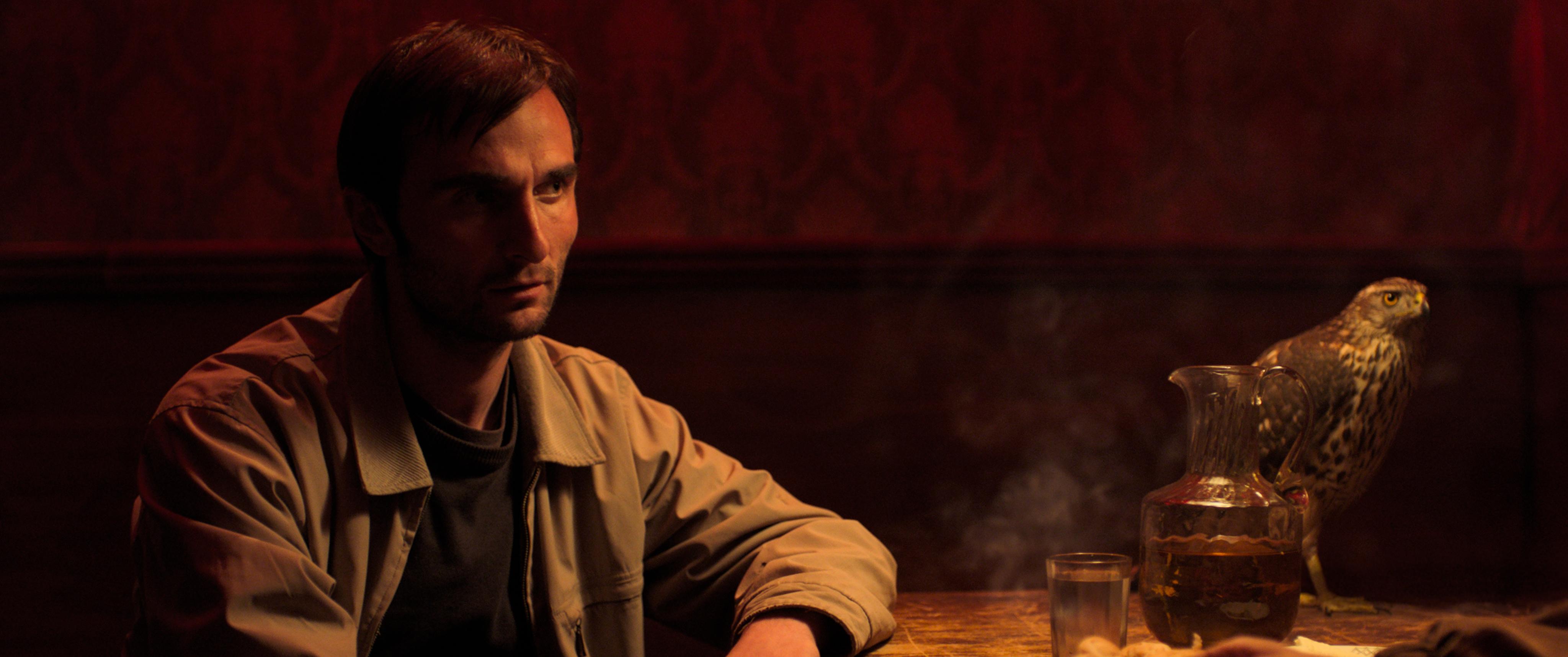
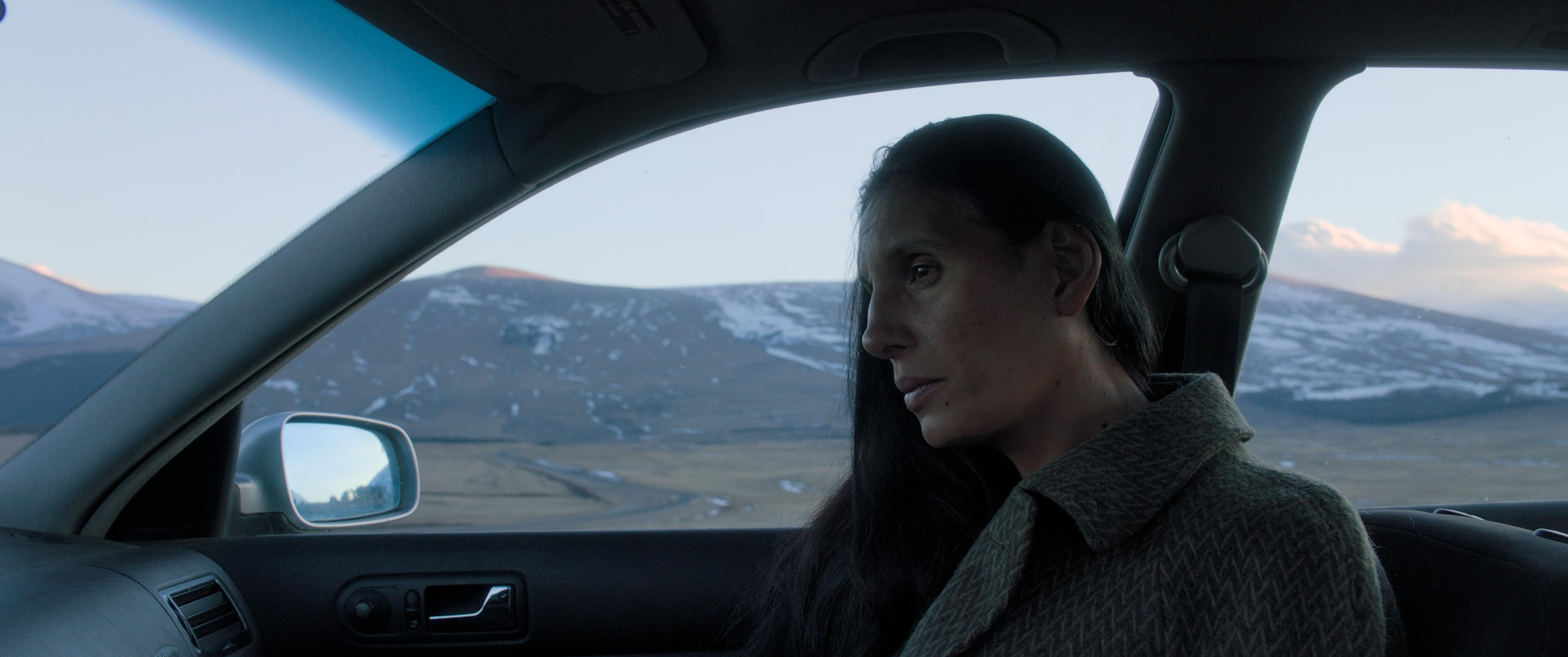
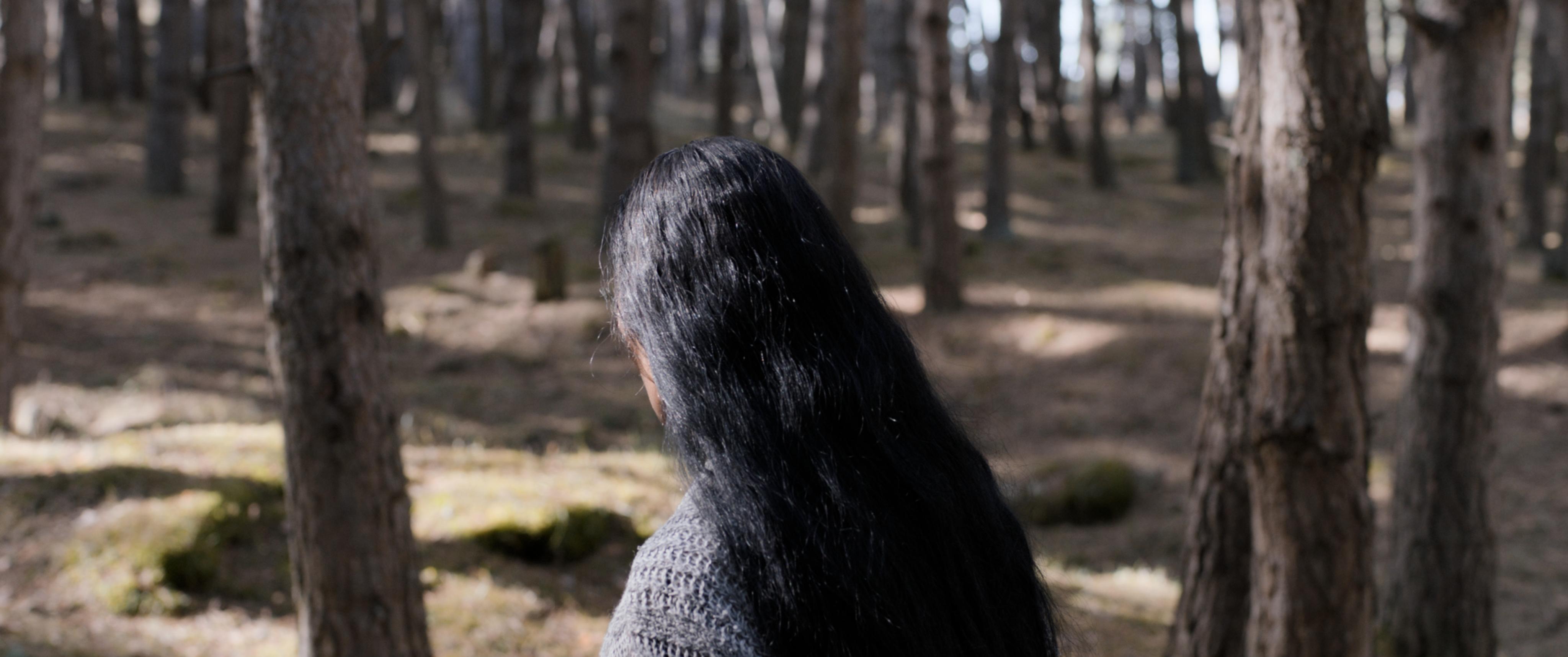
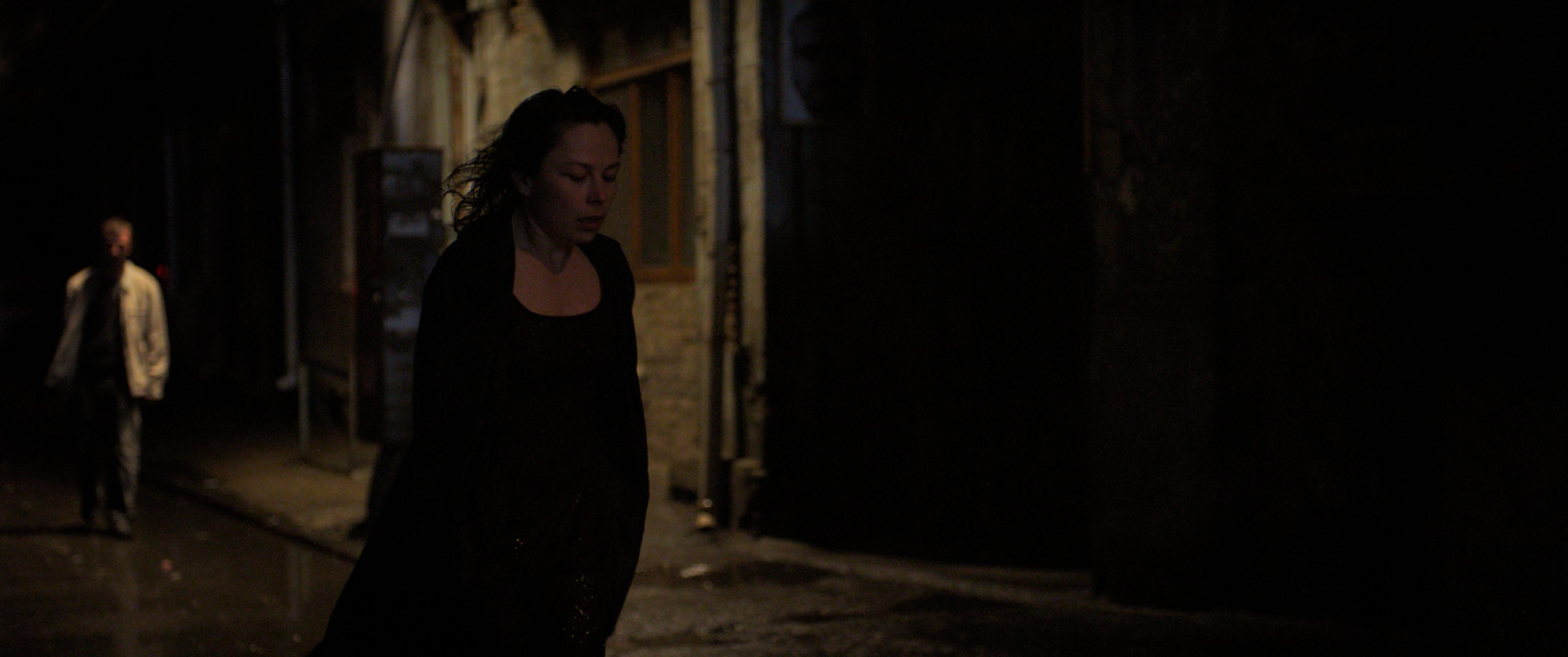
The hills, not a single tree, early morning. Two white cars on a deserted road. One passenger will die, and we are not destined to find out who, and why, dealt with him, the famous Georgian football player. The TV will inform the random crime, an inconspicuous worker about how the investigation is being investigated. The case makes him a participant in the ominous game, which is becoming more and more complicated, miners, gypsies, living and dead birds, lustful blinders and somnambulic police officers are drawn into it.
Is it possible to assign a crime? Exactly 50 years ago, in 1969, Nadine Trentinyan shot the film " The Crime Crime Office " about the witness of a suicide, who is imposed by the killer. The new film of the artistic director of the Moscow School of the New Cinema Dmitry Mamuli "Crime -Man" begins as a detective, but gradually loses the signs of the genre, turning into a poem about the darkness of forbidden fantasies.
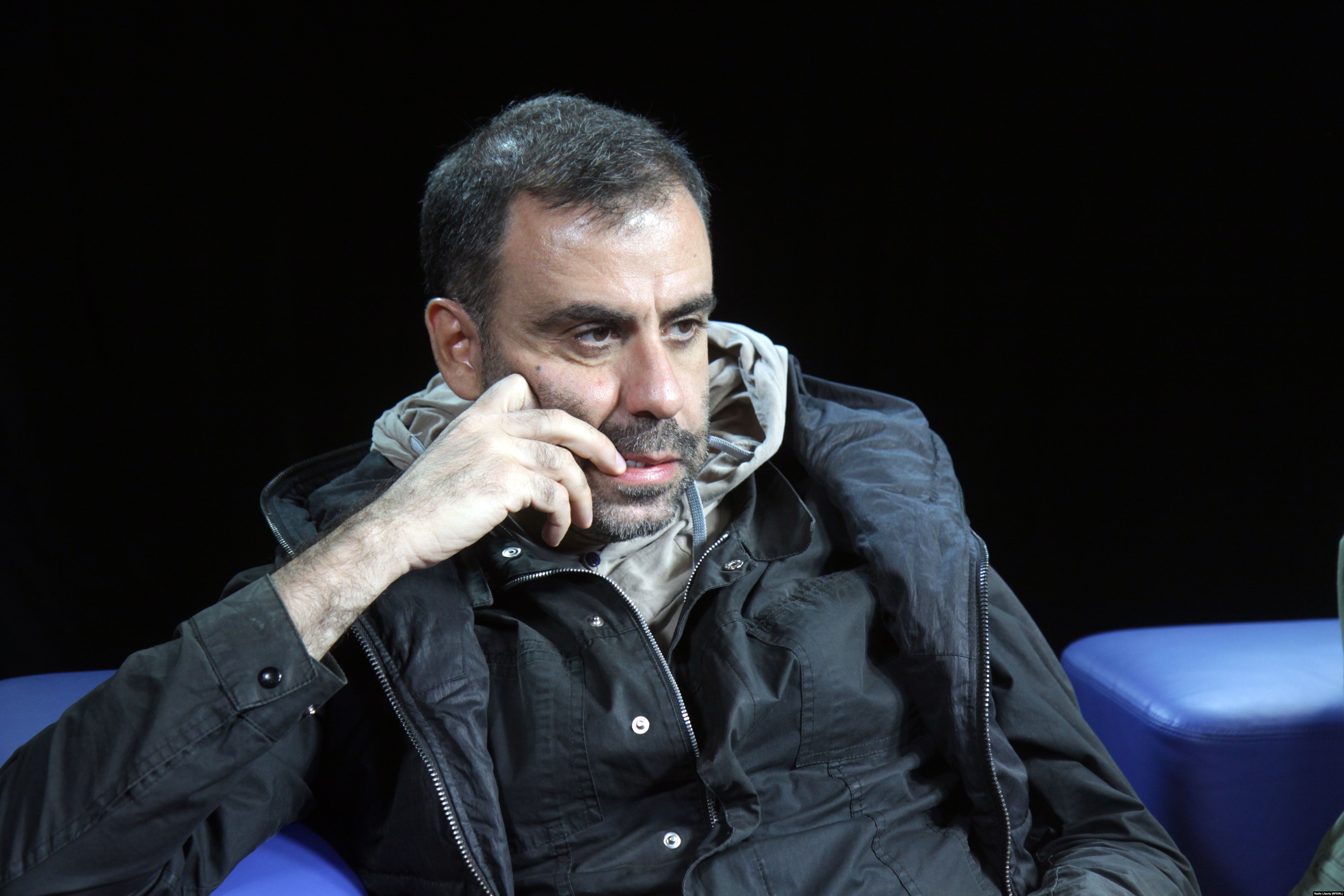
The conversation with the director after the premiere of the "criminal man" at the Venice festival begins and ends with the question of the verses that Dmitry Mamuli once wrote.
- I keep a book of your poems, this is a canvas bag in which there are strips of paper; The reader must untie it, get the strip from there and make a book on your own. It seems to me that your film is built on this principle: we also have to extract fragments of the poem, and each viewer will compose it again.
There is a terrible territory when something is instructed in a person
- I did not think about this comparison, but probably yes. What occupied me in recent years is like darkness settles in a person. Raskolnikov is not terrible. He is a metaphysicist, he has his own concept, he knows what he does. But there is a more terrible territory when something is instilled into a person-this is the Tolstoy theme, the theme of the "cruiser sonata", when a foreign creature enters a person and begins to occupy the place of his personality. And his personality becomes that being, a strange transformation occurs.
At the crime scene
“I know that you were going to shoot“ Crime and Punishment ”, then you had the idea of a film about the Russian wife of Norwegian Nazi Quisling.” It seemed to me that both of these plots are present in your film: the hero is partly schismatics, and his sister is a quiet Maria Pasechnikova, who lived with quisling and watched his metamorphosis.
“ I learned about Quisling's wife from your interview at large .” There is also this topic of dull mind.
- So, two unheated ideas merged into one incarnated. Have you been engaged in this picture for several years?
Psychotization of reality occurs, it begins to cross
- For three years, shooting lasted. They stopped and resumed for various reasons. The script was transformed depending on the existence of the heroes themselves, their existence changed the script.
- This is noticeable in the film, the rhythm changes there. At first, more slowly, and a lot of inserts from television reports. So in your first film it was, there is also one of the main characters - a TV that represented a fictional reality.
- Yes, it is. There is a certain psychotization of reality, it begins to cross. In fact, there is no avant -garde here, and it happens in life. It's just that a person is used to simplifying his outlook on life and telling a linear story. In fact, in life it happens just like that - discretely, and then the mind for some reason simplifies it and combs it. It seems to me that this is more realism than a direct narrative.
- As Raul Ruis said that a real conflict is when two people are fighting, and in the background the child eats poisoned ice cream. I, like a Sinefil, found in your film several hidden quotes. For example, from Philip Grandrhey, who taught at the Moscow school of new cinema and, I think, influenced you. The story with a boy with a hare lip, defocus and glare on his face ...
Search in the landscape and in the person of something saint is the most important thing for me
- I did not think about grandiyah, although the camera on such a lens refers to him. The movie, which is sacred for me, is a certain ratio of the landscape and face when the person’s face can unfold in time. This is the film Hermanno Olmi "Tree for shoes", this is Pazolini, this is Dreyer. Search in the landscape and in the person of something saint is the most important thing for me. Antonioni has this, a lot of where it is, and all this affects me.
- And painting too . Is your eagle that eagle that turns into a rock in Magritte's paintings?
- These birds are a parallel part of the film. In the picture of some medieval artist where Jesus is the people, in the foreground Jesus, in the background - the harlot stuck around the tree, suffering by some lake, and a bird sits on a tree. What does this bird mean, what these suffering mean? All together is an ensemble, which is part of the message of something that Jesus himself is. You can treat the cinema in the same way, and not look for internal motivations. They are still there, just hidden, they can be conspired in images. This is the sacred at Pazolini, this is what he is valuable to me. There is a whole chest of information in each face.
-Shvankmeier, when I asked him about some kind of box in his film, was indignant: "Why do you want me to tell you, where is this box where?" You can’t ask such questions, but nevertheless, the viewer will always demand an explanation, which is why the eagle died and why he appears in the police station.
It seems to me that the movie language is not developed, despite the fact that a hundred years is a very long time
- The painter or writer, drawing the human soul, recreating it, uses metonymy, parabola. Cinema can also. What Baudler can in the poem "Padal" or Rimbao in the "Drunk ship" can make a movie. Cinema has this possibility of a multi -beam image, when it is simultaneously hiding and unfolding, you monitor its deployment, and this deployment does not have the finale. It seems to me that the language of cinema is not developed, despite the fact that a hundred years is a very long time. But due to the fact that the cinema is a mass form of art, it went in the direction of entertainment, entertainment requires constant attention, and attention is the constant presentation of a new narrative, plot information. The searches that began in 1968–71 were stalled somewhere. In zero years, 5-6 people quietly continue them in their small cinema ...
- At least now you do not need to carry a huge camera. But still the film is shot by the group, it costs money, producers fuss ... And this kills Baudler.
- The alexa camera, the best camera in the world, I hated. You can’t rearrange anything, any whim is two hours. The camera is a certain creature that follows a retinue. There are myths that some directors are filmed in small groups, 8 people. I have no idea how to do it, but I really dream.
- There are films shot on a mobile phone ...
- This is another warehouse. You can't do this on a mobile phone.
- Why did you shoot in Georgia?
- In Georgia, there are the same archaic in the faces. If you work correctly with her, you can find it. In Mexico, in Chile there is something sacred in the faces, what old artists were looking for. This can be found now in Georgia.
-I know that you are very demanding on the choice of actors. When they shot "another sky" for a long time, and as a result, the Tunisian actor Khabib Bufares was invited to the role of the Tajik migrant. How was the casting for the "criminal man"?
All our heroes are people like in the days of Robin Hood
- The casting was very difficult. From the photograph, outwardly, a person comes up, but as soon as he begins to move, he disappears, destroyed in facial expressions. Moreover, this is impossible to find out on the video test. All actors, even third -stage, passed these samples. As a result, we realized that the principle is not an external semblance, but we need to look in the dramatic zones of people in whose life events occur, which rarely occur in our lives. All the time I recall the amazing words of Gelderlin, who has already crazy, a record in the Tsimmer’s house, he is 28 years old: "What is this in my life no longer events?" These events draw something on the face of a person. In fact, all our heroes are such people as in the days of Robin Hood. All robbers had a dramatic essence. These are people from the markets. I don’t want to talk about it now, but after the film one of the actors committed a crime.
- Is all the actors unprofessional?
- Professional actress alone, Natalia Dzhugeli, who plays the wife of the worker killer. All the rest are not professional actors.
- including from the gypsy camp ...
There are different times in the cat and in the sea lion. That's exactly the same in people
- Even in Georgia, it is impossible to find a person like this gypsy. This is not a matter of business, time in time. This is another time, this is the Renaissance. We can say that different temporality flows in different animals. For example, in a cat and in the sea lion, different times. That's exactly the same in people. This time today is generally impossible to find. Maybe somewhere in primitive tribes. This is what I am looking for.
- Since we remembered the widow of Shakhtar, we recall the “Death of the Worker”, the film by the Glawogger. ”
- I saw this film. The place where we shot was also a mining place. I was looking for marks of the old world. I was not looking for a plastic world that would correspond to the time of the heroes themselves. Found. I later recalled that there is a Glavogger, that he also dies a worker at the mine. Such a common topic about work. For me, not a plot canvas was important, but the possibility of walking in the second circle, unfolding these persons, these topics.
- And new crimes.
The crime scene, like Thumbelina, gives rise to different women
- Yes, he gets into this funnel in the second circle. At the level of the concept - I am talking about visual concepts, about painting - it was very important that there is a crime scene, which is also a hero, and this crime scene, like an inch, gives rise to different women. The crime gives a person who, in fact, should not meet a woman as such, suddenly it gives some fairys - here is one fairy, that’s the other fairy. This idea was so verbalized at the very beginning.
- He is a man who is granted meetings with beauties ...
- This is the main thing, the salt of this film, for me, in any case.
- Where did you find the actor?
- He worked as a guard at the theater institute in Tbilisi.
- How did you work with him?
- It is very difficult with inactors, it is impossible for them to explain, we need synchronization, literally like in synchronous swimming. You convey some fluids. You are in some condition, and he begins to copy you. He does not seem to understand what they want from him, but psychologically tries to synchronize with you. You must do it yourself so that he can pick up something, and it turns out.
- Bake him?
-Somehow . My assistants very often said that he was not able to. Surprisingly, this coincided with my presence was not able to. There was even a shift - and a change is money, a colossal budget - when we interrupted the shooting in the middle of the day. We still had 6 hours left, but we interrupted the shooting, because it was not able to, and I was not able to put it into a state. With the actors, everything is easier in this sense, because they are strong, it is their work.
- You made a film in Tbilisi and at the same time led the Moscow school of a new movie. It was difficult to combine it and how is the school doing?
-I was absent for a month or two, then returned. The school lives well. There are people who go on an individual creative, very serious path. They reflect what the language of the cinema should be today, think what Russian space, landscape, face are. These are not just people who remove some stories from the sky, and then try to illustrate them. Cinema is such a thing where a person works with the material. This material is specific. You have a tree or marble, and you must proceed from the consistency of this material to make a sculpture. Exactly the same with the cinema. The main idea of our school is to study this material, to know its inner flow.
- And what is cinema material?
He is interested in murder as such
- The time, face, time that lives in the person, the time that lives in posture, the relationship of man and landscape. In Russia, there is only one landscape, in Georgia, another, in Mexico, the third. All this is together - the topic. The topic is not in literature, but in the sense, as they say about the topic in music. There is this topic, its tonality, it lies somewhere in stories. It must be taken out, just hear, catch it. All together is material.
- There are unexpected jokes in the film. For example, when the hero opens the murderer's dossier and discovers the artist’s folder Nikita Yevglevsky.
- Yes, these are so internal jokes. Nikita made the magazine himself.
- What is he looking for in this archive?
- This is also such a world, a mythical archive where the affairs of the killers are composed . He is interested in the murder as such.
- Like the heroes of Grandrhey, especially in his last film, where everything is half -shown ...
- Here, too, there is such an onyeric component.
- I know that you are a student of Alexander Rekhvyashvili . Much, probably, comes from his plasticity.
- Yes, Sasha influenced me, I consult with him all the time.
- What have you watched recently and what has impressed you, besides Dreyer and Antonioni?
- "Happy Lazar" Alice Rorvacher. I turned on the film "Roma" and stopped in the twentieth minute, but in the end I looked. I really liked him, despite the fact that I made my way through it and something in him rejected me, did not suit me. The way the narrative is arranged there, the way he leads the story is delighting me. The event of the film is just swimming, for example. There are interesting artists who always interest me. These include Carlos Reigadas, Pedro Coshta, Jia Zhanka, Albert Serra. I believe that one of the best films of recent decades is "The Death of Louis XIV." The stunning film "Zam" Lucretia Martel.
- How are classes at the Moscow New Cinema School?
- We have many very interesting teachers. Awesome Fred Keelemen, he gives a lot to students. Serra will come for the third time now. There is Arthur Aristakisyan, another of my teacher, who can make a coup in the human mind, moreover, it can do this at a time. You get to his lecture and go to some other. It was like that with me, a meeting with him was such an event. We tried to gather people who could do this.
- Do you stay a poet? Not a poet who makes a poetic movie, but who writes poetry, even in bags?
Cinema makes it possible to chemize. As in the apartment: brought something from the street, went to the store, bought, put it, then rearranged
- No. The poet is as if such a chess figure equal to a genius. And cinema is an applied thing, you are engaged in production. When you watch the film on the installation, you absolutely do not understand whether you did it, what is there at all, some kind of horror. The film does not add up, some people come, look, they say: what is it? I really like this art. I am doing the film or not me? Here is a tree, the forest rustles, what does I have to do with it? He put a man in the forest, took him off, he has this very mediated attitude towards me. I really like the movie, it gives this opportunity to chemion. As in the apartment: he brought something from the street, went to the store, bought, put it, then rearranged, then bought something else. Here is such a kind of activity.
-During installation, something completely different is born ...
- A completely different movie. We changed scenes so radically that at times the group did not understand what was happening, was completely disoriented.
- You know that together with your film in Venice they show a new version of the “irreversibility” of Gaspar Noe, who simply changed everything in a chronological sequence and released a new film.
- Be sure to look.
-Therefore, there are no more poems, you are not writing about the Count of Saint-Germain, who removed cracks from diamonds?
Open-Eir at the dacha leader of the Center group Vasily Shumov. Freedom as a personal space
How are the freedom of creativity, personal and social freedoms related? Apartians, gatherings in the kitchens, festivals for their own, jam-seishn: how and for what purpose do these laboratories of modern culture work?
Theater, performance, Heppening, a festival of one day. "Useless songs." Rock and roll and politics. Rock and roll in private space and chamber format.
What are the Rock Stars of the Perestroika Rock Star today? Is the current cultural situation similar to the era of stagnation in the Soviet Union similar?
Open-Eir at the dacha Vasily Shumov (group "Center"). Musicians and artists Vladimir Ratskevich (leader of the Rubin attack group), Evgeny Kalachev (Obermanecs, JFF), Nikola Ovchinnikov ("Central Russian Upland"), Andrei Lezhnev (IBSH), Evgeny Ilnitsky ("Center"), Vova Terekh promoter Sergey Mironenko , Art Critic Elizabeth Plavinsky .
Elena Fanailova is running
Video version of the program
Elena Fanailova: Nikola, what is it? Is this a picnic of friends, an alternative party of people living across the time floating on it?
Nikola Ovchinnikov: A funny company of the entire local underground rock and roll, which survived until retirement age, something else gurgle and even fun has time.
Vladimir Ratskevich: Hephening. Everything that happens here is cute and insane in the good sense of the word. Hephening is good because no one knows what will happen, and it’s funny, interesting and very free. Freedom is a magical word, will, free creativity, free people, free conversations, freedom of speech.
Elena Fanailova: The program that you played today is prepared by you specifically for this Hepling? Or is it old things?
Vladimir Ratskevich: This is the cost of age. Previously, I was insane on stage and played abrupt rock and roll in the best traditions of this genre. Over the years, this is not just boring, since nostalgia in the meantime is still, but, rushing into the future, I want an endless space, immersion in itself.
Elena Fanailova: It is important for you who listens to you, how are they listening to you, in which company you are listening to you?
Vladimir Ratskevich
Vladimir Ratskevich: I don’t care, there are two people or one in the audience, I am leaving for my senses and I do not see the audience. Today, not quite as usual, because usually I am in general abstract, put on headphones and all. Although it is very important - which audience. If one of my friends, acquaintances came to me, I know that he is there, then I play for him.
Elena Fanailova: Why are you all busy with this beautiful company?
Evgeny Kalachev: Vasya Shumov has been organizing such musical evenings for many years, where he invites all his friends, musicians. It seems to me that this is one continuous party with an adventure to get here, with cops, with all business. This has become a tradition.
Elena Fanailova: Here and now we are busy with our freedom, pleasure, friendly communication, creative self -expression?
Evgeny Kalachev: Here, musicians are allowed here to do what they want, according to the mood. I also choose a repertoire, based exclusively from the atmosphere, which is here, under the Christmas trees and pines of the ruble, is strange and cute.
Nikola Ovchinnikov: I consider myself a retirement artist. Therefore, I can do what I want and when I want. And I am engaged in such stupidity.
Elena Fanailova: Is this a kind of escapism or still activity? For you, the audience is important, society is important, is it important how they react to you?
Nikola Ovchinnikov
Nikola Ovchinnikov: The presence of the public gives a different state. Volodya and I played two times a month on Mondays in the Vermel club, and this gave the experience of “public” in quotation marks (because three people came) performances, disciplines - to get together, come in time ... And when Vasya invited here, I agreed with pleasure. So this, on the one hand, is quasi -professional activity, but, on the other hand, it is clear that it does not bring income, and here is the zet of income and glory.
Elena Fanailova: What? Pleasure?
Nikola Ovchinnikov: pleasure. The process itself.
Elena Fanailova: Nikola Ovchinnikov, your partner, said that he was listening to inner noises, inner whining, some kind of inner voice.
Talk about tools with each other-there is something in this
Vladimir Terekh: Nicola and I do not discuss these moments, who on which side looks at our common cause. It all started with improvisation, even rather, from human relations, sympathy, communication ... Men are gathering, someone goes to the bathhouse, fishing, and we rehearse a concert. I feel internal warmth, pleasure from the process we are engaged, a certain growth, realization, not an empty pastime. Talk on tools with each other-there is something in this as learning a new language.
Elena Fanailova: And the audience is the third person in this conversation? Is it important to you?
Vladimir Terekh: Yes. For me, the audience is a company that is present in our conversation and sometimes can even participate in it.
Vladimir Terekh
Elena Fanailova: This picnic ...
Vladimir Terekh: Sound art.
Elena Fanailova: In what format are we located? This is a picnic, it reminds the apartment, the practices of the hapenings, originated in the 70s. For me, this is in line with the great history of the contemporary art of Eastern Europe from the 60s to our days. We can place ourselves both in the characters of the " Fluxus " of the 70s, and in the German underground of the 90s, and so on. Or is it just an innocent rock sovereign?
Vasily Shumov
Vasily Shumov: We have been holding this evening meeting of friends not the first time. Now you can play on the street, in the gazebo, warm, good weather, and it turns out like a picnic. Sometimes we do it in winter, in the house. And all this began with us as meetings of friends, former and today's members of the Center group, which has existed since the end of the 70s. During this time, there were many changes in the group, the musicians changed. It was at first an underground group, and everyone played only on personal enthusiasm, at their own peril and risk. When the USSR fell apart, we no longer had an interest to become a professional group. Anyway, the Center group is rather avant -garde, experimental, as they called: the main conceptualist of Russian rock. Tonight, the picnic, as it were, continues this story. Our guests are members of the Center group of different years, friends of the group who participated in our records, friends-artists, friends of my wife. So everything is completely organic and correct, it is a symbiosis of contemporary art. But it turns out completely natural, involuntarily because of those present people, because of guests, they represent contemporary art.
Lena Fanailova: Vasya, when he only met us, said: "What, rock and roll the Indian, he continues." Do you think this is so?
Evgeny Kalachev: Vasya is generally very specific, a real culture, and he tends not to lose the bar taken 40 years ago. Thanks to his taste, his feeling of time, we become the instruments of such a party.
Elena Fanailova: Some colleagues, comrades say that the times of large clubs have passed, especially after 2012, when a political reaction began, and we again began to gather in workshops and our companies. Do you have such a feeling or is it a private observation?
Evgeny Kalachev
Evgeny Kalachev: Apartians become the most appropriate genre of performance of rare things for rare people. The genre of a large concert was a little devalued, turned into a commercial pipe. I am not very interested in visiting them regularly. And the apartments always arise is not guessed.
Elena Fanailova: Do you miss the times when the “oveermank” was a real theater, rock theater or art theater? This is a very aesthetic project, of course.
Evgeny Kalachev: I have a partner to whom I conveyed all the affairs of the “oveermank”, and he still has the strength to engage in this daily, sing these songs, remind everyone about it, for which I am very grateful to him. And I can afford to engage in classic piano or something else.
Elena Fanailova: Does the artist have freedom only inside himself, freedom of creativity? Or should he correlate himself with all other freedoms, including civilians? Do you separate yourself in this sense from the general course of life?
Evgeny Kalachev: I, rather, is in solidarity with Cuentsis about the fact that art is mystery. This is mystery, communication, transmission of energy, transfer of memory or something else. And politics is an insignificant category in this area.
Elena Fanailova: Do this kind of pleasure enter the life package of a non-conformist or an ordinary city resident?
Sergey Mironenko: This is necessarily included in the package of a non-conformist artist and generally a normal person. That is how it is necessary to hold Saturdays, Sundays and, in general, more often, to meet, communicate, listen to music and have fun.
Elena Fanailova: Do people think at that moment, that this is their private space of freedom? Or is it connected for them that on the street, on the TV happens?
Sergey Mironenko
Sergey Mironenko: Everything is connected with what is happening on the street and on the TV, but we will distance him from this, including in such places. We understand each other at a glance, we do not need to talk about what is happening behind the fence. The people who gathered here are more or less than one generation, they survived Soviet power, moments and difficulties associated with it, and this unites us largely. I do not see any difficulties here, everything is high.
Elena Fanailova: In the zero years, everyone went to clubs. In the tenths, especially after 2012, my friends began to tell me: "We are sitting in our workshops, apartments, gather in the country." Is this a political or aesthetic measurement of society that everyone began to behave something like that in the Soviet years?
Vladimir Ratskevich: This phenomenon is clubs that were previously absent, and then appeared, exhausted themselves, they bored. A certain circle of communication, internal emigration is characteristic of today.
Elena Fanailova: Do you follow politics?
Vladimir Ratskevich: Yes.
Elena Fanailova: Internet, TV?
Vladimir Ratskevich: Internet, partly TV, less, of course, than the Internet. These are two main sources.
Elena Fanailova: It looks like Soviet times?
Vladimir Ratskevich: No, but such a spirit. I have passed all this, this is not the same "scoop", now it is better and freer. But the colors are the same. It's a shame that your peers, acquaintances, friends are younger than you position themselves in a completely unexpected way, like some party workers, Komsomol members of the 60-70s. I remember these characters well. Then they reached, and Russian rock arose on the interweaving of all this. In this music, I rather appreciate the phonetic component, and when poor poetry and stupid voices begins, it excites me.
Elena Fanailova: What should modern rock and roll do? Imagine that you are a young man, you are 25 now, and what would you be?
You have to be absolutely honest with yourself
Vasily Shumov: Again - they and we. There are appropriate, zhepoliza, careerists who would just be given funding. Directors shoot bastard series about KGB heroes. This is all ordinary soviet careerism in capitalist decoration. You have to be absolutely honest in front of yourself. My last composition is a “useless song” - about that Soviet hopelessness when pop songs were walking on Soviet television.
Elena Fanailova: Lisa, we are trying to determine which genre we perform in today, went through performance, hepening, theater platform, and as Ovchinnikov just said, this is a dissident show business.
Elizabeth Plavinskaya: This is a summer festival, of course. There are all signs: scene, super groups, summer. I am sure that now everyone will begin to do this. This is a small format, very sincere, and we got a bunch of ideal music as a result. I never thought that I would hear a “ruby attack”, and this is also a sign of the festival, when you are happy so that you can’t believe it. The same, we are doing things here, the artists still talk about art business, nothing can be done with them.
Elena Fanailova: Don't you talk about politics?
Elizabeth Plavinsky
Elizabeth Plavinskaya: We are not talking about politics, because it is still less than art business. It affects, but not really. And no matter how politics I would not wriggle, art business and show business are always only good. I remember we recently reviewed the film about non -conformists, I saw dad there, he is so sad. Non-conformist artists were very worried that they always represent Russia on the international stage, and Russia never imagines them at all somewhere in my head, does not support them. It was sad from the 19th century that the state and geniuses seem to do the same thing, but for some reason they do this with full dedication, and the state does not do it at all. An amazing impression - how many eras we survived. We recently discussed this at the Art-Vilnius. Both political and we migrated from one millennium to another, and some generations changed, and the digital era has come, and all that. And still, we are still inside luxurious art and excellent music, the most magnificent human circumstances. This causes euphoria. In those moments that we remember, we always believed in what we are doing. And at a new stage, it is already quite deep in the third millennium that we were all right.
Elena Fanailova: When Russia came in during the reaction period in 2012, Lev Semenovich Rubinstein told me: "What are you worried about? We lived in Soviet times, we know how to live in it." Do you agree with this?
Nikola Ovchinnikov: Yes, and no. Rather, “we know” is a certain indulgence from fears, and technically life is completely different now, and you can slip very easily on that banana crust that did not exist in Soviet times. This is what is associated with finances, the economy, with taxes.
Elena Fanailova: You are an artist, and suddenly you go to this line of electronic music. Or was it always your parallel occupation?
Nikola Ovchinnikov: I had something like that since childhood-undamned, unrestrained in the sense of sounds, music, and from time to time I had nailed me somewhere in this harbor. One of the reasons why I am here that once long ago I was nailed to Vasya in the Center group of the week for two in the role of a guitarist. Then we did something like this with Lesha Tegin, then the story with Vasya sailed, with the "medium-Russian hill", when the musical practice flowed into an artistic one. The "Central Russian Upland" was a musical performance, and this story lasted a year.
Elena Fanailova: And she left a noticeable mark in the development of Russian conceptual art and Russian rock. It was an impressive program.
Vasily Shumov: A circle of 30 years long was passed, and we again found ourselves in a pre -reciprocal situation. We were located in 1984 of the USSR, when there were “black lists” of rock bands, we played in apartments, underground concerts. And the songs written then, now again fall on the fibers of the soul of listeners. 30 years have passed since the release of the album "Center" "made in Paris." We made a program dedicated to the 30th anniversary of this album, and it passes quite warmly.
Elena Fanailova: This is a real rock and roll, with an absolutely sound, with all the fullness that we know about the classic rock and roll. And of course, this causes the emotions of grateful listeners, everyone was dancing under some of your compositions. And it seems, on the one hand, that the old rock and rolmers spoke louder. And on the other hand, this small format, kitchens, small events - do we not leave again in Soviet history with the fact that "my cuisine is my fortress, I will go to it, my dissent is my business, and let the state go to hell"? As I understand it, this is the space of individual freedom, and my cuisine is my kitchen, like any dissident, and Vaclav Gavel, and Andrei Sakharov. But what to do, is it necessary to do something with a large space of endless popes, stupidity and completely non-democratic policy?
The poet should always be modern
Vasily Shumov: Then there was a completely clear separation, they were, and we were. Now the same thing is happening, but under a different sauce, in a different historical formation, in capitalism, and you can seem to go abroad. Because of this terrible policy of the party and government, we again received the same watershed-they and we. Their elections, their affairs, their oligarchs, their children, their grandchildren, their property, their palaces, their yachts, their religion, and we are all the rest.
Elena Fanailova: If a person from the street wanted to come to your festival, let go?
Vasily Shumov: This is not a festival, this is a picnic for friends, a house, posters do not hang, tickets are not sold. This is for friends, artists, members of the Center group of different years, for neighbors. This is a private event.
Elena Fanailova: Zhenya, you performed one of the songs for Limonov’s poems.
Evgeny Kalachev: Yes. Eduard Limonov gave me paper that he gave me these words for free so that I always sang them. Then he once came to the concert, where I performed this song, and said: "Very lyrical." He expected hellish punk, and then a tender. Then the girl came to me alone and said: "Zhenya, it is about me." It turned out to be a girl with whom we made a stereoscopic photo project, she is a naked model, and she was a long time Limonov’s friend. We included this song in the album, which was made by many musicians of many groups, a collection. And now this song, to which Limonov is peculiarly referred to, turned out to be very in demand.
Elena Fanailova: The legend says that your musicians with whom you wrote an album dedicated to Limonov, when he was in prison, first embarrassed to play this song.
Evgeny Kalachev: Yes. I say: "Guys, let me go for some words so far." But I did not miss, and they are used to it.
Elena Fanailova: You did some songs from your old repertoire with Obermanate.
Evgeny Kalachev: Yes. The genre of performance turned out to be very tender, with wine, with beautiful girls, around nature, birds sang. I decided that you can take the natural hymns that we performed in New York, in completely different cadences, but now it seems to sound good.
Elena Fanailova: You had two young people in the program today, a boy and a girl, tell us about them.
Vasily Shumov: This is the IBVZ group, the abbreviation "and a rich inner life". This is Andrei Lezhnev, the group consists of one person, and he has temporary colleagues, keys, today there was a poet, read poetry. I met them when I helped to arrange a concert in support of protesters in the Khimki forest. I liked him, and I invited him.
Elena Fanailova: I really like that noise is a master of such local non -profit ventures.
Guys, your colleagues today said that this program was formed thanks to your taste, and this is an absolute cloud of pure art for me, the absolute artifact is what happened today.
Vasily Shumov: the poet should always be modern. Thanks to the French poets of the second half of the XIX century, contemporary art, which we know it, have been formed in many ways.
Elena Fanailova: Of course, Baudelaire, Verlaine is a classic, of course.
Vasily Shumov: Rimbae. And, getting acquainted with their biographies, with their work, I realized that it was very close to me, it fell on the fruitful soil of my soul. This can be expanded that the artist in general, the artist should always be modern. This means that you should always do something new, completely without looking back, as it will be perceived. I spend a lot of time studying contemporary art, and now all this is still holding on new technologies. And to be modern is to constantly be on the crest of the wave. This is not a modern squeak, but this is exactly the work. There is a wave, and there is a scallop on it, and you must always be in the know, with age you need to try to strain yourself and stay there. You can fail, of course, but at least you tried.
Elena Fanailova: The modest projects of large artists are a terribly attractive story, because it is a story about art and about life, about human existence, about how freedom of spirit manifests itself in chamber options. Freedom, independence, low -budgetaryness and real fun.
Cultural diary • Radio.Svoboda • RIMA — Russian Independent Media Archive