
Translated material
Askizzy: How open data help to solve the problems of homeless

In society, but in isolation - this is the situation of people deprived of the house. Once on the street, they often lose contact even with those who are ready to help them. This is a strange situation for a world covered with mobile networks. One of the services that intend to solve this problem is Askizzy .
How ASKIZZY works, and how it is useful to Russian developers
This is a foreign case that can be adopted by Russian social services. The site for homeless Australia has been developed by the non -profit organization InfoxChange , which is engaged in socially oriented technologies. The platform works on an open code.
Free distributed open source software (Open Source) is services whose code is available to everyone. They can be loaded and/or used on any number of devices. You are free to take the program code and do everything you want with it, and then spread it among your friends. The main value of the open source code is that the product can be improved, modernized thanks to the inventions of users.
With the help of Askizzy, homeless people can find out where you can get food, overnight, clothes, medical care, find out public transport routes, turn to volunteers or law enforcement officials, and take part in the social adaptation program. Askizzy combines 360,000 services offering housing, food, health services - free of charge and on anonymity. It is worth noting that the service began as a voice assistant. Subsequently, the team, along with people who had the experience of a homeless life, improved Askizzy. By 2020, the simplest and most demanded format of communication will launch-Chat Bot.
Askizzy is, firstly, the operational assistance service for the homeless and, secondly, an open data collection platform. She shows what help was most often required and where. This allows service operators - social services, corporations and just volunteers - to effectively distribute resources. On an interactive map, you can see who and where it needs to eat or track the foci with the increasing cases of domestic violence.
Open access to this information is important not only from the point of view of involving like -minded people, but also from the standpoint of the dynamics of the situation. So, in June 2019, an article was published with the speaking name " Feed Victoria ... ". It said that in the staff with a population of just over 6 million people over the past year, the number of people seeking food assistance increased by 101 percent. Readers were shocked by the fact that next to them are those who do not have enough funds for food.
How the ASKIZZY platform works, and why you can use its data
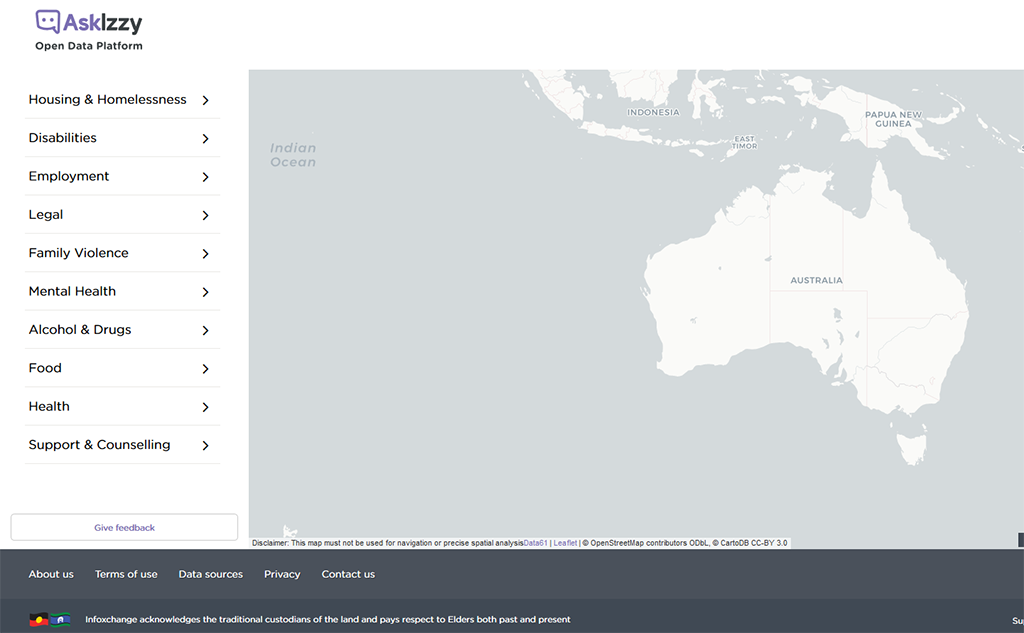
The platform displays all its information on an interactive map. In the menu on the left, you can choose a category in which people seek help: housing, food, mental health, etc. Data can be downloaded in .odp (Opendocument Presentation).
By choosing the category, you will switch to the card, by clicking on points, you can see detailed information: the total number of search data in the InfoxChange catalog (demand) for this location, as well as the total number of offering services (proposal) and the ratio of demand for a proposal.
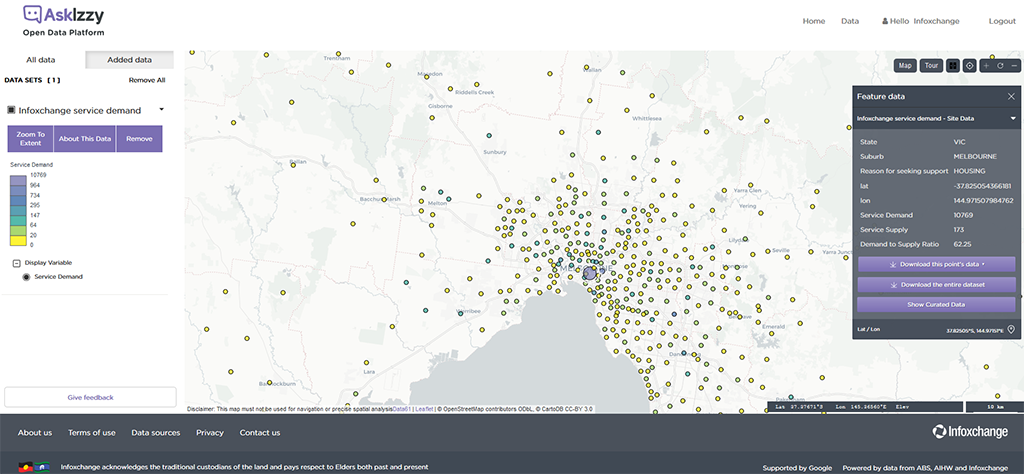
By clicking on the “source of data on the card”, you will see a pop -up window with information. So the platform loads data sets from the Australian Institute of Health and Social Support and the Australian Statistics Bureau. All available information can be saved.
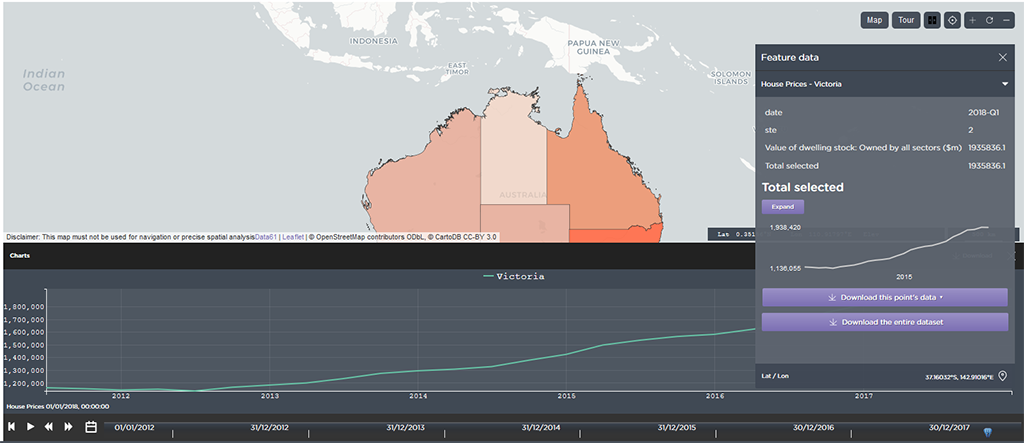
The “object data” field displays a large linear schedule. You can drag the sliders and see how the situation has changed over time.
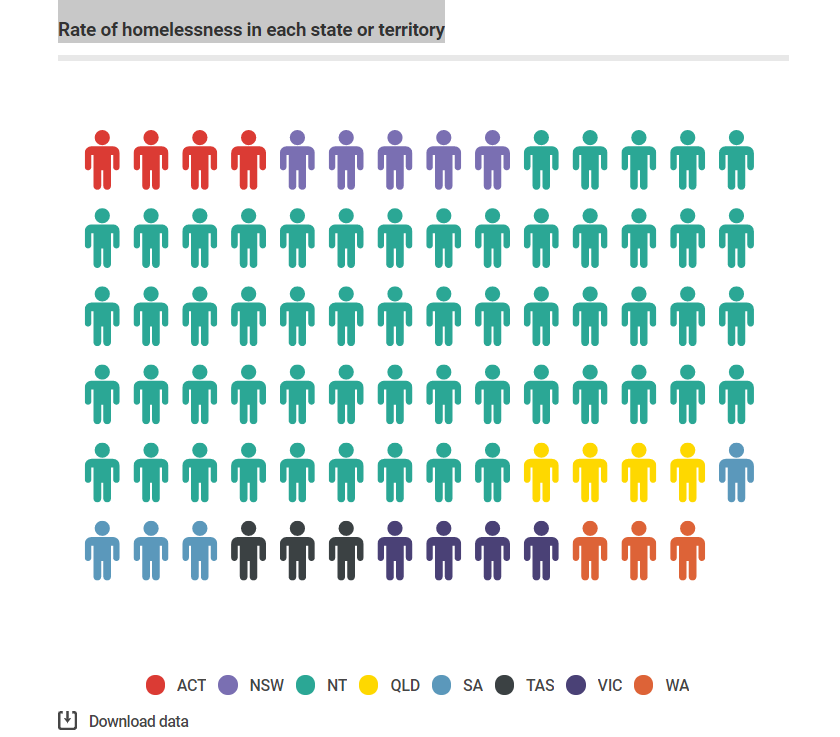
Askizzy advocates free access and distribution of data. All information available for unloading can be used for research, compilation of reports, supporting financing requests. On its website, the service even gives examples of how the infographics created on the basis of Askizzy data may look.
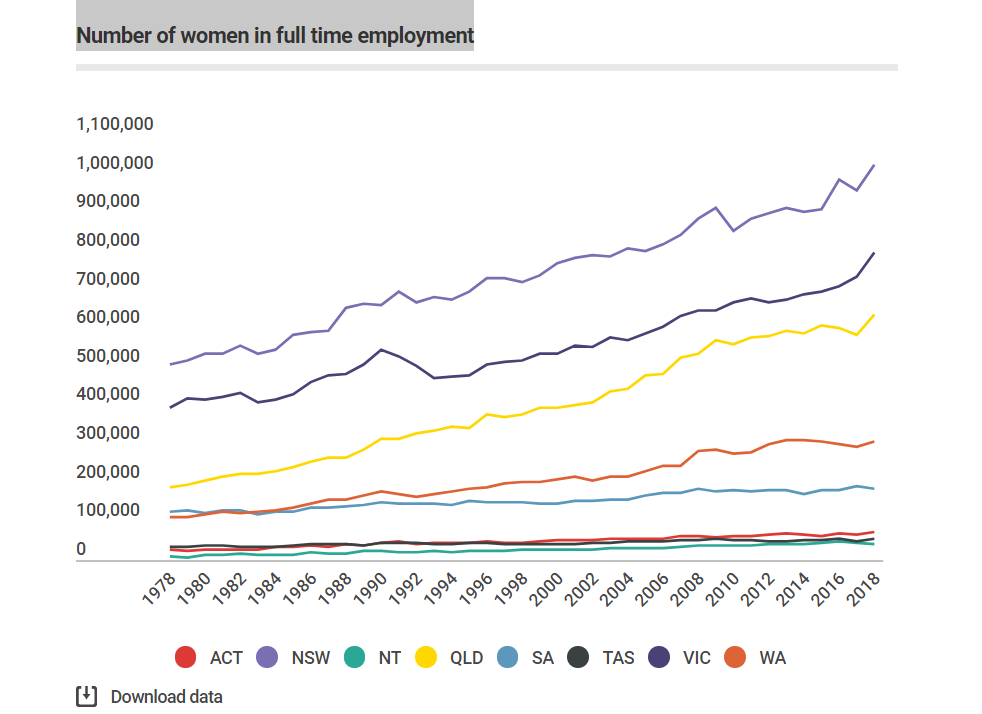
Is there anything like this in Russia?
“95% of homeless people in Australia have mobile phones, 80% of them are smartphones. Often they use prepayment tariffs that do not allow you to talk on credit, but they have access to the free Wi-Fi to be online, ” says David Spring, General Director of Infoxchange. He emphasizes that a person on the street may be for completely different reasons: he lost documents, could not pay for rent, forced to hide from who threatens violence.
Is this situation similar to Russian reality? There are many differences, but the general tragedy is the same. But we have no single service, where we could not find help from anywhere in the country. The Overnight charity organization, which has been helping people in trouble since 1990, has compiled a guide on funds and projects , and also shared the brochure of the Hardland Hard Wog .