
Translated material
Lockheed Martin defended the project of a "quiet" supersonic aircraft
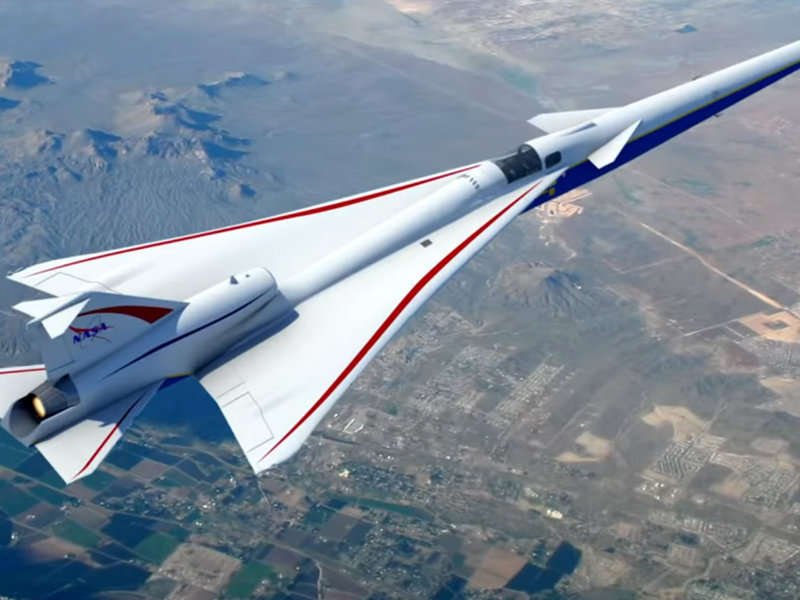
The Skunk Works unit of the American company Lockheed Martin defended the project of the Demonstrator of the "quiet" supersonic aircraft X-59, the development of which is commissioned by NASA as part of the Qaesst program. This was announced by the head of the unit of advanced aircraft of the National Directorate of the United States for Aeronading and Research of Space (NASA) James Kenion, writes N+1 .
The QueSST program provides for the development of technologies that will reduce the noise of supersonic aircraft, which will allow such aircraft to fly at superswood speed over settlement areas - now such flights are prohibited by international rules.
The noise of the X-59 is planned to be reduced due to the use of the glider of such an aerodynamic structure, in which as few shock waves would form on the surface of the aircraft. Designers also offer to reduce the noise of the aircraft due to the elongated acute nasal part, which will fully block the pilots overview forward.
The demonstrator of a 28.7 meter -long airplane technology will be performed by a single -engine. He will receive a glider, the fuselage and the wing of which will outwardly resemble an inverted plane. At the same time, ordinary vertical keel and horizontal steering rudders will be installed on the X-59 at low flight speed.
Recall that NASA signed the Lockheed Martin contract for the design, construction and testing of the first technology demonstrator of the “quiet” supersonic passenger aircraft in April 2018. According to the current schedule, the first flight of the X-59 should take place in 2020, and in 2021, trial flights of the aircraft over the landfill with sound measuring equipment will begin.
It is assumed that in the future, a new passenger plane will be able to perform cruising flights at an altitude of 16.8 kilometers at a speed of 1.5 thousand kilometers per hour. At the same time, the perceived noise level from such aircraft on the ground should not exceed 75 decibels, which corresponds to the cotton of the car door.
The development of a “quiet” supersonic airliner is part of the NASA program called New Aviation Horizons, in which it is planned to reduce the consumption of fuel aircraft, as well as a decrease in emissions and noise levels.