
Translated material
Survival lessons
In Moscow, two teachers have been evicted “nowhere” from the former hostel on the Kashirskoye Shosse for several years
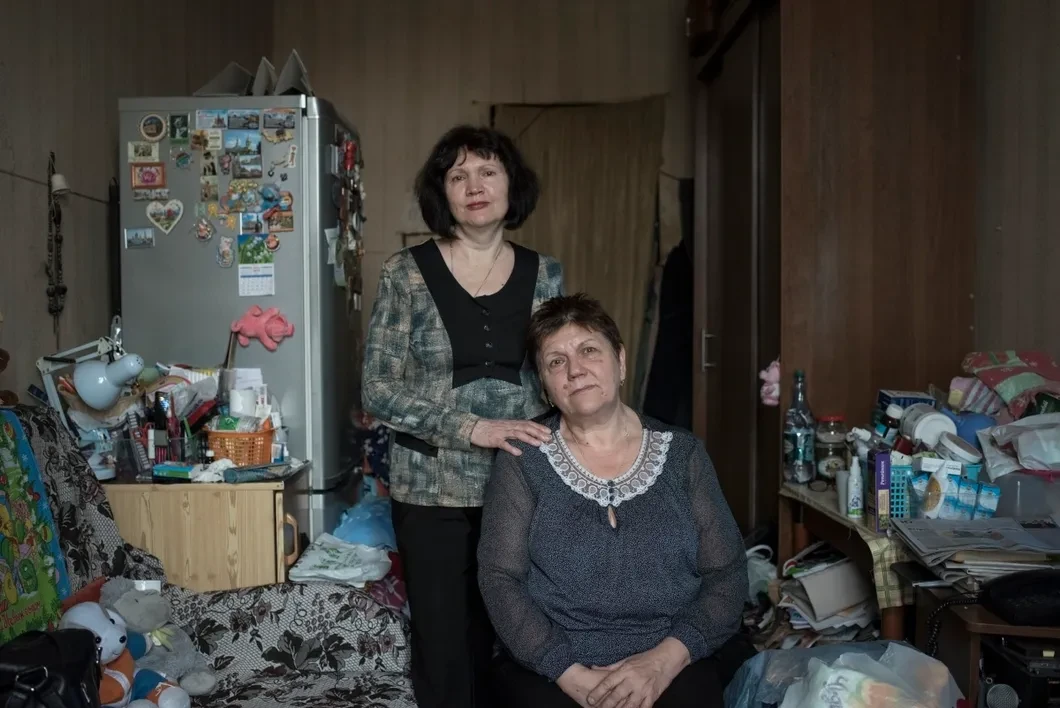
In the usual September Monday, the teacher Lyudmila Movsesyants and her sister Tatyana Metreveli were engaged in their usual things. Lyudmila was at work - she teaches Russian and literature at school, and then came home. Her sister was also not busy with anything. However, they also remembered this evening: a bailiff came to their small room in the dormitory on the Kashirsky highway, which demanded to free the occupied square.
Lyudmila, Tatyana, as well as her son Andrei, who is now 29 years old, has been evicted from this room since 2012. Only during this year they appealed three times to the Supreme Court to challenge the decision of the lower court on eviction, but unsuccessfully, the consideration of the case did not take place: for formal reasons. The court returned their documents every time.
In April, Metrevil and Movsesyants received a letter from the bailiff service - about the upcoming eviction. This letter was dated to the end of March, the five -day period, which was required to free the room, has already passed. The sisters continued to wait for their fate.
If teachers are evicted, they will be on the street - they have absolutely nowhere to go.
In July, they received another response from the Moscow City Property Department regarding their registration of those in need of housing. The meaning of the answer is that Moscow for these people is a place of stay, and not living, therefore, according to the law, they cannot register them.
"New" has already written about this story. Tatyana Metreveli with her sister Lyudmila Movsesyants, son Andrei and parents fled to Moscow from Baku in 1990. Fled from the war. The Executive Committee of the City Council of Deputies in Moscow then launched a program to help the peoples of Azerbaijan, Nagorno -Karabakh and Abkhazia, who suffered as a result of interethnic conflicts. The Moscow authorities gave the family a refugee certificate, but only the father of Tatyana and Lyudmila received housing in Moscow: by decision of the Moscow City Council, he was registered in the hostel on the Kashirsky highway. At the same time, the Moscow authorities refused to register his relatives, due to the fact that there were supposedly no free rooms in the hostel. Tatyana and Lyudmila were young, and officials, apparently, decided that they themselves would be able to find housing.
The father got a small rectangular room with an area of about 16 meters. In it, he was registered along with the same refugees that he did not even have relatives. Only after a while he managed to prescribe a sick wife in his room. It was more difficult to register daughters with the grandson.
Until 2004, Lyudmila and Tatyana and her son huddled in rented apartments, sometimes they lived in dachas of acquaintances, and for some time even at school.
Once Andrei became bad, and an ambulance had to be called to the school address. The doctors cursed: they decided that they have been holding the child at school for so long because of additional classes.
They wanted to take him to the hospital, but the family did not have Moscow registration, and therefore had to be abandoned from hospitalization.
In the early 2000s, one of the neighbors of the parents of Lyudmila and Tatyana, Albert Chelingarov, left for the USA under a special refugee program. Later, another neighbor, Stepan Akopyan, decided to go to another room - in fact, but not according to the documents. In 2004, Lyudmila, Tatyana and Andrei moved to the parental room.
At that time, the family already had Russian citizenship.
They received it in 2001, after parents. Both the mother and father of Lyudmila and Tatyana gave Russian citizenship unhindered, especially taking into account the fact that the mother was born in Russia. After that, the rest of the family members managed to obtain citizenship. With the status of immigrants, which is given if a person leaves the old place of residence due to a religious, national racial or other type of persecution, it turned out to be more difficult, Tatyana could not get him. The reason for the refusal was formal - did not have time to submit an application in time. Tatyana herself claims that she submitted the document on time, and the refusal was illegal.
They still did not have permanent registration, like a permanent place of residence.
At the end of 2006, Lyudmila and Tatyana had died her mother, and in the summer of 2007 his father. Movsesyants and Metreveli, of course, tried to officially register in the room in which they lived, but nothing happened.
Lyudmila, Andrei and Tatyana managed to achieve registration only in 2011. But the very next year they were deprived of them: the Akopyan, who was still registered in the room, initially did not object to the registration of the Mosvsesyants and Metreveli. However, then he opposed sharply against. Stepan Akopyan filed a claim for eviction, and the court satisfied this claim. The logic of the court came down to the following: at first the tenants of the room were the parents of the Movsesyants and Metreveli, as well as the Akopyan and Chelingarov. After the death of the parents of Tatyana and Lyudmila, only Akopyan remained the tenant. He is not their relative, therefore, according to Article 69 of the Housing Code of the Russian Federation, they cannot live on one housing under a social hiring agreement.
Since then, the Moscow authorities believe that the Movsesyants and Metreyl live in their room illegally. Under the pressure of the court and a neighbor Akopyan, they had to move to the liberated room, the keys to which they were given by the left neighbor. They had nowhere else to go.
Over the past 2-3 months, women wrote to the mayor of Moscow, the president, and in a variety of instances-asked for help. However, nothing happened.
When the Movsesyants and Metrevil tried to challenge the deprivation of registration in the courts, colleagues of Lyudmila and Tatyana came to meetings, confirming that they really worked at school for many years. However, this did not affect the position of the court.
The lawyer from Civil Assistance Philip Shishov, who is engaged in the case of teachers, helped them file a lawsuit in the ECHR. But the expectation of the decision of the ECHR is years. And there is no time to wait for Movsesyants and the meters - bailiffs with a decision on eviction can come at any moment.
In addition to a room with an area of about 16 square meters, in which they are now more likely to come together (Andrei tries to stay with a girl or with friends), they still do not have any housing.
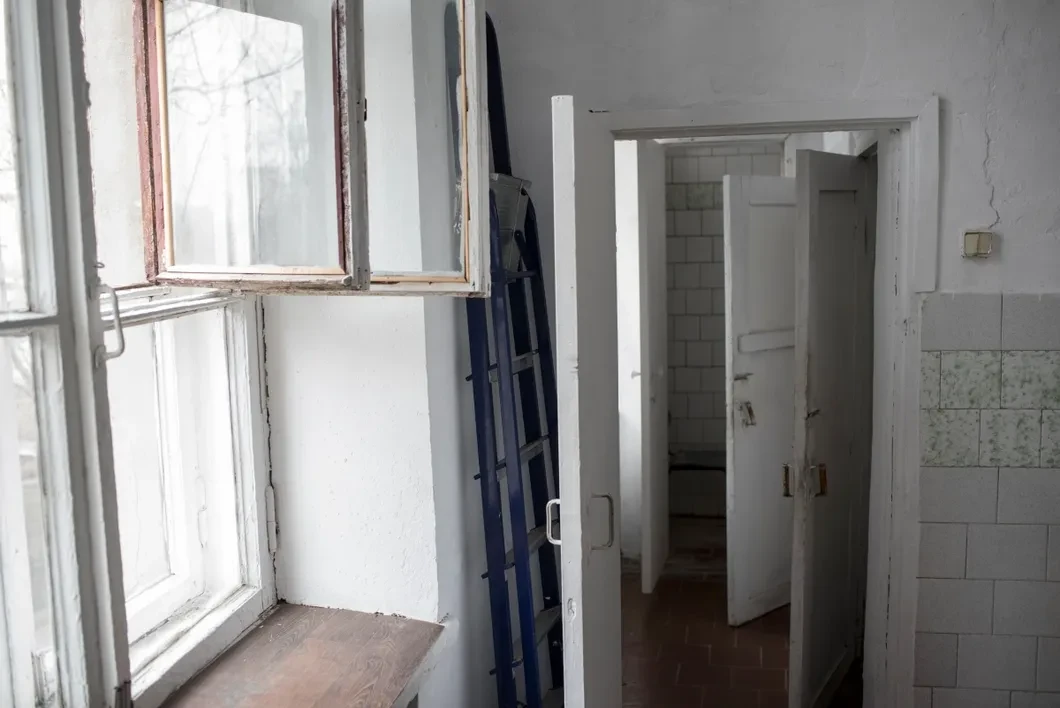
We go to the Stalin five -story building and climb the second floor along a shabby wide staircase. Tatyana opens a large door to the floor, and we find ourselves in a long corridor, on both sides of which are rooms. The corridor is uncomfortable: it smells of non-stitched meat, and something else, similar to a quick-made noodles. Some rooms have tables and some other things. The neighbors of the Movsesyants and the Metrevo-the same refugees or people who rent rooms in this house are in a hurry about their business, an elderly woman in a home dressing gown something coat on one of the tables standing in the corridor.
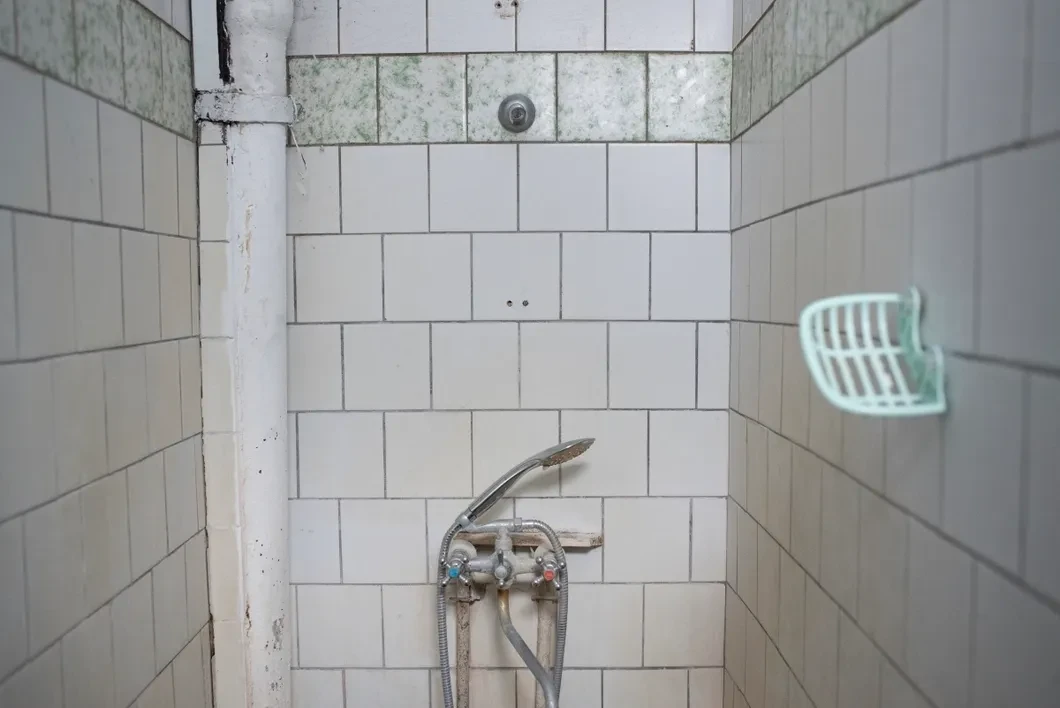
Shower and toilet are common to men and women. On the entire floor, where there are almost 30 rooms, there are two of them at one end of the corridor and in the other. The shower from the toilet is fenced off by a small partition. At first, everyone was embarrassed, and then - nothing, got used to it.
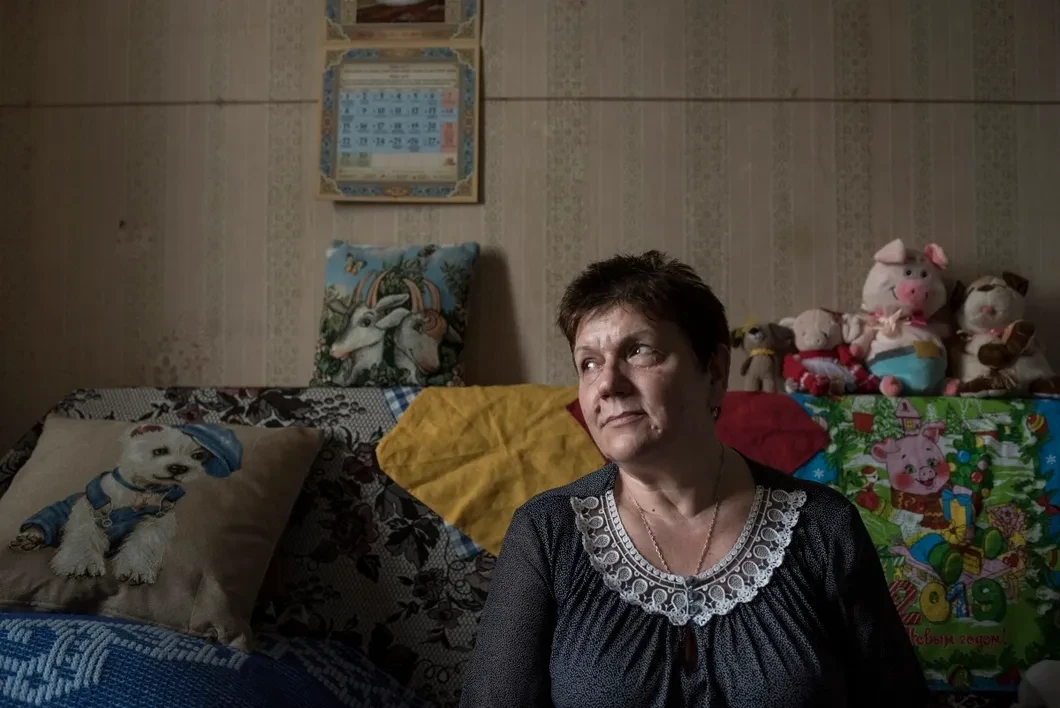
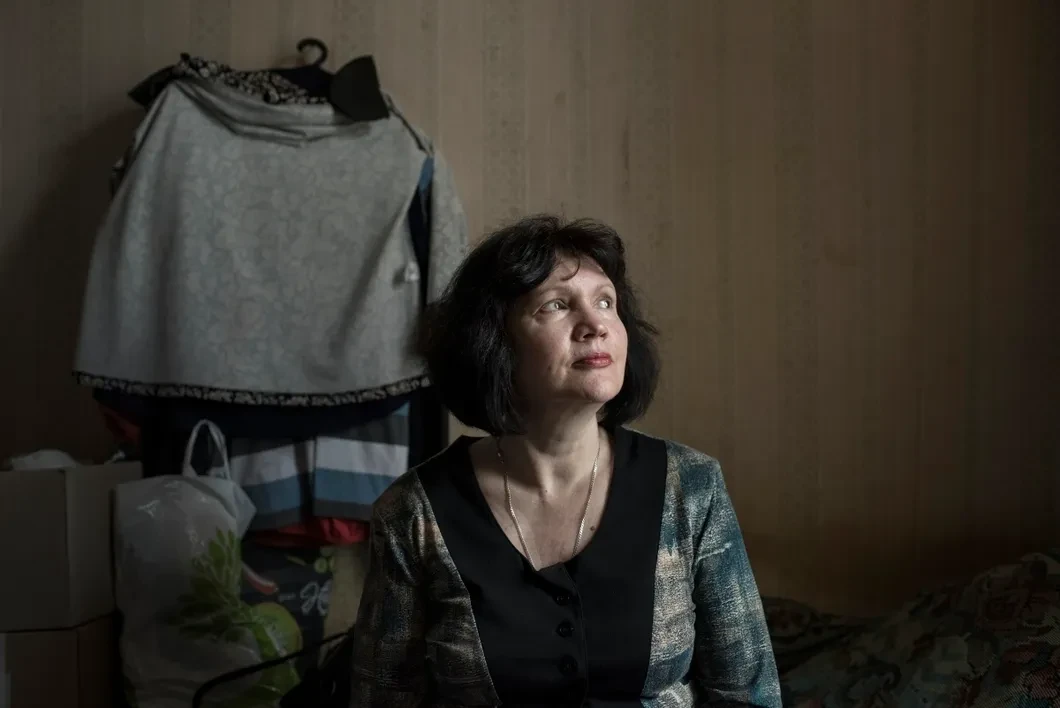
Finally we get to the room where Lyudmila meets us in home clothes. It is very difficult to move around the room: along the entire perimeter, the mountains of things are packed - to put them to two teachers simply nowhere. On a low old bedside table is a flat, small TV that firmly shows some kind of series. Light wallpapers are torn off in many places, and the clothes of Tatyana and Lyudmila are hanging on the cloves that are driven into the wall.
Of the sleeping places - two old sofas standing opposite each other.
Tatyana has now retired, previously led Russian and literature. Many of her former students have their own children. Lyudmila still works as a teacher of Russian and literature at school.
There she checks the notebooks, because she does not have a table in the room - even if it was possible to buy it, it would have nowhere to put it.
The Department of Urban Property Novaya Gazeta replied that Lyudmila, Tatyana and Andrei were never registered in the hostel on the Kashirsk highway (although there are still stamps in the passports). The department filed a lawsuit against the Movsesyants and Metrev in 2016 “due to the lack of legal grounds for living in the living space,” and the Simonovsky court of Moscow satisfied him. According to the response of the department, they cannot recognize them in need of housing, since under Art. 7 of the Law of the City of Moscow dated 14.06.2006 No. 29 “On the provision of the right of residents of the city of Moscow to residential premises”, residents of the capital are recognized as such if they, inter alia, live in the city at the place of residence on a legally at least 10 years. Where to go to two teachers if the court takes these 16 square meters from them, the department is not reported.