
Translated material
"Why did you make me a villain?"
CROC-2019: From a visual joke-to a philosophical tragedy
If the scientists of the future needed a diagram of the well -being of mankind at the turn of the past and current centuries, I would advise them to watch the best animated cinema, which is shown at Crok, the international festival of animated films. Here you have a diagnosis, and fears, and hopes, and injuries. Both the beauty of the world and its ugliness.
How does it work? Sometimes it seems that with all the independence, individuals of authors, artists living on different continents, someone directs, directs, throws up ideas from which the ideas of the paintings are lit. In different years, the competition was: the theme of suicide and loneliness, war syndrome, and the problems of growing up. The screen was inhabited by alternately strange clowns, thoughtful crows, obsessive flies, anthropomorphic hares.
This year, two lines unexpectedly contacted the knot, determining the mood of the review. The theme of space and umbilical cord - psychological and completely natural, tied to grow heroes to the mother, to the house.
In the "umbilical cord" Alexander Bubnov is a laconic, almost air design. The story of a blind mother’s love, singing his son for life to a skirt. A lot of details: here in the square everything with dogs, and the young mother - with her baby on a short leash. The teenager jealously pulls his mother from a fan, together in front of the TV, they knit, the aging mother viciously pulls her son's grown up from a girl ...
The umbilical cord turns into a strangle, and when his mother dies, the aged son screams terribly: he can’t survive without a torn noisy.
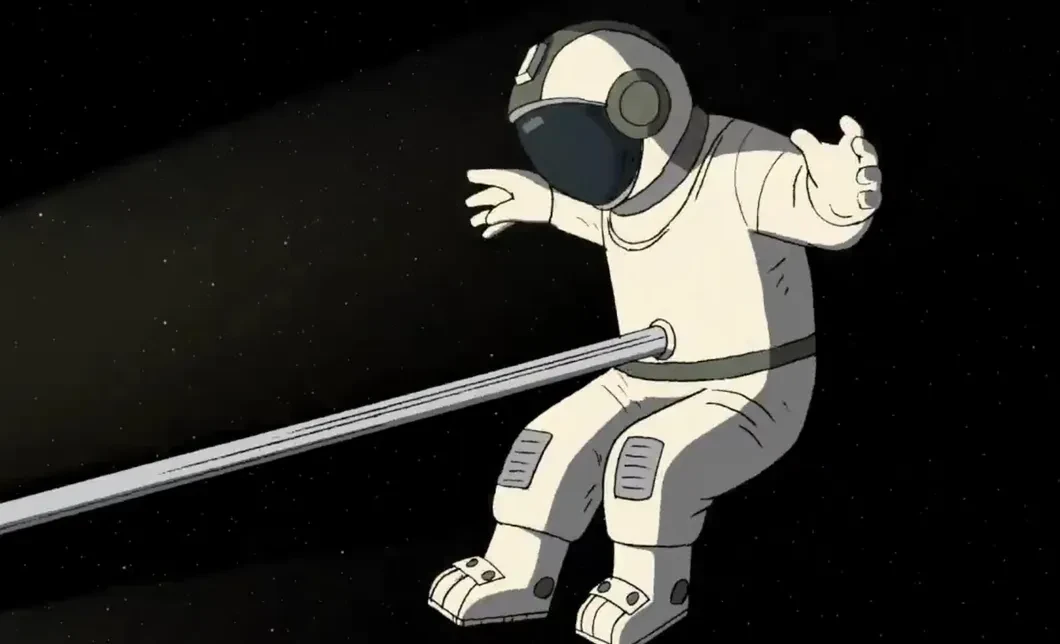
In the film of Konstantin Bronzita “He cannot live without space” , traditional graphics verified to the micron. Mom brings home a newborn astronaut - in armor, a spacesuit. A five -year -old baby is trying to blow out candles on a birthday pie - from breathing he only grows the glass of a helmet, he soars his legs from a cold right in bulky armor. The sun, which he, to the horror of his mother, twists on a swing is an explosion of insurmountable secret passion, gravity upward. And the house itself with a lonely tree and swings at the threshold at some point will turn into an interplanetary ship drifting between the stars.
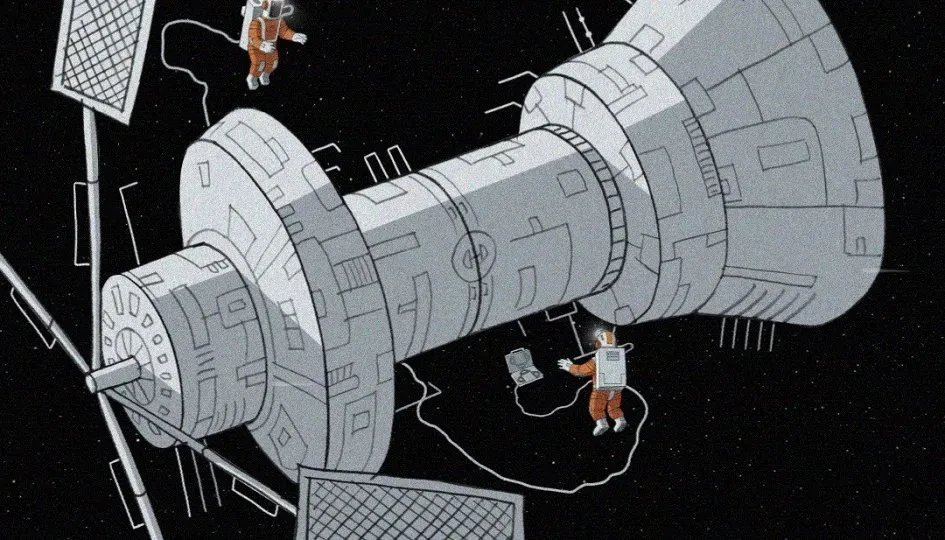
Dynamic culmination is a quarrel with her mother: pulling out a photograph of her father disappeared from her hands from her hands, the hero naturally grows up, barely fitting in the frame. Mom, on the contrary, becomes small, helpless.
With all the minimalism of the drawing, this is a philosophical movie about the ultimate dream that tears away from the ground and destroys the connection. About maternal love, saving and killing.
A rare genre in the world of animated cinema is a philosophical tragedy. The astronaut who returned from the flight is exposed. He steps on the grass, grabbing the grass with his fingers, freezing from total loneliness. The prodigal son returns home: a naked man on the floor in an empty house with flowers dried on the windowsill in the pose of the embryo. From the film to the film, Konstantin Bronzite moves from the visual joke towards the drama, into the secret of the incomprehensible.
“Watch how he slowly changes his beam,” Yuri Norshtein will say on the traditional “flight analysis”. Norshtein knows what he is talking about, his Akaki Akakievich is a cosmically lone creature floating between the earth and the sky with stellar bug signs. It seems that the director explores the nature of the animation itself, the boundaries of the permitted. After all, what is an image? "The space between the cosmos and the sky."
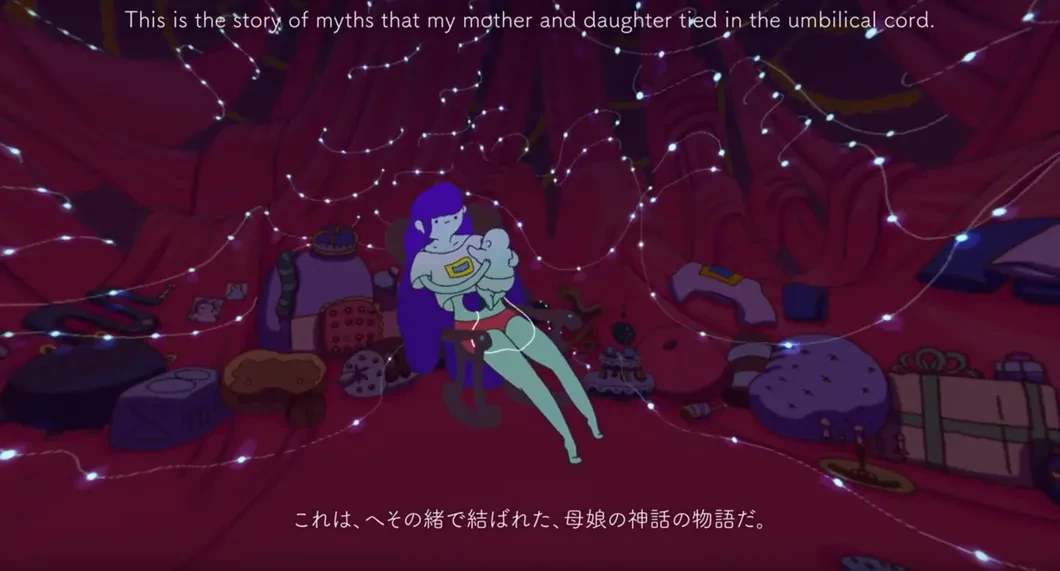
In the Japanese film “Mowb”, Cazuki Yuhara itself symbolizes the “Mirror Reflection of Mother and Daughter”. The daughter is connected with the mother of the umbilical cord, through which she absorbs vital energy. One life absorbs, drinks another. On the umbilical cord, as in a thin thread, the child is going on, growing up, moving between the stars. The umbilical cord is connected by a mother with previous and not yet born generations. The astronaut who has lost his job comes to the employment bureau in a tie and a spacesuit. What can they offer him? Brown buttons and levers on the children's carousel? Draw popcorn in the cinema?
The French film “Without Gravity” shows how hard in the prose of earthly attraction to the poisoned “cosmos as a foreboding”.
Relations of parents and children, intra -family problems on a competitive screen are not so much about conflicts as about a way of self -awareness. The grown daughter (in the film dolls seemed to be from papier-mash) in the hospital ward of the dying father recalls how hard he was, and how happiness it was a little bird to freeze on his chest (Daria Kashcheeva's “daughter” ). And it is still important, to find out, to convince, to finish something. From an alarming, unpredictable world, you can be saved in nostalgia for childhood. Taiwanese baby learns to live with the thought that his beloved grandfather died ( “gong” ), terrible trouble is turning for him into a dense forest, through which you need to run. A green puppy will burst into yellow in the yellow color - perhaps this grandfather’s soul came to console the child. "Listen, dad!" Pole sisters based on the novel by Irakli Kvirikadze - an internal monologue solved by plastic means. Continuation of a conversation with a father who makes a wider son.
The old woman - on the wall of the “iconostasis” from photographs of the descendants, the dead husband - cuts sausages, preparing for the holiday ( “Hello, relatives” by Alexander Vasiliev). Something strange is happening outside her window. A man in military uniform decided to lie down on a bench. The boy, chasing pigeons, climbs on the back of the bench. The bride is laid right on the asphalt. The old woman with her sausage crawls out of the entrance, and all the strange characters, suspiciously similar to her relatives, turn into cats, which she feeds.
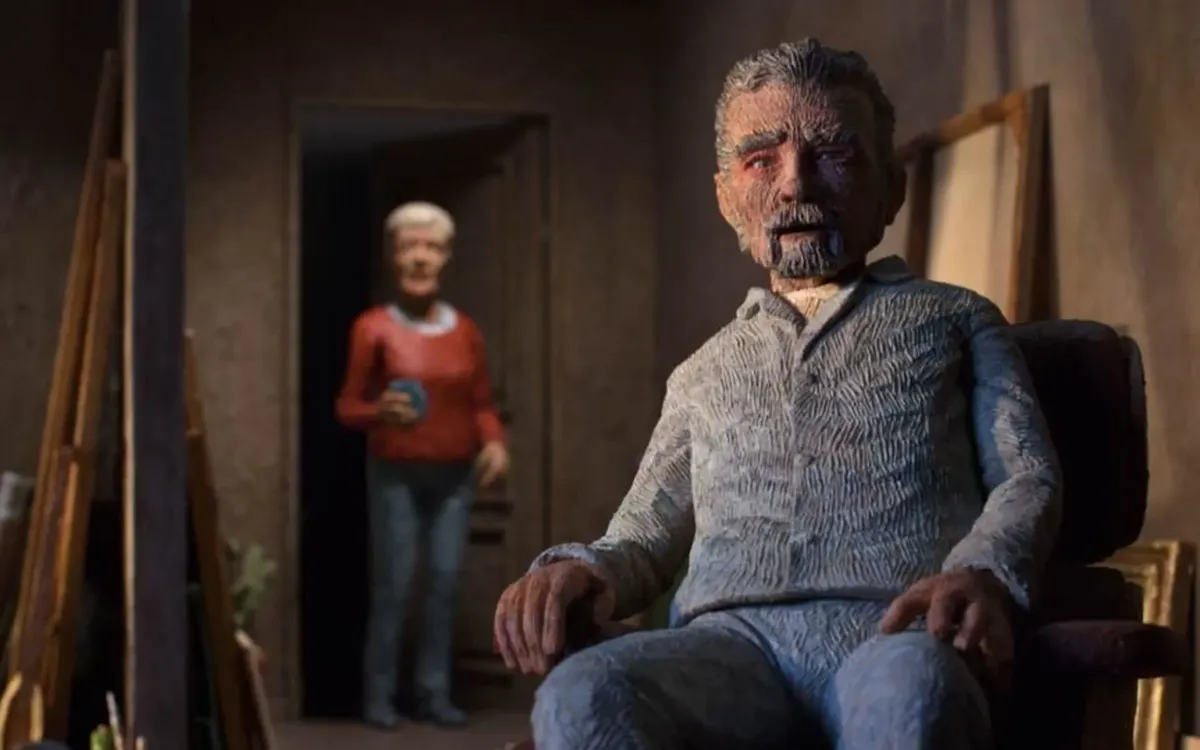
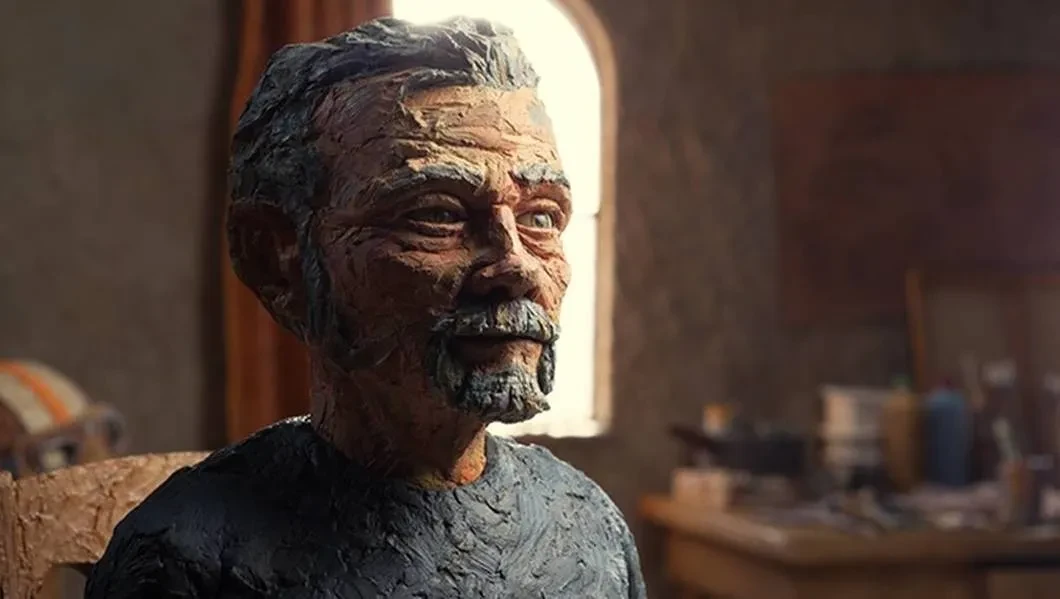
The “unforgettable” Bruno colle was awarded the Grand Prix. Dolls, as if cuts from wood with walled wrinkles. Husband, wife and Alzheimer, invading the third in the relationship of loved ones. It was he who confuses the aging artist Louis, hiding the pepper from the table from him, slipping the banana, the existence of which Louis Durye forgot about. Mr. Luis Durya believes that he lives in 1965, although they are trying to dissuade him in this.
The college is possible: to create a world as an artist sees it, struck by dementia. The world, oily written in oil, changes, entire fragments fall out of it, the obvious disappears.
The doctor seems to be a long -headed cubic animal. Objects lose materiality and their names. In the mirror instead of you someone is someone else's. Louis is trying to arouse falling asleep and heart with paints, fills them with an endangered space. He invites either his wife or her air image, just created. And this sensual dance, painted with fingers instead of brushes, is full of sympathy.
The theme of emigrants on the animated screen is refracted into grotesque stories about their and strangers. “Nitergaria” is the name of the conditional Balkan country in which the vital Frenchwoman is trying to take root. It is not more worthless to break through the invisible impenetrable walls. Cinema Kapryusin Müller is free, modern in breath, in cinema, in technology (a computer mix with painting on paper). About the difficulties of translating a different culture that in the eyes of a foreigner is thickening into the space of wild absurdity. On a similar topic, the film "Paper or Plastic" . The emigrant with the last forces adapts to the intricate reality of one prosperous country, but it twists it, delays the funnel of latent xenophobia. When he returns to his homeland, he will be a stranger there.
Animation is a time -tested way to combat aggression. Beloves, returns to him. "Beetle in the anthill" of Vasily Efremov - anti -utopia. After the destruction of the zoo, animals go to the ugly naked world, where excavators bite into frozen land. The factories are closed, people were impoverished, could not be disappointed. The story of the friendship of a former welder with a former resident of the zoo.
A person gives his photograph “as a keepsake” to a new friend of the elephant and receives in return his talisman - a tag from the cage door with the inscription “Elephant”.
"Why did you make me a villain?" - A doll shouts woefully to the director in Cornelius Koch's film “The Director Death” . But the director will not answer. During the filming of the film, he died. And that means there is no choice. “We are just dolls,” Marionate artists are bitterly aware of their sentence.
Modern animation speaks the language of metaphors about urgent problems. A fire in a cardboard city is a strong image. Or flesh that begins to live according to its absurd laws. Suzanne’s nightmare woman forms from the wounded leg of the hero, who cannot be rid of in any way. The rhyme to the expressionist plasticine essay "Portrait of Susanna" Isabella Pluchinsk is the graphic picture "Her head" by Emma Loukhivoori. The head of a young woman is a cat walking in itself. The sharp drawing clings and drags the usual expressions onto the screen, turning them into fantastic images: “not in the fret of your head”, “lose your head”, “put your head in place”.
Among the jury of the films - “Love Me, Fear Me” Veronika Solomon. In luxurious plasticine choreography, the drama of the relationship between the artist and spectators opens. Waving to please the crowd, all the time turns into a new creature, gradually losing himself. In the work, the director was helped by choreographers, whom she shot on camera.
Psychology and politics, sex and secret complexes. Intelligible stories and free visual fantasies, absurdity and animates. In the dark hall of the ship "Konstantin Simonov", leisurely coming from St. Petersburg to Moscow, his special life rushed and froze with a whirlwind - concentrated broth, which absorbed the secret of the world. Films of different quality, talents collected from forty countries.
Thirty years afloat. The oldest animation festival in the country is cheerful, carnival, on the one hand, on the other - concentrated, reflecting - its president Yuri Norshtein represents as an armad of ships.
However, Krok itself is a work of art floating through time. From the era in the era. This man -made work was created by all together: the directors and their films, the arrangers of the festival and participants.
Those who are no longer with us - Fedor Khitruk or Frederick Buck and debutants who fill the light sails of the festival and world animation with the wind. Kovalev, Bronzit, Maximov, Israeli director Gil Alkabets, author of the Chinese graphic parable "Six" Chen Si. And of course, the philanthropist Francois Solomon, who has supported both the festival and individual paintings for decades in love with Russian animation.
Swim, croc!