
Translated material
"Griffin", "taiga" and "helium"
“Peaceful nuclear explosions” hid four Hiroshima in Perm Earth
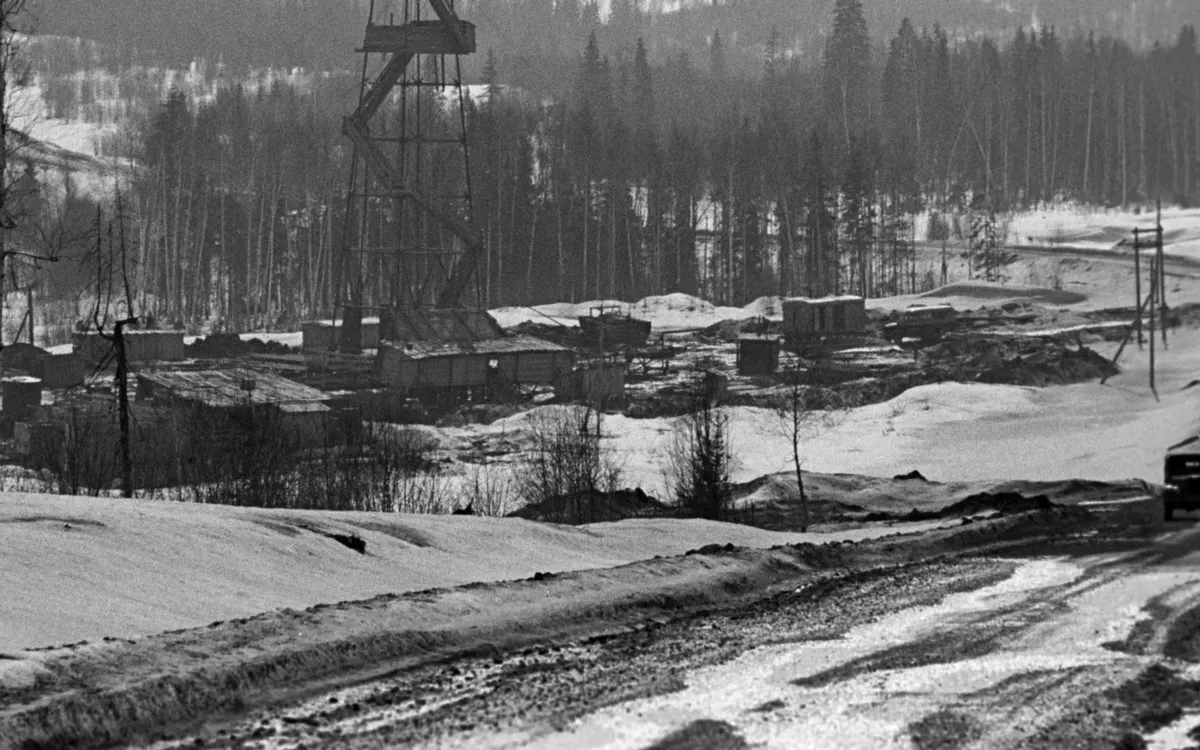
50 years ago on September 2 and 8 (according to other sources on September 9), 1969, two nuclear charges from the Griffin series were blown up at the Osinsky oil field near Perm. With their help, Soviet industrialists wanted to intensify oil production.
Five more similar explosions thundered from September 2, 1981 to April 19, 1987 at the Gezhsky deposit. A series of helium nuclear charges were blown up here.
Between them, on March 23, 1971, in the north of the Perm region, a simultaneous undermining of three nuclear landmines for the construction of a canal between Pechora and Kama (Taiga series) was produced.
The total capacity of all ten charges is estimated at 76.2 kilotons in TNT equivalent:
Four times the American atomic bomb with a capacity of 13-18 kilotons, which destroyed the Japanese city of Hiroshima in 1945.
According to the Russian ecologist Alexei Yablokov (1933–2017), the “peaceful” nuclear explosions left behind the Perm Earth uncontrolled burials of highly active radiation waste.
Like an earthquake
And after half a century, remembering the experienced, she is worried.
- I studied in the second grade. On that day, classes were canceled at the school, I was at my mother at work in a pharmacy. Suddenly all the employees were taken out and me on the street, they ordered me to sit on the ground. A terrible noise, as if we had raised us with a wave! There was fear. As if an earthquake happened, ”a pensioner Nadezhda Dolgikh tells about the September events of 1969. - In our school, all the glass knocked out, then they were inserted for a long time. We haven't studied for a week.
“I walked along the street, the earth shook,” says pensioner Nadezhda Belousova. - On the brick building of the sawmill, this is next to our house, a crack formed. She can see her now.
Nadezhda Sergeevna leads me to the building, where the garage is now located. Under a layer of cement in the upper right corner, traces of a long crack are noticeable.
Six kilometers from here at a depth of 1212 and 1208 meters in September 1969, two nuclear charge were blown up with a capacity of 7.6 kilotons. In the pamphlet “Myth of the Safety and Efficiency of Peaceful Underground Nuclear Explosions”, the corresponding member of the Russian Academy of Sciences Alexei Yablokov questioned the official figures about the additionally obtained oil-from 240 thousand to 500 thousand tons. But he cited data on wells that give products contaminated with radionuclides. If in 1976 there were only two of them, then by 1994 it became 317.
Due to the impulse of well pipes No. 1004 in 1977, the release of a water-neft of emulsion and a fire in 1987, radioactive pollution of the territory of about 200 hectares occurred.
All 59 employees of Osinsky oil field, who have worked there for more than five years, noted serious violations of the immune and hematopoietic systems.
"Investment of radioactive substances is prohibited!"
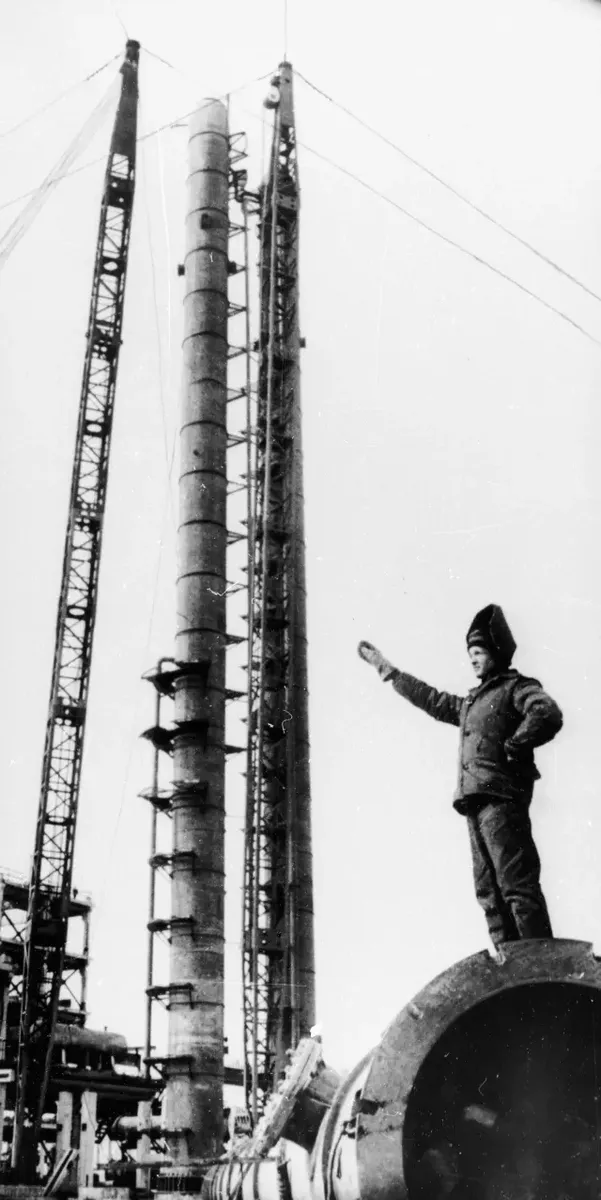
The path to the place of nuclear explosions is now blocking the locked gates. They have a sign: Lukoil-Perm Laboratory No. 5 Laboratory of Radiation Safety and Control. ” Nearby, above the doors to the passage, another sign: “The object is under guard. Investigation of radioactive substances is prohibited! ”
The first time I visited this place in the summer of 1989. Then, after a rally of Osa residents alarmed by the environmental situation, the oil workers began to equip a burial ground of radioactive waste. They did not bring here, but brought the soil from infected wells. Self -sides with a dangerous load drove up in my eyes. Together with the associate professor of Perm State University Vladimir Ponosov, we approached the next bunch of land. The portable radiometer showed: this lump, soaked in oil, is “phonit” by 500 micro -nytgen per hour. The other is 900 md/hour. For comparison, the usual background in Perm, which 94 kilometers north of the wasp, was at that time 14-16 md/hour.
“The largest dose of gamma radiation was awarded at the [measured installation]“ satellite-13 ”, where until now there is one of the bullets to be buried. The power of the exposure dose on the bottom of the bullet reaches more than 3000 μR/hour, decreasing on the walls to 650 and 60 μR/hour. In the underground waters of Strontius-90 it was determined in the territory of the Garden of the Berry, in the village of Tishkovo and the village of Koksharovo, ”noted in the“ characteristic of the radiation situation at the Osinskoye field ”, prepared in 1992 by the Regional Committee on Nature Protection.
“According to the standards, this soil is considered infected only conditionally. This means that he will not be accepted by special enterprises that utilize the waste of nuclear power plants, ”Lyudmila Shestopalova, at the Perm Radiation Security, explained in an interview with the Perm newspaper Zvezda, on August 16, 1997. - But there are a lot of it - 5000 cubic meters, and therefore they were not taken far to not scatter the radiation along the roads. And the place here complies with the norms: under the burial ground, the clay "pillow" is 14 meters deep. "
Now, in 2019, radioactive waste rests under the earthen mounds, fenced by a fence of a net grid. Behind the barbed wire with three -shred signs “Radiation Danger”, extensive areas reserved for future burials are visible.
The Tishkovka river flows nearby. As in the surrounding springs, as well as Osinka, Ivanovka and Sergeyevka, its water and bottom rainfall are infected with Cesium-137 and Stroncia-90.
Tishkovka and other rivals after a few kilometers flow into the formed Kama Votkinskoye reservoir.
Radiation Reserve
Nuclear devices for the “peaceful nuclear explosion” “Taiga”, according to the testimony of the scientist Alexei Yablokov, were more than 80 centimeters in diameter.
In March 1971, Vasily Osipov, a senior engineer of the regional fire department, spent the night next to such a device. He was sent from Perm to the taiga near the border from Komi to a construction site. Upon arrival, Captain Osipov was ordered to ensure the fire safety of the Taiga experiment, conceived to transfer part of the Pechora and Dischegda drain to the Caspian Sea through the Columa, Kama and Volga. In 1971, it was planned to blow up three charges. In total, for the construction of the 65-kilometer Pechoro-Kolvinsky Canal, up to 250 nuclear high-explosive highs was planned.
- At night they raised by alarm. On a combat well, a cable caught fire, feeding electricity from a diesel generator “Hurricane” tractor. In the back there was one of the collected nuclear charges, ”recalls Vasily Osipov, now retired lieutenant colonel. - When they arrived at the object, the danger seemed to have passed. The vigilant sentry who noticed a fire managed to de -energize the entire line. As it turned out, the cause of the emergency was a short circuit in the cable.
We sat with one of the nuclear people in the trimmed body of the Uragan, we look at the charge. The mood is clear what. And if a real fire broke out?
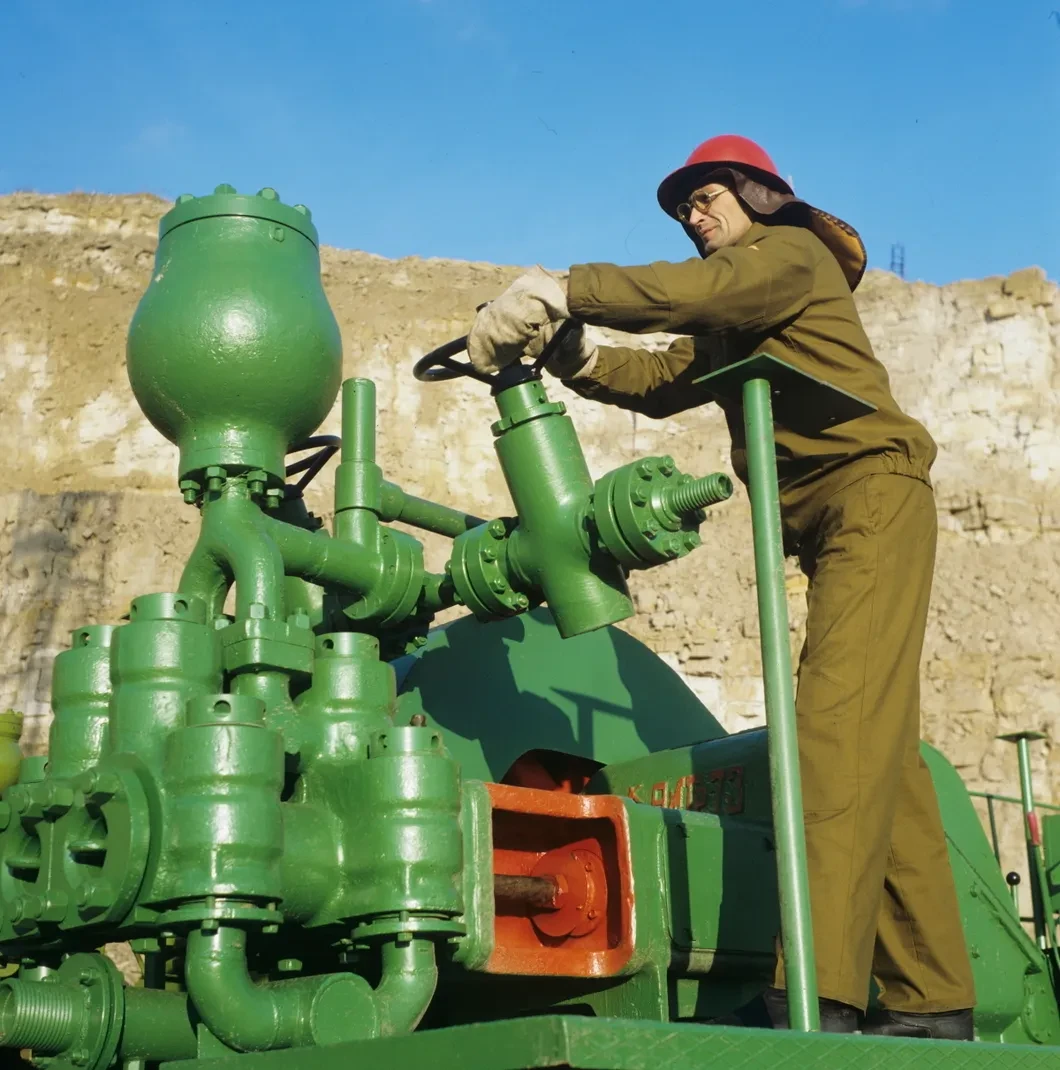
March 21, 1971, 100 kilometers north of Krasnovishersk at a depth of 128 meters 163–167 meters from each other, three charges with a capacity of 15 kilotons were blown up.
- First, the teeth of fire flashed in the distance. A roar was heard: the earth came underfoot, pillars staggered. The “mushroom” grew in the sky, exactly like in the pictures on civil defense, ”Vasily Osipov shares her experienced. - It seems that there were just any snowdrifts, and now along the road naked earth in cracks, and water hits fountains. In the place of the explosion is a huge funnel.
Two to three years after the Taiga, Osipov noticed a deterioration in health. Then he was recognized as a disabled person of group III for life. Since October 2018, he has been suing the Ministry of Defense of the Russian Federation for the right to have guarantee and compensation as a veteran of special risk units. So far unsuccessfully.
After the explosion in the Urals, there remained a deep excavation 750 and 350 meters wide, filled with water. The wits nicknamed the lake "by the reserve of radiation."
Given the half-life of Plutonium-239, the history of the new reserve is known in advance-this is 24 thousand years. Of the 85 “peaceful” nuclear explosions that thundered in Russia, the Perm Taiga is officially included in four with “significant pollution of the territories”.
Nuclear mine behind the outskirts
“In the USSR, a nuclear explosive device was usually placed in a combat well a few days before the explosion,” wrote Alexei Yablokov, a corresponding member of the Russian Academy of Sciences in his brochure. - The guaranteed time in the well for a nuclear explosive device was 18 days. The peaceful nuclear explosion "Helium" was carried out two years after the nuclear device was placed in the well. "
Five explosions of the Helium series with a capacity of 3.2 kilotons were made 20 kilometers southeast of Krasnovishersk at a depth of 2088 to 2015 meters. The date of the first - September 2, 1981, the second and third - August 28, 1984, the fourth and fifth - April 19, 1987. By the beginning of such works, the scale of the radiation accident in the OSA had already known at the Gerozh oil field.
According to Alexei Yablokov, in 1981, 65 wells with oil -contaminated radionuclides of oil acted in Osinsky Providence.
“At the Gerzhsky oil field in 1996 (15 years after the nuclear explosion), oil not only from the well, in which the explosion was carried out, but also from remote to many hundreds of meters was very contaminated with tritium. Here, oil comes out with water polluted by Cesium-137. All this indicates the activation of the processes of the span of radionuclides from the explosion cavity. The threat of tritius entering the water supply system of the city of Krasnovishersk was real, ”the scientist Yablokov said. - Five peaceful nuclear explosions “helium” polluted oil with radionuclides so much that the production had to be curtailed after the extraction of only 500 thousand tons of 16 million tons available for extraction.
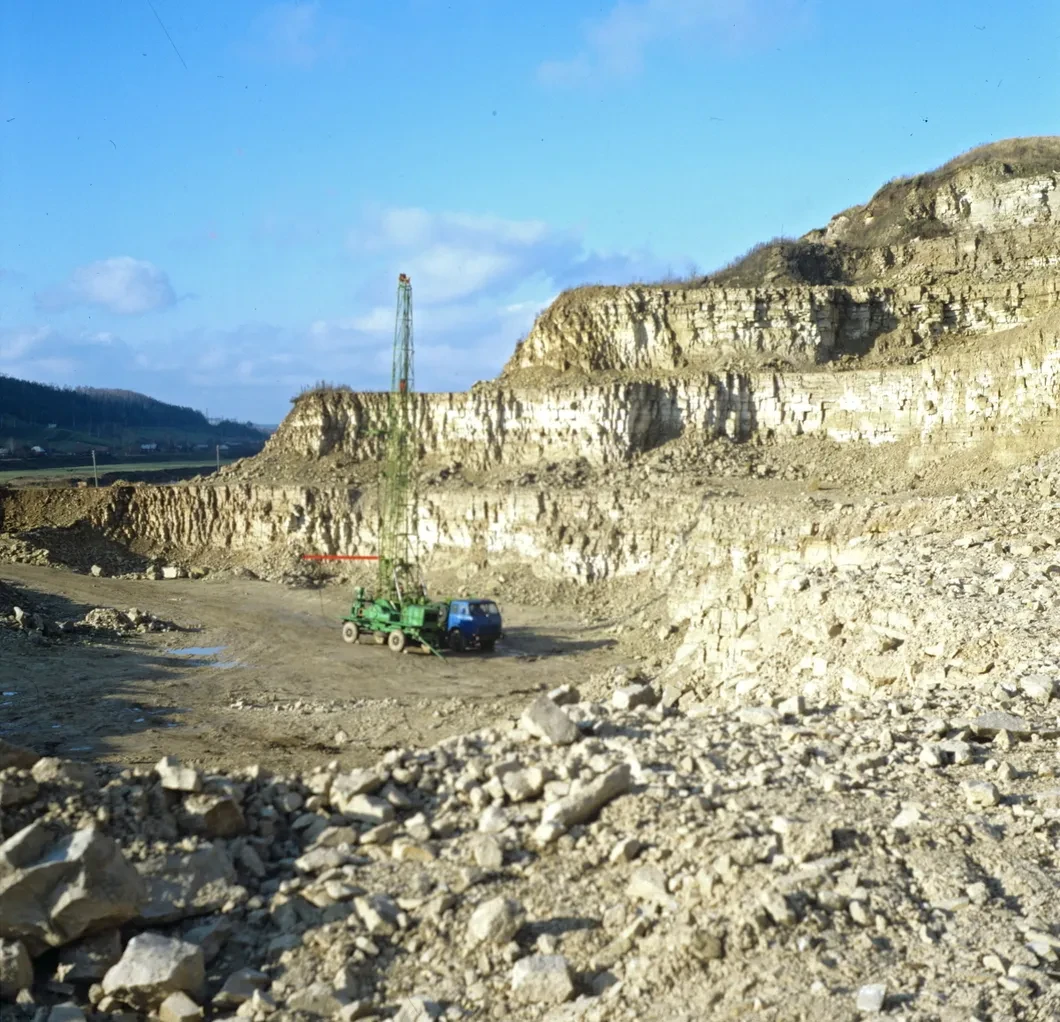
The scientific secretary of the Mining Institute of the Ural Branch of the Russian Academy of Sciences Boris Bachurin in 1992 prepared the work on nuclear explosions in the Perm Territory. After analyzing the information about the “emergency” near the wasp with a population of more than 25 thousand people and Krasnovishersk with a population of 19 thousand, he drew attention to the initial design decisions. Including - to a single system for the entire deposit, the system of collecting and preparing the products.
“It was these factors that led to a significant scale of radioactive pollution of natural geosystems at the Osinsky deposit and do not exclude the repetition of such a situation in Gerzhsky,” concluded Bachurin.
In 1994, the Moscow Institute of Nepipromics Technology, known for the fifth control (development and testing of nuclear ammunition), the USSR Ministry of Environment, presented the Perm authorities "Technical Regulation on Radiation Safety during the operation of the Griffin facility. Among other things, the document says:
“The radiation situation and the history of its formation existing in the Osinsky oil industry show that the risk of a significant change in the radiation situation with the possibility of re -rendering personnel and the population can be realized if a radiation accident in the former oil layer from the primary source of large fluid volumes with volumetric activity of radionuclides is 2–3 orders of magnitude higher than now existing.”
In other words, the institute participating in the serial explosions “Griffin”, “Taiga” and “helium” did not exclude a new accident with a radiation background 100-1000 times more than the current one.
In 1977, there was already an emergency emission of fluids “containing radionuclides (these are tritius, Cesius-137, Strontius-90, Cobalt-60, Surma-125, Ruthenius-106)”. In 1987, an emergency emission of a water -water emulsion, "complicated by a fire of poured oil," occurred from the same well No. 1004. At the Taiga facility in 1971, the hurricane tractor, loaded with a nuclear charge “more than 80 cm in diameter” and a capacity of 15 kilotons, almost caught fire. And in the 80s, one of the wells at the Helius facility remained with a 3.2 kiloton with a nuclear charge.
Hiroshima - one, Hiroshima - two?
Mikhail Lobanov - especially for "New"