
Translated material
Petersburg: Employees of St. Petersburg State University against the university move to Pushkin
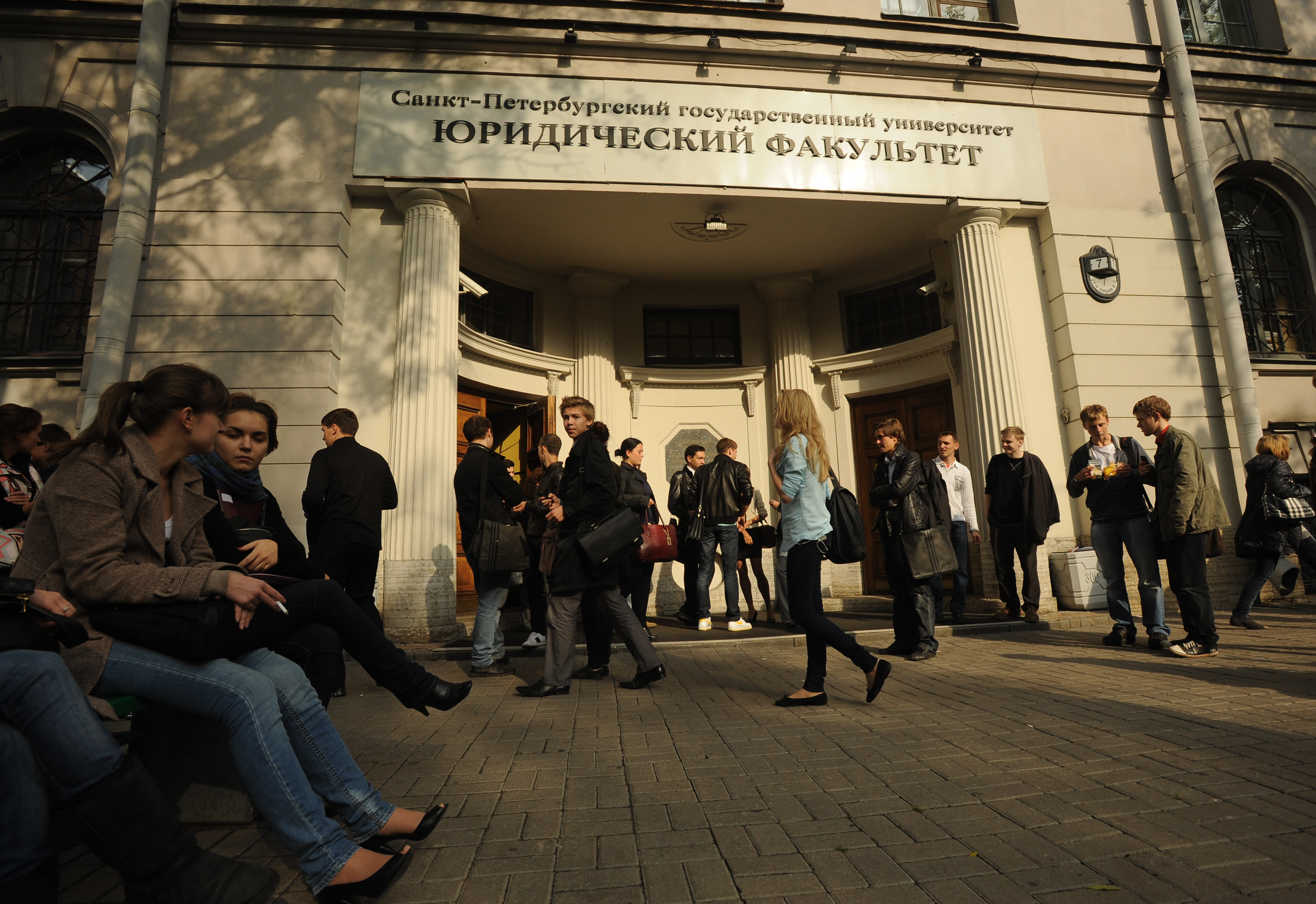
Hundreds of teachers and employees of St. Petersburg State University opposed the movements of the institute to a single campus to the city of Pushkin. Employees of St. Petersburg State University published an open letter under which more than 500 people signed.
The authors of the letter write that the Russian authorities will spend billions of rubles only on the construction of a new campus in Pushkin. According to preliminary data, they want to spend 45 billion rubles to the St. Petersburg campus in St. Petersburg, of which 19 billion will be allocated from the federal budget.
University employees note that no one asked their opinion on moving to Pushkin. At the same time, many teachers work in several universities and employees will have to spend several hours only on the road to the educational institution.
Employees of St. Petersburg State University offer not to create a single campus in Pushkin, but to expand the university on the territory of the Vasilievsky Island, where there is part of the faculties and hostels.
Wed to Yandex.Zen CR on Instagram SR in TelegramThe Corps of St. Petersburg State University is currently located in several areas of St. Petersburg.
The head of the Russian government, Dmitry Medvedev, previously instructed to transport all faculties of the university to Pushkin. It is expected that a single campus will be built 25 km from the city center by 2026.
For the first time, they started talking about the university to move to the suburbs of St. Petersburg back in 2013. Then the authorities determined that the new campus should accommodate 25,000 students, 4,000 teachers, 4,000 providing staff. In addition to dormitories and educational buildings, a hospital, congress Hall, a pool and an ice rink will appear in the SPbSU campus.
At the end of 2017, deputies of the Legislative Assembly of St. Petersburg asked the Governor of the city of Georgy Poltavchenko to speed up the movements of the institute, since "the form of the university’s territorial organization has completely outlived itself and limits the growth of the university’s competitiveness."