
Translated material
Trump allowed Turkey to attack the Kurds - the main allies of the United States in Syria. And then suddenly changed his mind and forbid
We are trying to understand that it was
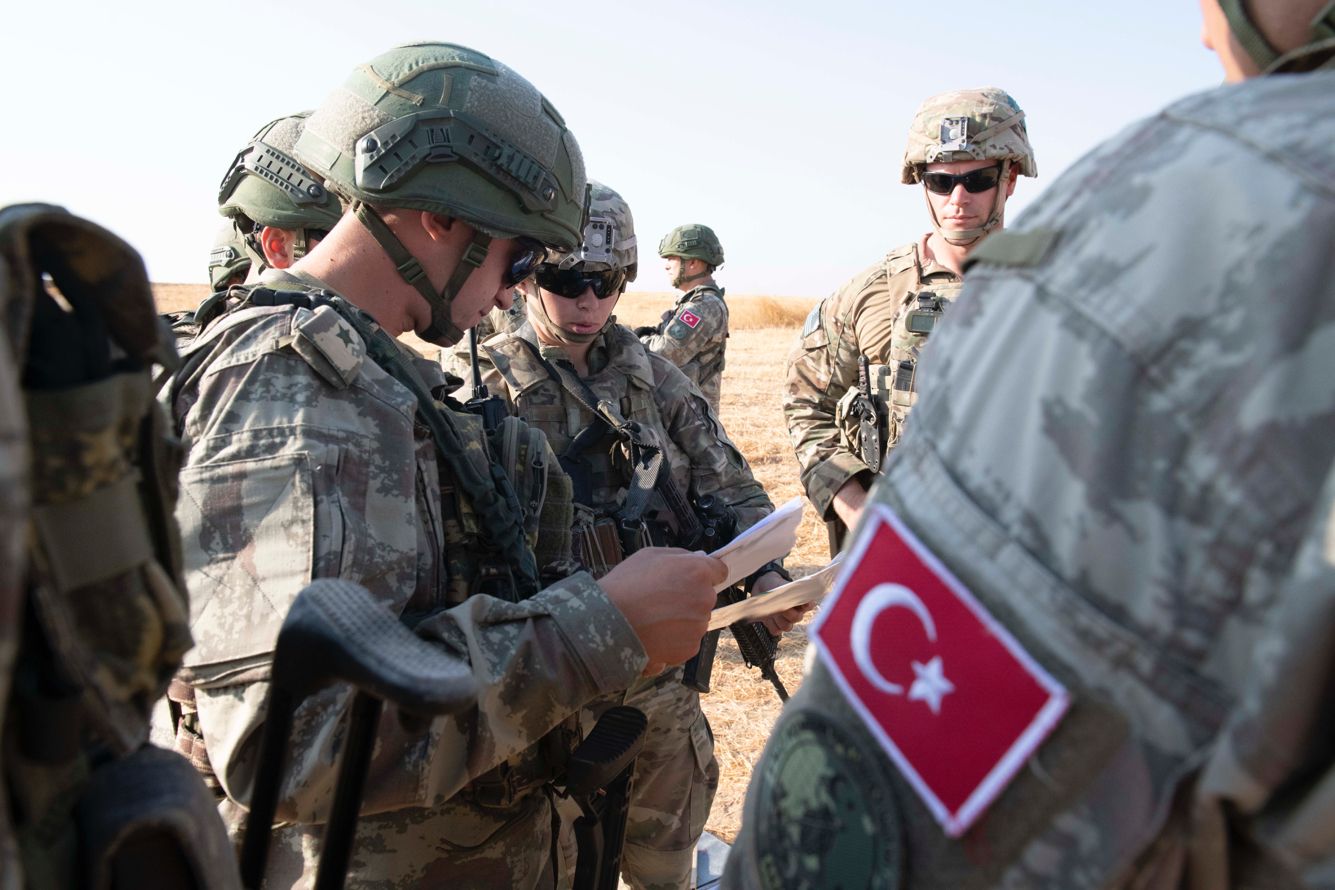
US President Donald Trump on October 8 decided to support the Syrian Kurds, which he had called terrorists the day earlier. In the New Twites series, he warned Turkey against an “unnecessary and unprovided” attack on Kurdish territories, promising that in the event of an attack, the Turkish economy would suffer. "Medusa" explains why Trump changed his mind to throw the main allies of the United States in Syria.
Trump wanted to withdraw troops from Syria. Will they stay now?
No, the US president confirmed that he did not want to leave “at least one soldier” in the Middle East. The Americans, according to him, "should not participate in other people's wars." He said the same thing the day earlier, when he suddenly announced that the United States was leaving the conflict. On the morning of October 7, American troops, by order of the president, hastily left the Kurdish regions in Syria, border with Turkey. This meant that Türkiye could safely start stripping the Syrian Kurdistan, which it planned for many months. However, if on October 7, Trump offered Turkey to deal with Syria as she wants, now he warned her against the use of force. He called the Kurds "special people and excellent fighters", whom the United States is not going to throw. The president promised that the United States would continue to finance and arm the Kurdish formations.
Why did Trump change your mind?
His decision to withdraw troops from Syria and the approval of the future Turkish operation against the Kurds was not supported by either allies around the world, or politics in the United States itself, or the Pentagon.
On October 7, the Pentagon closed the airspace over the Syrian Kurdistan for Turkish aviation, and also excluded Turkey from the network of exchange of distraction. The Pentagon said that the Turkish attack “creates risks” for Turkey itself. The military demanded that the president return to the idea of creating a “security zone” along the Turkish border, which would be free from Kurdish fighters and patrol the Turks and Americans.
Both Republicans and Democrats in Congress consider Trump's decisions “betrayal”. Legislators promise to introduce “wide, deep and destructive” sanctions against Turkey if it begins the invasion of Kurdish areas.
Trump administration officials were also extremely unhappy: according to them, the president succumbed to the pressure of his Turkish colleague Recep Erdogan on October 6. They believe that all the problems of American foreign policy because Trump does not have a rod.
France and Great Britain opposed the Turkish operation, the troops of which were also deployed in Kurdish areas. The British special forces, however, are preparing to withdraw from the country, because it completely depends on American logistics and supply. The French plan to stay in Syria and, together with the Kurds, continue to fight the Islamic State.
And what, there will be no Turkish operation now?
Ankara has not yet stopped the threat of the US president: it continues to prepare for the offensive in Syria, and the Turkish parliament has already voted to expand the military presence in Syria and Iraq. However, the chances of Kurdish armed detachments to avoid complete destruction have now clearly grown.
The Kurds, although they expect to convince Trump, are no longer relying only on Americans. They have already turned to the Syria government, with which they are in a state of “neither peace nor war” with a request for help. Promotecle detachments of the Islamic Syrian opposition, which should become the shock force of the Turkish operation, already promise that they will fight with the Syrian government if it stands for the Kurds.
The Kurds also asked for help from Russia. The success of the Turkish operation depends on the decision of Moscow: it is Russia (along with the USA) that actually controls the airspace of Syria. And she had already closed him several times for Turkish aviation. The position of Russia is not yet clear. It is only known that Foreign Minister Sergei Lavrov talked on the phone with his Turkish colleague and flew to meet one of the main Kurdish leaders, President of Iraqi Kurdistan Masud Barzani. Russian President Vladimir Putin discussed the situation with members of the Security Council.
At the same time, the Kurds are trying to show the USA and Europe that everything will be bad without them in Syria: they have already left the largest oil field in the country near the city of Deir-Az-Zor, which they guarded with the American special forces from the Islamic State and the Syrian government. Control over the field is the most important link in American sanctions against the regime of President Bashar al -Assad. Kurdish commanders also said that from now on, they consider the protection of thousands of militants of the Islamic State who were captured by them not the main priority.
On October 8, the convoy with weapons from an unknown participant in the international coalition, which is headed by the United States, arrived (it also includes many European and Arab countries). Probably, the United States will now propose Turkey peacefully to occupy the “security zone”, but to refrain from attacking Kurdish military formations.
Dmitry Kuznets