
Translated material
Trump leaked the Kurds
Now they have to face the Turkish army one on one. Invasion - in the coming hours
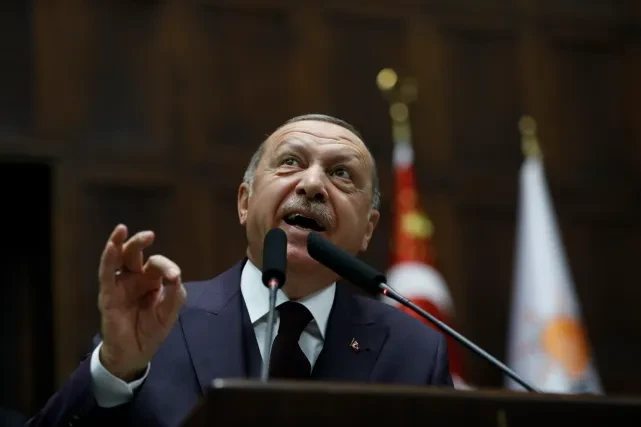
According to an eyewitness, an employee of the US National Security Council (SNB), who listened to Sunday telephone conversations of President Donald Trump with Turkish President Recep Tayyip Erdogan, and then quickly leaked the information to Newsweek magazine, Trump unconditionally surrendered the Kurdish allies of America. What will this lead to?
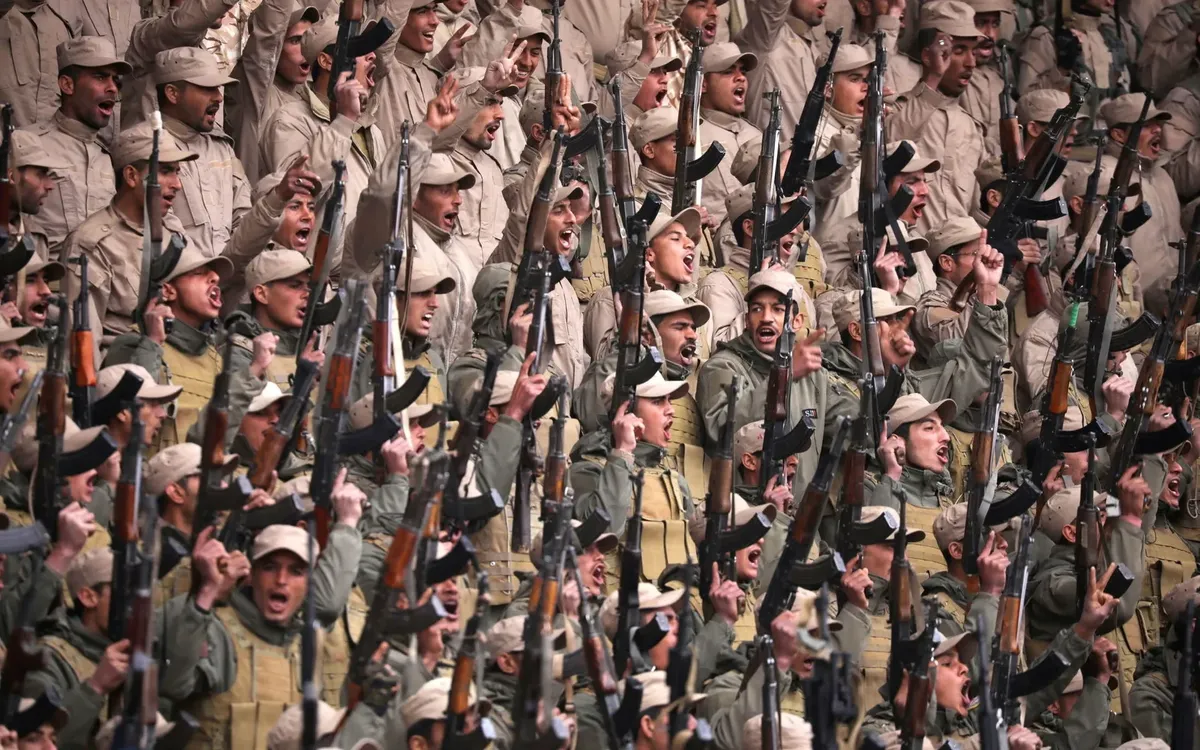
Since 2012, the Kurds managed to create in the north of Syria their own actually independent federation (Rogzhava) with the combat -ready armed forces - the YEKXYNEYYP PARASTINA GEL (YPG) folk self -defense. With the support of the Americans and their allies, Kurdish detachments stormed in June the 17th Caliphate of the IG Caliphate ( a terrorist organization banned in the Russian Federation.- Ed . ) The city of Er-krake on the Euphrates. More than 10 thousand YPG fighters died in battles. American advisers, specialists and fighters of special forces (more than 1000) were also deployed in Rodzhava, but over 5 years in Syria they lost only eight military personnel in Syria, having achieved, as Trump says, a complete victory over IS. Now Trump ordered the troops to withdraw, and the Kurds, like, “fought with us, but they paid them well with money and supplies of technology,” and now let them solve their problems with Turkey, Iran, Russia and others.
Trump again confirmed his pre -election promise to finish unpopular foreign wars. Like, America is above all, to Rodzhava 7000 miles, and this is not our business.
The hasty conclusion of the troops from Rodzhava began right on October 7, and the Turkish invasion is expected in the coming hours.
YPG Ankara is considered “terrorists” and a branch of the Kurdish Workers' Party banned in Turkey (Partiya Karkerên Kurdistan, or PKK), which has been conducting a partisan-sabotage struggle for national autonomy (independence) in Turkey for many decades. It is recognized in many countries with a “terrorist organization”, although in the Russian Federation, for example, PKK structures are present without particularly hiding, and in Moscow, the unofficial diplomatic mission of Rodzhava has been operating for several years.
Ankara is afraid that the semi -dependent and well -armed Rodzhava along the southern border of Turkey, where the majority of the population is also Kurdish on the other side, can cause the collapse (federalization) of the Unitary Turkish state.
Therefore, the defeat of Rodzhava and YPG is the main strategic task of Erdogan, to which he has been going on for quite some time, consistently eliminating obstacles.
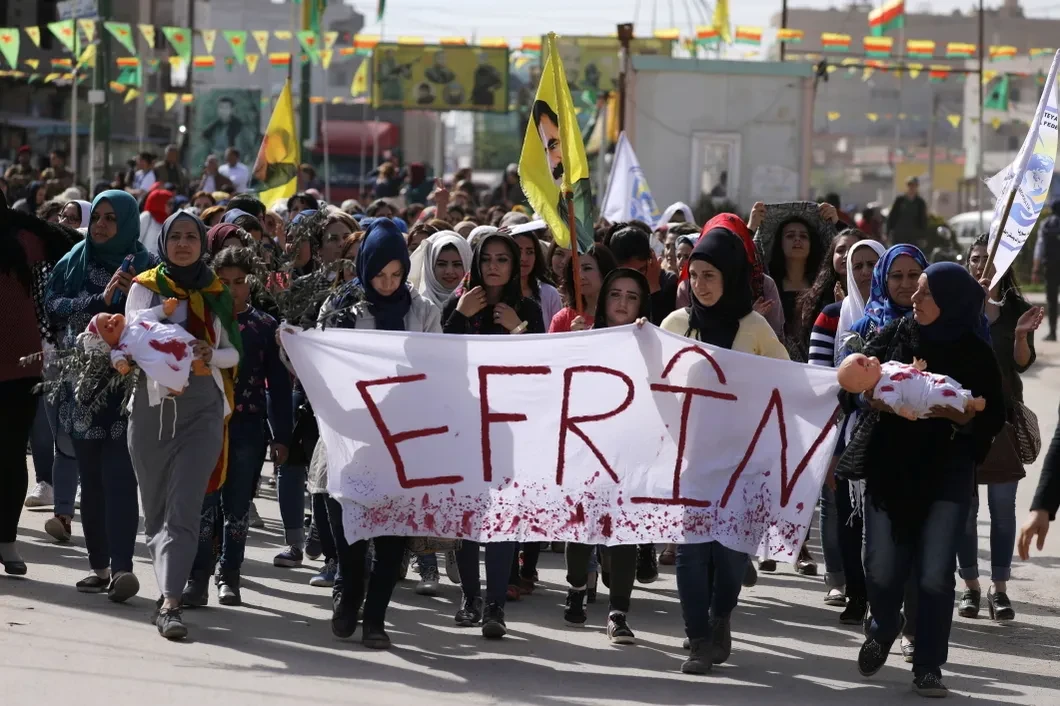
In 2016–2017 The Turkish troops, along with the militants from the Free Syrian Army (SSA), began the operation “Euphrates Shield” to stop the advance of YPG to the west towards the Kurdish canton Afrin, where a small detachment of the Russian military police entered the Kurds. In January 2018, after negotiations in Moscow, our contingent was taken out of Afrin, and a two-month siege of Africa began with the Turks and the militants of the SSA. The Kurds resisted, knocked out many tanks, but the superiority in the air and in artillery was overwhelming. YPG retreated east, where the presence of the Americans still restrained Erdogan. Now the Turkish military and the fighters of the SSA are ready to start the invasion of the remaining part of Rodzhava.
In Brussels and in Washington, Turkey's right to strengthen the safety of its southern border. The Pentagon conducted long negotiations on the mechanism of creating a border security zone. In August, they seemed to be agreed: joint American-Turkish patrols began, and the Kurds began to tear the border fortifications. The Kurds hoped that the United States would achieve a political compromise that would prevent the war and allow Rodzhava to preserve. The pentagon chief Mark Esper stated in August that the United States intends to prevent the Turkish offensive operation. Erdogan demanded the withdrawal of American troops and threatened to start the operation without looking back at Washington. October 6 during a telephone conversation
Trump, contrary to the opinion of the Pentagon and the State Department, passed the Kurds, obviously deciding that friendship with Erdogan is more important. Just like ours with Afrin last year.
The Kurds, of course, speak of a knife in the back and promise to fight to the last in the event of an invasion, deploy protests in Turkey and around the world, as well as transfer military operations to Turkish land, exploding and killing Turkish police and military. But they will not be able to survive against bombs, artillery and tanks. The Turks will push the YPG detachments, take and clean the north of the former Rodzhava. In the south, the Iranian and Prozadovsky forces, with the support of Russia, will cross the Euphrates and take important oil and gas fields in Deir ez-Zor, from where they had long wanted to oust the Americans, and here such a gift from Trump.
Neither Tehran, nor Moscow, nor Damascus do not want to fight with YPG, especially if the Americans have already left, therefore, probably, with the remnants of Rogzhava, they will conclude some kind of agreement on mutual non-aggression. In captivity YPG are 2500 foreign IS fighters and up to 10 thousand from Syria and Iraq. Even in the Al-Nol camp on the territory of Rodzhava up to 70 thousand civilian refugees-subjects of the IS, mainly wives and children of militants. Of these, up to 9 thousand are foreigners. Erdogan promised Trump that he would take control of the problem of prisoners and refugees, but in the confusion of the collapse of Rodzhava this is unlikely to work out.
The new lifting of the IG and the related terrorism is very likely.
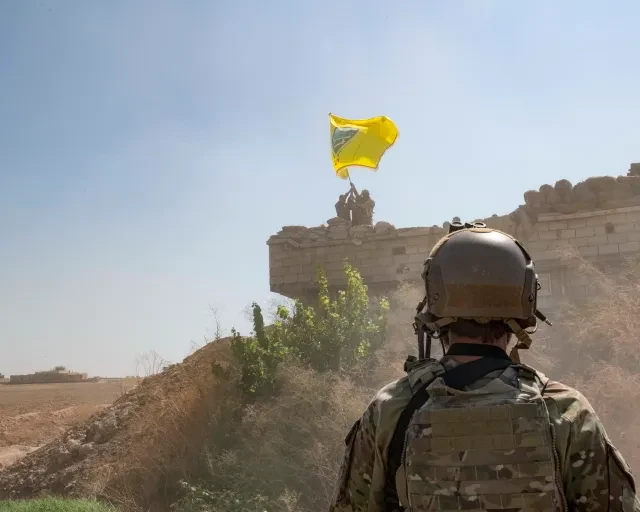
After the White House announced sudden departure from Syria, a storm rose in Washington. Trump is accused of betrayal, of surrendering to Moscow, Tehran and Erdogan regime, whom Trump, as on purpose, invited to come to Washington in the near future. In the Pentagon, they hastened to dissociate themselves: they say, in the Turkish operation we do not participate, but we are not approved, and the troops are withdrawn by order. Trump began to bless him habitually, telling reporters that he had set Erdogan the condition not to offend the Kurds, otherwise ruin sanctions will be imposed.
True, a source from the US SNB claims that Trump did not set everything without sound and did not set conditions, except for the security of his own military. The White House does not say anything about any specific conditions, the number of contingents, protocols about safe zones and the use of heavy weapons, so, most likely, the source tells the truth, and Trump is habitually composing.
In the Senate, many long-standing supporters abruptly criticize Trump and promise to urgently adopt a law on sanctions against Turkey in the event of an operation, and the most important resort senator, the leader of the majority of Mitch MacConnell, announced that the Senate had a bicameral “superbolstery”, which could conduct decisions on Turkey, contrary to the possible vert of the president.
Trump is accused even by some of the extreme right: they say, who will now believe in America, if we surrender allies? Who will fight for us?
In Congress, as you know, it may be impeachment to Trump before the New Year. At the same time, the Senate should judge and remove him from the post with a majority of 2/3 votes, where the majority of the Trump party. It was clear that it was impossible to gain 67 votes of senators for removal, but suddenly there was an opportunity that “superbolstot” in Syria could be reorganized into the real removal of Trump. The moods in Washington are changing, and the frequent denunciations and leaks from the White House prove that there are more and more officials who are ready to risk a career in the apparatus for the sake of early removal of Trump.
Everyone always betrayed the Kurds (often they did it themselves). Their faithful allies are only Kurdish mountains. Belief in this is one of the foundations of Kurdish self -awareness, and the current American treason will be only one more in the long history of the almost fifty million people without their own state. The Kurds will perceive the betrayal of stoically, but Trump, a person is exceptionally flexible, unscrupulous and cowardly, can sharply change the course if he feels that accusations of spineless indulgence to authoritarian rulers can end poorly. He can suddenly “suspend” the withdrawal of troops from Syria or demand from Erdogan these agreed guarantees of the security of former allies, a agreed solution to the problem of ISIS, etc. Maybe Rodzhava still has hope, but everything will be far away - in Washington.