
Translated material
Let go!
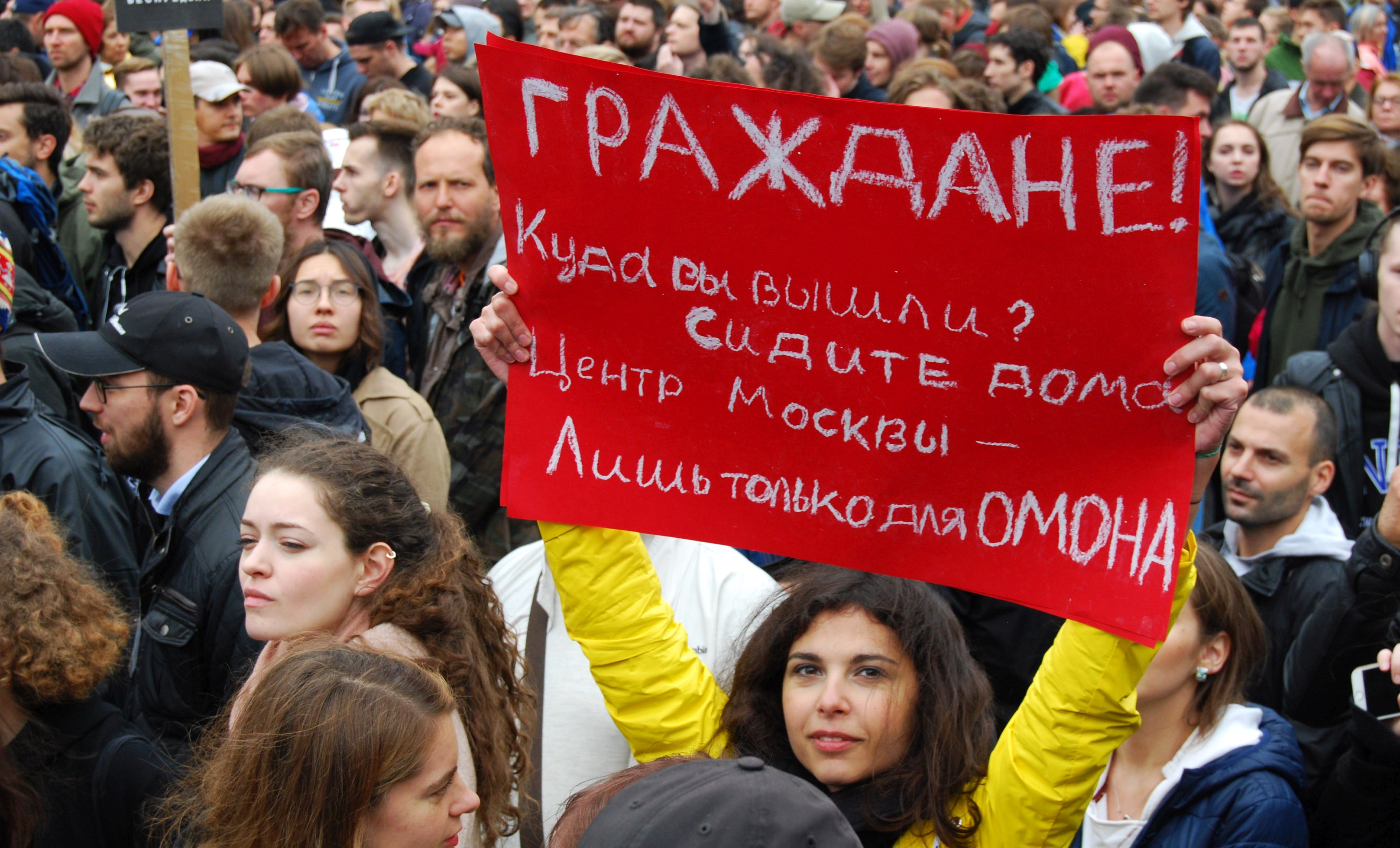
Sentences in Moscow case are ongoing. Stocks of support for political prisoners are also ongoing
Two years of the colonies of the 26-year-old father of two children Danila fugitive and pickets in his support from the recent prisoners of “Moscow business”.
Does the professional solidarity of actors, journalists, university employees help their colleagues, who were under investigation and in conclusion? Video -features of famous actors and a special case of actress Daria Egorova: why did the leadership of the Perm Theater theater did not appreciate her performances in support of Pavel Ustinov?
Nikolai Caucasian , political activist, human rights activist, activist of the civil rights committee, former “Prisoner of Bolotnaya”; Alexey Minyailo , civil activist, volunteer of the headquarters of Lyubov Sobol; Evgeny Ovcharov , civil activist (head of the team of Yegor Zhukov, coordinator of the United Democrats); In the record, actress Daria Egorova , director Joseph Reichelgaus . Fragments of the performances of theatrical figures in support of Pavel Ustinov were used.
Elena Fanailova is conducting the program.
Video version of the programElena Fanailova: "Let go!" - The slogan “admit!” Very quickly turned into such a slogan, with which activists came out to the streets of Moscow, protesting against the ban for new candidates to deputies to enter the authorities. The slogan "Let go!" Now it continues to be quite relevant, because the sentences in the “Moscow case” so -called. I want to begin to remember what happened in these months.

Sentences in Moscow case are ongoing. Stocks of support for political prisoners are also ongoing
The text of the copyWidth PX Height PX
The url has been copied to your clipboard
No Media Source Currently Available
0:00 0:01:59Elena Fanailova: Alexey, how do you feel, why were you released?
Alexey Minyailo: I think that my release is the result of an unprecedented public campaign in support of prisoners, including my support. It’s hard to explain this in another way. Because the judicial system does not work, unfortunately, so that innocent people are released, because then they would let everyone go.
Elena Fanailova: Let's see a report from the courtroom on yesterday's sentence Danila fugitive. It is completely incomprehensible, there is no logical chain that would prove that this person used violence and worthy of two years of the colony.
Elena Fanailova: He grabbed the wrist, the suffering of a policeman is just some endless saga of these months. The 26-year-old father of two children, the breadwinner of the family, somehow in his head all this fits very poorly, honestly.
Alexei Minyailo: Masha Chernykh nearly burst into tears in court yesterday, the coordinator of the prisoners of the case 212. The only thing that saved from this was that Vlad Barabanov and I were worsened, and she switched from the “sob” mode to “pull ours again”. At first I stood with the poster “Beas a god, free the fugitive”. Because really this is just an absolutely left man who accidentally ended up, showed nobility, stood up for the man whom these ghouls were really beaten. Just think, grabbed the sleeve, grabbed the wrist, made it painful. I understand that the Russian Guard is a tender creature, a princess on a pea. When I read the verdict, I just turned the poster over, wrote “Shame!” On the reverse side ” And he stood with this poster. Vlad stood across the road, police officers considered that less than 50 meters, ran up, fussed him, ran up, swinted me.
Elena Fanailova: After conclusion, you can scare the political activist with something?
Nikolai Caucasian: In fact, of course, you can. The authorities are engaged in this, which intimidates. Any person has fear. I agree with Alexei that this fear must be overcome, we must fight, because otherwise we will find ourselves in some totalitarianism. I agree that love wins fear.
Elena Fanailova: We are in a studio against a photo of a photograph where a rather large mass of people are visible who went to protests. This mass, this activity and its results are comparable to the “swamp business”. These people are not afraid, they want to tell society, the world, the vertical of the authorities, to these Rosgvardians tender, that: citizens, you in vain think that you are here, despite your batons, despite your methods of suppressing our non-violent resistance to your violent, we still continue to come out. This is the second “swamp business”, the replica is obvious.
Nikolai Caucasian: I agree. I would like to note: if we compare the “swamp business” and “Moscow business”, then it is clear that the role in “Moscow business” played an absolutely powerful, serious support of prisoners. Thanks to this, the power passed back. Unlike the “swamp business”, new defendants are not delayed now, because in the “swamp business” this lasted several years. Thanks to this terror, fear spread, any protest activity, the authorities tried to reduce it. Now they gave it a rebuff. Some of the defendants were released almost immediately, softened the verdict, someone was transferred to their own recognizance and house arrest almost immediately. It is important to understand that it depends on whether we will resist. Because the authorities saw that 25 thousand had been released in the defense of the Politicals in defense of the Politicals. But if you compare it with the rally that was in the summer, when everyone was on the trip, there were 60 thousand, it is clear that the decline. The authorities saw this, just after this rally, they stopped reviewing affairs and letting people go.
Elena Fanailova: Daniel’s sentence is associated with a fall in street activity, you suppose. Zhenya, can you talk about Yegor Zhukov, who is now under house arrest?
Evgeny Ovcharov: Now at home. In society, there is a strange idea that if a person is under house arrest, then everything is in order, he seems to have nothing to save from. Meanwhile, it hung over Yegor and has been hanging for five years potentially. 280 Part two is public calls for extremist activity. How do I evaluate everything that happens? As a repressive symbolism from the authorities. You can simply judge from the articles that this power appreciates the most and what it is afraid of: it is the inviolability and absolute untouchability of the police.
Elena Fanailova: At the same time, the police can concern everyone, anyone. As an observer, I went to the summer protests, I saw how the Rosguard, riot police behaved. It is not so unceremonious, there is unjustified, unmotivated cruelty towards civilians. They just approach any person, they will take him out arbitrarily, wring their hands, and to whom the legs. A person does not resist, but he is treated as if he is really cruelly resisting, is some powerful cyborg that beat these beautiful guys. This is all completely inadequate.
Evgeny Ovcharov: This untouchability and infallibility of the police. And most importantly: this is a ban on reasoning, a ban on analysis, a ban on logic, thoughtfulness, in short. Yegor had an accusation of unrest, like many. When the guys began, thank God, to let go, for some reason they decided not to release Yegor, they replaced him on the same day an article about riots for an article for extremism. Perhaps they are afraid of him as a political figure, because he knows how to speak, he knows how to unite people, he knows how to find supporters. There are people who pull it out not only because it is necessary to pull out the political prisoner, but because he is a candidate for them, he is for them a politician whom they support.
Alexey Minyailo: This is the reason why he is under house arrest. Because in a pre-trial detention center, he can speak through the Federal Penitentiary Service, he cannot speak under house arrest. As a person who was sitting in a pre -trial detention center, I can say that for me personally, if you postpone the issue of my parents' concern aside, better than a pre -trial detention center than house arrest, because from the pre -trial detention center you can speak and speak - it is. In such a situation, the word is equated with action. In his own words, a person can change a lot from there. Egor, of course, could. We met him, one of the things, why I am glad that I got into a pre -trial detention center because I met Yegor Zhukov. He makes an incredible impression. He is only 21 years old. At the age of 21, I was just a suction, Yegor at 21 - Gandhi. It is amazing how calm, concentrated, he understands why he is here. He is really a real leader. I am sure that they are afraid of him, so they are not allowed to speak.
Elena Fanailova: There are no calls to extremism in Yegor Zhukov in Yetube. He simply diagnoses modern Russia, says what the senior analysts are talking endlessly, including not quite opposition authorities: a Chekist vertical.
Nikolai Caucasian: I would like to object: I was sitting in a pre -trial detention center and under house arrest, I felt absolutely a difference. It is much easier to sit under house arrest. As for the transfer of information, statements, and so on - this can be done through lawyers. I did so. I had a Radio Freedom blog, in Novaya Gazeta, through lawyers I calmly conveyed everything that I consider to be transferred to the will.
Alexey Minyailo: My lawyer refused to accept information programs, said that he would be deprived of a lawyer status for this, the transfer of what was not connected with the criminal case.
Nikolai Caucasian: I am surprised at such a position. I am not ready to comment on it, everything was completely different for me, all lawyers helped me communicate with the media.
Alexey Minyailo: We must talk to Yegor’s lawyer, because we are losing a lot.
Nikolai Caucasian: Another important thing: we see specifically in this case the use of a list of terrorists and extremists. This is an old topic and very dangerous. Many years ago they made a list of Rosfinmonitoring, first to combat terrorism, but began to include all those who disagree there. This list for life can deprive a person with ordinary life. This list may not even be accused, but a suspect of something, will be there all his life. Firstly, you can not use any bank cards, you can’t actually get a job, you can spend only 10 thousand rubles a month. Now there is a legislative initiative to bind this to the cost of living, but in some regions it may be less than 10 thousand. For Moscow, this will be better, now we have about 20 thousand a living wage.
Evgeny Ovcharov: There are many important details that indicate that they are fighting with Yegor precisely as a political figure, that a matter against him is a matter of freedom of speech, as a phenomenon, against the right to reasoning. This is exactly what was included in the aforementioned list of extremists and terrorists. As Nikolai rightly noted, he deprives a person of a huge number of opportunities. Egor was nominated in the Moscow City Duma this year, I was engaged in his campaign, for example, he will not be able to go to the State Duma now, he actually deprived of suffrage, he cannot be a candidate. He cannot attend mass events, especially organizing mass events. That is, in fact, this is neutralization of it as a policy.
Elena Fanailova: Horror is caused by the fact that this guy is 21 years old, these five years continue to hang over him. Like no less horror, the scenes of the trial of Danil cause me when he sits, closing his head, apparently not assuming that this could happen at all. I propose to see a survey on the streets of Moscow, we asked people whether they are ready to support the political prisoners, whether the society tried to take people out of the cameras.
Evgeny Ovcharov: The workshop solidarity has one very big plus: this is that sooner or later people refuse it and begin to go beyond its framework. The profession is not some kind of unique criterion. According to the same principle, as students for a student, you can reason: give the brunette for the brunette. Starting with what criterion does this cease to be solidarity and becomes absurd? This line is incomprehensible to me. Therefore, I am a supporter of general -degree solidarity. But if at some instinctive level our society is mobilizing in the workshop, then it is worth starting with this, and then say: guys, look for the line of your workshop and intercede for those who absolutely do not look like you, who, perhaps, is absolutely opposite to you. Because the Libertarian ideology of the same Yegor, and just common sense says that you should even stand up for those who are disgusting to you, for those who are not at all like you, you must protect each other's freedom. Because otherwise someone will come who does not respect either your freedom, nor him, nor someone else.
Alexey Minyailo: We must look at events in dynamics. Five years ago, even by the workshop principle, no one stood up, firstly. Secondly, now the workshop solidarity in a sense is a locomotive that pulls the rest of the society. Journalists stood up for Golunov, but on June 12 for the freedom of all those who were thrown by drugs, 10 thousand people, under the batons that came out, were not journalists. 450 Encaoshnikov signed a letter for me, but not only the Encaoshniki came to the rally. This is something that takes the agenda in the media field, already involves additionally people. I ideologically agree that solidarity should be universal: if something unbearable happens, then everyone must come. It’s just subject to subjectively the level of development of civil society in Russia is such that thanks for the workshop solidarity, let's gradually expand it to everyone else.
Evgeny Ovcharov: We actually said the same thing in different words: the plus of the workshop solidarity is that sooner or later people go beyond its framework. This is a really good way to mobilize. The student campaign for Yegor has now spun at the level that we know about. Maybe it is necessary to reason from the point of view of the workshop solidarity, then it would be appropriate to turn to bloggers who, according to the principle of blogging, would record a video in the support of Yegor, as they did for Sokolovsky, according to the same principle: Zhukov is not an extremist, Zhukov is not a terrorist.
Elena Fanailova: I have two historical examples: this is a movement at the University of Moscow at the end of the 19th century in support of its protesting students, and the experience of "solidarity" when the student movement combined with the working movement, and initially it was a purely chained story.
Nikolai Caucasian: I believe that the workshop solidarity is good, because it is one of the factors of general solidarity. People are not interested in politics, but they, for example, students, they see that a student campaign begins, they are interested, come to the events of the student union in the Sakharov Center, are included first for their own, and then for all. I think it will work like this. The fact that the workshop solidarity has become so actively manifested is very important, as an element of the development of civil society. Previously, on such a scale, I remember, only the journalists' trade union stood up for their own, other social strata, professional strata did not react to those who were repressed from their number.
Elena Fanailova: In this protest season, several people with whom I spoke noted that somehow everything moved after the action in support of Ivan Golunov.
Alexey Minyailo: Society saw what could. One of the main bonds of the Putin regime is learned helplessness. People did not delve into this for a very long time, and then every attempt was suppressed cruelly, persistently. Case Golunova is the first public case when society was able to achieve something. I well remember when we go down from the hill to the boulevards, the woman goes with the poster "And if you are not a journalist?" This summer thing is especially expensive for me by the fact that they were able to, and then they were able to ordinary guys. Egor will also repel, one way or another. And if we do not back, we will have a “thief in the Gandhi Law”.
The workshop solidarity was manifested not only by the workshop principle. For example, teachers were not signed for teachers, there is a letter from teachers in support of the defendants in Moscow Affairs. There is a letter from priests in support of the Moscow Affairs. Not a single priest was detained. I was an altar for two and a half years, but they did not sign up for me, they signed up for everyone. They are now coming to the courts, first four priests came to the court, then Dmitry Pershin came to the trial of Podkopaev, Kovalenko, this is now ongoing. These are people who risked themselves, because the overwhelming number of signatories are priests from the regions, quite disenfranchised who were not afraid, acted according to conscience. They even made them write explanatory. I recently came across a photograph of an explanatory, where he writes that I signed this letter without blessing, because I believe that in order to act according to conscience, there is no need to ask permission. This is one of the reasons why I believe that this letter will go down in the history of the Russian Orthodox Church, just as the “Moscow business” will go down in the history of Russia, because it is a turning point.
Елена Фанайлова: Есть случай Дарьи Егоровой, достаточно интересный. Это актриса пермского Театра Театр, которая сейчас находится в Москве, она выступила в поддержку Павла Устинова в плохие времена для него, сразу после премьеры спектакля. После этого ей предложили уволиться в довольно жесткой форме. Для начала посмотрим, как известные актеры поддерживали Павла Устинова.
Елена Фанайлова: Итак, молодая актриса пермского театра "Театр Театр" Дарья Егорова выходит на поклоны после премьеры спектакля "Дом Бернарды Альбы" по пьесе Гарсиа Лорки.
Дарья Егорова: Я сказала, что сегодня у нас праздник, премьера, открытие сезона, но в то же время у нас большое горе, что нашего коллегу Павла Устинова задержали, я думаю, мы должны как-то все вместе сплотиться и что-то сделать. Если в зале есть кто-то, кто может помочь, то давайте сделаем это вместе. Вот примерно такой был текст. Никакой реакции сразу от моих коллег не последовало. Мы зашли за кулисы, все меня поздравляли, целовали, обнимали. Через пять минут подлетает ко мне режиссер и начинает просто дико орать на тему того, что я испортила праздник, испортила два с половиной месяца работы.
На месте Павла могла оказаться я или кто угодно из тех людей, с кем я работаю, разве эти люди не вступились бы за меня? Я вышла убежденная, что все меня поддержат, потому что это же о нас история. Это сейчас, мы здесь живем, это не где-то там происходит. Оказывается, что для них это где-то, это не про них. Хорошо, наверное, что я узнала об этом так скоро, что если бы случилась такая ситуация со мной, они бы ничего не сделали. Сейчас я уже думаю, может и хорошо, что я там больше не работаю. Я еще думала, что это будет абсолютно нормально, потому что в 2016 году, когда у Мильграма была похожая ситуация, его защищали, за него вступались, про него говорили, что-то происходило. И тут вдруг такая от него реакция.
Елена Фанайлова: Напомните, что это была за ситуация?
Дарья Егорова: Его убрали с должности, хотели поставить чиновника какого-то. Люди все театральные, зрители, месяц это все длилось или два, они его отбили, его вернули в театр, все было замечательно. Я на самом деле думала, что после премьеры он выйдет сам, что-то скажет, кто-нибудь из руководства выйдет, что-нибудь скажет. Я смотрю: никто не выходит, не идет. Strange. Потом мне говорили зрители, что они ждали, что выйдут и скажут об этом. Было бы странно, если бы в те дни об этом молчал театр.
Елена Фанайлова: Ваш личный разговор с Мильграмом был каков?
Дарья Егорова: На следующее утро я пришла, он сказал, что ты не имела права это делать, что я нарушила этику, что я необразованный человек, что я плохо играю. За несколько дней до этого на сдаче он поздравлял, говорил: как прекрасно вы все играете, как замечательно. Обнимал, целовал. И тут вдруг резко начинаются какие-то обиды, вдруг нарушение этики. Он сказал, что напиши, мы тебя выведем из спектакля и уволим после этого всего. Я спросила: "Почему вы не вышли, почему вы ничего не сказали, не сделали?". Он сказал: "Это мое решение, я принял такое решение. А ты такое решение принимать не могла". Я спросила у него: "А когда в 2016 году за вас вступались, вы вопросов не задавали. А сейчас почему так?". Он мне ничего не ответил.
Елена Фанайлова: Мы, следуя правилам журналистской этики, пытались связаться с руководителем театра Борисом Мильграмом для того, чтобы получить его комментарий. Впрочем, в "Новой газете" опубликован его жесткий комментарий по поводу поступка Дарьи. Такое ощущение, что то, что положено “большому белому мужчине”, не положено маленькой девочке. Давайте ради справедливости посмотрим фрагмент выступления Бориса Мильграма в поддержку Павла Устинова, его опубликовала его дочь у себя в социальных сетях.
Евгений Овчаров: Во-первых, я совершенно не понимаю, что с этим человеком не так, когда он увольняет человека за те же самые слова, которые сам говорит. This is a strange story. Признаться, в ее искренность я верю больше, чем в его, но это мое субъективное мнение. Касательно цеховой солидарности, каждый раз, как мы кого-то призываем к ней, как мы стремимся ее оказать, важно не остановиться в тот момент, когда победа близка, потому что иначе случается не положительная сторона кейса Голунова, а отрицательная. Когда журналисты фактически слили протест, потому что написали в день протеста: “мы не активисты, вы выходите все на свой страх и риск”.
Елена Фанайлова: Журналисты защищены корочкой. Двойственность профессиональной ситуации в том, что мы обязаны выходить на публичные акции с бумагой о том, чтоимеем редакционное задание. Определенное двоемыслие, конечно, журналистское присутствует.
Евгений Овчаров: Очень важно не останавливаться на этом, что вытащили своего, и все. Я был рад, когда все, кто выходили, присоединялись к движению защиты политзаключенных, выступали на митингах, говорили: ребята, мы с вами. На митинге я слышал, что люди, которых вытащили, не побоялись, не отошли в сторону, а продолжают с нами вытаскивать остальных. В этом смысле мы прогрессировали со времен Голунова очень сильно. Все гражданское общество за это лето, будучи избитым самым сильным образом за эти 20 лет, стало сильнее, чем когда-либо за эти 20 лет.
Алексей Миняйло: Я вышел из СИЗО, первая песня, которую я услышал, свежий альбом группы "Немного нервно", песня заканчивается словами "все, что не убивает меня, делает меня светлей". Не хочется всю жизнь жить в тюрьме. Можно отсидеть срок в тюрьме, выйти свободным человеком, а можно выйти из тюрьмы и остаться в тюрьме ментальной, заниматься самоцензурой, думать, как бы чего не вышло, как бы мне не подставиться, и всю жизнь в этой тюрьме прожить. Я не хочу, и остальные не хотят. Это тоже, мне кажется, знак зрелости большей.
Николай Кавказский: Мы по "болотному делу" выходили даже до того, как нас посадили, выходили до, выходили после за фигурантов. Я стоял у Следственного комитета. Июньская акция была 2012 года, меня в июне задержали, организовал людей с плакатами по "болотному делу". Еще важно, тут говорилось о деле Голунова, по подобным кейсам власть использует ложные обвинения, преступления без жертвы. Например, если мы берем Советский Союз, диссидентов обвиняли в мужеложстве, это дискриминация ЛГБТ была. Сейчас статью отменили, хотя дискриминация осталась, стали использовать статью за наркотики, использовать государственную наркофобию, благодаря которой у нас происходит эпидемия ВИЧ. На мой взгляд, еще важно гражданскому обществу бороться с этими видами дискриминации, дискриминация в отношении ЛГБТ, дискриминация в отношении наркопотребителей, которые вместо социальной помощи получают репрессии и огромные сроки.
Елена Фанайлова: Более того, люди, которые пытаются поднимать эту проблему, оказываются под ударом. Недавно вломились на спектакль Театра.doc, который эту проблему поднимает. Любая попытка заговорить о либерализации этих темных стигматизированных зон приводит к реакции.
Алексей Миняйло: Страной правят жандармы. Экзюпери очень точно написал: "Повели жандарму построить корабль, он постарается уничтожить море".
Елена Фанайлова: Предлагаю посмотреть последний фрагмент из Дашиного выступления. Для меня это история и о правах женщин тоже. Подтекст этого конфликта, мое оценочное мнение: это конфликт белого взрослого мужчины при власти и молодой девицы, которая осмелилась на открытое высказывание, она нарушила иерархию.
Вот что сказал режиссер Иосиф Райхельгауз:
Елена Фанайлова: Я спросила Дашу, изменила ли она сейчас отношение к тому, что она сделала.
Дарья Егорова: Я не считаю себя виноватой или неправой в чем-то, хоть меня обвиняют в какой-то лжи или еще в чем-то. Я не врала ни секунды. Эта ситуация показала, кто есть кто, для меня. Может быть хорошо, что я ушла. Конечно, первые несколько дней были ужасны, я не могла понять, почему мир так жесток, почему они так со мной поступают. Сейчас уже это неважно, надо жить дальше. До летних всех событий не было вообще ощущения, что мы можем что-то сделать, что я имею значение, что я кто-то. И тут вдруг люди стали сплачиваться, и это дает результаты, значит, мы можем что-то сделать, можем что-то изменить. Как будто бы всем надоело жить эту жизнь. Несмотря на то, что старшее поколение не видит этого всего или они уже привыкли, живут по накатанной, у них забирают пенсии, забирают зарплаты, еще что-то, ну хорошо. Моему поколению уже не хорошо, давайте что-то сделаем срочно, сегодня. Это очень радует, потому что полгода назад ощущение было беспросветности, какого-то конца, а сейчас совсем по-другому.
Николай Кавказский: Я абсолютно с ней согласен, надо преодолевать свой страх, выходить, иначе нас всех пересажают, у нас будет Северная Корея.
Евгений Овчаров: Страх, как мне кажется, уже давно преодолен. Власть, которая пыталась победить гражданских активистов путем страха, теперь понятия не имеет, что с нами делать. После всего произошедшего протесты не закончились, они и не закончатся.
Алексей Миняйло: Самое главное, что у нас есть конструктивная программа, мы настроены работать много, с любовью, но при этом с твердостью по отношению к тем, кто попирает права, свободы, законы, справедливость, честь.