
Translated material
Swamp and stream
We study the long list of the Enlightener prize: Books on the Humanities, part two
Today, a short list of the Enlightener prize will be announced, which is awarded for the best popular science books. Gorky talks about the last part of the list - about publications dedicated to the humanities. A review of books on medicine can be read here , books on natural sciences and technology - here , the first part of a review of books on the humanities here .Yuri Slovkin. Government House. The saga about the Russian revolution. M.: AST: Corpus, 2019
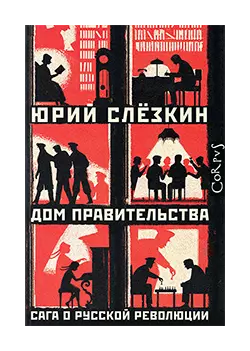 Without a doubt, the “Government House” is the most discussed historical book of the year. Silovkin’s work is remembered here and there, and in reviews , and Facebooks, and in bars. The problem is that, judging by the references, the book of Slovkin either did not quite read or did not understand. The fact is that they discuss the book, exclusively mentioning that this is a study in which "the Bolsheviks appear as a millennary sect." Yes, indeed, there is such an idea in the book, but from the total volume of almost a thousand pages the concept of the sect occupies hardly ten percent. It is worth noting that Slovkin himself in numerous interviews, and even in an interview , he actually rested on this, but the book has many other important thoughts.
Slovkin writes a consistent story of how a small group of radicals first seized power, then was able to keep it, explaining why they got both the first and the second. Further, the author goes to the literature that this group gave rise to. The “Government House” is generally much more literary and literary -centric than a historical and historical -centric book, dozens of texts important for Soviet literature are retold and meaningful. Then - repressions, and here Slovkin concerns such an important but not very studied topic as a rescue strategy in the era of a large terror. One of the characters simulates mental illness over the course of all dangerous years, and when the danger retreats, it is again healthy.
But this is also a book about the confrontation of the “stream” and “swamps”. The swamp is drawn into the abyss of its stability, and the stream wants to wash this swamp with running water. The Bolsheviks began as part of the stream, but turned into a swamp. The place of construction of the house on the embankment in the swamp for Slovkin is symbolic. This idea of the confrontation of the “swamp” and “stream” is not new for those who carefully monitor the work of the historian. For example, she rhymes with the idea of the struggle of nomadic Mercury and settled Apollonians from another book by Slovkin, who was published twelve years ago and reprinted this year of the “age of Mercury”. If the award was awarded for the frequency of mentions in the media and idle conversations, then the Government House would not have competitors. The main thing that the jury is worth remembering is that the book was already published in English a few years ago and even then sounded there. That is, on the one hand, Slovkin, perhaps the most obvious and most honored candidate for victory in the humanitarian nomination, on the other, appointing him the main enlightener, we honestly recognize the deep provincial of our science and scientific.
Vadim Volkov. State. St. Petersburg: EU Publishing House, 2018
 Vadim Volkov is a rare, if not unique case for Russia, the historian of law and sociologist, the texts of which can be seriously called cult. At the beginning of the zero, a silicon party was read out by his books on the history of modern Russian organized crime and quoted with enthusiasm, as Volkov called the bandits “power entrepreneurs”. The book “State” has not yet received a religious status, but we have very little works with a scientific base, reasonably, reasonably, reasonably, without enthusiastic or negative hysteria. Probably, the most important idea in Volkov’s book is that in the 1990s, Russia needed a truly strong state to create new institutions, but it wasn’t. But “the ideology of market liberalism prevailing in the early 1990s suggested that it is enough to clear the economic space from the shackles of the former state, to conduct shock therapy, and the market economy will form itself as soon as the owners and market signals appear about what and in what volumes should be made. The passivity of the state in the initial phase of the transition predetermined its collapse in the subsequent. " A strong contender for victory.
Lev Simkin. Sobibor. Afterword. M.: AST: Corpus, 2019
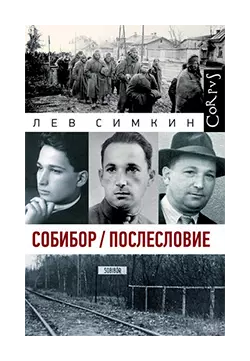 Lev Simkin, probably, knows the history of the uprising in the death camp of Sobibor and the biography of his leader Alexander Pechersky best in the world. Moreover, he was engaged in this topic before the release of the film Konstantin Khabensky “Sobibor”, the first version of Simkin’s book appeared in 2013. In general, this publication has everything that should be in any good historical study: a real hero (Alexander Pechersky, a Soviet Jewish officer who raised an uprising in the death camp and was able to flee) with an amazing biography; an era about which everyone has their own opinion; The erroneous thought is that everything is known about her, but in fact no one knows anything about her; Finally, a historian who really wants to talk about the era and the hero and who knows so much about them that his thoughts are closely under the cover. The main and most important disadvantage of the book is the amazing conservatism and tradition of the narrative: forty years ago, such a book could hardly appear, but thirty years ago - easily.
Elena Osokina. Alchemy of Soviet industrialization. Torgsin time. M.: New Literary Review, 2019
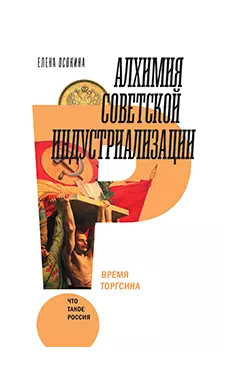 For the second year, books from the series "What is Russia?" Publishing houses "New Literary Review", and this is quite deserved. In this case, an important topic was chosen: as a traders, a system of stores in which it was possible to buy various scarce and not very goods for currency and jewelry, financed the industrialization of Soviet Russia. The topic is important, and most importantly - it allows you to combine political history, the history of everyday life, economics and even literature. Elena Osokina just specializes in the economy and life of the Stalin era, she devoted to these topics, probably the main book in her scientific career - the work “Behind the Facade of“ Stalinist abundance ””. Torgsin also came out: in the first version, the book appeared in 2009 under the name “Gold for Industrialization: Torgsin”. There is one and very important claim to it: already on the thirtieth page of Osokin, Boris Sokolov quotes - the author, to whom the scientific (both historical and philological) community has a lot of questions that are accused of conjuncture, plagiarism and falsifications. When the author is engaged in a narrow topic in which he understands, perhaps the best, it is difficult to objectively evaluate it, especially non -specialists. But if such an author refers to a person with such a terrible reputation, this spoils the whole impression of the book.
Evgeny Anisimov. Power and ax. Tsarist power, political investigation and Russian society in the XVIII century. M.: New Literary Review, 2019
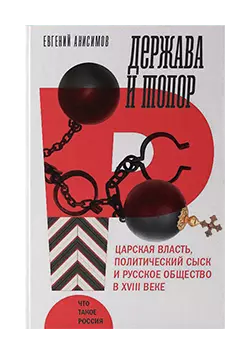
Another book from the series "What is Russia?" And another reprint. The first version of this book was called “Knut and Dyba”, for the first time it was published twenty years ago in the same publishing house. The main domestic specialist in the 18th century (surprisingly, in this Long List continuous main specialists) explains how the system of state fear in Russia was arranged. With examples of dozens of specific people broken in the literal and figurative sense. I will readily believe that in twenty years, nothing new has been written on this topic - Anisimov’s work is really magnificent: it was then left now. But to reward the work of twenty years ago is now somewhat strange.
Sergey Aleksashenko. Russian economic miracle: what went wrong? M.: AST, 2019
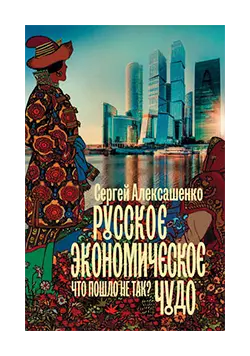 Sergei Aleksashenko was Deputy Minister of Finance and Deputy Head of the Central Bank of Russia in the 1990s, for the past few years he writes articles and books about the Russian economy. In principle, there is no single plot, except for the thesis of the missed capabilities of our country. This is a set of columns written at different times, each in a special, specific case. In principle, in reading the economic columns that were once relevant, and now you need to remember for a long time what exactly was discussed, there is your own high: you can think what exactly and when it went wrong, but at the same time dream of alternative reality. On the other hand, despite all the missed chances, the Russian economy is still standing and even skeptical Aleksashenko recognizes it quite “stable”. Books on economics periodically fall into the short list of the "Enlightener", but have never won anything. It is unlikely that the book of Aleksashenko will be the first.
Another participant in Long List is the book of Lyali Kandaurova “Half an hour of music. How to understand and love the classics. ” We have published a large and detailed review of this work.