
Translated material
And again - "Wordovonovo"
II Forum of Russian Culture in Europe was held in Montenegro
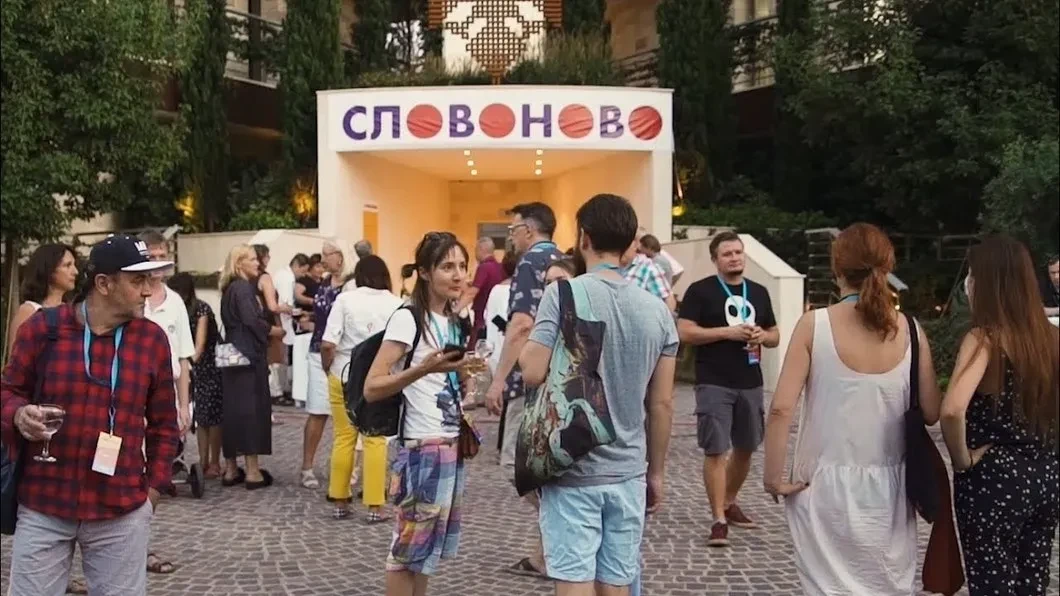
"It's time to finish with Ivanovich ..."
“Having arrived in England, I heard Russian speech only in the editorial office of the Russian BBC service. But here I go along Hempsted, and ...-They speak Russian behind me! And what they say! "It's time to finish with Ivan Ivanovich." I go forward. I feel: I’ll look around - I will see two hats. And the truth. Two "Fedora". Two coats. “It's time to finish” ... And who was this Ivanovich? ” - The writer Zinovy Zinik recalled at the word "Wordovo" forum.
“In the 70s I am tired of the Soviet style. But I was not strong enough to live independently of him or change it ” - so in an interview with me, published in the“ Russian Journal ”, the philosopher Alexander Pyatigorsk friend from the USSR explained his departure from the USSR. Well, he could not stand the gopnic grin of mature socialism.
“Sixty -seven times I filed a statement so that I was released to build with Oscar Nimayer, he called,” says Ernst Unknown in an interview with the magazine “Bear”. “But they didn’t let me in!” And then I decided to leave at all ... I was not given work ... They accused me of foreign exchange fraud, of espionage ...
Strange people met on the street and beat, broke the ribs, fingers, nose ... And in the morning you will stand up, wash the blood - and in the workshop; I'm a sculptor, I need to sculpt. I could not waste time. And left ... "
Hundreds of creative people who fled from Sophia Vlasyevna (as the people of art and opposition in the USSR called Soviet power) told similar stories. Who - with the "Jewish ticket", some - in political asylum, who - swim, like an artist Oleg Sokhanevich. Solzhenitsyna was sent with security. Aksenov, Voinovich, Vladimov was squeezed out of the country.
The leaders of culture went beyond the iron curtain - to the big world.
Now - not so
No debts? Go wherever you want. But there is a similarity: people of culture are leaving.
“Most of them arrange Russian cultural life where they now live,” says Marat Gelman, founder of the Wordovo forum in the Montenegrin Budva, who gathered prominent artists, writers, musicians and media people of the new foreign countries on the banks of the Adriatic. - Yes, we follow the events in Russia less, but we create them outside it - festivals, exhibitions, readings, shows, galleries, shops, publications.
The forum participants are not just emigrants, these are new Europeans, Americans, Israelis, living in culture, the main sign of which is the Russian language. ”
Today, not only works and news about them are again carried to the world. And people. Personally. And they live with her in a new place. Does someone call them renegade? Nonsense. Often referring to power, they participate in the life of the country. And then ... If the “renegades” have such names, then this is a disaster similar to the three waves of the outcome of the twentieth century, there were many high creators from Russia - from Berdyaev and Bunin to Galich and Vishnevskaya.
However, Pyatigorsk did not complain about the excursions into the past. “They,” he believed, “are able to dandy thinking. If a person wants to think, and they say to him: “But in 1948 ...”, then he can fall under the power of last life and stop thinking. It's harmful! For too much in the world depends on who and what thinks. ”
Participants in the "Wordovo" think. And share their thoughts. For the forum.
"There is no future ..."
- Sings from his stage Psa Korolenko.
- Or is there any - is there? - The participants in the discussion “Philosophical Reflection of the History of Russia” are asked - essayist Andrei Velikanov, leaders of the center of Boris Nemtsov at Karlov University Alexander Morozov and Marek Primy, philosopher Peter Shchedrovitsky.
The philosophers of Russia-the heroes of the book series published by Peter-answer this question differently. I was glad to conduct the presentation of this project of the Institute of Philosophy of the Russian Academy of Sciences and the Scientific Fund. G.P. Shchedrovitsky.
They were a core of emigration, the role of which in the struggle for freedom was discussed at the sessions of the “waves of the wind” Boris Banchevsky (“German wave”), a thinker from Serbia Igor Grishin, journalists from Jerusalem and Prague Elena Lagutin and Grigory Pasko, London artist Alexander Markvo and your humble servant.
Is it possible to help to affirm the freedom of creativity from abroad and generally ensure a normal life? You can’t do without politics. To the extent that it is part of the culture. So the lecture by Harry Kasparov, the round table “Another European Policy” with the participation of Ilya Ponomarev and the discussion “Religion” was not surprised by little.
But in the center of the forum-art: concerts of Boris Grebenshchikov, Hey Morales, the group "Megapolis" ... Evenings of the BBC stars Zinoviy Ziniy and Seva Novgorodtsev, writers Viktor Erofeev, Andrei Levkin, Mikhail Shishkin, Bakhyt Kenzheev, Orlushi, Leo Rubinstein, Lyudmila Streetskaya. Speech by Arkady Trojanker. Elena Yakovich’s films “Fast the belts forever”, Alexander Smolyansky about the artist Oscar Rabin, Igor Minaev and Irina Dugup “Blue Dress”. Oh, as I would like to call everything and everyone ...
Their mouth “Slovonovo” answers the question in the language of creativity: you need to write, shoot, publish, draw, take risks. And to do everything made by the affordable topics in Russia and outside of it, for whom the word “culture” still means something.
This is evidenced by the participants of the conference "Russophilia: is it difficult to love Russia, sessions" Russian Venice "," Los Angeles "," Paris "," Riga "," Helsinki "," Russian Book Israel ", then-everywhere; round tables "Man of the world. The culture of being free ”,“ Russian theater and cinema ”and“ Russian art in Europe ”.
Where prominent gallerists and artists claim: in 2014 it seemed that everything was over-the demand for Russian art irreparably collapsed for years to come, but this is not so.
Gelman recalls how “partners terminated contracts, canceled museum projects. But they remembered: not all Russian art is official. Often it is not at all connected with the interests of power. And now we are doing 15 successful exhibitions per year. Only about 1700 publications came out about the Art Riot project. ”
The Milan Galerist Jampaolo Abbondio says: Oleg Kulik’s exhibition, he - for the first time in the history of his gallery - extended to six months. Interest in the works of artists from Russia is high.
“This is due to the extremely attentive attitude of the intellectual West to culture,” says the legendary Vitaly Komar. “It is not in vain that a large article about our first with Alexander Melamid wrote the exhibition was written by Umberto Eco.” Right. In March 1976, the text of Eco Bevente Breshnev Cola-“Brezhnev, who drinks Cola” was a high level of recognition in “Espresso”.
After all, culture - strictly by IVF - “everything is known to the extent that it was said about this ... Authorities. And everything is unknown, because it is a source of wonderful discoveries, and sometimes the key to finding secret harmony. ” What are the wrong ones who are looking for it in contemporary art?
Inquired harmony
The forum is rich in vernissages. Starting from the ICONS exhibition, in which, in addition to Dmitry Gutov, Dmitry Vrubel and Victoria Timofeeva, seven more artists and groups performed, ending with “maps” of Yuri Gordon. And also - Rustam Adagamov, Anton Litvin, Peter Pavlensky, Konstantin Rubakhin, Galya Lutsk, “Blue Noses” and many others, including “Sonya Delonya. Parisian from Odessa ”, which was so elegantly introduced by Evgeny Demenok. But what is the main thing? The innermost harmony waiting for discoveries.
But where is she, say, in the work of Komar and Melamida “Yalta Conference”? Perhaps in the metaphor of the unity of nations in the battle with Nazism? “Who knows,” the mosquito thinks, “what if the threat of aggressive extremism will unite them again?” And America will decide to swear allegiance to the British crown. Our world is such that it seems that everything is possible in it. ”
Even the success of the Russian art site in London.
The hostess of the SaAS gallery Sofia Ebbot of those who "in childhood fell asleep under the banquet table, and woke up on the vernissage." The roots of her courage are in the experience of generations of artists. Leaving the advice of “experts”, who believed that her project would drown in one and a half thousand others, she held five exhibitions in a year. And she went to zero. When several galleries are ruined over the same period, this is a good result.
Leaving, someone is taking the name with him. Someone is money. Someone are plans. But everyone is waiting for a shock of a new life. But the shock is overcome. The activity and search for sites for her begins. This is one of the missions of the Wordovo forum - to provide them with bright figures of Russian culture. And also to provide them with topics in the world who, avoiding cases with Russian power, highly appreciates Russian culture.